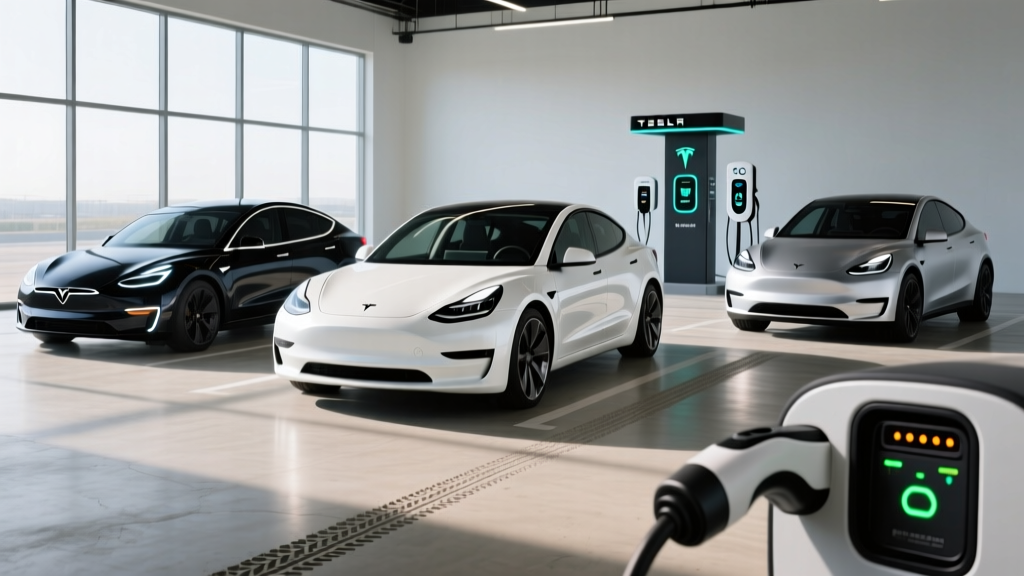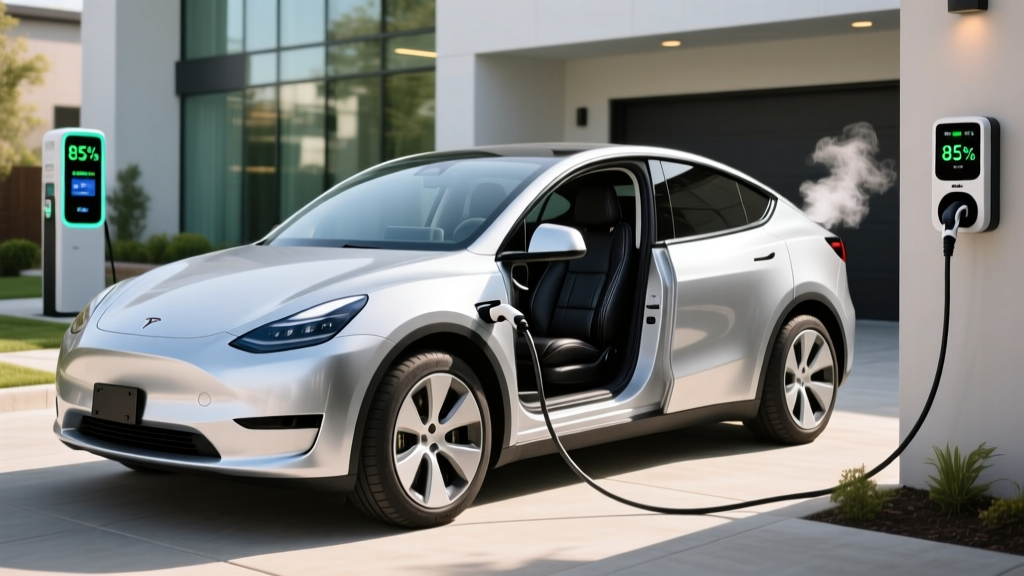
The 2021 Tesla Model Y remains one of the most sought-after vehicles on the used EV market in 2026. As a practical, long-range electric crossover with access to Tesla's Supercharger network, it occupies a sweet spot for buyers who want proven technology without paying new-car premiums. But with multiple trims, a mid-year battery change, and evolving federal incentive rules, shopping for a 2021 Model Y requires careful attention to detail.
This guide breaks down every number that matters — EPA range versus what you'll actually see on the road, DC fast-charging curves, home charging speeds, battery chemistry differences, and whether a used 2021 Model Y can still qualify for a federal tax credit under current IRS §30D rules.
2021 Tesla Model Y: Quick Specs at a Glance
| Specification | Long Range AWD | Performance | Standard Range (RWD) |
|---|---|---|---|
| EPA Range | 326 miles | 303 miles | 244 miles |
| Battery (usable) | ~75 kWh (NMC) | ~75 kWh (NMC) | ~52-55 kWh (LFP) |
| Drivetrain | Dual-Motor AWD | Dual-Motor AWD | Rear-Wheel Drive |
| Horsepower | ~384 hp | ~456 hp | ~295 hp |
| 0-60 mph | 4.8 sec | 3.5 sec | 5.3 sec |
| MPGe (combined) | 121 MPGe | 115 MPGe | 129 MPGe |
| Efficiency | 28 kWh/100 mi | 30 kWh/100 mi | 26 kWh/100 mi |
| Max DC Fast Charge | 250 kW | 250 kW | 170 kW (LFP) |
| 10-80% DCFC Time | ~27 min | ~27 min | ~30 min |
| Level 2 Home Charge | 11.5 kW (~44 mi/hr) | 11.5 kW (~44 mi/hr) | 11.5 kW (~44 mi/hr) |
| Cargo Volume | 76.2 cu ft (rear seats folded) / 30.2 cu ft (rear seats up) | ||
| Battery Warranty | 8 years / 120,000 miles (70% capacity retention) | ||
| Original MSRP | $49,990 | $59,990 | $41,990 |
Sources: EPA fueleconomy.gov, Tesla specifications. Standard Range RWD was produced in limited numbers in early-to-mid 2021.
Real-World Range: What the EPA Sticker Doesn't Tell You
Real-world expectations based on owner data and testing:
- City/suburban driving (moderate climate): 310-330 miles — regenerative braking recovers energy in stop-and-go traffic, often matching or exceeding the EPA sticker.
- Highway cruising at 70-75 mph: 260-285 miles — aerodynamic drag dominates at sustained speed, reducing efficiency by 15-20%.
- Cold weather (below 30°F) highway: 220-255 miles — battery resistance increases and cabin heating draws significant power. Expect 25-35% range loss in deep winter conditions.
- With heat pump (standard on 2021 Model Y): Cold-weather losses are reduced compared to resistive heating, but still material.
The 2021 Model Y was one of the first Teslas to ship standard with a heat pump, which improves cold-weather efficiency by roughly 10-15% compared to the resistive heaters in earlier Model 3 variants.
For the Performance trim (EPA 303 miles), subtract roughly 20-25 miles across all real-world scenarios. The Standard Range RWD (EPA 244 miles) is best suited for commuters with reliable home charging — its smaller battery leaves less buffer for highway detours or cold snaps.
Battery Chemistry: NMC vs. LFP and Why It Matters
The 2021 Model Year saw a critical split in Tesla's battery strategy. The Long Range and Performance trims use NMC (nickel-manganese-cobalt) cells in a ~75 kWh usable pack, while the limited-run Standard Range RWD adopted LFP (lithium iron phosphate) chemistry with roughly 52-55 kWh usable.
| Factor | NMC (Long Range / Performance) | LFP (Standard Range RWD) |
|---|---|---|
| Energy Density | Higher — more range per kg | Lower — heavier pack for same kWh |
| Cycle Life | ~1,500-2,000 full cycles | ~3,000+ full cycles |
| Charging to 100% Daily | Not recommended — accelerates degradation | Recommended — Tesla advises 100% weekly |
| Cold-Weather Performance | Better low-temp conductivity | Reduced performance below freezing |
| Long-Term Degradation | ~8-12% loss over 100k miles | ~5-8% loss over 100k miles |
| Cobalt Content | Contains cobalt | Cobalt-free |
Practical implication for used buyers: A 2021 Long Range with 60,000 miles should retain roughly 90-93% of its original battery capacity, giving you an effective range of about 295-305 miles. Check the car's Energy screen for State of Health (SoH) data, or request a pre-purchase battery diagnostic from a Tesla Service Center.
Charging Speed: DC Fast Charging and Home Setup
| Charging Level | Power | Speed (Long Range) | Connector |
|---|---|---|---|
| Level 1 (120V outlet) | ~1.4 kW | ~5 miles/hour | J1772 (adapter included) |
| Level 2 (240V, 48A) | 11.5 kW | ~44 miles/hour | J1772 / NACS (built-in) |
| DC Fast Charge (peak) | 250 kW (LR/Perf) / 170 kW (Std) | 10-80% in ~27 min (LR) | NACS (Tesla) / CCS (adapter) |
Understanding the charge curve: The 250 kW peak rate on the Long Range and Performance is not sustained across the entire session. The Model Y charges at its fastest between roughly 10-40% State of Charge (SoC), then progressively tapers. From 80-100%, the rate drops dramatically — often below 25 kW — to protect battery health. This is why the industry standard metric is 10-80% time rather than a full charge.
Preconditioning matters. When navigating to a Supercharger, the Model Y automatically warms the battery to its optimal charging temperature. If you arrive at a DC fast charger without preconditioning (for example, at a non-Tesla CCS station using an adapter), charging speeds can be 20-30% slower, especially in cold weather.
Home charging setup: A Tesla Wall Connector on a 60-amp circuit delivers the full 11.5 kW (48A continuous), adding roughly 44 miles of range per hour — enough to fully replenish overnight for even the longest daily commutes. Installation typically costs $800-$2,000 depending on panel capacity and run length, assuming no electrical panel upgrade is needed.
Performance, Handling, and Drivetrain
The dual-motor AWD system in the Long Range and Performance trims provides excellent all-weather traction without the mechanical complexity of a traditional driveshaft. Each axle has its own motor, enabling torque vectoring that the traction control system manages thousands of times per second.
- Long Range AWD: 4.8 seconds 0-60 mph, ~384 hp — brisk enough for confident highway merging and passing, while the efficiency-oriented tuning maximizes range.
- Performance: 3.5 seconds 0-60 mph, ~456 hp — sports-car acceleration with the added benefit of lowered suspension, 21-inch Überturbine wheels, performance brakes, and Track Mode. The trade-off is roughly 23 miles of EPA range and a firmer ride.
- Standard Range RWD: 5.3 seconds 0-60 mph, ~295 hp — adequate for daily driving, with the lightest curb weight and highest MPGe of the lineup.
One-pedal driving via regenerative braking is strong in the Model Y. Tesla removed the user-adjustable regen setting in 2020 (making it always-on at maximum), and while some drivers initially miss the option, most adapt within a week. The result is significantly reduced brake wear — original brake pads at 60,000+ miles are common among Model Y owners.
Interior, Cargo Space, and Technology
The Model Y's cabin follows Tesla's minimalist design philosophy: a single 15-inch landscape touchscreen handles virtually all vehicle functions, from climate control to navigation to media. There is no instrument cluster — speed and navigation info appear on the left third of the main screen.
Cargo dimensions:
- Behind second row: 30.2 cu ft
- Rear seats folded: 76.2 cu ft
- Front trunk (frunk): ~4.1 cu ft
- Optional third row (7-seat config, Long Range only): reduces cargo to 12.4 cu ft behind the third row; best suited for small children only
Passenger space: Front legroom is generous at 41.8 inches. Rear legroom measures 37.4 inches — adequate for adults but tighter than competitors like the Hyundai Ioniq 5 or VW ID.4. The panoramic glass roof creates an airy feel, though it can make the cabin warm in summer despite UV tinting.
Standout technology:
- Autopilot (standard): SAE Level 2 driver-assist including Traffic-Aware Cruise Control and Autosteer. The driver must remain engaged — hands on the wheel, eyes on the road. This is not self-driving.
- Full Self-Driving Supervised (optional, $8,000-$15,000 depending on purchase year): Adds Navigate on Autopilot, Auto Lane Change, Autopark, Summon, and traffic light/stop sign recognition. Still SAE Level 2 — full driver supervision required at all times.
- Over-the-air (OTA) updates: Tesla regularly pushes software improvements. A 2021 Model Y in 2026 has received dozens of feature updates since delivery, including UI refreshes, new games, and efficiency optimizations.
- Sentry Mode and Dashcam: Built-in cameras record surroundings when parked and while driving, stored on a USB drive.
Pricing, Used Market Value, and Tax Credit Eligibility
As of early 2026, used 2021 Tesla Model Y pricing varies significantly by trim, mileage, and condition:
| Trim | Original MSRP | Typical Used Price (2026) | Potential Used EV Credit |
|---|---|---|---|
| Standard Range RWD | $41,990 | $22,000 - $26,000 | Up to $4,000 (§25E) |
| Long Range AWD | $49,990 | $27,000 - $33,000 | Up to $4,000 (§25E) |
| Performance AWD | $59,990 | $30,000 - $37,000 | Up to $4,000 (§25E) |
Federal tax credit for used EVs (IRS §25E): Unlike the new-vehicle §30D credit, the used-EV credit allows up to $4,000 (or 30% of the sale price, whichever is less) for qualifying pre-owned electric vehicles. Key eligibility rules for 2026:
- Vehicle price cap: Sale price must not exceed $25,000. This eliminates most Long Range and Performance examples from credit eligibility at current market prices.
- Buyer income limits: Modified AGI must not exceed $75,000 (single), $112,500 (head of household), or $150,000 (joint filers).
- Vehicle age: Must be at least 2 model years old — the 2021 Model Y qualifies.
- First-time transfer: The credit applies only once per vehicle after its original sale. Verify the specific VIN hasn't already been claimed.
- Dealer requirement: Must be purchased from a licensed dealer (private-party sales do not qualify).
- Point-of-sale transfer: The credit can be applied as a down-payment reduction at the dealership, effective for tax year 2024 onward.
Consult IRS.gov §25E guidance and a qualified tax professional to confirm your eligibility. Rules are subject to legislative change.
Bottom line on pricing: A 2021 Standard Range RWD priced at or below $25,000 from a dealer can effectively drop to $21,000 after the credit for qualifying buyers — making it one of the most affordable entries into the Tesla ecosystem. Long Range buyers should expect to pay $27,000-$33,000 without credit assistance.
Warranty Coverage and Long-Term Ownership Costs
Tesla's warranty structure for the 2021 Model Y:
- Basic Vehicle Limited Warranty: 4 years / 50,000 miles (expired for nearly all 2021 examples by 2026)
- Battery & Drive Unit Warranty: 8 years / 120,000 miles (Long Range & Performance) or 8 years / 100,000 miles (Standard Range) — whichever comes first, with a minimum 70% capacity retention guarantee
This means a 2021 Model Y's battery and drive unit remain under warranty until January 2029 at the latest. If the battery degrades below 70% of its original capacity within that window, Tesla will repair or replace it at no cost. In practice, NMC degradation in the Long Range averages about 8-12% at 100,000 miles, well within the warranty threshold.
Out-of-warranty costs to budget for:
- Tires: $800-$1,400 per set (EV-specific tires recommended for noise and efficiency); expect replacement every 25,000-35,000 miles due to the vehicle's weight and instant torque
- Cabin air filter: $50-$80 every 2 years
- Brake fluid check: Every 2 years; brake pad replacement is rare due to regen braking
- 12V auxiliary battery: Replacement around year 4-6, roughly $150-$300
- Insurance: Typically 15-25% higher than comparable gas crossovers; get quotes before purchasing
How the 2021 Model Y Stacks Up Against Competitors
| Metric | 2021 Tesla Model Y LR | 2021 Ford Mustang Mach-E ER AWD | 2021 VW ID.4 AWD Pro S |
|---|---|---|---|
| EPA Range | 326 mi | 270 mi | 249 mi |
| Battery | ~75 kWh NMC | 88 kWh NMC | 77 kWh NMC |
| Max DCFC | 250 kW | 150 kW | 125 kW |
| 0-60 mph | 4.8 sec | 5.1 sec | 5.7 sec |
| Cargo (seats up) | 30.2 cu ft | 29.7 cu ft | 30.3 cu ft |
| Charging Network | Tesla Supercharger (NACS) | CCS (adapter for NACS) | CCS (adapter for NACS) |
| Used Price Range (2026) | $27k-$33k | $22k-$28k | $20k-$26k |
The Model Y's advantages are clear: best-in-class range, fastest charging, and the largest proprietary fast-charging network. The Mach-E offers a more traditional interior with physical controls and a lower entry price. The ID.4 provides the most rear-seat comfort and the lowest used pricing but lags in charging speed and range.
One critical note for 2026: Tesla's Supercharger network now serves non-Tesla EVs via NACS adapters, reducing the Model Y's charging-network exclusivity advantage. However, Supercharger reliability and plug-and-charge simplicity remain superior to most third-party CCS networks.
Who Should Buy a 2021 Tesla Model Y?
Choose the 2021 Model Y Long Range if:
- You regularly take road trips of 200+ miles and want minimal charging stops
- You live in a cold climate and need AWD with a heat pump for winter efficiency
- You want access to the most reliable DC fast-charging network without adapters
- You value OTA software updates that continue adding features years after purchase
Choose the 2021 Model Y Standard Range RWD if:
- Your daily commute is under 80 miles round-trip and you charge at home nightly
- You want the lowest entry price into a Tesla and can stay under the $25,000 used-EV credit cap
- You prefer LFP chemistry for its longer cycle life and tolerance for 100% daily charging
- You live in a moderate climate where cold-weather range loss is less of a concern
Look elsewhere if:
- You need a traditional instrument cluster or physical buttons for climate/audio
- Rear-seat passenger comfort is a top priority (the ID.4 and Ioniq 5 are roomier)
- You want a sub-$20,000 used EV (consider a Nissan LEAF, Chevy Bolt, or older Model 3)
Pros and Cons
Pros
- Class-leading EPA range (326 mi Long Range)
- 250 kW DC fast charging — 10-80% in ~27 minutes
- Access to Tesla Supercharger network (30,000+ stalls globally)
- Heat pump standard — better cold-weather efficiency than most 2021 competitors
- OTA updates continue adding features and improvements
- Strong regenerative braking reduces brake wear significantly
- Spacious cargo area with frunk (76.2 cu ft total)
- Battery warranty extends to 2029 for most examples
- Excellent safety ratings: NHTSA 5-Star, IIHS Top Safety Pick+
Cons
- Minimalist interior not for everyone — no physical buttons or instrument cluster
- Rear-seat legroom (37.4 in) is tighter than key competitors
- Ride quality is firm, especially on Performance trim with 21-inch wheels
- Panel gaps and paint quality inconsistent on some 2021 examples (pre-Fremont refresh)
- No Apple CarPlay or Android Auto — Tesla's proprietary infotainment only
- Insurance premiums typically 15-25% above segment average
- FSD purchase does not transfer reliably between owners on the used market
- Optional third-row seat is impractical for anyone over small children
Frequently Asked Questions
What is the real-world range of the 2021 Tesla Model Y?
The EPA rates the Long Range AWD at 326 miles, but real-world highway driving at 70-75 mph typically yields 260-285 miles. In cold weather below 30°F, expect 220-255 miles. City driving with regenerative braking can match or exceed the EPA estimate at 310-330 miles.
How fast does the 2021 Model Y charge at home and on the road?
On a Level 2 home charger (240V, 48A), the Model Y charges at 11.5 kW, adding about 44 miles of range per hour — a full overnight charge. On a Tesla Supercharger V3, the Long Range peaks at 250 kW and charges from 10-80% in approximately 27 minutes. The Standard Range RWD peaks at 170 kW due to its LFP battery.
Does a used 2021 Tesla Model Y qualify for a federal tax credit?
It may qualify for the IRS §25E used-EV credit of up to $4,000, but only if the sale price is at or below $25,000, the buyer meets income caps ($75k single / $150k joint), and the vehicle is purchased from a licensed dealer. This effectively limits the credit to Standard Range RWD examples in most markets. Consult a tax professional to verify eligibility.
Is the 2021 Model Y worth buying versus newer competitors?
For range, charging speed, and software, the 2021 Model Y Long Range still competes strongly with newer EVs like the Hyundai Ioniq 5, Ford Mach-E, and VW ID.4. Its main trade-offs are a minimalist interior that polarizes buyers, firmer ride quality, and lack of Apple CarPlay. If you prioritize charging infrastructure and efficiency over interior luxury, it remains an excellent value at $27,000-$33,000 used.
How long will the 2021 Model Y battery last?
Tesla warranties the battery for 8 years / 120,000 miles (Long Range) or 8 years / 100,000 miles (Standard Range) with a minimum 70% capacity retention guarantee. Real-world data from high-mileage Teslas shows NMC batteries typically lose 8-12% capacity over 100,000 miles. With proper care — avoiding frequent 100% charges on NMC, using scheduled charging — the battery should remain functional well beyond 150,000 miles.
Does Full Self-Driving transfer when buying a used Model Y?
FSD licenses are tied to the original owner's Tesla account and do not reliably transfer to subsequent buyers. Some 2021 examples were sold with FSD transferred as a promotional exception, but this is not guaranteed. Always verify FSD status directly in the vehicle's Software menu before purchasing, and do not pay a premium for FSD on a used Tesla without written confirmation from Tesla that the license is active on that VIN.
What should I check before buying a used 2021 Model Y?
Key inspection points: battery State of Health via the Energy screen, tire wear (heavy EVs wear tires faster), suspension components for clunking (control arm bushings can wear by 60,000+ miles), panel gaps and paint consistency, 12V battery age, and whether any open recalls have been addressed. A pre-purchase inspection at a Tesla Service Center ($100-$200) is strongly recommended.
For official safety ratings, see NHTSA.gov and IIHS.org. Federal incentive rules are current as of early 2026 and subject to legislative change.