Quick Verdict: The 2021 Model Y Performance Still Sets the Bar
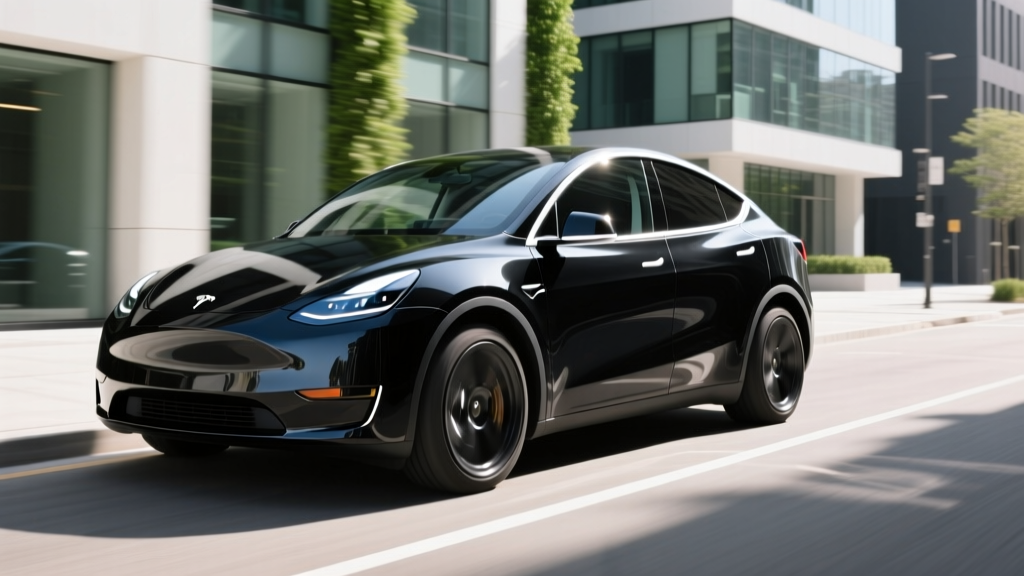
If you are shopping the used EV market in 2026 and want a crossover that can embarrass sports cars at stoplights while hauling a family of five, the 2021 Tesla Model Y Performance remains one of the most compelling picks. Its headline 3.5-second 0-60 mph sprint, access to the Supercharger network, and OTA software updates keep it relevant five years after launch. But buyers evaluating a 2021 Tesla Model Y Performance 0-60 benchmark should also weigh real-world range degradation, charging-curve behavior, and whether the used-EV tax credit still applies to their purchase.
This review breaks down every number that matters — from EPA range and battery chemistry to DC fast-charge taper and total cost of ownership — so you can decide if a used 2021 Model Y Performance is the right electrified vehicle for your garage.
2021 Tesla Model Y Performance: Core Specifications
| Spec | 2021 Model Y Performance |
|---|---|
| EPA Range | 303 miles |
| Battery (usable) | ~75 kWh, NMC (Nickel Manganese Cobalt) |
| Drivetrain | Dual-Motor AWD |
| Horsepower | 456 hp (combined) |
| Torque | 497 lb-ft |
| 0-60 mph | 3.5 seconds (Tesla); 3.7–4.0 sec (independent tests) |
| Top Speed | 155 mph |
| Efficiency | 121 MPGe combined / 28 kWh/100 mi |
| Max DC Fast Charge | 250 kW (peak, V3 Supercharger) |
| 10-80% DC Charge Time | ~27 minutes |
| Level 2 Home Charge Rate | 11.5 kW (~44 mi/hr) |
| Cargo Volume | 30.2 cu ft (rear seats up) / 76.2 cu ft (folded) |
| Frunk | 4.1 cu ft |
| Legroom (front/rear) | 41.8 in / 39.4 in |
| Battery Warranty | 8 years / 120,000 miles (70% retention) |
| Original MSRP | $59,990 (before delivery fees) |
Sources: EPA fueleconomy.gov, Tesla owner's manual archives.
Real-World Range: What the EPA Sticker Doesn't Tell You
EPA Estimate: 303 miles
Real-World Highway (70-75 mph): ~240–265 miles
Cold Weather (below 32°F): ~200–230 miles
Mixed Commute (55 mph, moderate climate): ~275–295 miles
The EPA's 303-mile figure for the 2021 Model Y Performance assumes a blend of city and highway driving at moderate temperatures. In practice, sustained highway speeds above 70 mph cut range by 12-18% due to aerodynamic drag — a factor that hits the Model Y's crossover profile harder than a sedan like the Model 3. Independent tests by Edmunds and real-world owner logs on TeslaFi consistently show 240-265 miles on long road trips at 75 mph in fair weather.
Cold weather compounds the loss. NMC batteries lose efficiency in freezing temperatures, and cabin heating draws significant energy. Without preconditioning, expect 200-230 miles of usable range at 20°F. The Model Y's heat pump (introduced in the 2021 refresh) mitigates this somewhat versus older resistive heaters, but the physics of lithium-ion chemistry in cold remains unavoidable.
Battery degradation note: A 2021 Model Y in 2026 will likely show 5-10% capacity loss depending on charging habits. That means a five-year-old pack originally delivering 303 EPA miles may now provide 270-285 miles at full charge. Tesla's NMC packs tend to lose ~5% in the first 50,000 miles, then degrade more slowly. Always request a battery health report or use the car's built-in energy graph before purchasing used.
Charging Speed: DC Fast, Level 2, and the Curve Reality
Charging speed is where the 2021 Model Y Performance still competes with newer EVs, thanks to its 250 kW peak DC fast-charge capability on Tesla V3 Superchargers. But peak kW is only part of the story — the charge curve determines your actual wait time.
Charging Speeds Breakdown
| Charging Level | Power / Rate | Miles Added per Hour | Notes |
|---|---|---|---|
| Level 1 (120V household) | ~1.4 kW | ~5 mi/hr | Emergency/trickle only |
| Level 2 (240V home, 48A) | 11.5 kW | ~44 mi/hr | Full charge overnight (~7 hrs) |
| DC Fast (V3 Supercharger) | Peak 250 kW | ~1,000 mi/hr (peak) | 10-80% in ~27 min |
| DC Fast (V2 Supercharger) | Peak 150 kW | ~600 mi/hr (peak) | 10-80% in ~38 min |
| CCS Adapter (non-Tesla DC) | Up to 250 kW | Varies by station | Requires Tesla CCS adapter |
Understanding the Charge Curve
The 250 kW peak only holds between roughly 10-30% state of charge (SoC). After 50%, the rate tapers to ~100 kW, and above 80% it drops further to ~40-50 kW to protect battery longevity. This means the 10-80% time of ~27 minutes is realistic, but charging from 80-100% can add another 25-30 minutes. For road trips, the practical strategy is to charge to 80% and drive on — you'll add roughly 200 miles of range in 20-22 minutes at a V3 stall.
For home charging, a Wall Connector on a 60A circuit delivers 11.5 kW (48A continuous), replenishing the full ~75 kWh battery in about 7 hours. Most owners plug in nightly and wake up to a full charge, making public charging a road-trip-only affair. If your home has a 200A electrical panel, installation typically runs $800-$1,500 for a standard Wall Connector setup; older homes with 100A panels may need a $2,000-$4,000 panel upgrade.
Performance: Beyond the 0-60 Number
The 2021 Tesla Model Y Performance 0-60 time of 3.5 seconds (Tesla-claimed) puts it in supercar territory from a launch standpoint. Independent testing by outlets like Car and Driver has recorded 3.7-second runs, with the variance attributable to tire condition, surface temperature, and rollout measurement methodology.
But straight-line acceleration is only part of the performance story:
- Dual-motor AWD torque vectoring: The independent front and rear motors provide instant torque distribution, giving confident grip in rain and light snow without the mechanical complexity of a traditional AWD system.
- Low center of gravity: The under-floor battery pack keeps body roll minimal for a crossover, though the 4,416-lb curb weight is noticeable during aggressive cornering.
- Track Mode: Exclusive to the Performance trim, Track Mode allows adjustable front/rear torque balance, increased regenerative braking, and enhanced cooling — useful for occasional track days or spirited canyon driving.
- Regenerative braking: One-pedal driving is standard, with strong regen that brings the car to a complete stop in most scenarios. This reduces brake wear significantly — many Model Y owners report original brake pads at 60,000+ miles.
The Performance trim also includes 21-inch Überturbine wheels, performance brakes, and a lowered suspension versus the Long Range trim. The trade-off: a slightly firmer ride and roughly 15-20 miles less EPA range than the Long Range's 326-mile rating (2021 model year).
Tech, Interior, and Driver Assistance
Infotainment and Cabin
The 2021 Model Y interior follows Tesla's minimalist philosophy — a single 15-inch center touchscreen controls everything from climate to navigation to media. There are no physical buttons, no instrument cluster, and no Apple CarPlay or Android Auto. Instead, Tesla's native software handles Spotify, Netflix, YouTube (while parked), and a built-in navigation system with real-time Supercharger routing.
The cabin seats five, though the rear middle seat is narrow for adults on long trips. Cargo space is generous: 30.2 cubic feet behind the rear seats and 76.2 cubic feet with them folded, plus a 4.1-cubic-foot frunk for charging cables or a small bag. A panoramic glass roof creates an airy feel but contributes to cabin heat in summer — a sunshade is a common aftermarket addition.
Autopilot and FSD (Supervised)
Tesla's Autopilot and Full Self-Driving (Supervised) are SAE Level 2 driver-assistance systems. The driver must remain attentive, keep hands on the wheel, and be prepared to take over at any moment. These systems do not make the vehicle autonomous. Level 4 driverless operation (no human needed) is currently limited to geofenced robotaxi services like Waymo in select cities.
Every 2021 Model Y came with basic Autopilot (Traffic-Aware Cruise Control and Autosteer). Full Self-Driving (FSD) was a $10,000 add-on or $199/month subscription that added Navigate on Autopilot, Auto Lane Change, Autopark, Summon, and traffic light/stop sign recognition. In 2026, FSD (Supervised) has improved significantly via OTA updates, but it remains a Level 2 system requiring constant driver supervision. Used buyers should verify whether FSD was purchased outright (it transfers with the vehicle) or was a subscription (which does not).
Pricing, Tax Credits, and Used-EV Value
The 2021 Model Y Performance originally started at $59,990 before destination fees. In the 2026 used market, well-maintained examples with 40,000-70,000 miles typically list between $28,000 and $36,000 depending on condition, mileage, color, and whether FSD is included.
Federal Tax Credit for Used EVs (IRS §25E)
Buying a used 2021 Model Y Performance from a licensed dealer may qualify you for the Used Clean Vehicle Credit (IRS §25E), which provides up to $4,000 (or 30% of the sale price, whichever is lower). Key requirements per IRS.gov:
- Sale price cap: Vehicle must sell for $25,000 or less
- Income limits: Modified AGI ≤ $75,000 (single) / $112,500 (head of household) / $150,000 (joint)
- Dealer sale only: Private-party sales do not qualify
- Vehicle age: Must be at least 2 model years old (2021 qualifies in 2026)
- One-time use: The specific VIN can only claim this credit once
- Point-of-sale transfer: You can transfer the credit to the dealer for an immediate price reduction
Important caveat: The $25,000 sale price cap is the biggest hurdle. Many 2021 Model Y Performance examples list above $25,000, which disqualifies them. However, higher-mileage or cosmetically imperfect units from dealers occasionally fall at or below $25,000 — making the $4,000 credit achievable. The original $7,500 new-vehicle credit (§30D) no longer applies to 2021 models purchased used.
| Scenario | Price Range | Tax Credit | Effective Cost |
|---|---|---|---|
| Used, above $25k (no credit) | $28,000–$36,000 | $0 | $28,000–$36,000 |
| Used, at/below $25k (dealer, income-eligible) | $23,000–$25,000 | Up to $4,000 | $19,000–$21,000 |
| Private-party sale | $26,000–$33,000 | $0 | $26,000–$33,000 |
Pros and Cons: Honest Ownership Assessment
✅ Pros
- 3.5-sec 0-60 mph — supercar acceleration in a family crossover
- Access to Tesla Supercharger network (35,000+ stalls globally)
- OTA software updates keep the car improving years after purchase
- Minimal maintenance (no oil changes, rare brake pad replacement)
- Strong cargo versatility (76.2 cu ft with seats folded + frunk)
- Heat pump for improved cold-weather efficiency
- High safety ratings (IIHS Top Safety Pick+, NHTSA 5-Star)
❌ Cons
- Real-world highway range ~240-265 mi (below 303 EPA sticker)
- Firm ride on 21-inch Performance wheels over rough pavement
- No Apple CarPlay or Android Auto — Tesla-only ecosystem
- Panel gaps and paint quality inconsistent on 2021 Fremont builds
- Rear visibility limited by thick C-pillars and no rear wiper
- Insurance premiums 20-40% higher than comparable gas crossovers
- FSD purchase does not guarantee full autonomous capability
2021 Model Y Performance vs. Key Competitors
Shopping a used 2021 Model Y Performance means cross-shopping other premium electric crossovers in the $28,000-$40,000 range. Here's how it stacks up against the most common alternatives:
| Spec | 2021 Tesla Model Y Perf. | 2021 Ford Mustang Mach-E GT | 2022 Hyundai Ioniq 5 Limited AWD |
|---|---|---|---|
| EPA Range | 303 mi | 260 mi | 256 mi |
| 0-60 mph | 3.5 sec | 3.5 sec | 5.2 sec |
| Peak DC Charge | 250 kW | 150 kW | 235 kW |
| 10-80% DC Time | ~27 min | ~45 min | ~18 min |
| Cargo (seats up) | 30.2 cu ft | 29.7 cu ft | 27.2 cu ft |
| Charging Network | Supercharger (native) | NACS adapter needed (2026) | NACS adapter needed (2026) |
| Used Price (2026) | $28k–$36k | $26k–$34k | $27k–$35k |
The Mach-E GT matches the Model Y's acceleration but falls short on range and DC charging speed. The Ioniq 5 charges faster (800V architecture) but can't match the Tesla's range or performance. The Model Y's biggest structural advantage in 2026 remains native Supercharger access — while Ford and Hyundai now support NACS via adapters, Tesla owners enjoy seamless plug-and-charge reliability with no adapter dependency.
Who Should Buy the 2021 Model Y Performance?
Decision Framework
Choose the 2021 Model Y Performance if:
- You want a daily-driver family crossover that can also deliver thrill-ride acceleration
- You road-trip frequently and value Supercharger network reliability
- You have home Level 2 charging and can wake up to a full "tank" daily
- You prefer minimal maintenance and over-the-air feature updates
- You need versatile cargo space for strollers, gear, or camping equipment
Look elsewhere if:
- You regularly drive more than 250 miles between charging stops in cold weather
- You prioritize a plush, quiet ride over sporty handling (consider the Ioniq 5 or Mach-E Premium)
- You depend on Apple CarPlay for your daily navigation and music workflow
- You cannot install a Level 2 charger at home and lack reliable workplace or public charging nearby
- You need three rows of seating (look at the Model X or Rivian R1S)
Frequently Asked Questions
What is the real-world range of the 2021 Tesla Model Y Performance?
The EPA rates it at 303 miles, but real-world highway driving at 70-75 mph typically yields 240-265 miles in moderate temperatures. In freezing weather, expect 200-230 miles. A five-year-old battery with moderate degradation may reduce these figures by 5-10%.
How fast does the 2021 Model Y Performance charge?
On a Tesla V3 Supercharger (250 kW peak), it charges from 10-80% in approximately 27 minutes. At home on a 240V/48A Level 2 Wall Connector (11.5 kW), a full charge takes about 7 hours, adding roughly 44 miles of range per hour of charging.
Does the 2021 Model Y Performance qualify for the federal EV tax credit in 2026?
As a used vehicle, it may qualify for the IRS §25E Used Clean Vehicle Credit of up to $4,000 — but only if the dealer sale price is $25,000 or less, your income falls below the caps ($75k single / $150k joint), and the VIN hasn't previously been used to claim this credit. The $7,500 new-vehicle credit (§30D) does not apply to used purchases.
Is the 2021 Model Y Performance worth buying vs. newer EVs?
At $28,000-$36,000 used, it offers performance and charging infrastructure that still competes with 2026 models costing $50,000+. The main trade-offs are slightly older interior materials, no rear-screen entertainment, and a battery that has experienced some degradation. For buyers who prioritize driving dynamics and road-trip charging convenience, it remains an excellent value.
How long will the battery last on a 2021 Model Y Performance?
Tesla warranties the battery for 8 years or 120,000 miles (whichever comes first) with a minimum 70% capacity retention. Real-world data from TeslaFi fleets shows NMC packs typically retain 85-92% capacity at 100,000 miles. Out-of-warranty battery replacement runs $12,000-$16,000, though full replacements are rare — individual module repairs cost significantly less.
What are the biggest ownership costs to budget for?
Beyond the purchase price, budget for: insurance ($1,800-$2,800/year depending on state and driving record), electricity ($500-$900/year for 12,000 miles of home charging at $0.13/kWh), tire replacement every 25,000-35,000 miles ($800-$1,400 for a set of four, as EV-specific tires carry a premium), and cabin air filter replacement every 2 years (~$50 DIY). Total annual running costs typically run $2,500-$4,000 — roughly half what a comparable gas-powered performance crossover costs to fuel and maintain.
Tax credit rules referenced are current as of 2026 and subject to change. Consult IRS.gov or a tax professional to verify your eligibility. Vehicle specs based on EPA data and manufacturer archives.