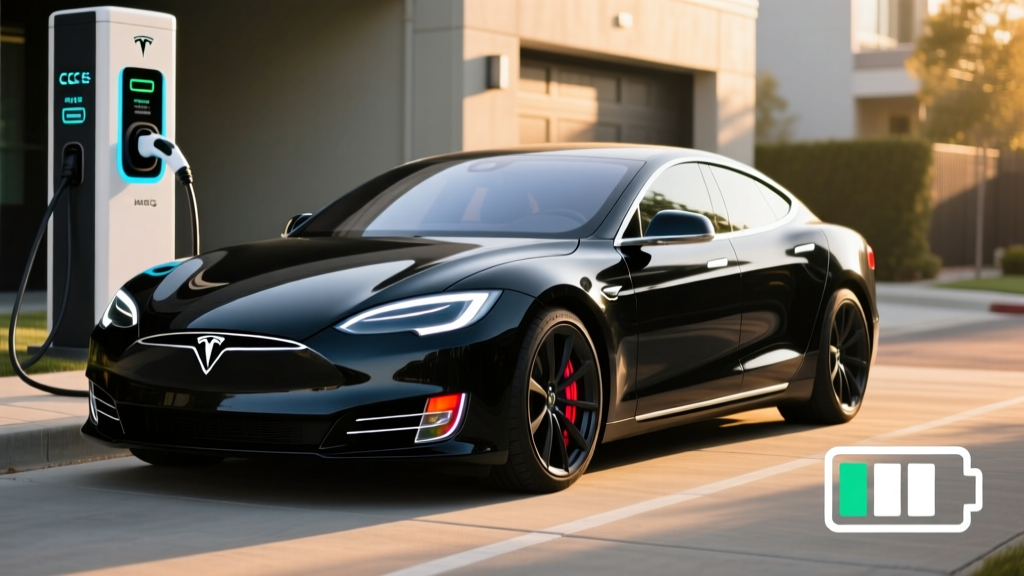
The 2021 Tesla Model S Plaid arrived as a halo sedan that redefined what a four-door electric car could do: 1,020 horsepower, a sub-two-second 0-60 mph time, and an EPA-estimated 390 miles of range. Now, several model years later, the Plaid remains a benchmark for performance EVs — but prospective buyers in the used and certified-pre-owned market need clear data on how this car actually lives day-to-day. This review breaks down real-world range, charging behavior, ownership economics, and how the 2021 Tesla Plaid stacks up against newer rivals in 2026.
Quick Verdict: Who Should Buy the 2021 Tesla Model S Plaid?
The 2021 Model S Plaid is built for buyers who refuse to compromise between hypercar acceleration and daily-driver practicality. It suits tech-forward professionals, long-distance commuters who value Supercharger access, and enthusiasts who want tri-motor AWD grip in all weather. It is not the right pick if you prioritize interior material luxury (Mercedes EQS and BMW i7 do that better) or if you need maximum rear-seat headroom for tall passengers. For the performance-per-dollar ratio, however, few EVs at any price point deliver what the Plaid does.
Range, Efficiency & Real-World Expectations
Real-World Expectation: Plan for 310–340 miles in mixed highway driving at 70–75 mph. In cold weather (below 32°F), expect a 20–30% reduction, dropping effective range to roughly 240–280 miles. City driving with regenerative braking recovers energy and can push closer to the EPA sticker.
The 2021 Model S Plaid carries a usable battery capacity of approximately 95 kWh out of a gross pack size near 100 kWh. Tesla uses NMC (nickel manganese cobalt) chemistry in the Plaid — chosen for its high energy density, which is essential for packing enough range into a performance platform. This contrasts with the LFP (lithium iron phosphate) chemistry found in some Standard Range Tesla models, which trades energy density for longer cycle life and lower cost.
On the efficiency front, the EPA rates the Plaid at 120 MPGe combined (city 124 / highway 116), which translates to roughly 28 kWh per 100 miles. That's a respectable figure given the 1,020 hp on tap, but it's noticeably thirstier than a Long Range Model S (which achieves around 124 MPGe combined with its dual-motor setup). Aggressive driving — and the Plaid tempts you to drive aggressively — will push consumption past 35 kWh/100mi, cutting range accordingly.
| Spec | Value |
|---|---|
| EPA Range (19" wheels) | 390 miles |
| EPA Range (21" wheels) | 348 miles |
| Battery (usable / gross) | ~95 kWh / ~100 kWh |
| Battery Chemistry | NMC (Nickel Manganese Cobalt) |
| Drivetrain | Tri-Motor AWD |
| Horsepower | 1,020 hp |
| 0–60 mph | 1.99 seconds (with rollout) |
| Top Speed | 200 mph |
| MPGe (combined) | 120 MPGe |
| Efficiency | ~28 kWh/100mi |
| Cargo (rear + frunk) | 28.0 cu ft rear + 3.1 cu ft frunk |
| Rear Legroom | 35.4 inches |
| Curb Weight | 4,766 lbs |
Charging Speed: DC Fast, Level 2 & the Charge Curve
Charging is where the 2021 Tesla Plaid's ownership experience truly shines — provided you're on the Tesla Supercharger network.
| Level | Power | Speed / Notes |
|---|---|---|
| Level 1 (120V household) | ~1.4 kW | ~3–4 miles per hour |
| Level 2 (240V home / Wall Connector) | 11.5 kW (48A) | ~34 miles per hour; full charge in ~9 hrs |
| DC Fast Charge (Supercharger V3) | Peak 250 kW | 10–80% in ~27 min; ~170 miles in 15 min |
| DC Fast Charge (Supercharger V4 / newer stalls) | Up to ~320 kW (vehicle-limited) | Plaid architecture caps near 250 kW sustained; V4 stalls may yield marginal gains |
Understanding the charge curve: The Plaid peaks at 250 kW only at a low state of charge (roughly 10–25% SoC). As the battery fills past 50%, the rate tapers significantly — by 80% SoC, you're pulling closer to 60–80 kW. This is why the 10–80% time is the metric that matters, not peak kW. Preconditioning the battery (which the car does automatically when you navigate to a Supercharger) is critical; arriving at a charger with a cold battery can cut peak charge rates in half.
For home charging, Tesla's Wall Connector at 48 amps (11.5 kW) adds roughly 34 miles of range per hour. An overnight charge from 20% to 80% takes about 5–6 hours, which is seamless for daily use. Note: the Plaid uses the Tesla NACS connector natively. For CCS-based public chargers, Tesla sells a CCS adapter, though the Supercharger network remains the most reliable option.
Performance: Tri-Motor AWD and the 1.99-Second Claim
The numbers are staggering and well-documented: 1,020 horsepower from three permanent-magnet synchronous motors (one front, two rear), delivering 0–60 mph in 1.99 seconds (Tesla's figure, measured with a one-foot rollout as is standard in drag racing). Independent testing by outlets like Motor Trend and Car and Driver has confirmed times in the 2.1–2.3 second range without rollout, which is firmly hypercar territory from a four-door sedan weighing 4,766 pounds.
Beyond straight-line speed, the tri-motor setup enables torque vectoring across the rear axle, which improves cornering grip and stability. The adaptive air suspension lowers the car at speed for aerodynamic efficiency and can raise it for rough driveways. The carbon-ceramic brake package (a $9,000 option when new) is essential for track use, as the stock brakes can overheat under repeated hard stops with this much mass and power.
One real-world caveat: launching the Plaid at full power requires specific conditions — a warm battery (above 70% SoC), pre-conditioned drivetrain, and a grippy surface. On a public road in cold or wet conditions, you won't see the 1.99-second figure. The car's traction control will intervene aggressively.
Interior, Tech & Driver Assistance
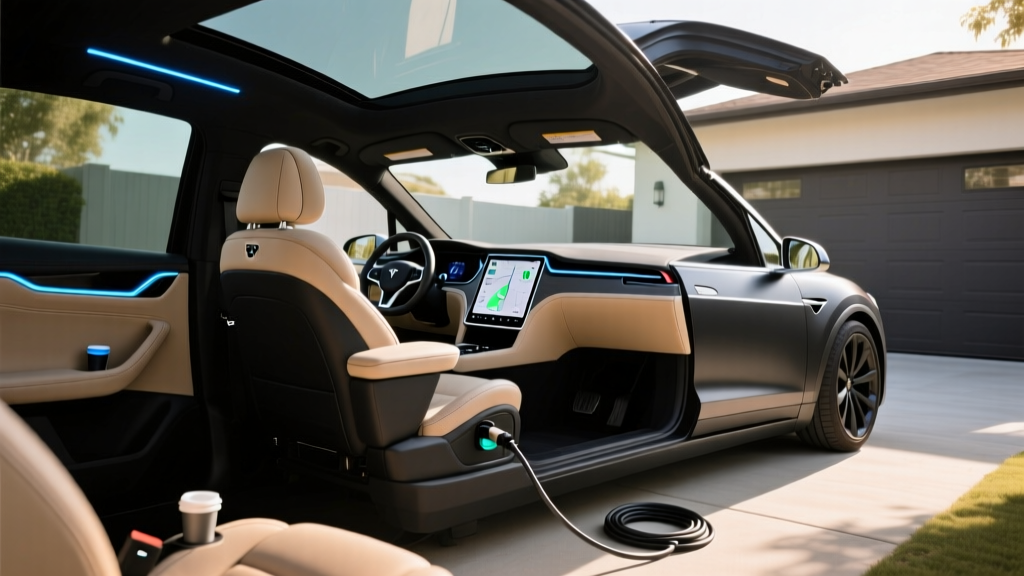
The 2021 Plaid introduced the redesigned Model S interior: a 17-inch landscape-oriented center touchscreen (an upgrade from the older portrait layout), a secondary 8-inch screen for rear passengers, and a yoke-style steering wheel (a conventional round wheel became available later as a no-cost swap). The infotainment system runs Tesla's proprietary software with native navigation, Spotify, Netflix, YouTube, and a surprisingly capable gaming suite — the car can run Cyberpunk 2077 while parked.
Driver assistance: The Plaid comes with Tesla's Basic Autopilot (adaptive cruise, lane-keeping). Full Self-Driving (FSD) capability was a $10,000 option (later raised to $12,000, then reduced to $8,000 in subsequent years). It's critical to understand that FSD is a Level 2 SAE driver-assist system — it does not make the car self-driving. The driver must remain attentive, hands on the wheel (or yoke), and eyes on the road at all times. FSD Supervised handles highway interchanges and some city streets impressively, but it can make unexpected lane changes, miss construction-zone cones, and struggle in heavy rain or faded lane markings.
Notable drawbacks: The yoke steering is polarizing and makes low-speed maneuvering (parking lots, U-turns) awkward without a variable-ratio rack (which Tesla did not implement). Rear-seat headroom is tight for passengers over 6 feet due to the sloping roofline. Panel gaps and interior material quality, while improved over pre-2021 models, still lag behind Mercedes, BMW, and Audi at this price point. There is no Apple CarPlay or Android Auto — Tesla's native system is the only option.
Pricing, Tax Credits & 2026 Ownership Costs
When new, the 2021 Model S Plaid carried a base MSRP of $129,990 (before destination). With common options — such as the carbon-ceramic brakes ($9,000), Full Self-Driving ($10,000 at the time), and premium paint colors ($1,500–$2,500) — as-tested prices regularly exceeded $150,000.
| Item | Amount |
|---|---|
| Base MSRP (when new) | $129,990 |
| Typical As-Tested Price | $142,000–$155,000 |
| Federal §30D Tax Credit (new purchase) | $0 — MSRP exceeds $55,000 sedan cap |
| Used EV Credit (§25E, if buying used in 2026) | Up to $4,000 (30% of sale price, max $4,000, if sale price ≤ $25,000 and buyer income qualifies) |
Tax credit reality: The 2021 Model S Plaid never qualified for the $7,500 federal new-EV tax credit (§30D). The sedan MSRP cap is $55,000, and the Plaid's $129,990 sticker far exceeds it. There is no workaround for this — regardless of buyer income or battery sourcing. If you're purchasing a used Plaid in 2026, the §25E used EV credit offers up to $4,000, but only if the sale price is $25,000 or less (which is unlikely for a Plaid in 2026, where used prices typically range $65,000–$90,000 depending on mileage and condition). Always consult a tax professional or the IRS for your specific eligibility.
Ownership costs to budget for:
- Insurance: Expect $3,500–$5,500 annually for a Plaid, depending on state, age, and driving record. Performance EVs carry steep premiums due to repair costs and power output.
- Maintenance: Minimal compared to ICE equivalents — no oil changes, no transmission fluid. Budget $500–$800/year for cabin air filters, wiper fluid, tire rotation, and brake fluid checks.
- Tires: The Plaid's weight and torque eat tires. Expect to replace the 21-inch Michelin Pilot Sport 4S set ($1,600–$2,000) every 15,000–20,000 miles under normal driving, or far sooner with aggressive use.
- Electricity: At the national average of $0.16/kWh, charging a 95 kWh battery from 10% to 80% costs roughly $10–12 at home. Supercharger rates vary ($0.25–$0.45/kWh), making a comparable fill $17–$30.
- Depreciation: The Plaid has seen steeper-than-average EV depreciation. A 2021 model purchased new at ~$140,000 may trade at $65,000–$85,000 in 2026 depending on mileage and market conditions.
Battery Warranty & Long-Term Degradation
Tesla covers the Model S Plaid's battery and drive unit with an 8-year / 150,000-mile warranty (whichever comes first), guaranteeing a minimum of 70% battery capacity retention over that period. This is more generous than the Long Range Model S (8yr/120,000mi) due to the Plaid's higher price point.
Real-world degradation data from high-mileage Tesla owners suggests NMC packs in the Model S lose approximately 8–12% capacity over the first 100,000 miles, with the steepest drop occurring in the first 20,000–30,000 miles before leveling off. The tri-motor Plaid's thermal management system (which includes a heat pump for efficiency and active battery cooling during hard driving) helps mitigate degradation compared to earlier Tesla packs.
If you're buying a used 2021 Plaid in 2026, check the battery's State of Health (SoH) via the car's service menu or a third-party diagnostic. A 2021 Plaid with 50,000 miles should still retain 90%+ of its original capacity, meaning roughly 350 miles of EPA range on 19-inch wheels. A full battery replacement (out of warranty) would cost approximately $15,000–$22,000, though this is rare within the first decade of ownership.
Pros, Cons & How It Compares
Pros
- 1,020 hp and sub-2-second 0–60 — unmatched at any price in a four-door
- 390-mile EPA range is among the highest of any performance EV
- Supercharger network access — the most reliable DC fast-charging ecosystem in North America
- Over-the-air updates continue to add features years after purchase
- Tri-motor AWD provides exceptional all-weather traction
- Spacious rear hatch and 28 cu ft cargo area (more than most luxury sedans)
- Strong 8yr/150,000mi battery warranty
Cons
- No federal tax credit eligibility (MSRP far above $55K sedan cap)
- Interior quality and panel gaps still below Mercedes/BMW/Audi at this price
- Yoke steering is impractical for low-speed maneuvering (round wheel now available)
- Rear headroom is tight for passengers over 6 feet
- No Apple CarPlay or Android Auto
- Insurance premiums are steep ($3,500–$5,500/year)
- Tire wear is aggressive — budget for frequent replacements
- High depreciation from original MSRP
Key competitors in 2026:
- Lucid Air Sapphire: 1,234 hp, EPA 427 miles, $249,000. More range, more power, far higher price. Less charging infrastructure.
- Porsche Taycan Turbo GT: 1,019 hp, EPA ~280 miles, ~$230,000. Superior handling and interior quality, but much less range and no Supercharger access.
- BMW i7 M70: 650 hp, EPA ~318 miles, ~$170,000. Better luxury and rear-seat comfort, but not in the same performance league.
- Mercedes-AMG EQS 53: 649 hp, EPA ~277 miles, ~$150,000. Superior interior materials, but heavier, less efficient, and significantly slower.
Choose the 2021 Tesla Model S Plaid If:
- You want the fastest-accelerating four-door sedan ever made and value real-world usability
- You road-trip frequently and want Supercharger network reliability
- You're buying used in 2026 and want hypercar performance at a depreciated price (~$65K–$85K)
- You value OTA software updates and a tech-first cabin experience
Look Elsewhere If:
- Interior luxury, rear-seat comfort, and ride refinement are top priorities (consider BMW i7 or Mercedes EQS)
- You want the absolute longest range regardless of price (Lucid Air Grand Touring: 516 mi EPA)
- You need a federal tax credit on a new EV purchase (the Plaid doesn't qualify)
- You prefer CarPlay/Android Auto integration and traditional luxury-brand dealer service
Frequently Asked Questions
What is the real-world range of the 2021 Tesla Model S Plaid?
The EPA rates it at 390 miles on 19-inch wheels and 348 miles on 21-inch wheels. In real-world highway driving at 70–75 mph, expect 310–340 miles. In cold weather (below freezing), plan for 240–280 miles. City driving with regenerative braking can approach the EPA estimate.
How fast does the Plaid charge at home and on the road?
At home on a Level 2 Tesla Wall Connector (11.5 kW / 48A), it adds ~34 miles per hour, fully charging overnight in about 9 hours. On a V3 Supercharger, it peaks at 250 kW and charges from 10–80% in approximately 27 minutes. Battery preconditioning (automatic when navigating to a charger) is essential for reaching peak rates.
Does the 2021 Tesla Model S Plaid qualify for the federal EV tax credit?
No. The IRS §30D credit caps sedan eligibility at $55,000 MSRP. The Plaid's $129,990 sticker far exceeds this. It is also unlikely to qualify for the §25E used EV credit ($4,000 max) in 2026 because the used sale price would need to be $25,000 or less — well below current Plaid market values. Always verify eligibility with a tax professional.
Is the 2021 Plaid worth buying vs. newer competitors in 2026?
For used-market buyers, the Plaid is arguably the best performance-per-dollar EV available in 2026. Depreciation has brought prices to $65,000–$85,000, which buys you 1,020 hp, 390 miles of range, and Supercharger access. Newer rivals like the Lucid Air Sapphire and Porsche Taycan Turbo GT offer more power or better handling, but at two to three times the price. The main trade-off is interior quality, which still lags German luxury brands.
What are the biggest ongoing costs of owning a Plaid?
Insurance ($3,500–$5,500/year), tires ($1,600–$2,000 every 15,000–20,000 miles), and electricity (roughly $600–$1,200/year depending on mileage and charging mix). Maintenance is minimal — no oil changes, no spark plugs, no transmission service. Budget $500–$800/year for filters, wipers, and fluid top-offs.
Is Tesla's Full Self-Driving actually self-driving?
No. FSD (Supervised) is an SAE Level 2 driver-assist system. It requires the driver to remain fully attentive, with hands on the wheel and eyes on the road. It handles many highway and city scenarios well but can make errors in construction zones, heavy rain, or unusual road configurations. It is not a substitute for a human driver.
How long will the Plaid's battery last?
Tesla warranties the battery for 8 years or 150,000 miles, whichever comes first, with a minimum 70% capacity retention guarantee. Real-world data suggests NMC packs in Teslas lose 8–12% capacity over 100,000 miles. With proper care (avoiding frequent 100% charges, using Superchargers in moderation, keeping the battery between 20–80% for daily use), the pack should deliver well over 200,000 miles before approaching the warranty threshold.