The 2021 Tesla Model S Plaid launched as the quickest production sedan on the planet, promising supercar-rivaling acceleration in a four-door package with over 390 miles of range. Now several model years removed from its debut, the Plaid has settled into the used-EV market where it presents a compelling — if complicated — value proposition. This review examines what it's actually like to live with a 2021 Model S Plaid in 2026: real-world range, charging behavior, ownership costs, and whether it still holds up against newer competition.
Range Reality Check
EPA Estimated Range: 396 miles (19-inch wheels) / 348 miles (21-inch Arachnid wheels)
Real-World Expectation: Expect 320–350 miles in mixed driving at moderate speeds. Highway cruising at 75+ mph drops range to approximately 280–310 miles. In freezing temperatures (below 32°F), plan for 20–30% range loss, bringing effective winter range to roughly 230–275 miles on 19-inch wheels.
Specs at a Glance: 2021 Tesla Model S Plaid
| Specification | Value |
|---|---|
| EPA Range (19" wheels) | 396 miles |
| EPA Range (21" wheels) | 348 miles |
| Battery Capacity | ~100 kWh usable (NMC chemistry) |
| Drivetrain | Tri-Motor AWD |
| Horsepower | 1,020 HP |
| 0–60 mph | 1.99 seconds (with rollout) |
| Top Speed | 200 mph |
| Max DC Fast Charge Rate | 250 kW (V3 Supercharger) |
| 10–80% DC Charge Time | ~30 minutes (with preconditioning) |
| Level 2 Home Charging | 11.5 kW / 48A (~34 mi/hr) |
| EPA Efficiency | 120 MPGe combined (19") |
| Energy Consumption | 28 kWh/100 mi |
| Cargo Volume | 28 cu ft (rear) + ~5.3 cu ft (frunk) |
| Seating | 5 passengers |
| Rear Legroom | 35.4 inches |
| Original MSRP (2021) | $129,990 (before incentives) |
| Battery/Powertrain Warranty | 8 years / 150,000 miles |
Battery, Chemistry, and Long-Term Degradation
The 2021 Model S Plaid uses a nickel-manganese-cobalt (NMC) lithium-ion battery pack with approximately 100 kWh of usable capacity. Tesla does not publish exact pack specifications, but teardowns and owner telemetry confirm NMC chemistry — the standard for Tesla's long-range and performance vehicles (LFP is reserved for Standard Range rear-wheel-drive models like the base Model 3).
NMC offers higher energy density than LFP, which is how Tesla fits 396 miles of range into the Plaid's sedan footprint. The trade-off is slightly faster degradation over time. Based on fleet data aggregated by sources like Teslanomics and owner forums, Model S/X packs from this era typically show 5–8% capacity loss after 100,000 miles, with degradation slowing significantly after the initial 20,000–30,000 miles.
The battery and drive unit warranty covers 8 years or 150,000 miles (whichever comes first) with a minimum 70% capacity retention threshold. If you're buying a 2021 Plaid in 2026, you still have approximately 3 years or significant mileage remaining on this warranty — but verify the specific vehicle's in-service date and current State of Health (SoH) through Tesla's service menu or a pre-purchase inspection.
Charging Speed: DC Fast Charging and Home Setup
The 2021 Model S Plaid supports up to 250 kW peak DC fast charging on Tesla's V3 Supercharger network. However, peak rate is not sustained rate — and understanding the charge curve is critical for road-trip planning.
| Charging Method | Power | Speed / Time |
|---|---|---|
| DC Fast Charge (V3 Supercharger) | Up to 250 kW peak | ~170 miles in 15 min; 10–80% in ~30 min |
| DC Fast Charge (CCS adapter, non-Tesla) | Up to ~150 kW typical | 10–80% in ~40 min |
| Level 2 (Tesla Wall Connector, 48A) | 11.5 kW | ~34 miles per hour |
| Level 2 (standard 240V/40A outlet) | 9.6 kW | ~28 miles per hour |
| Level 1 (120V household) | ~1.4 kW | ~3–4 miles per hour |
The charging curve reality: The Plaid hits 250 kW only at low states of charge (roughly 10–25% SoC) and only when the battery is properly preconditioned — either by navigating to a Supercharger via the car's built-in navigation or by manually preconditioning. Without preconditioning, expect peak rates closer to 120–150 kW even on a V3 stall. Above 50% SoC, the charge rate tapers significantly, dropping below 100 kW. Above 80%, it slows to under 50 kW. This is why the 10–80% metric matters more than peak kW.
For non-Tesla DC fast chargers, Tesla sells a CCS adapter (approximately $250) that enables charging on Electrify America, EVgo, and other networks. Charging speeds on these networks typically max out around 150 kW for the Model S Plaid due to the adapter's throughput limitations and the vehicle's handshake protocols.
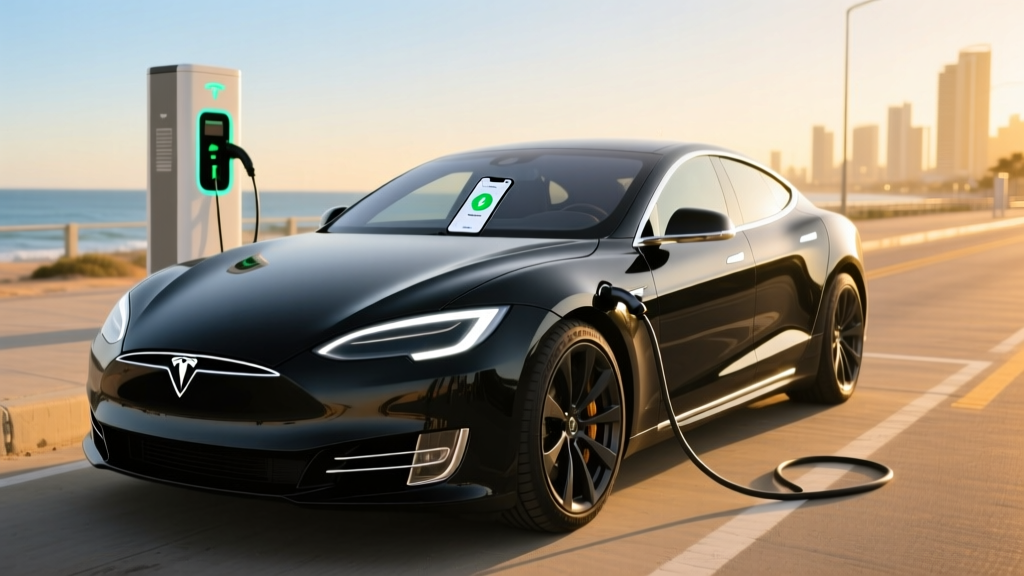
At home, the Tesla Wall Connector at 48 amps delivers 11.5 kW, adding roughly 34 miles of range per hour. A full overnight charge from 20% to 80% takes approximately 6 hours — easily accomplished with a standard overnight plug-in routine. Home charging installation typically costs $500–$2,000 depending on whether your electrical panel needs an upgrade (consult a licensed electrician for your specific situation).
Performance: The Numbers That Still Shock
Let's address the headline number: the 2021 Model S Plaid's tri-motor powertrain produces 1,020 horsepower and achieves a manufacturer-claimed 0–60 mph time of 1.99 seconds (with a 1-foot rollout subtracted, per drag-racing convention). Independent testing by outlets like Car and Driver and Motor Trend confirmed 0–60 times in the 2.1–2.3 second range without rollout — making this one of the quickest production cars ever tested, regardless of powertrain type.
The tri-motor layout places one motor on the front axle and two on the rear, enabling precise torque vectoring and staggering launch traction. The Plaid uses carbon-sleeved rotors in its permanent-magnet reluctance and induction motors to sustain high-RPM output without thermal derating — a key engineering detail that separates it from lesser dual-motor EVs that lose power after repeated hard launches.
Top speed is electronically limited to 200 mph (with the appropriate tire and hardware package). Beyond straight-line speed, the Plaid's adaptive air suspension and low center of gravity give it surprisingly capable handling for a 4,766-pound sedan, though it's no sports car in the corners. Track mode allows adjustable torque distribution and suspension settings for closed-course driving.
Interior, Technology, and Daily Livability
The 2021 Model S Plaid debuted Tesla's "refreshed" interior, which brought meaningful improvements over the pre-2021 cabin — along with some controversial choices.
What works:
- A 17-inch landscape-oriented center touchscreen with an AMD Ryzen processor (in later 2021 builds; early 2021 cars may have the older Intel Atom chip — verify before purchasing)
- A 12.3-inch digital instrument cluster behind the yoke or round steering wheel
- A rear 8-inch touchscreen for rear-seat passengers (climate, media, gaming)
- Ventilated front seats (a first for Model S)
- A 22-speaker audio system with impressive fidelity
- Wireless phone charging pad and improved center console storage
What frustrates:
- The yoke steering wheel (standard on Plaid) deletes turn signal stalks and gear selector — turn signals become thumb buttons, which many owners find unintuitive in roundabouts or multi-lane merges
- No physical buttons for climate, wipers, or glove box — everything routes through the touchscreen
- Build quality improved over earlier Model S generations but still shows inconsistencies (panel gaps, trim alignment) compared to German luxury sedans
- Rear-seat legroom (35.4 inches) is adequate but not generous for a $130K+ vehicle; tall adults will find it tighter than in a BMW 7 Series or Mercedes S-Class
Cargo space is a genuine strength: 28 cubic feet in the rear hatch (the liftback design makes loading easy) plus approximately 5.3 cubic feet in the front trunk (frunk). Total storage of roughly 33 cubic feet handily beats most luxury sedans and rivals compact SUVs.
Driver Assistance: Autopilot and FSD (Supervised)
SAE Automation Level: Level 2
Tesla's Autopilot and Full Self-Driving (Supervised) are Level 2 driver-assistance systems under the SAE J3016 standard. This means the vehicle can control steering, acceleration, and braking under certain conditions, but the driver must remain fully attentive, keep hands on the wheel, and be prepared to take over at any moment. This is not autonomous or "self-driving" capability. Only Level 4 services like Waymo's robotaxi operate without a human driver in defined areas.
The 2021 Model S Plaid ships with basic Autopilot (Traffic-Aware Cruise Control and Autosteer). Full Self-Driving (Supervised) was a $10,000 option at purchase or $12,000 as a later upgrade. FSD (Supervised) adds features like automatic lane changes, navigate-on-autopilot for highway interchanges, traffic light and stop sign recognition, and the controversial "city streets" capability.
In practice, FSD (Supervised) on 2021-era hardware (Hardware 3 / HW3) works well on highways but remains inconsistent in complex urban environments. If FSD capability is a priority, verify which hardware version the specific vehicle has — some 2021 units received HW4 (also called AI4) in later production runs, which offers significantly improved camera resolution and processing power.
Pricing, Tax Credits, and Value in the Used Market
The 2021 Tesla Model S Plaid originally stickered at $129,990 (including destination fee). With options like FSD, special paint colors, and 21-inch Arachnid wheels, as-tested prices commonly reached $140,000–$145,000.
In the 2026 used market, expect to find 2021 Plaid examples ranging from approximately $65,000 to $85,000, depending on mileage, condition, and hardware version. Depreciation has been steep — a reality of high-end EVs where rapid technology improvements erode resale value.
| Item | Amount |
|---|---|
| Original MSRP (2021) | $129,990 |
| Typical Used Price (2026 market) | $65,000–$85,000 |
| Federal Used EV Tax Credit (§25E) | Up to $4,000 (30% of sale price, capped) |
| Federal New EV Credit (§30D) | Not applicable — new MSRP exceeds $55,000 sedan cap |
| Estimated Price After Used EV Credit | $61,000–$81,000 |
Tax credit details: The §30D new-vehicle credit was never available to the Model S Plaid because its MSRP exceeds the $55,000 sedan cap (the cap is $80,000 for SUVs/vans/pickups). However, the §25E used-EV credit may apply when purchasing from a dealer: it provides 30% of the sale price up to a maximum of $4,000. Eligibility requires the buyer's modified adjusted gross income to fall below $75,000 (single) / $112,500 (head of household) / $150,000 (joint), and the vehicle must be purchased from a licensed dealer for under $25,000 to qualify for the full credit (the 30% cap means the credit phases out as price rises). Always consult IRS guidelines and a tax professional for your specific situation.
Pros and Cons
Strengths
- Unmatched acceleration — 1,020 HP and sub-2-second 0–60 remains exotic-car territory
- 396-mile EPA range (19" wheels) eliminates range anxiety on most road trips
- Access to Tesla's Supercharger network — the most reliable DC fast-charging ecosystem in North America
- Practical cargo capacity (28 cu ft rear + 5.3 cu ft frunk) for a performance sedan
- Over-the-air updates continue to add features years after purchase
- Strong battery warranty (8 yr / 150,000 mi) with remaining coverage on 2021 examples
Drawbacks
- Steep depreciation — expect 40–50% value loss from original MSRP
- Yoke steering and touchscreen-only controls frustrate many drivers daily
- Build quality still lags German luxury competitors at this price point
- Insurance costs are high — Plaid claims data leads to premiums 30–60% above comparable luxury sedans
- Outdated HW3 Autopilot hardware on many 2021 units limits FSD capability
- 21-inch Arachnid wheels reduce range by ~48 miles and ride quality noticeably
- No Apple CarPlay or Android Auto — Tesla's proprietary infotainment only
Who Should Buy a 2021 Model S Plaid?
The 2021 Model S Plaid suits a specific buyer: someone who wants supercar-rivaling performance in a practical four-door sedan, values the Tesla Supercharger network for road trips, and is comfortable with Tesla's minimalist (and sometimes frustrating) interior philosophy. At $65,000–$85,000 on the used market, it offers performance-per-dollar that no new vehicle can match.
It's a strong fit if:
- You prioritize straight-line performance and instant torque above all else
- You have reliable home Level 2 charging and use DC fast chargers for road trips
- You want a 400-mile-range EV that can still seat five and carry luggage for a family trip
- You're buying used and comfortable with the depreciation curve (worst of it is behind you)
Look elsewhere if:
- Interior luxury, build quality, and traditional controls are priorities (consider the Lucid Air, BMW i7, or Mercedes EQS)
- You want the latest driver-assistance hardware — newer EVs have more advanced sensor suites
- Insurance costs are a concern — get a quote before committing
- You need towing capability — the Plaid is not rated for towing
Decision Framework
Choose the 2021 Model S Plaid if: Performance is non-negotiable, you want Supercharger access, and you accept Tesla's interior quirks.
Choose the Lucid Air Grand Touring if: You want similar range (516 mi EPA), better build quality, and a more traditional luxury experience.
Choose the Porsche Taycan Turbo S if: Driving dynamics and chassis balance matter more than straight-line numbers, and you're willing to accept lower range (~280 mi EPA).
Frequently Asked Questions
What is the real-world range of the 2021 Tesla Model S Plaid?
On 19-inch wheels, the EPA rates the Plaid at 396 miles. In real-world mixed driving at moderate speeds, expect 320–350 miles. Highway driving at 75+ mph reduces this to approximately 280–310 miles. Cold weather (below freezing) can cut range by 20–30%, yielding 230–275 effective miles. The 21-inch Arachnid wheels reduce EPA range to 348 miles with proportionally lower real-world figures.
How fast does the 2021 Model S Plaid charge?
On a Tesla V3 Supercharger (250 kW peak), the Plaid charges from 10–80% in approximately 30 minutes with proper battery preconditioning. Peak rate of 250 kW is sustained only briefly at low SoC; the curve tapers significantly above 50%. On a home Level 2 charger (Tesla Wall Connector at 11.5 kW), expect roughly 34 miles of range added per hour, or a full overnight charge from 20–80% in about 6 hours.
Does the 2021 Model S Plaid qualify for the federal EV tax credit?
The §30D new-vehicle credit was never available because the Plaid's MSRP ($129,990) exceeds the $55,000 sedan cap. However, the §25E used-EV credit may provide up to $4,000 (30% of sale price, capped) when purchasing from a licensed dealer, subject to buyer income limits ($75K single / $150K joint). The vehicle must sell for $25,000 or less to receive the maximum credit. Consult IRS §25E guidelines and a tax professional.
Is the 2021 Model S Plaid worth buying vs. competitors?
At $65,000–$85,000 used, the Plaid offers unmatched performance-per-dollar and the best DC charging network access. It's worth it if acceleration and range are your top priorities. If you value interior luxury and build quality more, the Lucid Air or BMW i7 are stronger choices. If driving dynamics matter most, the Porsche Taycan Turbo S handles better but sacrifices range. The Plaid wins on raw specs and charging infrastructure; it loses on refinement and daily ergonomics.
What are the biggest ownership costs to watch for?
Insurance is the most significant ongoing cost — Plaid premiums run 30–60% higher than comparable luxury sedans due to the vehicle's performance profile and repair costs. Tires wear quickly given the weight and torque; expect to replace them every 15,000–25,000 miles at $300–$500 per tire. Home charging electricity costs approximately $0.04–$0.06 per mile (at $0.15/kWh), dramatically less than a comparable gas performance sedan. Supercharger costs run $0.10–$0.15 per mile depending on regional pricing.
What battery health should I expect on a used 2021 Plaid?
Fleet data suggests NMC packs in the Model S lose approximately 5–8% capacity over the first 100,000 miles. A 2021 Plaid with 40,000–60,000 miles should show 93–96% State of Health (SoH). Request a battery health report through Tesla service or check the vehicle's energy app for degradation indicators. The 8-year/150,000-mile battery warranty (70% minimum retention) should still be active on most 2021 examples, providing a safety net against abnormal degradation.