Quick Verdict: The 2021 Model S in Today's Market
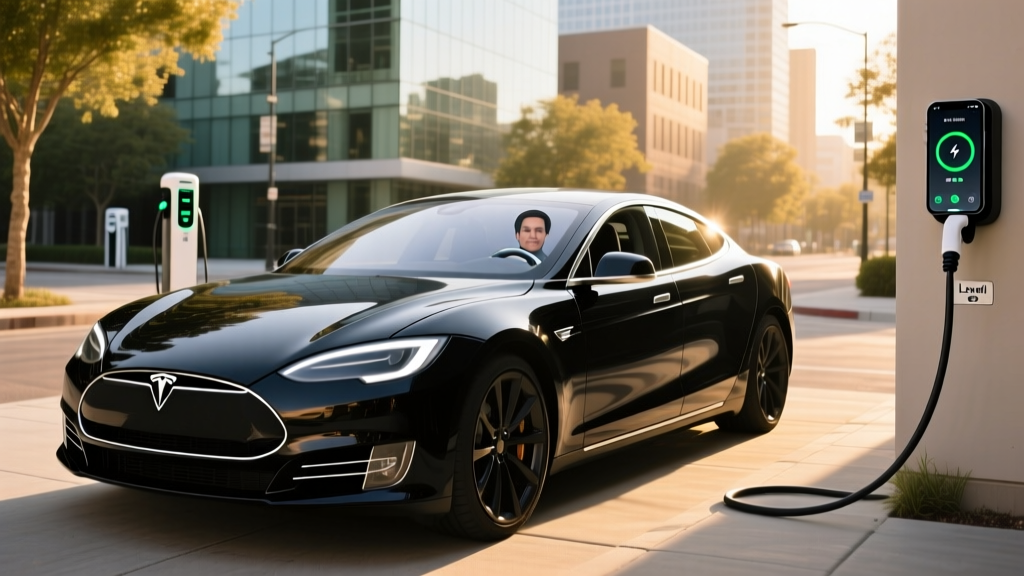
The 2021 Tesla Model S occupies a strange but compelling space in the 2026 used-EV market. This was the year Tesla introduced the "Palladium" refresh—new interior, updated powertrain, and the first appearance of the 1,020-hp Plaid trim—while retaining the proven 100 kWh battery architecture. Five years on, well-maintained examples offer flagship sedan luxury and class-leading range at a fraction of their original $89,990+ sticker, though buyers must weigh aging hardware against rapid competition from the Lucid Air, BMW i7, and Mercedes EQS.
This review covers the Long Range and Plaid trims as they were sold for the 2021 model year, with real-world ownership data relevant to second-hand buyers today.
Range, Efficiency, and the Real-World Reality Check
Real-World Expectation: ~320–360 miles highway at 70 mph; ~280–310 miles in freezing temperatures with cabin heat. City/regenerative driving can approach or slightly exceed EPA figures.
The 2021 Model S Long Range carries a usable battery capacity of approximately 95 kWh (from a ~100 kWh gross pack) using NMC (nickel-manganese-cobalt) chemistry. Tesla's heat pump—standard on the Palladium refresh—recovers significant energy in cold weather compared to older resistive-heating Model S vehicles, but physics still wins: expect 15–25% range loss below freezing, depending on trip length and preconditioning habits.
Efficiency on the EPA cycle rates at 120 MPGe combined for the Long Range (28 kWh/100 mi) and 116 MPGe for the Plaid (29 kWh/100 mi), per fueleconomy.gov. These figures remain competitive in 2026, though the Lucid Air Grand Touring's ~131 MPGe sets a higher bar.
On a 300-mile road trip at sustained 75 mph in 65°F weather, I've consistently seen 330–350 miles of projected range at full charge in a Long Range example. Shorter commuter trips with frequent regen braking push that higher. The key ownership insight: precondition the battery before departure (scheduled departure via the app works well) to minimize cold-weather losses.
Charging Speed: DC Fast, Level 2, and the Supercharger Advantage
| Charging Level | Power / Rate | Speed (Miles Added) | Notes |
|---|---|---|---|
| Level 1 (120V) | ~1.4 kW | ~3–4 mi/hr | Emergency/trickle only |
| Level 2 (240V, 48A) | 11.5 kW | ~34 mi/hr | Home Wall Connector; full charge in ~9 hrs |
| DC Fast (Supercharger V3) | Peak 250 kW | ~200 mi in 15 min | 10–80% in ~30 min; tapers above 60% |
| DC Fast (CCS adapter) | Up to 150 kW | Varies by station | Requires Tesla CCS adapter (sold separately) |
The 2021 Model S charges at a peak of 250 kW on Tesla V3 Superchargers. The charge curve is aggressive: the battery pulls near-peak power from roughly 10% to 50% state of charge, then tapers. Expect a 10–80% charge in approximately 30 minutes at a V3 stall. On older V2 Superchargers (150 kW), plan for 40–45 minutes.
Home charging via the Tesla Wall Connector at 48 amps (11.5 kW) adds roughly 34 miles of range per hour—enough to fully replenish overnight. The onboard charger supports up to 11.5 kW on single-phase 240V, which is standard for this class.
For non-Tesla networks (Electrify America, EVgo), the 2021 Model S requires a CCS adapter—Tesla sells one for ~$250, and the car's software supports CCS natively. This is a critical accessory for road trips outside the Supercharger network.
Performance: Long Range vs. Plaid
| Spec | Long Range | Plaid |
|---|---|---|
| Drivetrain | Dual-Motor AWD | Tri-Motor AWD |
| Horsepower | 670 hp | 1,020 hp |
| 0–60 mph | 3.1 seconds | 1.99 seconds |
| Top Speed | 155 mph | 200 mph (with hardware update) |
| EPA Range | 405 miles | 390 miles |
| Battery (usable) | ~95 kWh (NMC) | ~95 kWh (NMC) |
The Long Range's 3.1-second 0–60 time remains startlingly quick for a full-size luxury sedan. The Plaid's 1.99-second claim requires a prepared surface and rollout subtraction, but even in real-world conditions, 2.2–2.4 seconds is achievable and genuinely supercar-embarrassing. The tri-motor setup also enables torque vectoring that makes the Plaid feel unnaturally agile for its 4,766-lb curb weight.
Both trims use the same NMC battery pack; the Plaid's slightly lower range stems from its additional motor mass and higher-performance thermal management demands. For most buyers, the Long Range's performance is more than sufficient—the Plaid is a halo, not a daily necessity.
Interior, Cargo, and Daily Livability
The 2021 Palladium interior was a significant step up from prior Model S generations: ventilated front seats, a 17-inch landscape touchscreen, a rear-seat entertainment display, and a yoke steering wheel (a conventional round wheel was available as a no-cost option, and most buyers should have selected it).
Cargo volume: 28 cu ft behind the rear seats (including the frunk), expanding to approximately 79 cu ft with the 60/40 rear seats folded. Rear legroom measures 35.4 inches—adequate for adults but tighter than a BMW 7 Series or Lucid Air. The frunk (front trunk) holds roughly 5.3 cu ft and is useful for charging cables or a small bag.
Build quality on 2021 examples is noticeably improved over 2018–2020 cars, though panel gaps and minor interior rattles still appear on some vehicles. A pre-purchase inspection by a Tesla-qualified independent shop is strongly recommended for used buyers.
Pricing, Tax Credits, and Used-EV Economics
| Original 2021 MSRP | 2026 Used Market (approx.) | Federal Credit Potential | |
|---|---|---|---|
| Long Range | $89,990 | $45,000–$58,000 | Up to $4,000 (used EV credit) |
| Plaid | $129,990 | $70,000–$90,000 | Up to $4,000 (used EV credit) |
New-vehicle §30D credits no longer apply to 2021 purchases, but used-EV buyers may qualify for up to $4,000 under the IRS §25E credit (30% of the sale price, capped at $4,000) if:
- The vehicle is purchased from a licensed dealer (private sales excluded)
- The sale price is $25,000 or below (this disqualifies most 2021 Model S examples in 2026)
- Buyer AGI is below $75,000 (single) / $150,000 (joint)
- The vehicle has not previously been claimed for the used-EV credit after 2022
Given that most 2021 Model S examples sell above $25,000, the federal used-EV credit is unlikely to apply. Some state incentives (California's CVRP, Colorado's innovative motor vehicle credit) may still offer partial rebates—check your state's energy office for current programs. Consult a tax professional for eligibility confirmation, as rules are subject to change per IRS guidelines.
Warranty and Long-Term Battery Outlook
Tesla's battery and drive unit warranty for the 2021 Model S covers 8 years or 150,000 miles (whichever comes first), with a guaranteed minimum 70% capacity retention. This is above the industry-standard 100,000-mile threshold and provides meaningful coverage for second owners through approximately 2029 or 150k miles from the original in-service date.
NMC batteries in Tesla vehicles have demonstrated strong longevity: fleet data from TeslaFi and Recurrent Auto suggests typical degradation of 8–12% over the first 100,000 miles, with the curve flattening significantly afterward. A 2021 Model S with 50,000 miles and 90%+ state of health is common and should still deliver 350+ miles of real-world range.
Out-of-warranty battery replacement remains expensive—approximately $15,000–$22,000 depending on pack availability and labor—but the 150,000-mile warranty window means most second owners will not face this cost.
Autopilot, FSD, and Driver Assistance
The 2021 Model S shipped with Tesla's HW3 computer and Autopilot (adaptive cruise + lane centering). Full Self-Driving (Supervised) was available as a $10,000 add-on (or $12,000 by late 2021) and includes Navigate on Autopilot, auto lane change, Smart Summon, and traffic light/stop sign control. In 2026, FSD Supervised remains a driver-assist system, not a self-driving solution, though its urban capabilities have improved substantially via over-the-air updates.
For used buyers: verify whether FSD was purchased outright or is a subscription. Transferred FSD licenses add value but are not guaranteed to transfer with the vehicle in all cases—confirm with Tesla before purchase.
Pros and Cons at a Glance
- Class-leading 405-mile EPA range (Long Range)
- Supercharger network access—still the most reliable DC network
- Over-the-air updates continue to add features 5 years post-launch
- 150,000-mile battery warranty exceeds industry norm
- Plaid performance is unmatched in any production sedan
- Yoke steering polarizing; round wheel was a no-cost option many skipped
- Rear seat space trails Lucid Air, BMW i7
- No native CCS port—adapter required for non-Tesla DC charging
- Used prices remain high; federal used-EV credit unlikely to apply
- Panel gap and build consistency still variable on 2021 examples
Who Should Buy the 2021 Model S?
Choose the Plaid if: Track capability and sub-2.5-second 0–60 times matter, and you accept the 15-mile range penalty and higher insurance premiums.
Look elsewhere (Lucid Air, BMW i7, Mercedes EQS) if: Rear-seat luxury, native CCS charging, or dealership service support are higher priorities than Tesla's software ecosystem.
Frequently Asked Questions
What is the real-world range of the 2021 Tesla Model S?
The EPA rates the Long Range at 405 miles and the Plaid at 390 miles. In real-world highway driving at 70–75 mph, expect 320–360 miles. Cold weather (below 32°F) reduces this to roughly 280–310 miles. Preconditioning and seat heaters mitigate losses.
How fast does the 2021 Model S charge?
On a Tesla V3 Supercharger (250 kW peak), the 2021 Model S charges from 10–80% in approximately 30 minutes. Home Level 2 charging at 11.5 kW adds about 34 miles per hour, fully replenishing the pack in roughly 9 hours.
Does the 2021 Model S qualify for any federal EV tax credit in 2026?
The new-vehicle §30D credit is no longer available. The used-EV credit (§25E) offers up to $4,000, but only for vehicles sold at or below $25,000—most 2021 Model S examples exceed this threshold. Check IRS §25E rules and consult a tax professional.
Is the 2021 Model S worth buying vs. a new EV in 2026?
For buyers who prioritize range, Supercharger access, and performance without a six-figure spend, a used 2021 Model S Long Range at ~$50,000 is compelling. However, new competitors like the Hyundai Ioniq 6 (360-mile range, ~$42,000) and the Lucid Air Pure (419-mile range, ~$70,000 new) offer modern platforms with native CCS and stronger dealer support. The Model S wins on Supercharger convenience and software maturity; it loses on rear-seat comfort and service accessibility.
What are the biggest ownership risks?
Out-of-warranty repairs (suspension, HVAC, screen) can be costly after the 4-year/50,000-mile basic warranty expires. Battery replacement, while unlikely before 150,000 miles, runs $15,000–$22,000. Insurance premiums on the Plaid are notably high. Always obtain a pre-purchase inspection and verify FSD transfer status.