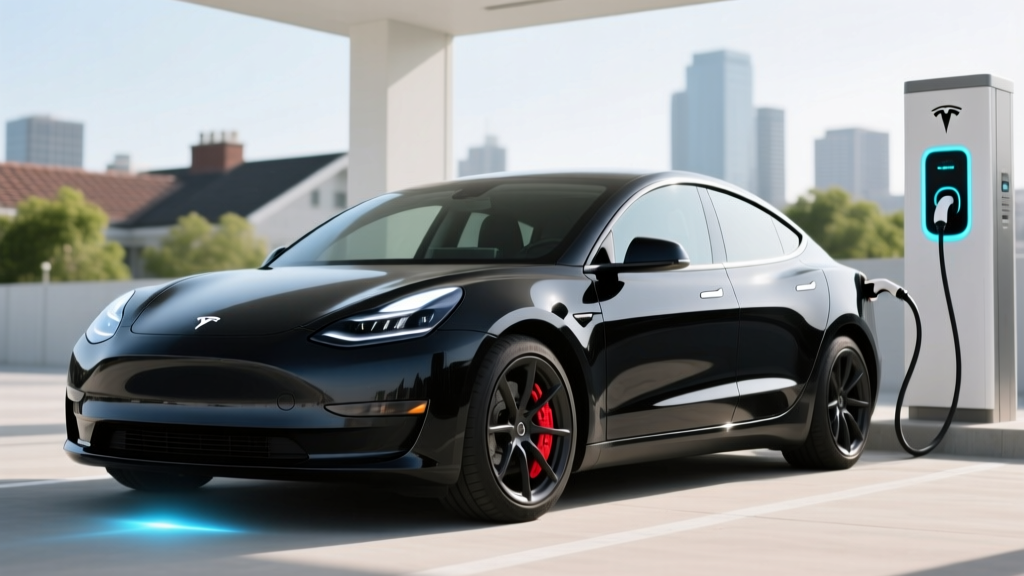
The 2021 Tesla Model 3 occupies a unique position in the used EV market. It's old enough to have depreciated significantly from its original MSRP, yet modern enough to offer competitive range, access to the Supercharger network, and over-the-air updates that continue to improve the car. For buyers considering a pre-owned electric sedan, this model year represents a critical inflection point: it was the year Tesla introduced the lithium iron phosphate (LFP) battery in the Standard Range Plus trim, fundamentally changing the ownership calculus for budget-conscious EV shoppers.
This review breaks down what you need to know before buying a used 2021 Model 3 — from real-world range and charging behavior to the specific battery chemistry hiding under your floorpan and whether the federal used-EV tax credit applies.
2021 Tesla Model 3 at a Glance: Key Specs by Trim
| Spec | Standard Range Plus (RWD) | Long Range AWD | Performance AWD |
|---|---|---|---|
| EPA Range | 263 mi | 353 mi | 315 mi |
| Battery (usable) | ~55 kWh (LFP)* | ~75 kWh (NMC) | ~75 kWh (NMC) |
| Drivetrain | Rear-Wheel Drive | Dual-Motor AWD | Dual-Motor AWD |
| Horsepower | 283 hp | 346 hp | 450 hp |
| 0–60 mph | 5.3 sec | 4.2 sec | 3.1 sec |
| MPGe (combined) | 142 MPGe | 134 MPGe | 123 MPGe |
| kWh/100 mi | 24 | 25 | 27 |
| DC Fast Charge (peak) | 170 kW | 250 kW | 250 kW |
| 10–80% DCFC Time | ~30 min | ~25 min | ~25 min |
| Level 2 Home Charge | 11.5 kW / ~44 mi/hr | 11.5 kW / ~44 mi/hr | 11.5 kW / ~44 mi/hr |
| Original MSRP (2021) | $37,990 | $46,990 | $55,990 |
| Typical Used Price (2026) | $18,000–$23,000 | $24,000–$30,000 | $28,000–$34,000 |
*Note: Not all 2021 Standard Range Plus models received LFP cells. Vehicles built for the North American market through mid-2021 used NMC batteries sourced from Panasonic/LG. LFP cells from CATL appeared in later builds and in some imported units. Always verify battery chemistry via the vehicle's menu or a Tesla service center before purchase.
Real-World Range: What the EPA Sticker Doesn't Tell You
The 2021 Model 3 Long Range carries an EPA-estimated 353 miles of range — one of the highest in its class. But EPA testing uses a mixed city/highway cycle at moderate temperatures. Here's what to expect in practice:
- Highway driving (70–80 mph): Expect 280–310 miles before needing a charge. Aerodynamic drag rises with the square of speed, and the Model 3's efficiency drops noticeably above 70 mph.
- Cold weather (below 32°F): Range can fall 20–35%, putting the Long Range at roughly 230–280 miles. The heat pump (standard on 2021 models) mitigates cabin-heating losses but cannot eliminate battery chemistry slowdown.
- City/commuter driving: You'll often match or slightly exceed the EPA estimate thanks to regenerative braking recapturing energy in stop-and-go traffic.
The Standard Range Plus (263 mi EPA) is best understood as a ~200-mile real-world highway car in temperate conditions, dropping to ~170 miles in deep winter. For daily commutes under 60 miles round-trip with home charging, this is more than adequate. For road trips, it means more frequent stops — roughly every 2.5 hours at highway speeds.
Charging Speed and Infrastructure: The Supercharger Advantage
Charging speed is where the 2021 Model 3 still competes effectively with newer EVs. Tesla's V3 Superchargers deliver up to 250 kW to the Long Range and Performance trims, adding approximately 170 miles of range in 15 minutes under ideal conditions (battery preconditioned, low state of charge, moderate ambient temperature).
| Charging Level | Power | Miles Added per Hour | Best For |
|---|---|---|---|
| Level 1 (120V household) | ~1.4 kW | ~3–5 mi/hr | Emergency top-up only |
| Level 2 (240V home/public) | Up to 11.5 kW | ~44 mi/hr | Daily home charging |
| DC Fast Charge (V3 Supercharger) | Up to 250 kW | ~1,000+ mi/hr (peak) | Road trips |
| DC Fast Charge (non-Tesla CCS w/ adapter) | Up to 150–250 kW | Varies | Backup on road trips |
The charging curve matters: Peak 250 kW is only sustained from roughly 10–30% state of charge. From 50–80%, expect the rate to taper to 60–90 kW. This is why Tesla's quoted "10–80% in 25 minutes" is a more honest metric than peak kW alone. Above 80%, charging slows dramatically to protect battery longevity — plan your road-trip stops to leave chargers at 70–80%, not 100%.
Home charging setup: A Tesla Wall Connector on a 60-amp circuit delivers the full 11.5 kW (48 amps continuous), recovering a full Long Range battery in roughly 7 hours. Installation typically costs $500–$2,000 depending on panel proximity and local permit requirements, on top of the ~$475 Wall Connector hardware cost.
Supercharger access in 2026: Tesla opened its Supercharger network to non-Tesla EVs starting in 2024, but Model 3 owners retain full native access with no adapter needed. As of 2026, the network exceeds 6,500 U.S. stations and remains the most reliable DC fast-charging infrastructure in North America.
Battery Chemistry: LFP vs. NMC — Why It Matters for Your 2021 Model 3
The 2021 model year was a transition year for Tesla's battery supply chain, and the chemistry under your car dramatically affects how you should own it:
| Attribute | LFP (Lithium Iron Phosphate) | NMC (Nickel Manganese Cobalt) |
|---|---|---|
| Found in | Some late-2021 Standard Range Plus | All Long Range, Performance, and early SR+ |
| Energy density | Lower (heavier pack for same kWh) | Higher (lighter, more range) |
| Cycle life | 3,000+ cycles (excellent longevity) | 1,000–2,000 cycles |
| Recommended daily SoC | 100% (charge to full daily) | 80–90% (reserve 100% for trips) |
| Cold-weather performance | Weaker — slower charging, more range loss | Better — preconditioning helps significantly |
| Fire risk | Extremely low (thermally stable) | Low but higher than LFP |
| Cost to replace (2026 est.) | $8,000–$12,000 | $12,000–$16,000 |
How to check your battery chemistry: Navigate to Controls → Software → Additional Vehicle Information on the touchscreen. If it reads "LFP," you have the iron phosphate pack. Alternatively, if your car's charge menu recommends setting the daily limit to 100%, it's LFP. If it suggests 80–90% for daily use, it's NMC.
This distinction is critical for used buyers: an LFP Model 3 is arguably a better daily-driver car because you can charge to 100% every night without degradation anxiety, effectively giving you the full 263 EPA miles every morning. An NMC car requires more charge-management discipline but delivers more total range.
Performance, Handling, and Daily Drivability
Even the base 2021 Model 3 Standard Range Plus delivers 283 horsepower and a 5.3-second 0–60 mph time — quicker than most gas-powered sports sedans from a decade ago. The instant torque delivery means real-world acceleration feels even more responsive than the numbers suggest, particularly in city driving and highway merging.
The Long Range and Performance trims add a front motor for all-wheel drive, improving traction in rain and snow. The Performance trim's 3.1-second 0–60 time rivals a Porsche 911 Carrera, though the Model 3's ~4,000-lb curb weight is evident in corners and under hard braking.
Ride quality caveat: The 2021 Model 3 rides on a firm, sport-tuned suspension. Road imperfections transmit clearly into the cabin, particularly on the 19-inch Sport Wheels (optional). If ride comfort is a priority, seek a model with the standard 18-inch Aero Wheels, which offer more sidewall cushioning and slightly better efficiency.
One-pedal driving: Tesla's regenerative braking (standard and non-adjustable on 2021 models after a firmware update) allows true one-pedal driving in most conditions. Lift off the accelerator and the car decelerates briskly — often eliminating the need to touch the brake pedal in normal traffic. New EV drivers typically adapt within a week and report less fatigue.
Interior, Tech, and Cargo: Minimalism with Trade-Offs
The 2021 Model 3 interior is defined by radical minimalism. There is no instrument cluster — all information (speed, range, navigation, media) lives on the 15-inch center touchscreen. There are no physical buttons for climate, mirrors, or glovebox; everything is controlled via the screen or steering-wheel scroll wheels.
Dimensions and space:
- Front legroom: 42.7 inches
- Rear legroom: 35.2 inches (tight for adults over 6 feet on long trips)
- Cargo (trunk): 15.0 cu ft
- Frunk (front trunk): 3.1 cu ft
- Total cargo: 18.1 cu ft (competitive with a Honda Civic sedan, less than a hatchback)
Tech highlights:
- Over-the-air (OTA) software updates continue to add features years after purchase
- Sentry Mode (360° dashcam recording when parked)
- Dog Mode and Camp Mode (climate control while parked)
- Tesla app with remote preconditioning, location tracking, and charge management
- 15-speaker premium audio (Long Range/Performance) — widely praised for clarity
Notable drawbacks:
- No Apple CarPlay or Android Auto (Tesla's proprietary infotainment only)
- Rear visibility is limited by the sloping rear glass; rely on the backup camera
- No heads-up display or traditional gauge cluster
- Panel gaps and paint quality on 2021 Fremont-built cars are inconsistent — inspect carefully
- Rear-seat headroom is tight for taller passengers due to the glass roof
Autopilot and FSD: What You Actually Get
Every 2021 Model 3 comes with Basic Autopilot (Traffic-Aware Cruise Control + Autosteer), which is an SAE Level 2 driver-assistance system. This means the car handles steering and speed on marked roads, but you must remain fully attentive, hands on the wheel, and ready to take over at any moment. It is not self-driving.
Full Self-Driving (FSD) Capability — a $10,000 option in 2021 (later shifted to a $199/month subscription) — adds Navigate on Autopilot, Auto Lane Change, Autopark, Summon, and traffic-light/stop-sign recognition. As of 2026, FSD (Supervised) remains a Level 2 system. It does not make the car autonomous. The driver is legally and practically responsible at all times.
Source: NHTSA — Automated Vehicle Safety
Is FSD worth it on a used 2021 Model 3? If the previous owner purchased the FSD package, it transfers with the vehicle at no additional cost — a significant value-add. Verify FSD status in the Tesla app or on the car's Software screen before purchase. If FSD was not purchased, adding it in 2026 costs $8,000 outright or $99/month (pricing subject to change). For most buyers, Basic Autopilot handles highway cruising competently, and FSD's city-street capabilities remain a work-in-progress that requires constant vigilance.
Pricing, Tax Credits, and Total Cost of Ownership
Used 2021 Model 3 prices have settled into an attractive range by 2026, driven by lease returns, fleet sales, and the introduction of the refreshed "Highland" Model 3 in 2024:
| Trim | Typical Used Price (2026) | IRS §25E Used EV Credit | Effective Price After Credit |
|---|---|---|---|
| Standard Range Plus | $18,000–$23,000 | Up to $4,000 (30% of sale price, capped) | $14,000–$19,000 |
| Long Range AWD | $24,000–$30,000 | Up to $4,000 | $20,000–$26,000 |
| Performance AWD | $28,000–$34,000 | Up to $4,000 | $24,000–$30,000 |
IRS §25E Used Clean Vehicle Credit rules (2026):
- Credit equals 30% of the sale price, up to a maximum of $4,000
- The vehicle must be sold for $25,000 or less to qualify (this eliminates many Long Range and most Performance examples — negotiate accordingly)
- Buyer income caps apply: $75,000 single / $112,500 head of household / $150,000 joint (modified AGI)
- The vehicle must be at least 2 model years old (2021 qualifies in 2026)
- The credit can be transferred to the dealer at point of sale as a down-payment reduction
- You can only claim the used-EV credit once every 3 years
Source: IRS — Used Clean Vehicle Credit (§25E)
5-year ownership cost estimate (Long Range, 15,000 mi/yr):
- Purchase (after credit): ~$22,000
- Electricity (home charging at $0.14/kWh, 25 kWh/100mi): ~$2,625 over 5 years
- Insurance (national average for Model 3): ~$1,800–$2,400/year = $9,000–$12,000
- Maintenance (no oil changes; cabin filter, tire rotation, wiper fluid): ~$1,500 over 5 years
- Tires (one replacement set): ~$1,200
- Estimated 5-year total: $36,325–$39,325 (or $605–$655/month all-in)
Compare this to a similarly priced used BMW 3 Series or Audi A4, where fuel alone at 25 MPG combined and $3.50/gallon would cost ~$10,500 over 5 years — nearly $8,000 more than electricity. The Model 3's maintenance savings add another $3,000–$5,000 in advantage.
Warranty Coverage and Battery Longevity
Tesla's warranty on the 2021 Model 3 was structured as follows (remaining coverage transfers to subsequent owners):
- Basic Vehicle Limited Warranty: 4 years / 50,000 miles (expired for most 2021 models by 2025–2026)
- Battery and Drive Unit Warranty:
- Standard Range Plus: 8 years / 100,000 miles, with minimum 70% capacity retention
- Long Range & Performance: 8 years / 120,000 miles, with minimum 70% capacity retention
What this means in 2026: A 2021 Model 3 with under 100,000 miles (SR+) or 120,000 miles (LR/Performance) still has active battery and drive-unit warranty coverage through 2029. If battery capacity drops below 70% of original (verified by Tesla diagnostics), Tesla will repair or replace the pack at no cost.
Real-world degradation data: Tesla's own fleet data and independent analyses (including crowdsourced data from TeslaFi and Recurrent Auto) show that Model 3 batteries typically lose 5–8% capacity in the first 50,000 miles, then degrade more slowly — averaging 10–15% total loss at 150,000 miles. NMC packs charged regularly to 100% and DC fast-charged frequently may see slightly higher degradation. LFP packs charged to 100% daily show remarkably flat degradation curves, with many owners reporting less than 5% loss at 80,000 miles.
Pros and Cons: The Honest Scorecard
✅ Pros
- Class-leading efficiency (142 MPGe SR+)
- Supercharger network access — the most reliable DCFC infrastructure in North America
- OTA updates continue to improve the car
- LFP battery option offers exceptional longevity
- Strong performance even in base trim (5.3s 0–60)
- Low running costs vs. gas competitors
- IRS §25E used-EV credit can reduce price by up to $4,000
- Minimal maintenance (no oil, spark plugs, or transmission fluid)
❌ Cons
- No Apple CarPlay / Android Auto
- Firm ride quality, especially on 19" wheels
- Panel gaps and paint inconsistency on Fremont-built 2021 cars
- Rear-seat space is tight for tall adults
- Everything controlled via touchscreen — learning curve and distraction risk
- Insurance costs 15–30% higher than comparable gas sedans
- Basic Autopilot is capable but FSD remains an expensive, imperfect add-on
- Cargo space (18.1 cu ft total) trails hatchback competitors
Who Should Buy a Used 2021 Model 3?
Decision Framework
Choose the 2021 Model 3 Standard Range Plus if: You commute under 60 miles daily, have home Level 2 charging, want the lowest entry price, and value battery longevity (LFP) over maximum range.
Choose the 2021 Model 3 Long Range if: You take regular road trips (300+ miles), live in a cold climate where range loss matters, need AWD for snow, or frequently carry rear-seat passengers who appreciate the extra cabin-heating headroom from the larger battery buffer.
Choose the 2021 Model 3 Performance if: You prioritize acceleration and track capability, and can find one under $25,000 to qualify for the §25E credit (rare but possible with higher-mileage examples).
Look elsewhere if: You need CarPlay, prefer physical buttons, want a plush ride, need more than 18 cu ft of cargo, or require Level 4 autonomous driving (no consumer vehicle offers this).
Frequently Asked Questions
What is the real-world range of the 2021 Tesla Model 3?
The Long Range AWD is EPA-rated at 353 miles, but expect 280–310 miles on the highway and 230–280 miles in cold weather. The Standard Range Plus (263 mi EPA) delivers roughly 200–230 miles highway in mild conditions, dropping to ~170 in winter. City driving with regenerative braking often matches or slightly exceeds EPA estimates.
How fast does the 2021 Model 3 charge at home and on the road?
At home on a Level 2 (240V) Tesla Wall Connector, the Model 3 charges at up to 11.5 kW, adding about 44 miles of range per hour — a full charge takes roughly 7 hours for the Long Range. On a V3 Supercharger (DC fast charge), the Long Range and Performance peak at 250 kW and can go from 10–80% in approximately 25 minutes. The Standard Range Plus peaks at 170 kW, taking about 30 minutes for the same 10–80% session.
Does the 2021 Tesla Model 3 qualify for any federal tax credit?
As a used vehicle in 2026, the 2021 Model 3 may qualify for the IRS §25E Used Clean Vehicle Credit — up to $4,000 (30% of sale price). Key requirements: the sale price must be $25,000 or less, the buyer must fall under income caps ($75K single / $150K joint), and the credit can only be claimed once every 3 years. The credit can be applied at the point of sale. Note: the §30D new-vehicle credit does not apply to used purchases.
Is a used 2021 Model 3 worth buying vs. a newer Hyundai Ioniq 6 or BMW i4?
The 2021 Model 3 wins on value (as low as $14,000 after the used-EV credit), Supercharger network access, and efficiency. The Ioniq 6 (new, ~$38,000 after incentives) offers a more conventional interior, CarPlay, and 800V ultra-fast charging. The BMW i4 (used, ~$30,000+) provides a more premium ride and traditional controls. If you prioritize low cost, charging infrastructure, and software, the used Model 3 is hard to beat. If you want a quieter cabin, physical buttons, or a more refined ride, consider the alternatives.
How long will the 2021 Model 3 battery last?
Tesla warranties the battery for 8 years / 100,000–120,000 miles (depending on trim) with a minimum 70% capacity retention guarantee. Real-world data shows most Model 3 packs lose 10–15% capacity over 150,000 miles. LFP-equipped Standard Range Plus models show even slower degradation. At current rates, a well-maintained 2021 Model 3 battery should provide usable service well past 200,000 miles before requiring replacement.
Should I be concerned about buying a 2021 Model 3 without remaining basic warranty?
The 4-year/50,000-mile basic warranty has expired for most 2021 examples. However, the battery and drive-unit warranty (8 years / 100,000–120,000 miles) remains active through 2029. The most expensive potential out-of-warranty repairs involve the touchscreen ($1,500–$2,500), HVAC compressor ($1,000–$1,800), and suspension components ($500–$1,200). A pre-purchase inspection at a Tesla Service Center or an EV-specialist shop is strongly recommended.