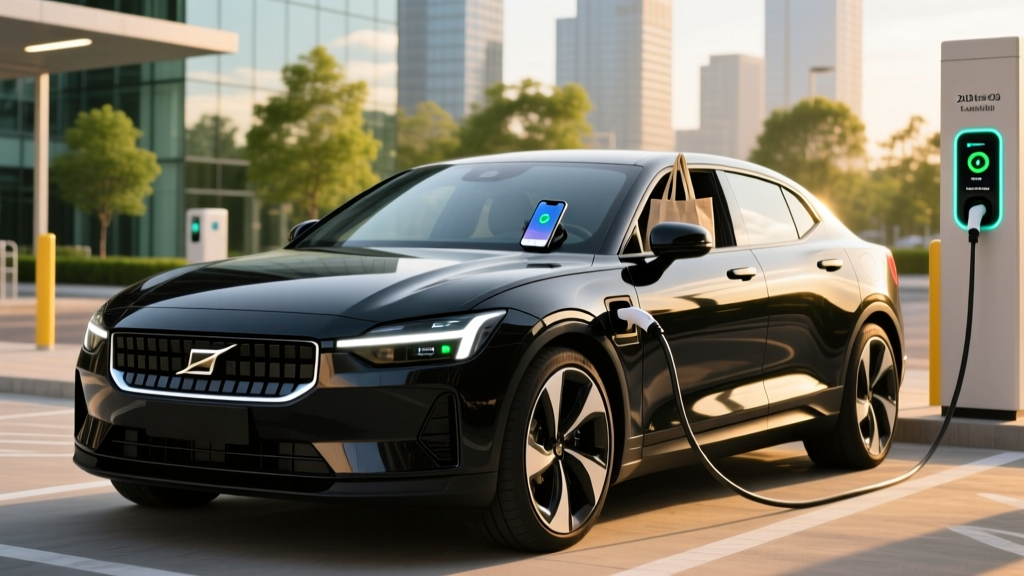
The 2021 Polestar 2 Launch Edition was Polestar's opening salvo into the premium electric sedan market — a Volvo-Geely-backed challenger aimed squarely at the Tesla Model 3. Offered exclusively as a fully loaded dual-motor AWD configuration in its debut year, the Launch Edition packed a 78 kWh NMC battery, 408 horsepower, and a Scandinavian-minimalist interior wrapped around Google's first native automotive infotainment system. Now that these cars are flooding the used-EV market at steep discounts, we're taking a hard look at what ownership actually looks like in 2026: real-world range, charging behavior, degradation expectations, and whether the federal used-EV tax credit can make this a compelling buy.
2021 Polestar 2 Launch Edition: Core Specifications
| Attribute | Value |
|---|---|
| Drivetrain | Dual-motor AWD |
| Horsepower / Torque | 408 hp / 487 lb-ft |
| 0–60 mph | 4.5 seconds |
| Battery (gross / usable) | 78 kWh / ~75 kWh (NMC) |
| EPA Range | 233 miles |
| EPA Efficiency | 92 MPGe combined (36 kWh/100 mi) |
| Max DC Fast Charge | 150 kW (CCS1) |
| 10–80% DC Fast Charge | ~40 minutes |
| Level 2 Onboard Charger | 11 kW (3-phase) / 7.2 kW (single-phase) |
| Cargo Volume | 14.4 cu ft (trunk) + 1.2 cu ft (frunk) |
| Rear Legroom | 33.9 inches |
| Battery Warranty | 8 years / 100,000 miles |
| Original MSRP | $59,900 (before incentives) |
Real-World Range: What 233 EPA Miles Actually Means on the Road
Real-World Highway (70–75 mph, mild weather): ~190–210 miles
Real-World City / Mixed Commute: ~215–230 miles
Cold Weather (below 32°F, highway): ~155–180 miles
The 2021 Polestar 2's 233-mile EPA rating was a sore point at launch, especially when the Long Range Model 3 offered 353 miles. The gap narrows somewhat in practice if you understand where the energy goes. The Polestar 2 is a heavy vehicle — roughly 4,680 lbs — with a blunt frontal area that punishes it at highway speeds. According to fueleconomy.gov, the combined efficiency is 92 MPGe (36 kWh/100 mi), which is notably thirstier than the Model 3 LR's 134 MPGe.
Around town and in stop-and-go traffic, regenerative braking recovers significant energy, and owners consistently report hitting or slightly exceeding the EPA figure on mixed commutes. Highway driving at 75 mph drops usable range to roughly 200 miles on a good day. In freezing temperatures, expect a 20–30% reduction from the EPA figure due to battery heating demands and cabin climate load. The Polestar 2 does include a heat pump (part of the Plus Pack on later trims, standard on the Launch Edition in many markets), which helps mitigate cold-weather losses compared to resistive heating, but the physics of a 4,680-lb sedan with NMC chemistry in sub-freezing conditions are unforgiving.
For a daily commuter doing 40–60 miles round-trip with home charging, the range is perfectly adequate. For road trippers who regularly drive 300+ miles between stops, the 233-mile ceiling means planning around a DC fast charge roughly every 2.5 to 3 hours of driving.
Charging Speed and Behavior: 150 kW Peak, But Mind the Curve
| Charging Level | Power (kW) | Speed (miles of range/hr) | Notes |
|---|---|---|---|
| Level 1 (120V household) | ~1.4 kW | ~3–4 mi/hr | Emergency / trickle only |
| Level 2 (240V, 32A single-phase) | 7.2 kW | ~20–22 mi/hr | Typical home install |
| Level 2 (240V, 48A 3-phase) | 11 kW | ~30–33 mi/hr | Requires 3-phase power (rare in US homes) |
| DC Fast Charge (CCS1) | Up to 150 kW peak | ~300+ mi/hr at peak | 10–80% in ~40 min |
The Polestar 2 Launch Edition uses a CCS1 connector for DC fast charging, with a peak rate of 150 kW. In real-world testing, the car hits peak charge rate only in a narrow state-of-charge window — typically between 15% and 35% SoC — and the curve tapers substantially above 50%. Expect roughly 120–150 kW between 10–30%, dropping to 80–100 kW by 50%, and falling below 40 kW past 70%. The full 10–80% session takes approximately 40 minutes at a 150 kW or higher station.
This is slower than the Hyundai Ioniq 5's 800V architecture (10–80% in ~18 minutes) and the Tesla Model 3's ~250 kW V3 Supercharger capability (~15–20 minutes for 10–80%). For road tripping, the Polestar 2's charging speed is adequate but not class-leading. You'll spend more time at chargers than you would in a Tesla or E-GMP platform vehicle.
For home charging, most US installations will deliver single-phase 240V at 32A or 48A. At 32A (7.7 kW circuit, 7.2 kW to the car), you'll add roughly 22 miles of range per hour — enough to fully replenish the 78 kWh battery overnight in about 10–11 hours. At 48A (11.5 kW circuit), single-phase charging is still limited by the car's onboard rectifier, so gains are modest. The 11 kW three-phase rate is mostly relevant in European or commercial settings.
Preconditioning tip: The Polestar 2 does not have a dedicated "navigate to charger" battery preconditioning feature like Tesla. To optimize DC fast charging, enable climate preconditioning while still plugged in at home, or drive the car hard for 10–15 minutes before arriving at a fast charger to warm the battery through use.
Performance and Driving Dynamics
The dual-motor AWD powertrain produces 408 horsepower and 487 lb-ft of torque (with the optional Performance Pack software upgrade, which many Launch Edition cars received as an OTA update). The 0–60 mph time of 4.5 seconds is genuinely quick, and the instant torque delivery makes the Polestar 2 feel faster than the number suggests in real-world passing and merging situations.
What sets the Polestar 2 apart from the Model 3 is ride quality and chassis tuning. The Launch Edition came standard with Öhlins dual-flow-valve dampers — a $2,000+ option on most performance cars — providing a firm but remarkably controlled ride. The 20-inch forged wheels wrapped in Continental EcoContact 6 tires prioritize efficiency over grip, but the chassis balance is neutral and confidence-inspiring on back roads. Steering is precise if slightly numb, and the one-pedal driving mode offers aggressive regen that most EV adopters appreciate.
Braking performance benefits from Brembo front calipers (also standard on the Launch Edition), and the blended regen-to-friction braking transition is smoother than many early EVs. Noise isolation is strong — this is a Volvo-heritage car, and it shows in the cabin quietness at highway speeds.
Interior, Tech, and Daily Livability
The Polestar 2 was the first vehicle to ship with Google's native Android Automotive OS (AAOS) — not to be confused with Android Auto phone projection. This means Google Maps, Google Assistant, and the Google Play Store are built directly into the car's 11.2-inch portrait touchscreen. In 2026, AAOS still holds up well: navigation with live traffic is excellent, voice commands are reliable, and the interface is clean. OTA updates have added features over the years, including improved range estimation and charging optimization.
The 12.3-inch digital instrument cluster is straightforward and configurable, though it lacks the theatrical flair of Tesla's minimalist approach or the MBUX Hyperscreen. Apple CarPlay was added via OTA update after launch and works wirelessly on updated software versions.
The Pilot Pack (standard on the Launch Edition) includes adaptive cruise control with stop-and-go, lane centering assist, and blind-spot monitoring. This is an SAE Level 2 driver-assistance system — it does not drive itself, and you must keep your hands on the wheel and eyes on the road. It works well on highways but is not competitive with Tesla's Autopilot or GM's Super Cruise in terms of hands-free capability or lane-change confidence.
Cargo space is the Polestar 2's weak point. The liftback trunk offers 14.4 cubic feet — adequate for groceries and a couple of suitcases but less than the Model 3's 23 cu ft trunk or any compact SUV. The frunk (front trunk) is a small 1.2 cu ft, useful for charging cables but not much else. Rear legroom at 33.9 inches is tight for adults on long trips; taller passengers will find the sloping roofline and high floor (due to the battery pack) compromise headroom and thigh support.
Pricing, Used Market Value, and Federal Tax Credit Eligibility
The 2021 Polestar 2 Launch Edition originally retailed at $59,900 before any incentives. By 2026, used examples with 30,000–60,000 miles typically sell for $22,000–$32,000 depending on condition, mileage, and market — a depreciation curve that's been steep, which is bad news for first owners but excellent for used-EV shoppers.
| Item | Amount |
|---|---|
| Original MSRP (Launch Edition) | $59,900 |
| Typical Used Price (2026, 40k mi) | $24,000–$30,000 |
| Federal Used-EV Credit (§25E) | Up to $4,000 (30% of sale price, capped) |
| Price After Max Used Credit | ~$20,000–$26,000 |
Important: The 2021 Polestar 2 is no longer eligible for the new-vehicle §30D credit (which has MSRP caps, income limits, and battery-sourcing requirements that apply only to new vehicles). However, it may qualify for the §25E Previously Owned Clean Vehicle Credit, which provides up to $4,000 or 30% of the sale price (whichever is lower) for used EVs purchased from a dealer. Per IRS guidelines, eligibility requires:
- Sale price of $25,000 or below (the credit applies to the first $25,000)
- Purchase from a licensed dealer (private-party sales do not qualify)
- Buyer income limits: $75,000 single / $112,500 head of household / $150,000 joint
- The vehicle must be at least two model years old (2021 qualifies in 2026)
- The credit can only be claimed once per vehicle (check the VIN history)
At a $25,000 sale price, the 30% credit equals $7,500 — but the cap is $4,000, so the maximum benefit is $4,000. At a $22,000 sale price, the credit would be $4,000 (30% of $22,000 = $6,600, capped at $4,000). Consult a tax professional to confirm your eligibility, as rules are subject to legislative change.
Battery Health, Degradation, and Warranty
The 78 kWh NMC (nickel manganese cobalt) battery pack in the 2021 Polestar 2 is covered by an 8-year/100,000-mile warranty against defects and capacity loss below 70% of original capacity, per Polestar's warranty documentation. NMC chemistry offers high energy density but is more sensitive to sustained high-SoC storage and extreme heat than LFP chemistry.
Based on owner reports and fleet data from similar Volvo/Polestar platforms through 2025, typical degradation at 60,000 miles is in the 6–10% range — meaning a 2021 model with 50,000 miles might retain 90–94% of its original capacity, yielding roughly 210–220 miles of usable range. This is within normal expectations for NMC packs with active liquid cooling.
To maximize battery longevity:
- Set daily charge limit to 80–90% and charge to 100% only before long trips
- Avoid frequent DC fast charging when Level 2 is available
- In extreme heat, precondition while plugged in before driving
- Monitor State of Health (SoH) via the Polestar app or third-party OBD2 tools
Out-of-warranty battery replacement for the Polestar 2 is estimated at $14,000–$20,000 based on current parts and labor pricing for similar Volvo/Polestar packs — a significant cost, though the likelihood of needing replacement within the first 150,000 miles is low based on current degradation data.
How the Polestar 2 Stacks Up Against Key Competitors
| Attribute | Polestar 2 Launch | Tesla Model 3 LR (2021) | Hyundai Ioniq 5 SEL (2022) | BMW i4 eDrive40 (2022) |
|---|---|---|---|---|
| EPA Range | 233 mi | 353 mi | 303 mi | 301 mi |
| Battery (kWh) | 78 (NMC) | 82 (NMC) | 77.4 (NMC) | 83.9 (NMC) |
| DC Fast Charge Peak | 150 kW | 250 kW | 235 kW | 200 kW |
| 10–80% Time | ~40 min | ~20 min | ~18 min | ~31 min |
| 0–60 mph | 4.5 sec | 4.2 sec | 5.1 sec (RWD) | 5.5 sec |
| Typical Used Price | $24k–$30k | $26k–$34k | $25k–$32k | $32k–$40k |
| Charging Network | CCS (EA, EVgo) | Supercharger + NACS | CCS (EA, EVgo) | CCS (EA, EVgo) |
The Model 3 wins on range and charging speed — there's no way around it. The Ioniq 5 offers more interior space, faster charging, and a more practical hatchback form factor. The BMW i4 delivers superior build quality and driving refinement at a higher price.
Where the Polestar 2 wins: build quality and materials (Vegan WeaveTech upholstery, real aluminum inlays), the Öhlins/Brembo hardware on the Launch Edition, and the satisfaction of driving something distinctive in a sea of white Model 3s. The Android Automotive infotainment is also more intuitive than Tesla's screen-centric approach for drivers who prefer physical knobs (the Polestar 2 has a volume knob and some hard buttons).
Pros and Cons at a Glance
✓ Pros
- Premium build quality and materials rivaling BMW/Audi
- Öhlins dampers and Brembo brakes standard on Launch Edition
- Android Automotive OS with native Google Maps is excellent
- Strong depreciation makes it a used-EV bargain
- Distinctive Scandinavian design — not a Tesla clone
- Eligible for up to $4,000 federal used-EV credit
- Quiet, refined highway cruising
✗ Cons
- 233-mile EPA range is below class average
- 150 kW peak DC charging is slow vs. competitors
- Tight rear seat and limited cargo space
- CCS charging network reliability lags Tesla Superchargers
- No battery preconditioning for optimized fast charging
- Heavy vehicle (4,680 lbs) hurts efficiency
- Polestar's US service center network is sparse
Who Should Buy the 2021 Polestar 2 Launch Edition in 2026?
- You commute 60 miles or less round-trip and have reliable home Level 2 charging
- You value build quality, materials, and design over maximum range
- You want a loaded, performance-oriented EV under $30,000 (after credits)
- You rarely take road trips over 250 miles without a planned stop
- You live near a Polestar service center or a Volvo dealer (which can service Polestars)
- You regularly road-trip 300+ miles and need fast DC charging
- You need rear-seat space for adults or bulky child seats
- You live in an area with limited CCS charging infrastructure
- Maximum range per charge is your top priority (consider a used Model 3 LR or Ioniq 5)
Frequently Asked Questions
What is the real-world range of the 2021 Polestar 2 Launch Edition?
Expect roughly 190–210 miles on the highway in mild weather, 215–230 miles in mixed city/highway commuting, and 155–180 miles in freezing temperatures. The 233-mile EPA rating is achievable in ideal conditions but not typical for sustained highway driving.
How fast does the Polestar 2 charge at home and on DC fast chargers?
At home on a 240V Level 2 charger (32A), expect about 22 miles of range per hour and a full charge in roughly 10–11 hours. On a DC fast charger, the peak rate is 150 kW, with a 10–80% session taking approximately 40 minutes due to charge-curve tapering above 50% SoC.
Does the 2021 Polestar 2 qualify for any federal tax credit in 2026?
Not the new-vehicle §30D credit, but it may qualify for the §25E used-EV credit of up to $4,000 when purchased from a dealer for $25,000 or less, subject to buyer income limits ($75k single / $150k joint). Always verify eligibility with the IRS or a tax professional before purchasing.
Is the Polestar 2 Launch Edition worth buying over a used Tesla Model 3?
It depends on your priorities. The Model 3 offers significantly more range (353 vs. 233 EPA miles), faster charging, and access to the Supercharger network. The Polestar 2 counters with superior build quality, Öhlins suspension, a more conventional control layout, and a lower used price. If range and road-trip charging speed are critical, the Model 3 wins. If you value refinement and uniqueness at a bargain price, the Polestar 2 is compelling.
What is the battery warranty and expected degradation?
The battery is warranted for 8 years or 100,000 miles against defects and capacity loss below 70%. Real-world data suggests 6–10% degradation at 60,000 miles for NMC packs with active thermal management. A 2021 model with 50,000 miles should still deliver 210–220 miles of usable range.
Can Polestar service my car, or do I need a Volvo dealer?
Polestar operates a limited network of dedicated service centers in major US metros. In areas without a Polestar center, authorized Volvo dealerships can perform warranty and maintenance work. Check Polestar's service locator before buying to confirm coverage in your area.