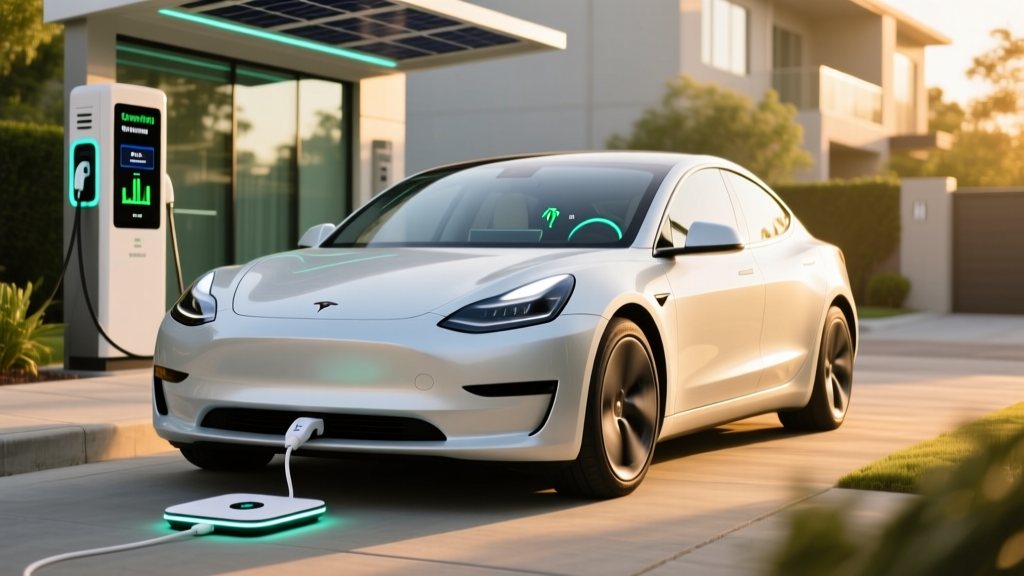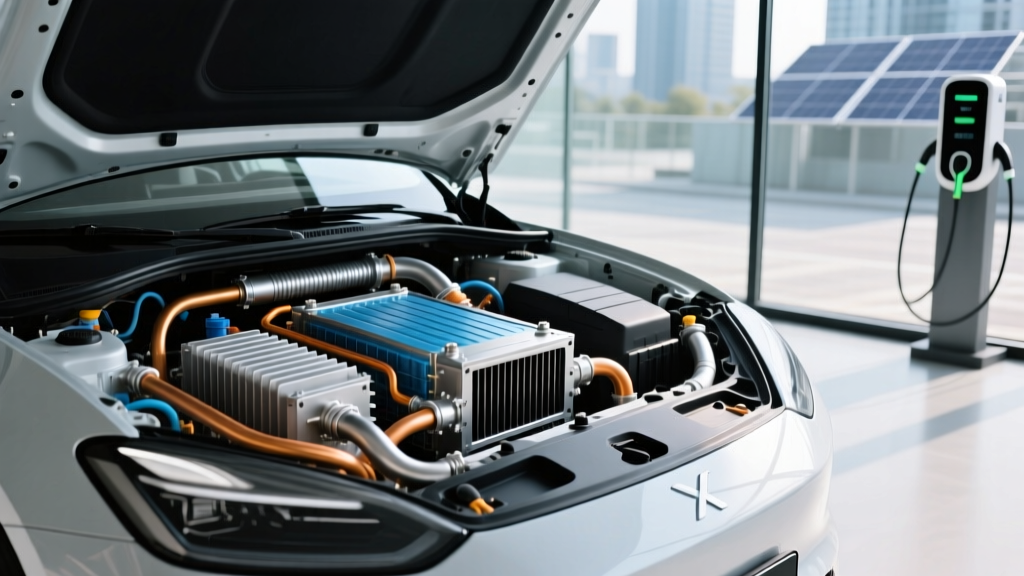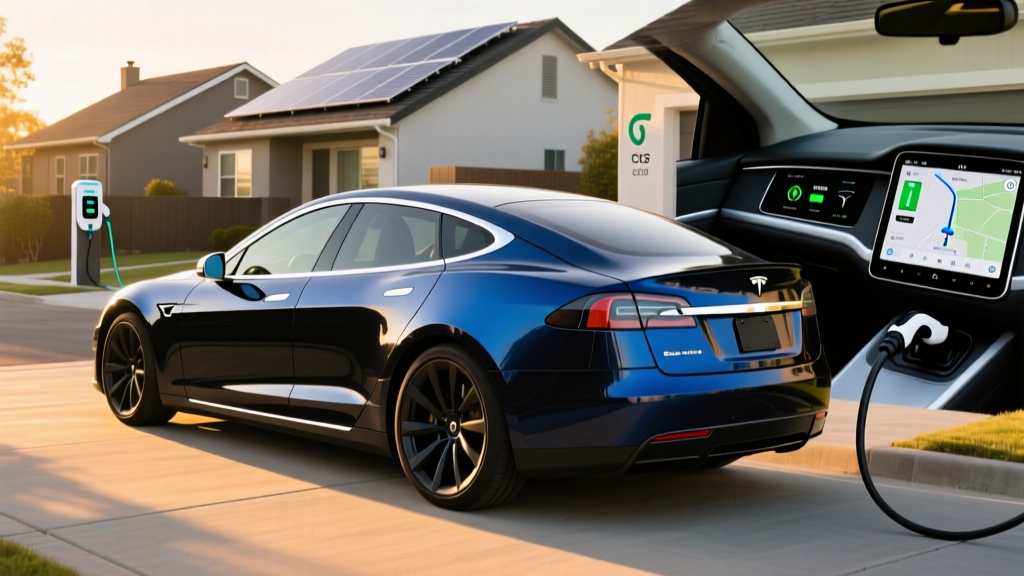
The 2021 Tesla Model S Plaid arrived as a tri-motor flagship promising hypercar acceleration in a luxury sedan wrapper. Five years later, it remains one of the quickest production cars ever built and a benchmark for long-range electric performance. But specs on a window sticker only tell part of the story. This review breaks down what it's actually like to live with, charge, and drive a 2021 Model S Plaid in 2026 — with real-world range data, charging-curve realities, and used-EV tax credit math that matters to today's buyers.
Quick Verdict: Still a Performance Bargain on the Used Market
The 2021 Model S Plaid delivers 1,020 horsepower, a 1.99-second 0-60 mph claim, and a 396-mile EPA range estimate — figures that still compete with 2026's newest EVs. On the used market, Plaid examples now trade between roughly $55,000 and $75,000 depending on mileage and condition, making it accessible to buyers who couldn't stomach the original $129,990 MSRP. The tri-motor all-wheel-drive powertrain, 100 kWh battery pack, and access to Tesla's Supercharger network remain compelling advantages. The yoke steering, minimalist interior, and panel-gap inconsistencies are the trade-offs you accept.
Range, Efficiency, and the Real-World Reality Check
Real-World Expectation: Plan for 310–340 miles in mixed highway driving at 70–75 mph. In cold weather (below 32°F), expect a 20–30% reduction, dropping usable range to roughly 240–280 miles. City driving with regenerative braking recovers more energy, often exceeding EPA estimates in stop-and-go traffic.
The 2021 Model S Plaid uses a ~100 kWh battery pack (approximately 95 kWh usable) with NMC (nickel manganese cobalt) chemistry. Tesla's thermal management system is among the best in the industry, using a heat pump and octovalve manifold to condition the battery efficiently. Still, physics is physics: a heavy tri-motor sedan pushing 4,766 lbs at highway speeds consumes energy faster than the EPA combined cycle suggests.
According to fueleconomy.gov, the 2021 Model S Plaid achieves 120 MPGe combined (113 city / 129 highway). In energy terms, that translates to roughly 28 kWh per 100 miles. Owners who drive conservatively in moderate temperatures report seeing 26–27 kWh/100mi, while aggressive driving or mountain passes can push consumption above 35 kWh/100mi.
| Spec | Value |
|---|---|
| EPA Range (19" wheels) | 396 miles |
| EPA Range (21" wheels) | 348 miles |
| Battery Capacity (usable) | ~95 kWh (NMC chemistry) |
| Drivetrain | Tri-motor AWD |
| Horsepower | 1,020 hp |
| 0-60 mph | 1.99 seconds (with rollout) |
| Top Speed | 200 mph |
| MPGe (combined) | 120 MPGe |
| Energy Consumption | 28 kWh/100mi |
| Curb Weight | 4,766 lbs |
| Cargo Volume | 28 cu ft (rear) + frunk |
| Original MSRP | $129,990 |
Charging Speed: DC Fast Charging and Home Level 2
Charging speed is where the 2021 Model S Plaid shows its age relative to 2026's 800-volt architectures. The Plaid operates on a 400-volt platform, which limits peak DC fast-charging rates compared to vehicles like the Hyundai Ioniq 5 or Porsche Taycan.
| Charging Level | Max Rate | Speed / Notes |
|---|---|---|
| Level 1 (120V household) | ~1.4 kW | ~3–4 miles per hour |
| Level 2 (240V home/wall connector) | 11.5 kW (48A) | ~34 miles per hour; full charge in ~9 hours |
| DC Fast Charge (Supercharger V3) | 250 kW peak | 10–80% in ~25–28 minutes |
| DC Fast Charge (CCS adapter) | ~150–170 kW typical | Varies by station; 10–80% in ~35 minutes |
The 250 kW peak on a V3 Supercharger is just that — a peak. The actual charging curve tapers significantly. You'll see 250 kW briefly between roughly 10–20% state of charge, after which the rate drops to approximately 150 kW through the mid-range, then falls further above 60%. The 10–80% charge typically takes 25–28 minutes at a V3 Supercharger, which is respectable but not class-leading by 2026 standards.
For home charging, Tesla's Gen 2 Wall Connector delivers up to 11.5 kW (48 amps) on a 60-amp circuit. This adds roughly 34 miles of range per hour, meaning an overnight session from 20–90% takes about 6–7 hours. Most owners find this more than adequate — plug in when you get home, wake up to a full battery. A licensed electrician will typically charge $500–$1,500 for a 240V/60A circuit installation, depending on panel proximity and local permit requirements.
The 2021 Model S Plaid uses Tesla's proprietary connector (now standardized as NACS). Tesla also includes a CCS adapter in many markets, enabling access to Electrify America and other CCS networks — though charging speeds on non-Tesla networks are often lower due to handshake and protocol limitations.
Performance: 1,020 Horsepower and the 1.99-Second Claim
The tri-motor setup places one motor on the front axle and two on the rear, enabling torque vectoring and staggering launch capability. Tesla's claimed 1.99-second 0-60 mph time includes a 1-foot rollout (drag-strip convention), which shaves roughly 0.2–0.3 seconds versus a standing start. Independent testing by outlets like Motor Trend and Car and Driver has recorded 0-60 times between 2.1 and 2.3 seconds from a standing start — still absurdly quick and faster than virtually any production car available in 2021 or 2026.
Quarter-mile runs land in the 9.2–9.4 second range at roughly 150 mph. The Plaid's carbon-sleeved rotors in the rear motors allow them to spin to 20,000+ RPM without mechanical overspeed failure, which is the engineering trick that makes this power level possible without a multi-speed transmission.
On the road, the Plaid is deceptively fast. The linear, instant torque delivery means you're at highway speeds before your brain registers the acceleration. The adaptive air suspension provides a comfortable ride in its softest setting and firm body control in Sport. Steering feel is precise but light — a common Tesla criticism — and the optional yoke steering wheel requires an adaptation period that not every driver warms to.
Interior, Cargo, and Daily Livability
The 2021 Model S refresh (internally called the "Palladium" platform) brought a significantly updated interior: a 17-inch landscape-oriented touchscreen, a rear-seat entertainment display, ventilated front seats, a heated steering wheel, and a redesigned center console with wireless phone charging and USB-C ports.
Passenger space is generous for a full-size sedan. Front legroom measures 42.7 inches, and rear legroom comes in at 35.4 inches — adequate for adults on longer trips, though the sloping roofline cuts into rear headroom for taller passengers. The panoramic glass roof creates an airy cabin but offers no shade panel, which some owners address with aftermarket sunshades.
Cargo capacity is a genuine strength: 28 cubic feet behind the rear seats (including the lower trunk area), expandable by folding the 60/40 rear seatbacks. The front trunk (frunk) adds additional storage for charging cables or a small bag. Total cargo volume with seats folded approaches 58 cubic feet, rivaling many crossovers.
The infotainment system runs Tesla's proprietary software, which includes navigation with real-time Supercharger routing, a web browser, Netflix/YouTube/Theater (while parked), and a growing library of games. There is no Apple CarPlay or Android Auto — a dealbreaker for some buyers accustomed to phone-mirroring interfaces. Audio quality from the 22-speaker premium system is excellent, with deep bass and clear mids.
Driver Assistance: Autopilot and FSD Supervised
The 2021 Model S Plaid shipped with Tesla's HW3 (Hardware 3) Autopilot computer. It includes basic Autopilot (traffic-aware cruise control and autosteer) as standard. Full Self-Driving (Supervised), a $12,000 option at the time or available as a monthly subscription, adds features like automatic lane changes, navigation-on-autopilot, autosteer on city streets, and traffic light/stop sign recognition.
In 2026, FSD Supervised has improved substantially through over-the-air updates, but it remains a Level 2 system. It handles many highway and suburban scenarios competently, reducing driver fatigue on long trips. However, it still requires vigilant supervision, occasionally makes unexpected lane-change decisions, and can struggle with construction zones, unprotected left turns, and adverse weather. Buyers should test FSD extensively before committing to the subscription or purchase.
Pricing, Used Market Values, and Tax Credit Eligibility
The 2021 Model S Plaid originally stickered at $129,990 before options and destination fees. Well-equipped examples with FSD and the 21-inch Arachnid wheels pushed past $140,000. In the 2026 used market, Plaid examples typically trade in the $55,000–$75,000 range depending on mileage, condition, and option content. Higher-mileage examples (50,000+ miles) can be found below $55,000.
| Item | Amount |
|---|---|
| Original MSRP (2021) | $129,990 |
| Typical Used Price (2026 market) | $55,000–$75,000 |
| Federal Used EV Tax Credit (§25E) | Up to $4,000 (30% of sale price, max $4,000) |
| Effective Price After Credit | $51,000–$71,000 |
Federal tax credit note: The 2021 Model S Plaid does not qualify for the new-vehicle §30D credit ($7,500) because the original MSRP exceeded the $55,000 sedan cap, and the credit was largely exhausted for Tesla by the time of delivery. However, it may qualify for the §25E Previously Owned Clean Vehicle Credit when purchased from a dealer in 2026. This credit provides 30% of the sale price up to a maximum of $4,000, subject to buyer income caps ($75,000 single / $112,500 head of household / $150,000 joint filers) and a sale price cap of $25,000. Since most Plaid examples sell above $25,000, buyers should verify the specific vehicle's eligibility with the selling dealer and consult IRS guidance on §25E. A tax professional should confirm eligibility before relying on the credit.
Battery Health, Degradation, and Warranty
Tesla's battery and drive unit warranty on the 2021 Model S Plaid covers 8 years or 150,000 miles, whichever comes first, with a minimum 70% battery capacity retention threshold. This is among the better warranties in the EV space, and Tesla's NMC packs have demonstrated relatively low degradation in real-world fleet data.
Typical NMC degradation for a 2021 Plaid in 2026 (5 years old, ~50,000–70,000 miles) falls in the 8–14% range, meaning most examples retain 86–92% of original capacity. A Plaid that started with 396 miles of EPA range might now show 340–365 miles at 100% state of charge. Degradation is non-linear — the steepest drop occurs in the first year or two, then levels off. Supercharging frequency, extreme heat exposure, and habitual charging to 100% can accelerate degradation modestly.
Out-of-warranty battery replacement for a Model S runs approximately $15,000–$22,000 at a Tesla Service Center, though most 2021 examples will still carry warranty coverage through 2029. Third-party battery repair shops are an emerging option for module-level replacements at lower cost.
Pros, Cons, and Who Should Buy
- 1,020 hp tri-motor AWD with sub-2.1-second 0-60 (standing start)
- 396-mile EPA range (19" wheels) remains competitive in 2026
- Supercharger network access — the most reliable DC fast-charging network in North America
- Generous cargo space (28 cu ft + frunk) for a performance sedan
- Continuous OTA software updates add features years after purchase
- Excellent thermal management preserves battery health and enables repeat performance runs
- Strong used-market value retention relative to other luxury EVs
- 400V architecture limits DC fast-charge speed vs. 800V competitors (250 kW peak vs. 350 kW)
- Yoke steering is polarizing and takes significant adaptation
- No Apple CarPlay or Android Auto
- Panel gaps and interior trim quality inconsistent at this price point
- High insurance premiums ($3,000–$5,000/year depending on state and driver profile)
- Tire costs are steep — Michelin Pilot Sport 4S or equivalent in 21" can exceed $1,600 for a set
- Rear-seat headroom is tight for passengers over 6 feet
- FSD remains Level 2 despite the "Full Self-Driving" name
- Performance enthusiasts who want hypercar acceleration with four doors and daily-driver practicality.
- Road-trip-oriented EV owners who value Supercharger network reliability and 350+ mile real-world range.
- Tech-forward buyers who enjoy OTA updates, integrated navigation, and Tesla's software ecosystem.
- Used-EV bargain hunters willing to accept minor cosmetic imperfections for a massive discount off the original MSRP.
- Buyers prioritizing luxury fit and finish — a used Porsche Taycan or Mercedes EQS offers better interior refinement.
- Drivers who need Apple CarPlay — Tesla does not support phone mirroring.
- Those who want the fastest possible DC charging — 800V vehicles like the Ioniq 5 N or Lucid Air charge faster.
2021 Model S Plaid vs. Key Competitors
In the 2026 used market, the Plaid competes against several compelling alternatives:
- Lucid Air Grand Touring (2022–2023): Superior EPA range (516 miles), 800V+ architecture, more luxurious interior — but higher used prices ($70,000–$90,000) and a smaller service network.
- Porsche Taycan Turbo S (2021–2022): Better build quality, sharper handling dynamics, 800V charging (~270 kW) — but far less range (227 miles EPA for the Turbo S) and a tighter rear seat.
- BMW i7 xDrive60 (2023): More traditional luxury, excellent ride quality — but heavier, less efficient, and significantly more expensive on the used market.
- Tesla Model S Long Range (2021): 405-mile EPA range, dual-motor, 670 hp, substantially cheaper used ($40,000–$55,000) — the pragmatic choice if you don't need 1,020 hp.
The Plaid wins on raw performance, range-per-dollar, and Supercharger access. It loses on interior luxury, charging speed, and brand prestige to Porsche and Lucid.
Frequently Asked Questions
What is the real-world range of the 2021 Model S Plaid?
Expect 310–340 miles in mixed highway driving at moderate speeds and temperatures. The EPA rates it at 396 miles on 19-inch wheels, but highway driving at 75+ mph and cold weather reduce that figure meaningfully. In cold conditions (below freezing), plan for 240–280 miles of usable range.
How fast does the 2021 Model S Plaid charge?
On a Tesla V3 Supercharger, it peaks at 250 kW and charges from 10–80% in approximately 25–28 minutes. At home on a Level 2 Wall Connector (11.5 kW), a full charge takes about 9 hours. The 400V platform means charging speeds are slower than 800V competitors like the Lucid Air or Hyundai Ioniq 5.
Does the 2021 Model S Plaid qualify for any federal tax credit in 2026?
It does not qualify for the new-vehicle §30D credit. It may qualify for the §25E Used Clean Vehicle Credit (up to $4,000) if purchased from a dealer, but the $25,000 sale price cap disqualifies most Plaid examples. Verify with the dealer and consult a tax professional. Check IRS §25E guidelines for current rules.
Is the 2021 Model S Plaid worth buying in 2026?
At $55,000–$75,000 used, it offers unmatched performance-per-dollar in the EV sedan segment, with strong range and Supercharger access. If you prioritize luxury refinement, Apple CarPlay, or the fastest DC charging, alternatives like the Lucid Air or Porsche Taycan may suit you better. For most performance-minded EV buyers, the Plaid remains an excellent choice.
How long will the battery last?
Tesla warranties the battery for 8 years or 150,000 miles with a 70% capacity retention guarantee. Real-world data suggests most 2021 Plaid batteries in 2026 retain 86–92% of original capacity. With proper care (avoiding habitual 100% charges, minimizing DC fast charging when Level 2 is available), the pack should last well beyond 150,000 miles before approaching the warranty threshold.
What are the biggest ownership costs beyond the purchase price?
Insurance is the primary pain point — expect $3,000–$5,000 annually depending on your profile and state. Tire replacement runs $1,200–$1,800 for a set of performance tires every 15,000–25,000 miles. Home charging electricity costs roughly $0.04–$0.06 per mile depending on local rates, far less than gasoline for a comparable performance sedan. Supercharging costs approximately $0.25–$0.35 per kWh, or about $0.08–$0.12 per mile.
Sources: EPA fueleconomy.gov, IRS §25E Used EV Credit, Tesla Warranty Information.