Quick Verdict: Still One of the Fastest Sedans Under $30K Used
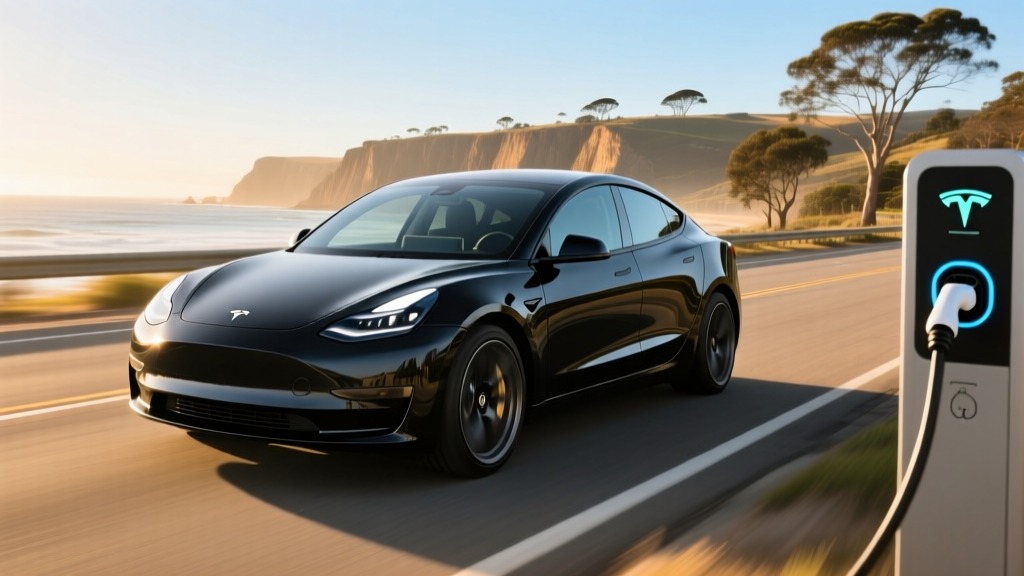
Three years after its model year, the 2021 Tesla Model 3 Performance remains a benchmark in accessible acceleration. Tesla claimed a 3.1-second 0-60 mph time at launch, and independent drag-strip testing consistently validates 3.1–3.3 seconds depending on tire condition, surface temperature, and battery state of charge. In 2026, well-maintained examples trade between $22,000 and $28,000 on the used market — putting supercar-tier acceleration into the price bracket of a new compact crossover.
But the 2021 Model 3 Performance story isn't just straight-line speed. It packs a 75 kWh (usable) NMC battery, an EPA-estimated 315 miles of range, 250 kW peak DC fast charging, and access to the Tesla Supercharger network — still the most reliable public charging ecosystem in North America. This review breaks down what 2026 used buyers actually need to know: real-world range, charging curves, the used-EV tax credit, and where the 2021 Performance falls short against newer rivals.
Performance: Validating the 2021 Model 3 Performance 0-60 Claim
The 2021 Model 3 Performance uses a dual-motor all-wheel-drive layout: a permanent-magnet synchronous motor on the rear axle and an induction motor up front. Combined output is approximately 456 horsepower and 497 lb-ft of torque. Tesla's official 0-60 mph figure of 3.1 seconds (with rollout subtracted) holds up in real-world testing when the battery is above 50% state of charge and tires are warm.
| Spec | Value |
|---|---|
| 0-60 mph | 3.1 sec (manufacturer, with rollout) |
| Horsepower | 456 hp combined |
| Torque | 497 lb-ft |
| Drivetrain | Dual-motor AWD |
| Battery (usable) | ~75 kWh, NMC (2170 cells) |
| EPA Range | 315 miles |
| MPGe (combined) | 113 MPGe |
| Efficiency | 24 kWh/100 mi |
| Top Speed | 162 mph |
| Cargo Volume | 23 cu ft (trunk + frunk) |
| Curb Weight | 4,065 lbs |
The Performance trim includes Track Mode, which allows adjustable torque distribution between front and rear motors — useful for closed-course driving but irrelevant to daily commuting. Acceleration Mode (formerly "Chill" vs standard) lets you soften throttle response for passengers. Even in Chill mode, the 2021 Model 3 Performance hits 60 mph in roughly 5.0 seconds, which is still quicker than most gas-powered sport sedans.
Range and Efficiency: EPA vs. Reality
Real-World Expectation: 250–280 miles at sustained highway speeds (70–80 mph); 210–240 miles in freezing temperatures; 290–310 miles in mixed city/suburban driving with moderate regen.
The 315-mile EPA sticker was class-leading for 2021 and remains competitive in 2026. But EPA testing uses low average speeds and includes significant city driving where regenerative braking recovers energy. On a flat interstate at 75 mph in 70°F weather, expect roughly 265–280 miles before the car demands a charging stop. Push 80+ mph or drive into headwinds at elevation, and that number drops toward 240.
Cold weather is the bigger penalty. At 20°F, lithium-ion chemistry slows and the cabin heater draws significant energy (the 2021 Model 3 uses a highly efficient heat pump, which helps). Expect 20–30% range loss in sustained sub-freezing driving, putting real-world winter range around 220–250 miles. Preconditioning the battery while plugged in — a feature accessible through the Tesla app — mitigates this by warming the pack before you depart.
Efficiency of 24 kWh/100 miles (113 MPGe combined per fueleconomy.gov) is excellent for a dual-motor performance sedan. For context, the 2021 Ford Mustang Mach-E GT (the closest rival) achieves 90 MPGe combined with a 270-mile EPA range. The Model 3 Performance's efficiency advantage comes from its low drag coefficient (0.23 Cd), lighter weight, and Tesla's industry-leading powertrain thermal management.
Charging: 250 kW Peak, but the Curve Matters
| Charging Level | Power / Rate | Speed |
|---|---|---|
| Level 1 (120V household) | ~1.4 kW | ~3–4 miles per hour |
| Level 2 (240V home, 48A) | 11.5 kW | ~44 miles per hour |
| DC Fast Charge (V3 Supercharger) | 250 kW peak | 10–80% in ~27 minutes |
| DC Fast Charge (V2 Supercharger) | 150 kW peak | 10–80% in ~38 minutes |
The 2021 Model 3 Performance supports Tesla's V3 Supercharger architecture at up to 250 kW. That peak rate holds from roughly 10% to 30% state of charge, then steps down progressively: around 170 kW at 45%, 100 kW at 65%, and 50 kW approaching 80%. This taper is normal for NMC chemistry — the battery management system protects cell longevity by reducing current as voltage rises.
A typical 10–80% session at a V3 Supercharger takes 25–30 minutes. Plan highway road-trip stops around 15–20 minutes to take advantage of the steepest part of the curve (10–55% SoC), then continue driving rather than waiting for the slow top-off above 80%.
At home, the onboard charger accepts up to 11.5 kW (48 amps on a 60-amp circuit). A full overnight charge from 20% to 80% takes roughly 4 hours. Installation of a Tesla Wall Connector or equivalent Level 2 unit typically costs $500–$1,500 depending on panel proximity and local permitting. For daily commuting, charging to 80% overnight adds approximately 250 miles of range — more than enough for virtually any daily pattern.
The 2021 Model 3 Performance uses a proprietary Tesla connector. As of 2026, Tesla has opened Supercharger access to non-Tesla EVs via the NACS standard, and Tesla vehicles can use CCS-equipped third-party networks with a Tesla-to-CCS adapter (sold separately, ~$200–$250). This adapter unlocks Electrify America, EVgo, and other networks as backup, though Superchargers remain faster and more reliable.
Pricing, Tax Credits, and Used-Buyer Economics
When new, the 2021 Model 3 Performance carried an MSRP of approximately $56,990 (before destination). In the 2026 used market, clean-title examples with 30,000–60,000 miles typically sell for $22,000–$28,000 depending on condition, color, FSD package inclusion, and regional demand.
| Line Item | Amount |
|---|---|
| Used market price (avg.) | $25,000 |
| Used EV federal tax credit (§25E, up to $4,000) | −$4,000 |
| Estimated net cost | ~$21,000 |
Critical distinction for 2026 buyers: the $7,500 federal credit under IRS §30D applies only to new EV purchases. For used EVs, the applicable credit is §25E (Previously-Owned Clean Vehicle Credit), which provides 30% of the sale price up to a maximum of $4,000. To qualify:
- The vehicle must be purchased from a licensed dealer (private-party sales do not qualify).
- Sale price must be $25,000 or less — meaning higher-priced 2021 Performance examples may not qualify.
- Buyer adjusted gross income must not exceed $75,000 (single), $112,500 (head of household), or $150,000 (joint filers).
- The credit can be transferred to the dealer at point of sale as an immediate price reduction.
This means a $25,000 2021 Model 3 Performance bought from a qualifying dealer could net a $4,000 credit — bringing effective cost to $21,000. At that price point, the performance-per-dollar ratio is unmatched in the EV market.
Interior, Cargo, Tech, and Daily Livability
The 2021 Model 3 interior follows Tesla's minimalist philosophy: a single 15-inch landscape touchscreen handles all infotainment, climate, and vehicle controls. There is no instrument cluster — speed and navigation appear on the left third of the main display. The steering wheel has two scroll wheels and no traditional stalks (turn signals are buttons on the wheel, a common complaint).
Interior materials improved significantly with the "Model 3 Refresh" that the 2021 model year represents: matte wood trim, softer-touch door panels, and a center console with wireless phone charging. Seats are synthetic leather (vegan), heated in both rows. The Performance trim adds a carbon-fiber spoiler, lowered sport suspension, 20-inch Überturbine wheels, and performance brakes.
Cargo space totals 23 cubic feet (15 cu ft trunk + 3 cu ft frunk + pass-through folding rear seats). Rear legroom is 35.2 inches — adequate for adults on shorter trips but tighter than a Toyota Camry. The glass roof creates an airy cabin but provides no shade; many owners apply aftermarket tint film to reduce solar heat gain in summer.
Driver-assistance technology includes standard Autopilot (lane-keeping, adaptive cruise control, traffic-aware steering). This is an SAE Level 2 system — the driver must keep hands on the wheel and eyes on the road at all times. Full Self-Driving (FSD) capability was available as a $10,000 add-on in 2021, but its value on the used market is heavily debated; most experts recommend ignoring FSD cost when evaluating used pricing since Tesla does not transfer FSD licenses in most private-party sales.
Battery Health, Warranty, and Long-Term Ownership
The 2021 Model 3 Performance uses a ~75 kWh NMC (nickel-manganese-cobalt) battery pack built from Panasonic 2170 cells at Gigafactory Nevada. Tesla's battery warranty covers 8 years or 120,000 miles (whichever comes first) with a minimum 70% capacity retention threshold. For a 2021 model, that factory warranty extends through early 2029.
Real-world degradation data from Tesla fleet analytics and owner communities (tracked by sources like Tesla's Impact Report) shows NMC packs in the Model 3 losing approximately 5–8% capacity in the first 50,000 miles, then degrading more slowly. A 2021 Performance with 45,000 miles in 2026 should retain roughly 92–95% of its original capacity — translating to approximately 290–300 miles of EPA-equivalent range.
Best practices for NMC longevity:
- Set daily charge limit to 80% (Tesla's onboard software supports this natively).
- Avoid leaving the car at 100% SoC for extended periods.
- Minimize repeated DC fast-charging to 100% — charge to 80% on road trips and top up at destination.
- Precondition the battery in cold weather before fast charging.
Out-of-warranty battery replacement for a Model 3 currently runs $12,000–$16,000 at Tesla Service Centers, though third-party EV repair shops are beginning to offer module-level repairs for $3,000–$6,000 — a growing option as the fleet ages.
Pros, Cons, and Who Should Buy
Pros
- 3.1-second 0-60 mph at a ~$21,000 effective used price
- 315-mile EPA range still competitive in 2026
- 250 kW V3 Supercharger access + open NACS ecosystem
- Over-the-air updates continue adding features years after purchase
- Excellent efficiency (113 MPGe) keeps charging costs low
- Strong safety ratings (IIHS Top Safety Pick+, 5-star NHTSA)
Cons
- No physical instrument cluster or traditional turn-signal stalks
- Rear seat legroom tight for taller passengers
- Glass roof causes cabin heat in summer without tint
- FSD transfer policy reduces used-car value of the option
- Sport suspension is firm — noticeable on rough roads
- Turn-signal buttons on steering wheel frustrate some drivers
Best for: Driving enthusiasts who want supercar acceleration in a practical daily driver; solo drivers or couples without frequent rear-seat passengers; commuters with home charging access who want minimal running costs; road-trippers who value Supercharger network reliability.
Look elsewhere if: You regularly carry rear-seat adults (consider Model Y or Ioniq 5); you want a physical instrument cluster; you need a comfortable highway cruiser rather than a sport-tuned ride; you live in an apartment without any charging access.
2021 Model 3 Performance vs. 2026 Competitors (Used Market)
In the $22,000–$28,000 used EV bracket of 2026, the 2021 Model 3 Performance competes against:
- 2021–2022 Ford Mustang Mach-E GT (~$27,000 used): 3.5-sec 0-60, 270-mi EPA range, more interior space, less efficient (90 MPGe). Choose if you need crossover cargo room.
- 2021 Polestar 2 (~$20,000 used): 4.5-sec 0-60 (single motor), 233-mi range, more premium interior, CCS charging. Choose if you prefer traditional build quality over Tesla's minimalism.
- 2022 Hyundai Ioniq 5 AWD (~$26,000 used): 5.1-sec 0-60, 256-mi range, 800V charging (10–80% in 18 min). Choose if fast charging speed matters more than acceleration.
None of these match the Model 3 Performance's combination of 3.1-second acceleration, 315-mile range, and 113 MPGe efficiency. The trade-off is interior space, conventional controls, and build quality perception.
Frequently Asked Questions
Does the 2021 Model 3 Performance really hit 0-60 in 3.1 seconds?
Yes, with caveats. Tesla's 3.1-second claim uses a 1-foot rollout (standard in drag racing). Independent tests with a full rollout from a standstill typically show 3.2–3.4 seconds. Battery must be above ~50% SoC and tires should be warm for best results. On worn tires or a cold battery, expect 3.5–4.0 seconds.
Does the 2021 Model 3 Performance qualify for the federal EV tax credit in 2026?
Not the new-vehicle §30D credit (that applies only to new purchases). It may qualify for the used EV credit (§25E) of up to $4,000 if: the sale price is $25,000 or less, the buyer's income falls below IRS thresholds ($75K single / $150K joint), and the purchase is through a licensed dealer. Check IRS.gov §25E guidelines before purchasing.
What is the real-world range of the 2021 Model 3 Performance?
Expect 250–280 miles at highway speeds in moderate weather, 290–310 miles in mixed city driving, and 210–250 miles in freezing conditions. The EPA sticker of 315 miles is achievable in ideal city/suburban conditions but optimistic for sustained highway trips.
How much does it cost to charge a 2021 Model 3 Performance at home?
At the U.S. average electricity rate of ~$0.16/kWh, a full 75 kWh charge costs about $12 and adds roughly 300 miles of range — approximately $0.04 per mile. Compare that to a gas car at 25 MPG and $3.50/gallon fuel: $0.14 per mile. Home charging saves roughly $100/month for a 1,000-mile-per-month driver.
Is the 2021 Model 3 Performance still worth buying in 2026?
For performance-per-dollar, absolutely. At ~$21,000 effective cost after the used EV credit, nothing else offers a 3.1-second 0-60, 315-mile range, and Supercharger access. The main compromises are rear-seat space, minimalist controls, and firm ride quality. If those aren't dealbreakers, it remains one of the best EV values on the used market.
How long will the battery last?
Tesla's NMC packs are designed for 300,000–500,000 miles of useful life before reaching 70% capacity. Fleet data suggests most 2021 Model 3 batteries will retain 85–90% capacity at 100,000 miles with normal charging habits. The factory warranty covers through early 2029 or 120,000 miles.