Quick Verdict: A Performance SUV That Still Holds Up
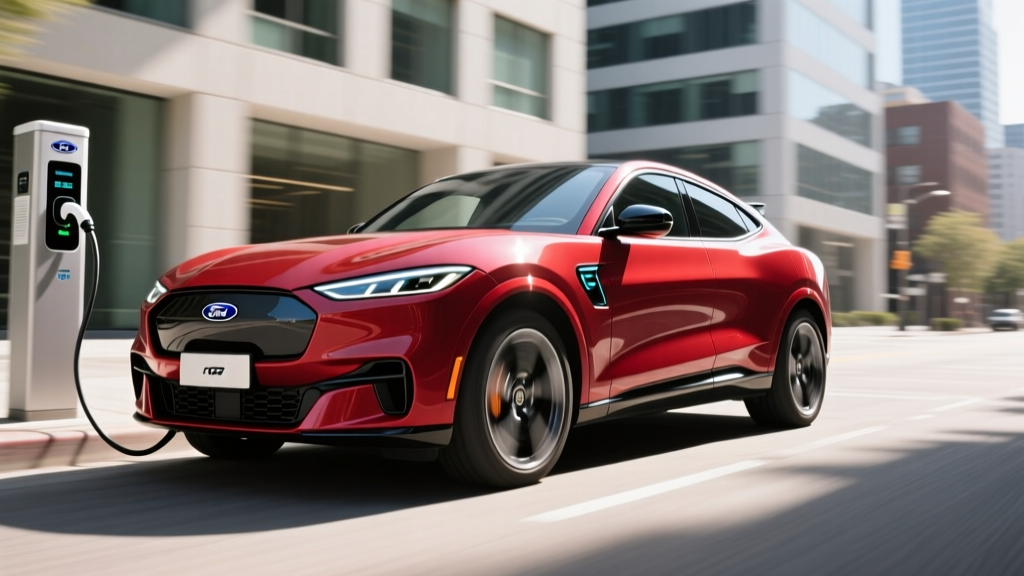
The 2021 Ford Mustang Mach-E GT arrived as Ford's answer to the Tesla Model Y Performance — a dual-motor, all-wheel-drive electric crossover with genuine sports-car acceleration and a usable 270-mile EPA range. Now well into its lifecycle on the used market, the GT trim remains one of the most compelling performance EVs available under $40,000. But how does its real-world range, charging speed, and ownership experience stack up against newer competitors?
This review breaks down every number that matters — from actual highway range and DC fast-charging curves to battery degradation expectations and federal tax credit eligibility for used buyers.
Spec Sheet: 2021 Mach-E GT at a Glance
| Attribute | 2021 Mach-E GT | 2021 Mach-E GT Performance Edition |
|---|---|---|
| EPA Range | 270 miles | 260 miles |
| Usable Battery | 88 kWh (Extended Range, NMC) | 88 kWh (Extended Range, NMC) |
| Horsepower | 480 hp | 480 hp |
| Torque | 600 lb-ft | 634 lb-ft |
| 0-60 mph | 5.1 seconds | 3.5 seconds |
| Drivetrain | AWD (Dual Motor) | AWD (Dual Motor) |
| Max DC Fast Charge | 150 kW | 150 kW |
| 10-80% DC Time | ~45 minutes | ~45 minutes |
| Level 2 Home Charge | 10.5 kW (~32 mi/hr) | 10.5 kW (~32 mi/hr) |
| MPGe (Combined) | 84 MPGe | 82 MPGe |
| Efficiency | 40 kWh/100 mi | 41 kWh/100 mi |
| Original MSRP | $60,500 | $65,500 |
| Battery Warranty | 8 yr / 100,000 mi | 8 yr / 100,000 mi |
Real-World Range: What the EPA Number Doesn't Tell You
Real-World Highway (70 mph, moderate climate): ~220-240 miles
Real-World City/Mixed Driving: ~245-265 miles
Cold Weather (below 32°F): ~180-210 miles (25-35% reduction)
The 2021 Mach-E GT's 88 kWh usable NMC (nickel manganese cobalt) battery delivers its rated 270 miles under ideal EPA test conditions. In practice, highway driving at 70+ mph pushes energy consumption to roughly 42-45 kWh/100 mi, dropping effective range to around 220-240 miles before you need to find a charger.
The Performance Edition's larger 20-inch wheels, stickier summer tires, and more aggressive calibration cost you 10 EPA miles and noticeably more in cold weather. Owners in northern climates consistently report 180-200 miles of usable winter range on highway trips — adequate for daily commuting but a factor on longer road trips.
The Mach-E GT does not include a heat pump (Ford added one starting with the 2023 model year). Cabin heating relies on resistive elements, which draw significant energy in cold weather. If you live where winters regularly drop below freezing, budget for 25-35% range loss and plan charging stops accordingly.
On the positive side, the battery management system reserves a generous buffer below 0% displayed and above 100%, reducing the risk of brick-level degradation from normal use. According to fueleconomy.gov, the GT's combined efficiency of 40 kWh/100 mi is respectable for a 480-hp AWD crossover, though it trails the lighter RWD Mach-E variants.
Charging Speed: DC Fast Charge and Home Setup
| Charging Level | Power / Rate | Miles Added | Notes |
|---|---|---|---|
| Level 1 (120V outlet) | 1.4 kW | ~3 mi/hr | Emergency/trickle only |
| Level 2 (240V, 48A) | 10.5 kW | ~32 mi/hr | Full charge in ~8.5 hours |
| DC Fast Charge (peak) | 150 kW | ~52 mi in 10 min | Peak rate, not sustained |
| DC Fast Charge (10-80%) | Avg ~95 kW | ~190 mi | ~45 minutes total |
The 2021 Mach-E GT peaks at 150 kW on a DC fast charger — competitive at launch but now outpaced by Hyundai/Kia's 800V architecture (240+ kW) and Tesla's V3/V4 Superchargers. The real story is the charge curve: the GT sustains close to its peak rate from roughly 10-50% state of charge, then tapers progressively. By 80%, charging slows to around 40-50 kW.
This means the published 10-80% time of approximately 45 minutes is realistic, but don't expect a quick top-off from 80-100% — that final stretch can add another 40+ minutes at a fast charger. For road trips, the practical strategy is to charge to 80% and move on, which the navigation system's route planner supports by suggesting optimal stop points.
The Mach-E GT ships with a CCS1 connector (the pre-2025 standard for non-Tesla EVs). With Ford's 2024 integration of NACS adapters, owners can access Tesla Supercharger stations using a Ford-provided or third-party CCS-to-NACS adapter. This significantly expanded the GT's fast-charging network — a major advantage for used buyers compared to the original ownership experience.
At home, the onboard 10.5 kW charger fills the 88 kWh battery from empty in about 8.5 hours on a 48-amp Level 2 circuit (requiring a 60-amp breaker). Most owners report waking to a full charge every morning with a standard overnight routine. Installation of a hardwired Level 2 charger typically runs $500-$2,000 depending on panel proximity and local electrical codes.
Performance and Driving Dynamics
The GT Performance Edition's 3.5-second 0-60 mph time puts it in genuine sports-car territory — roughly matching a Porsche Cayenne S while carrying five passengers and 29.7 cubic feet of cargo behind the rear seats. The standard GT's 5.1-second run is still brisk by any SUV standard.
Ford's dual-motor AWD system provides torque vectoring that makes the GT feel planted through corners despite its 4,900-pound curb weight. The Performance Edition adds MagneRide adaptive dampers, which noticeably improve both ride compliance and body control compared to the standard GT's passive setup. The difference is worth seeking out on the used market.
One-pedal driving is available and well-calibrated, though the regen strength doesn't quite match the aggressive deceleration of a Tesla or Hyundai Ioniq 5. The brake pedal feel is among the best in the EV segment — firm, linear, and free of the grabby regen-blending common in early electric crossovers.
The Mach-E GT carries a 1,500-pound towing capacity when properly equipped — adequate for a small utility trailer but not for boat or camper duty. If towing is a priority, the Ford F-150 Lightning or Rivian R1S serve that use case far better.
Interior, Tech, and Cargo
The 2021 Mach-E GT's cabin is anchored by a vertically oriented 15.5-inch touchscreen running Ford's SYNC 4A system. The interface is responsive and supports wireless Apple CarPlay and Android Auto. A physical volume knob at the base of the screen is a welcome usability choice, though climate controls are fully touch-based — a common complaint among owners.
Passenger space is generous for the segment: 43.3 inches of front legroom and 38.9 inches of rear legroom accommodate tall adults comfortably. The rear seatbacks recline slightly, aiding long-trip comfort. Headroom is adequate, though the sloping roofline cuts into space for passengers over six feet.
Cargo volume measures 29.7 cubic feet behind the rear seats and 59.7 cubic feet with seats folded — competitive with the Tesla Model Y but less than a Hyundai Ioniq 5's flat-load floor. The front trunk (frunk) adds 4.7 cubic feet of drainable storage, useful for wet gear or charging cables.
On the driver-assistance front, the 2021 GT includes Ford Co-Pilot360 Assist 2.0, which provides adaptive cruise control with stop-and-go, lane centering, and evasive steering assist. This is an SAE Level 2 system — it requires continuous driver supervision and does not constitute self-driving. Ford's hands-free BlueCruise was not available on 2021 models; it arrived with the 2022 model year via an over-the-air update for equipped vehicles, though not all 2021 hardware supports it.
Pricing, Tax Credits, and Used Market Value
| Cost Factor | Amount |
|---|---|
| Original MSRP (GT) | $60,500 |
| Original MSRP (GT Performance Edition) | $65,500 |
| Typical Used Price (2026 market) | $28,000 - $38,000 |
| Federal Used EV Credit (§25E) | Up to $4,000 (30% of sale price) |
| Effective Price After Credit | $24,000 - $34,000 |
As a 2021 model, the Mach-E GT is no longer eligible for the new-vehicle §30D federal tax credit (up to $7,500). However, it may qualify for the §25E Used Clean Vehicle Credit, which provides 30% of the sale price up to $4,000 for qualifying used EVs.
Eligibility requirements for §25E include:
- Sale price must be $25,000 or less (this is a hard cap — many GT listings exceed it)
- Buyer income caps: $75,000 single / $112,500 head of household / $150,000 joint
- Vehicle must be at least two model years old (2021 qualifies in 2024+)
- Must purchase from a licensed dealer (private-party sales excluded)
- Credit is non-refundable — it can reduce your tax liability to zero but won't generate a refund
Because the §25E price cap is $25,000, only lower-mileage or higher-depreciation GT examples will qualify. Buyers should confirm dealer pricing and consult a tax professional before assuming credit eligibility. The credit can be transferred to the dealer at point of sale as an instant discount, per current IRS rules.
On the used market as of early 2026, 2021 Mach-E GT listings cluster between $28,000 and $38,000 depending on mileage, condition, and trim. The Performance Edition commands a $2,000-$4,000 premium. These prices represent significant depreciation from the $60,000+ original MSRP — a loss for first owners but a value opportunity for second buyers.
Ownership Costs: Insurance, Maintenance, and Battery Longevity
The Mach-E GT's NMC battery carries an 8-year/100,000-mile warranty against defects and capacity loss below 70% of original capacity. Ford's warranty terms are standard for the industry. Real-world degradation data from owner forums and Recurrent's battery analytics suggest typical 2021 Mach-E batteries retain 92-96% capacity after three years — well within warranty thresholds.
A full battery replacement outside warranty currently costs approximately $18,000-$22,000 including labor — a figure worth knowing but unlikely to be relevant for most owners given current degradation trajectories.
Insurance premiums for the GT run 15-25% higher than a comparable gas-powered Ford Edge, reflecting the vehicle's performance classification and higher repair costs for collision damage. Expect annual premiums of $1,800-$2,800 depending on your profile and state.
Maintenance costs are minimal: cabin air filter replacement every 20,000 miles, brake fluid checks, tire rotations, and wiper fluid. There are no oil changes, transmission fluid services, or spark plug replacements. Brake pad life is extended significantly by regenerative braking — many owners report original pads at 60,000+ miles.
Pros and Cons
Pros
- Genuine sports-car acceleration (3.5s 0-60 Performance Edition)
- Comfortable, spacious cabin with quality materials
- CCS + NACS adapter access to Tesla Supercharger network
- Excellent brake pedal feel for an EV
- Significant used-market depreciation creates strong value
- SYNC 4A infotainment is responsive and well-organized
Cons
- No heat pump — significant cold-weather range loss
- 150 kW peak DC charging trails newer competitors
- BlueCruise hands-free driving not available on 2021 hardware
- §25E used EV credit price cap ($25k) excludes many listings
- Touch-only climate controls frustrate some drivers
- Efficiency drops noticeably at sustained highway speeds
Who Should Buy the 2021 Mach-E GT?
Choose the Mach-E GT if: You want a performance-oriented electric crossover with strong acceleration, comfortable daily-driver manners, and access to both CCS and Tesla Supercharger networks — and you're buying used to avoid the steepest depreciation.
Look elsewhere if: You live in a cold climate and need maximum winter range (consider the Hyundai Ioniq 5 AWD with heat pump), you want the fastest possible DC charging (Ioniq 5 or Ioniq 6 at 240+ kW), or you need hands-free highway driving (Ford's BlueCruise or GM's Super Cruise on newer models).
The 2021 Mach-E GT is best suited for performance-minded commuters and weekend road-trippers who can charge at home and don't regularly face sub-freezing highway drives. Its combination of acceleration, interior quality, and used-market value makes it a strong pick in the $28,000-$38,000 range — provided you understand the charging and cold-weather trade-offs.
Frequently Asked Questions
What is the real-world range of the 2021 Mach-E GT?
Expect 220-240 miles on highway trips at 70 mph in moderate weather, 245-265 miles in mixed city driving, and 180-210 miles in freezing temperatures. The EPA sticker reads 270 miles (260 for the Performance Edition), but real-world conditions — especially highway speed and cold weather — reduce that figure meaningfully.
How fast does the Mach-E GT charge?
On a DC fast charger, it peaks at 150 kW and charges from 10-80% in approximately 45 minutes. At home on a 240V Level 2 charger (48A), it adds roughly 32 miles of range per hour, with a full charge taking about 8.5 hours. The charging curve tapers significantly above 80%, so plan road-trip stops around the 80% mark.
Does the 2021 Mach-E GT qualify for any federal tax credit?
It is no longer eligible for the new-vehicle §30D credit. It may qualify for the §25E Used Clean Vehicle Credit (up to $4,000) if purchased from a dealer for $25,000 or less, and the buyer meets income caps ($75k single / $150k joint). Because many GT listings exceed the $25,000 price cap, confirm pricing before assuming eligibility.
Is the 2021 Mach-E GT worth buying vs. the Tesla Model Y Performance?
The Model Y offers longer real-world range, faster Supercharger charging, and hands-free-capable Autopilot — but at a higher used-market price. The Mach-E GT counters with a more comfortable ride, better brake feel, more traditional interior ergonomics, and lower cost of entry. If you prioritize driving refinement and value, the GT is compelling. If range and charging speed are paramount, the Model Y wins.
How long will the Mach-E GT battery last?
The 88 kWh NMC battery is warranted for 8 years or 100,000 miles against capacity loss below 70%. Real-world data from early owners shows 92-96% capacity retention at the three-year mark, suggesting the battery should comfortably outlast 150,000 miles with normal use. Replacement cost outside warranty is approximately $18,000-$22,000.
Can I use Tesla Superchargers with the 2021 Mach-E GT?
Yes. Ford provides a CCS-to-NACS adapter that enables Mach-E owners to charge at Tesla Supercharger stalls. The adapter is available through Ford dealers and works with the vehicle's existing CCS1 charge port. This significantly expanded the GT's road-trip charging options compared to its original launch.