Quick Verdict: The Value Champion of the Used EV Market
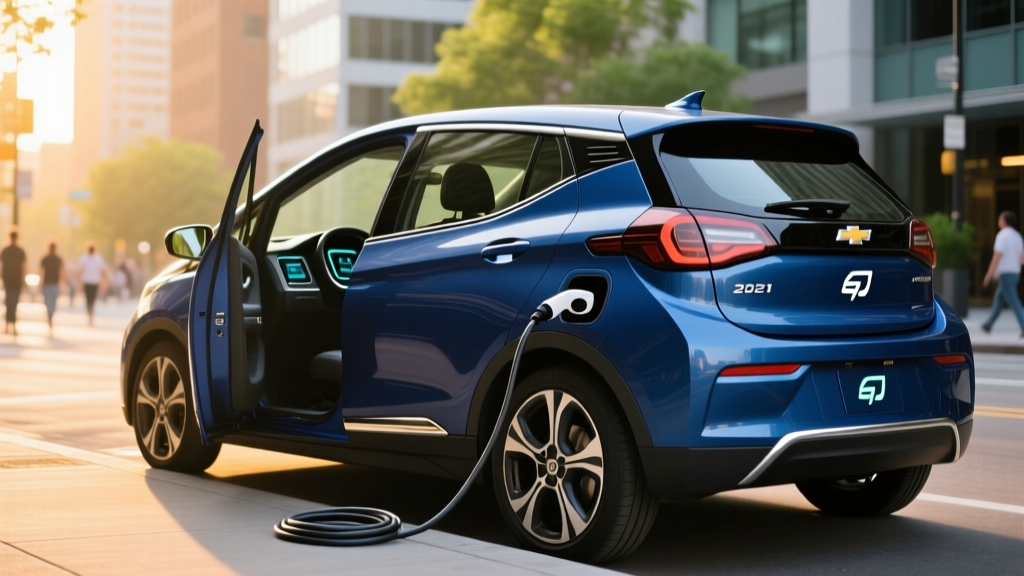
The 2021 Chevrolet Bolt EV remains one of the most compelling used electric vehicles available in 2026. With an EPA-estimated 259 miles of range, a practical hatchback body, and a proven powertrain, it delivers daily-driving usability at a fraction of what it cost new. But prospective buyers need to understand its charging limitations, real-world range behavior, and the critical context of GM's battery recall history before signing on the dotted line.
Originally priced from $36,500, the 2021 Bolt EV now trades on the used market between roughly $14,000 and $22,000 depending on mileage and condition — and qualifying buyers may still access the up-to-$4,000 federal used-EV tax credit (IRS §25E). This makes it a serious contender for budget-conscious commuters who want genuine range without the premium price tag.
Range, Battery, and Efficiency: The Numbers That Matter
Real-World Expectation: 220–240 miles on mixed highway driving; 190–210 miles in sustained cold weather (below 30°F) with cabin heat; up to 259 miles in mild-weather city driving where regenerative braking shines.
The 2021 Bolt EV is equipped with a 66 kWh usable lithium-ion battery (gross capacity approximately 66 kWh) using NMC (nickel-manganese-cobalt) chemistry. This is important context: NMC cells offer high energy density — which is how Chevy packed 259 miles into a compact hatch — but they degrade slightly faster than LFP (lithium iron phosphate) chemistries found in some newer EVs. Expect roughly 5–10% capacity loss over the first 100,000 miles under normal use, which is within industry norms for NMC packs of this generation.
| Specification | Value |
|---|---|
| EPA Range | 259 miles |
| Battery (Usable) | 66 kWh, NMC chemistry |
| Efficiency | 120 MPGe combined (28 kWh/100 mi) |
| Motor Output | 200 hp / 266 lb-ft torque |
| 0–60 mph | 6.5 seconds |
| Drivetrain | Front-wheel drive (single motor) |
| DC Fast Charge (Peak) | 55 kW (CCS) |
| 10–80% DC Charge Time | ~60 minutes |
| Level 2 Home Charge Rate | 11.5 kW (39 mi/hr) |
| Cargo Volume | 16.9 cu ft (rear seats up) / 56.6 cu ft (folded) |
| Rear Legroom | 36.5 inches |
| Battery Warranty | 8 years / 100,000 miles |
| Original Base MSRP | $36,500 (LT) / $41,000 (Premier) |
Efficiency is a strong suit. At 120 MPGe combined (approximately 28 kWh per 100 miles, per fueleconomy.gov), the Bolt EV extracts excellent miles per kilowatt-hour. In city driving with frequent regenerative braking opportunities, owners regularly report exceeding the EPA estimate. Highway cruising at 70+ mph, however, will push consumption closer to 32–35 kWh/100 mi, trimming range accordingly.
Charging Speed: The Bolt EV's Biggest Compromise
If the 2021 Bolt EV has an Achilles' heel, it's DC fast charging. The peak charge rate is just 55 kW via its CCS connector — a figure that was acceptable in 2017 when the Bolt debuted but feels dated by 2026 standards, where competitors routinely pull 150–250 kW at public chargers.
| Charging Level | Power | Speed | Notes |
|---|---|---|---|
| Level 1 (120V) | ~1.4 kW | ~4 miles/hour | Emergency/trickle only; full charge ~48 hours |
| Level 2 (240V, 48A) | 11.5 kW | ~39 miles/hour | Full charge ~7 hours; ideal for overnight home charging |
| DC Fast Charge | 55 kW peak | ~100 miles in 30 min | 10–80% in ~60 min; tapers significantly above 80% |
Real-world road-trip implication: On a long drive, plan for roughly one hour of charging per 200 miles driven. The charge curve is relatively flat from 10–60% SoC, then tapers noticeably. Above 80%, charging slows dramatically to protect battery health — adding the final 20% can take as long as the first 70%. Preconditioning (warming the battery before arriving at a charger) is not automatic in the 2021 Bolt EV; you must manually enable it through the infotainment navigation by routing to a DC fast charger.
Home Level 2 charging, however, is excellent. The onboard charger accepts up to 11.5 kW on a 48-amp Level 2 circuit, meaning a full overnight charge is easily achievable. Most owners install a 32-amp or 48-amp Level 2 station (such as a ChargePoint Home Flex or Emporia Vue) and wake to a full battery every morning.
Performance and Driving Dynamics
The 2021 Bolt EV is genuinely quick off the line. Its single front-mounted permanent-magnet motor produces 200 horsepower and 266 lb-ft of torque, available instantly from zero RPM. The 0–60 mph time of 6.5 seconds makes it faster than most compact crossovers and more than adequate for highway merging and passing.
The driving experience is enhanced by one-pedal driving mode, which increases regenerative braking aggressiveness enough that many owners rarely touch the brake pedal in city traffic. A steering-wheel paddle provides an additional regen boost on demand. The low center of gravity (battery pack under the floor) gives the Bolt EV surprisingly composed handling for a tall hatchback, though the eco-oriented Michelin Energy Saver tires prioritize efficiency over grip.
Ride quality is comfortable around town but can feel firm over sharp highway imperfections — a trade-off for the stiff suspension tuning needed to manage the vehicle's ~3,560-pound curb weight.
Interior, Tech, and Driver Assistance
The cabin is functional rather than luxurious. The 10.2-inch touchscreen infotainment system (LT and Premier trims) supports wireless Apple CarPlay and Android Auto — a welcome convenience that eliminates cable clutter. A 8-inch digital driver display provides speed, range, and energy-flow information. The shifter is a traditional PRNDL layout, which many buyers prefer over the rotary or stalk selectors in some competitors.
Cargo practicality is a highlight: 16.9 cubic feet behind the rear seats expands to 56.6 cubic feet with the 60/40 split rear seat folded. That's competitive with compact SUVs and far more versatile than a sedan trunk. Rear-seat legroom at 36.5 inches is adequate for adults on shorter trips.
Standard driver-assistance features include:
- Automatic emergency braking with pedestrian detection
- Lane keep assist with lane departure warning
- Following distance indicator
- Intelligent high-beam headlights
Available on Premier trim: adaptive cruise control, surround-view camera, and rear cross-traffic alert. Note that the Bolt EV does not offer GM's Super Cruise hands-free driving system — that technology was reserved for the Cadillac CT6 and later the Bolt EUV (a separate, slightly larger model). The 2021 Bolt EV's driver assists are SAE Level 1 — they assist but require full driver engagement at all times.
Pricing, Tax Credits, and Used Market Value
| Trim | Original MSRP | Typical Used Price (2026) | Potential Used-EV Credit |
|---|---|---|---|
| LT | $36,500 | $14,000–$18,000 | Up to $4,000 (§25E) |
| Premier | $41,000 | $17,000–$22,000 | Up to $4,000 (§25E) |
Federal tax credit context: The original $7,500 new-vehicle credit (§30D) is no longer applicable to a used purchase. However, the IRS §25E Used Clean Vehicle Credit offers up to $4,000 (30% of the sale price, capped at $4,000) for qualifying used EVs. Key eligibility requirements per irs.gov:
- Income caps: Modified AGI cannot exceed $75,000 (single), $112,500 (head of household), or $150,000 (joint filers)
- Price cap: Sale price must be $25,000 or less
- Dealer requirement: Vehicle must be purchased from a licensed dealer
- Model year rule: Vehicle must be at least two model years old (2021 qualifies in 2026)
- One-time use: You cannot claim the used-EV credit more than once every three years
A $16,000 Bolt EV LT purchase could net a $4,000 credit (since 30% of $16,000 = $4,800, but the cap applies), bringing the effective cost to around $12,000. Always consult a tax professional to confirm your specific eligibility — rules can change and individual circumstances vary.
The Battery Recall: What Every Used Buyer Must Verify
No discussion of the 2021 Bolt EV is complete without addressing the battery recall. In 2021, GM issued a recall for Bolt EV and Bolt EUV models due to a manufacturing defect in certain LG Chem battery cells that could pose a fire risk when charged to full capacity. This was a serious issue that resulted in a stop-sale and parking-outside advisories.
What you need to know in 2026: GM completed a comprehensive battery replacement and software update program for affected vehicles. The fix involved replacing defective battery modules and implementing updated battery management software. Before purchasing any used 2021 Bolt EV, verify the following:
- The recall repair has been completed (check the VIN at nhtsa.gov/recalls)
- Request documentation from the seller showing the battery replacement was performed
- Confirm the battery management software has been updated
A Bolt EV with a completed recall repair is considered safe and carries the full 8-year/100,000-mile battery warranty from the date of the repair. A vehicle without the completed repair should be avoided entirely — or the repair should be completed at a GM dealer before finalizing the purchase.
Pros and Cons at a Glance
Pros
- 259-mile EPA range is excellent for the price point
- Strong efficiency (120 MPGe combined) keeps charging costs low
- Quick 0–60 time (6.5 sec) and smooth one-pedal driving
- Generous cargo space (56.6 cu ft) for a compact hatchback
- Wireless Apple CarPlay/Android Auto
- Used pricing + §25E credit = exceptional value proposition
- Proven, well-understood platform with wide dealer service network
Cons
- DC fast charging capped at 55 kW — slow for road trips
- No battery preconditioning automation for fast charging
- Recall history requires careful VIN verification
- Firm ride quality on rough pavement
- No adaptive cruise on base LT trim
- Rear seat is tight for tall adults on long trips
- No heat pump — cold-weather range loss is significant
Who Should Buy the 2021 Bolt EV?
Choose the 2021 Bolt EV if:
- You're a daily commuter driving under 100 miles round-trip with home Level 2 charging
- You want maximum range per dollar in the used EV market
- Your driving is primarily city and suburban, where regen braking maximizes efficiency
- You need a practical hatchback with genuine cargo versatility
- You qualify for the §25E used-EV credit and want an effective sub-$15,000 EV
Look elsewhere if:
- You take frequent road trips and need fast DC charging (consider a used Hyundai Ioniq 5 or Tesla Model 3)
- You regularly drive in extreme cold and need minimal range degradation (consider a newer EV with a heat pump)
- You need all-wheel drive for snow-belt winters (the Bolt EV is FWD only)
- You want hands-free highway driving assistance (the Bolt EV lacks Super Cruise)
For its target buyer — the home-charging commuter who prioritizes range, value, and practicality — the 2021 Chevrolet Bolt EV remains one of the smartest used-EV purchases available in 2026. Just verify that recall repair, budget for a Level 2 home charger installation, and enjoy 259 miles of quiet, efficient driving for pennies per mile.
Frequently Asked Questions
What is the real-world range of the 2021 Chevrolet Bolt EV?
In mild weather with mixed city and highway driving, expect 230–250 miles. Highway-only driving at 70 mph drops that to roughly 210–225 miles. In winter temperatures below 30°F with cabin heating, plan for 190–210 miles. City driving with regenerative braking can actually exceed the 259-mile EPA estimate in ideal conditions.
How fast does the 2021 Bolt EV charge?
On a DC fast charger, the peak rate is 55 kW, taking approximately 60 minutes from 10–80% state of charge. At home on a Level 2 charger (240V, 48A), it charges at 11.5 kW, adding about 39 miles per hour — a full charge takes roughly 7 hours overnight. On a standard 120V outlet (Level 1), expect about 4 miles per hour.
Does the 2021 Bolt EV qualify for any federal tax credit in 2026?
As a used purchase, it may qualify for the IRS §25E Used Clean Vehicle Credit of up to $4,000, provided the sale price is $25,000 or less, your income is within the caps ($75K single / $150K joint), you buy from a licensed dealer, and you haven't claimed the used-EV credit in the past three years. The original $7,500 new-vehicle credit (§30D) does not apply to used purchases.
Is the 2021 Bolt EV safe after the battery recall?
Yes — but only if the recall repair has been completed. GM replaced defective battery modules and updated the battery management software on affected vehicles. Always check the VIN at nhtsa.gov/recalls and request documentation before purchasing. A completed-recall Bolt EV is considered safe and retains its full battery warranty.
How does the 2021 Bolt EV compare to the Nissan Leaf and Tesla Model 3?
Against the 2021 Nissan Leaf Plus (226-mile range, CHAdeMO connector, no active thermal management), the Bolt EV offers significantly more range and a more robust CCS charging standard. Against a used Tesla Model 3 Standard Range Plus (~263-mile EPA), the Tesla charges much faster (up to 170 kW DC), has access to the Supercharger network, and offers Autopilot — but typically costs $5,000–$8,000 more on the used market. The Bolt EV wins on pure value per mile of range.
What is the battery warranty on a used 2021 Bolt EV?
The original battery warranty is 8 years / 100,000 miles from the vehicle's original in-service date, covering defects and excessive capacity loss (typically below 60–70% of original capacity, per GM's terms). If the battery was replaced under the recall, the warranty may reset from the repair date — confirm with a GM dealer using your VIN. The warranty is transferable to subsequent owners.
Can I install a Level 2 charger at home for the Bolt EV?
Yes, and it's strongly recommended. The Bolt EV's 11.5 kW onboard charger works with any standard J1772 Level 2 home station. Expect to spend $500–$800 on the charger hardware and $800–$2,000 on professional installation (depending on your electrical panel capacity and the distance from panel to charger location). A licensed electrician should assess whether your panel has capacity for a 60-amp circuit (required for a 48-amp charger). Total home charging setup: typically $1,300–$2,800.