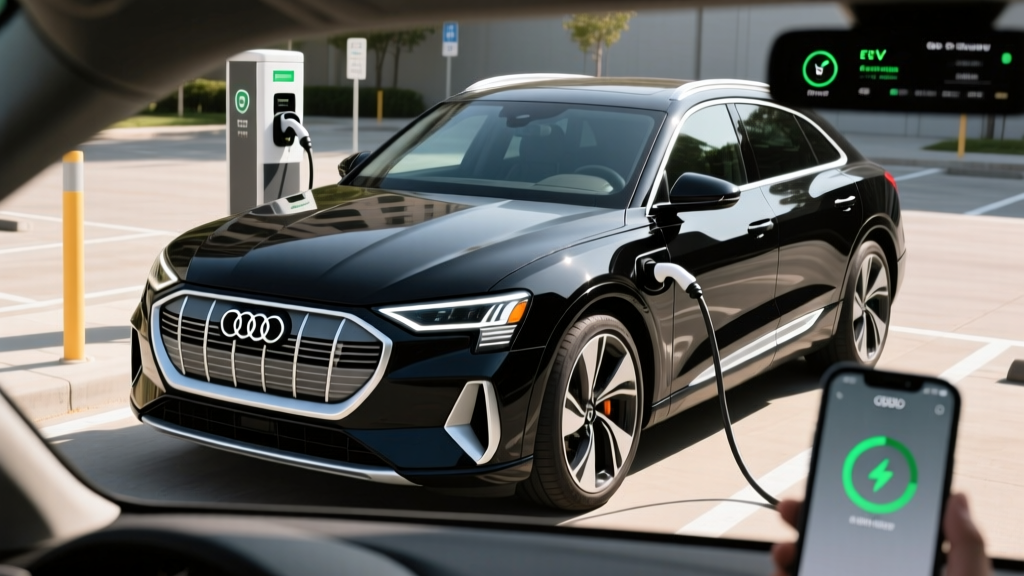
Audi's first dedicated electric SUV arrived in the U.S. for the 2019 model year, and by 2021 it had matured into one of the most refined luxury EVs on the market. The 2021 Audi e-tron doesn't chase headline-grabbing range numbers like the Tesla Model X or the newer BMW iX — instead, it prioritizes build quality, cabin silence, and a charging curve that remains one of the most sustained in the industry. If you're evaluating a used 2021 e-tron in 2026, the question isn't whether it's the longest-range option. It's whether Audi's approach to electric luxury still holds up, and whether the used-EV tax credit makes it a compelling buy.
This review covers the 2021 Audi e-tron (the pre-facelift model before Audi rebranded it the Q8 e-tron for 2024). We'll break down its real-world range, charging behavior, ownership economics, and where it fits in today's used EV market.
Specs at a Glance: 2021 Audi e-tron
| Specification | Value |
|---|---|
| EPA Range | 222 miles (SUV), 218 miles (Sportback) |
| Battery (Gross / Usable) | 95 kWh gross / 86.5 kWh usable (pre-2021 software update); 95 kWh gross / ~91 kWh usable (post-update) |
| Battery Chemistry | NMC (Nickel Manganese Cobalt) — LG Chem pouch cells |
| DC Fast Charge (Peak) | 150 kW |
| 10–80% DC Charge Time | ~30 minutes |
| Level 2 AC Charge Rate | 9.6 kW (onboard charger) |
| 0–60 mph | 5.5 seconds (Boost mode engaged) |
| Horsepower | 355 hp standard / 402 hp (Boost mode) |
| Drivetrain | quattro AWD (dual-motor) |
| MPGe (Combined) | 78 MPGe |
| Efficiency | 43 kWh/100 mi |
| Cargo Volume | 28.5 cu ft (rear seats up) / 57.0 cu ft (rear seats folded) |
| Base MSRP (2021) | $65,900 (Premium Plus SUV) |
| Battery Warranty | 8 years / 100,000 miles |
Real-World Range: What 222 EPA Miles Actually Means
EPA Estimate: 222 miles (SUV body style)
Real-World Highway (70 mph, moderate temps): ~185–200 miles
Real-World City/Mixed: ~200–215 miles
Cold Weather (below 32°F, highway): ~155–175 miles
The e-tron's large battery buffer and thermal management system help it hold up better than average in cold conditions, but its 43 kWh/100 mi efficiency means highway driving at speed takes a significant toll.
The 222-mile EPA figure places the 2021 e-tron well behind contemporaries like the Tesla Model X Long Range (360 miles) and the newer Rivian R1S (316 miles). But EPA range only tells part of the story. The e-tron uses a substantial bottom buffer — Audi initially locked out roughly 8.5 kWh of the 95 kWh pack to protect long-term battery health. A 2020 software update (which many 2021 models received) unlocked an additional ~4.5 kWh, bringing usable capacity closer to 91 kWh and improving both range and charge speed slightly.
In EPA testing documented at fueleconomy.gov, the e-tron achieved 78 MPGe combined. That translates to 43 kWh consumed per 100 miles — making it one of the less efficient luxury EVs in its class. The heavy curb weight (~5,700 lbs) and conservative aerodynamics are the primary culprits.
For daily commuting under 80 miles round-trip with home charging, the range is more than adequate. For road trips, you'll need to plan DC fast-charging stops roughly every 170–180 miles to stay comfortable — which the e-tron's excellent charge curve (more on that below) makes less painful than the raw range number suggests.
Charging Performance: Where the e-tron Shines
If the e-tron's range is its weakest spec-sheet number, its charging behavior is arguably its strongest real-world asset. Unlike many EVs that spike to a peak kW figure and immediately taper, the e-tron sustains near-peak charging rates from 10% all the way to roughly 80% State of Charge (SoC).
| Charge Level | Power / Rate | Miles Added per Hour | Notes |
|---|---|---|---|
| Level 1 (120V household) | 1.2 kW | ~3 mi/hr | Emergency/trickle only; full charge in ~70+ hours |
| Level 2 (240V home/public) | 9.6 kW | ~22 mi/hr | Full charge in ~9.5 hours (0–100%); overnight-ready |
| DC Fast Charge (CCS) | 150 kW peak | ~300+ mi/hr (at peak) | 10–80% in ~30 min; sustained ~120–150 kW through 70% |
The key insight for prospective owners: peak kW is not sustained kW. Many competitors claim 250 kW peak rates but taper sharply after 50% SoC. The e-tron's charge curve is remarkably flat — it holds above 120 kW from roughly 10% to 70% SoC, then gradually tapers through 80%. This means a 10–80% session at a 150 kW Electrify America or EVgo station takes a genuine ~30 minutes, not the 45+ minutes you'd calculate from a less sustained curve.
Audi also includes three years of complimentary charging on the Electrify America network (250 kWh/month) for original purchasers. For used buyers in 2026, check whether this benefit transfers — it's tied to the original in-service date and may have expired or have limited remaining allocation.
Home charging setup: The 9.6 kW onboard charger means a 48-amp Level 2 circuit (hardwired, 60-amp breaker) will replenish the battery at the maximum AC rate. Most owners report a full overnight charge from 20% to 100% in roughly 8 hours. A NEMA 14-50 outlet on a 50-amp breaker will deliver ~7.7 kW, adding roughly 5 hours to a full charge — still perfectly viable for overnight use.
Performance and Driving Dynamics
The 2021 e-tron uses a dual-motor quattro all-wheel-drive layout producing 355 horsepower in standard driving mode. Engage Boost mode (via the shift lever) and output rises to 402 hp for 8-second bursts, dropping the 0–60 mph time from 6.0 seconds to 5.5 seconds.
This isn't a performance SUV in the Tesla Model X Plaid sense. The e-tron's acceleration is brisk and confident for merging and passing, but the ~5,700-pound curb weight is always present through corners. Where the e-tron excels is refinement: cabin noise levels are among the lowest of any EV we've tested, the air suspension soaks up highway imperfections, and the regenerative braking system is one of the most seamlessly integrated in the industry.
Audi's regen system uses steering-wheel paddles to toggle between three levels of deceleration, plus an auto mode that uses radar and navigation data to adjust regen based on traffic and upcoming curves. Unlike one-pedal driving systems in the Nissan Leaf or BMW i3, the e-tron doesn't come to a complete stop under regen alone — you'll still use the brake pedal at stoplights. Most owners adapt to this quickly and appreciate the natural coasting behavior.
Interior, Tech, and Cargo Space
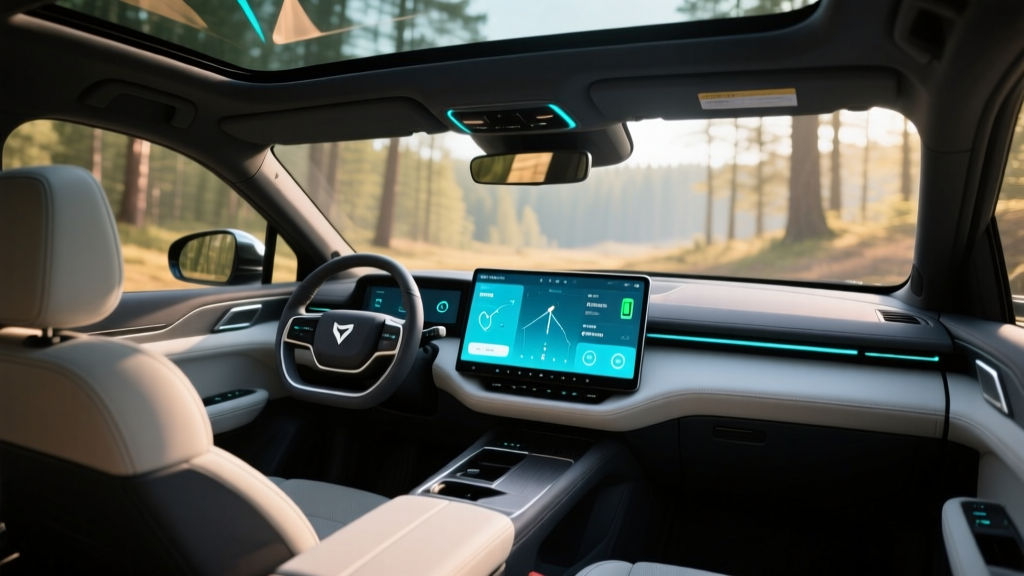
The 2021 e-tron's cabin is where Audi's luxury heritage shows most clearly. The dual-touchscreen MMI system (10.1-inch upper, 8.6-inch lower) replaces most physical buttons and includes haptic feedback. The 12.3-inch Virtual Cockit digital instrument cluster is standard, and the available head-up display projects navigation and speed clearly.
Cargo dimensions:
- Behind rear seats: 28.5 cu ft
- Rear seats folded: 57.0 cu ft
- Front trunk (frunk): Small underhood compartment for charging cables (~2 cu ft usable)
The Sportback variant sacrifices roughly 1.5 cu ft of cargo volume for its coupe-like roofline. Rear-seat legroom is generous at 39.1 inches, accommodating adults comfortably on longer drives.
Driver assistance (SAE Level 2): The e-tron comes equipped with Audi Adaptive Cruise Assist, which combines adaptive cruise control with lane-centering. This is a Level 2 driver-assist system — you must keep your hands on the wheel and remain engaged at all times. It does not offer hands-free driving like GM's Super Cruise or Ford's BlueCruise. The system is competent on highways but requires regular steering-wheel touch confirmation.
Audi Adaptive Cruise Assist is SAE Level 2. The driver must supervise at all times, maintain hands on the wheel, and be prepared to take over instantly. This is not autonomous or self-driving capability.
Pricing, Trims, and Tax Credit Eligibility
The 2021 e-tron launched with three trims for the SUV body style:
| Trim | 2021 Base MSRP | Est. 2026 Used Price | Federal Used EV Credit (45E) |
|---|---|---|---|
| Premium Plus | $65,900 | $28,000–$33,000 | Up to $4,000 (30% of sale price, capped) |
| Prestige | $74,800 | $32,000–$38,000 | Up to $4,000 |
| Sportback Premium Plus | $68,900 | $30,000–$35,000 | Up to $4,000 |
Federal tax credit breakdown for used buyers in 2026:
The 2021 e-tron is no longer eligible for the new-vehicle §30D credit (which has strict MSRP caps of $80,000 for SUVs, battery-sourcing requirements, and buyer income limits). However, as a used vehicle purchased from a dealer, it may qualify for the §25E Previously-Owned Clean Vehicle Credit:
- Credit amount: 30% of the sale price, up to a maximum of $4,000
- Vehicle requirements: Model year at least 2 years older than the calendar year of purchase (2021 qualifies in 2026); sale price must be $25,000 or less; purchased from a licensed dealer
- Buyer income caps (modified AGI): $75,000 single / $112,500 head of household / $150,000 joint
- Point-of-sale transfer: Available — the dealer can apply the credit as a down-payment reduction at purchase
Critical caveat: The $25,000 sale price cap is the biggest hurdle. Many 2021 e-tron Prestige and Sportback examples will list above this threshold. The Premium Plus trim in average condition is your best bet for staying under the cap and capturing the full $4,000 credit. Always verify current IRS §25E rules at irs.gov before purchasing, as credit availability and income thresholds are subject to legislative change.
Warranty and Long-Term Battery Health
Audi backs the 2021 e-tron's battery pack with an 8-year/100,000-mile warranty against defects and excessive capacity loss. Audi defines excessive degradation as falling below 70% of original capacity within the warranty period.
The NMC chemistry in the e-tron is managed by a sophisticated liquid thermal management system that keeps cells in an optimal temperature window. Early e-tron owners (2019–2021 models) have generally reported modest degradation — typically 5–8% loss over the first 60,000 miles based on community data from e-tron owner forums and NHTSA filings.
For a 2021 model in 2026, the battery warranty remains active through the earlier of 8 years from the original in-service date or 100,000 miles. If the vehicle was first sold in March 2021, coverage extends through March 2029. Request the vehicle's State of Health (SoH) report from an Audi dealer before purchase — this diagnostic shows remaining capacity percentage and is the most reliable indicator of battery condition.
Powertrain warranty: 4 years / 50,000 miles (likely expired on most 2021 examples by 2026). The general limited warranty was also 4 years / 50,000 miles.
Pros and Cons: Honest Assessment
- Exceptional DC charge curve — sustained 120–150 kW through 70% SoC
- Best-in-class cabin quietness and ride refinement
- Audi build quality: panel gaps, materials, and switchgear exceed most EV competitors
- Generous battery buffer protects long-term SoH
- Standard quattro AWD with competent all-weather traction
- Comfortable rear seats with strong legroom (39.1 in)
- Used pricing now in the $28K–$38K range — significant depreciation creates value
- 222-mile EPA range trails most competitors by 80+ miles
- 43 kWh/100 mi efficiency is poor — means higher charging costs per mile
- CCS1 connector (not NACS) — requires adapter for Tesla Supercharger access
- No hands-free driving capability (Level 2 only, no equivalent to Super Cruise)
- Dual-touchscreen MMI has a learning curve and can be distracting
- Small frunk — most charging cables barely fit
- Heavy at ~5,700 lbs — impacts tire wear and handling agility
Who Should Buy the 2021 Audi e-tron in 2026?
Buy the 2021 e-tron if:
- You prioritize cabin luxury, quietness, and ride quality over maximum range
- Your daily commute is under 100 miles round-trip and you charge at home
- You value sustained DC fast-charging speed for the road trips you do take
- You want a luxury SUV badge at a depreciated, used-EV-credit-eligible price
- You live in a region with reliable Electrify America or CCS charging infrastructure
Look elsewhere if:
- You need 300+ miles of range for frequent long-distance driving
- You want Tesla Supercharger network access without adapters
- You prioritize efficiency (kWh/100 mi) to minimize charging costs
- You want hands-free highway driving (consider a used Cadillac Lyriq with Super Cruise or Ford Mustang Mach-E with BlueCruise)
- You need maximum cargo space (the Rivian R1S or Tesla Model X offer significantly more)
Frequently Asked Questions
What is the real-world range of the 2021 Audi e-tron?
Expect 185–200 miles on the highway at 70 mph in moderate temperatures, and 200–215 miles in mixed city/suburban driving. In cold weather (below freezing), highway range drops to approximately 155–175 miles. The EPA sticker says 222 miles, but real-world efficiency of 43 kWh/100 mi means you'll plan charging stops more frequently than in a Tesla Model Y or Hyundai Ioniq 5.
How fast does the 2021 e-tron charge at home and on the road?
At home on a Level 2 (240V, 48-amp) charger, the e-tron accepts 9.6 kW and adds roughly 22 miles of range per hour — a full charge takes about 9.5 hours. On a DC fast charger (CCS connector), it peaks at 150 kW and sustains strong charging rates through 70% SoC, achieving a 10–80% charge in approximately 30 minutes. This sustained curve is one of the e-tron's strongest practical advantages.
Does the 2021 Audi e-tron qualify for any federal tax credit in 2026?
Not the new-vehicle §30D credit — that's only for new purchases meeting MSRP, income, and battery-sourcing requirements. However, as a used vehicle, the 2021 e-tron may qualify for the §25E Previously-Owned Clean Vehicle Credit: up to $4,000 (30% of sale price) if the purchase price is $25,000 or less, you buy from a dealer, and your modified AGI is under $75,000 (single) or $150,000 (joint). Check current rules at irs.gov.
Is the 2021 e-tron worth buying vs. a used Tesla Model Y or Ford Mustang Mach-E?
It depends on your priorities. The Model Y offers far superior range (330 miles), efficiency, and Supercharger access, but its interior quality and ride comfort don't match the Audi. The Mach-E provides better range and a more engaging drive at a lower price, but again falls short on cabin refinement. If luxury, quietness, and build quality are your top criteria — and your daily range needs are modest — the e-tron is a strong value at 2026 used prices.
What connector does the 2021 e-tron use, and can it charge at Tesla Superchargers?
The 2021 e-tron uses the CCS1 (Combined Charging System) connector for DC fast charging and J1772 for Level 2 AC. It does not have the NACS (Tesla) connector natively. However, Audi has approved the use of Tesla's official CCS-to-NACS adapter for Supercharger access — check Audi's compatibility list and ensure your vehicle's software is updated before relying on Supercharger charging.
How much does it cost to charge the e-tron at home vs. gas?
At the national average electricity rate of ~$0.16/kWh (2026 EIA data), fully charging the ~91 kWh usable battery costs roughly $14.60 at home. Given the 222-mile EPA range, that's approximately $0.066 per mile. A comparable gas SUV averaging 22 MPG at $3.40/gallon costs about $0.155 per mile — making the e-tron roughly 57% cheaper to fuel per mile when charging at home. Public DC fast charging at $0.35–$0.50/kWh narrows this advantage significantly.