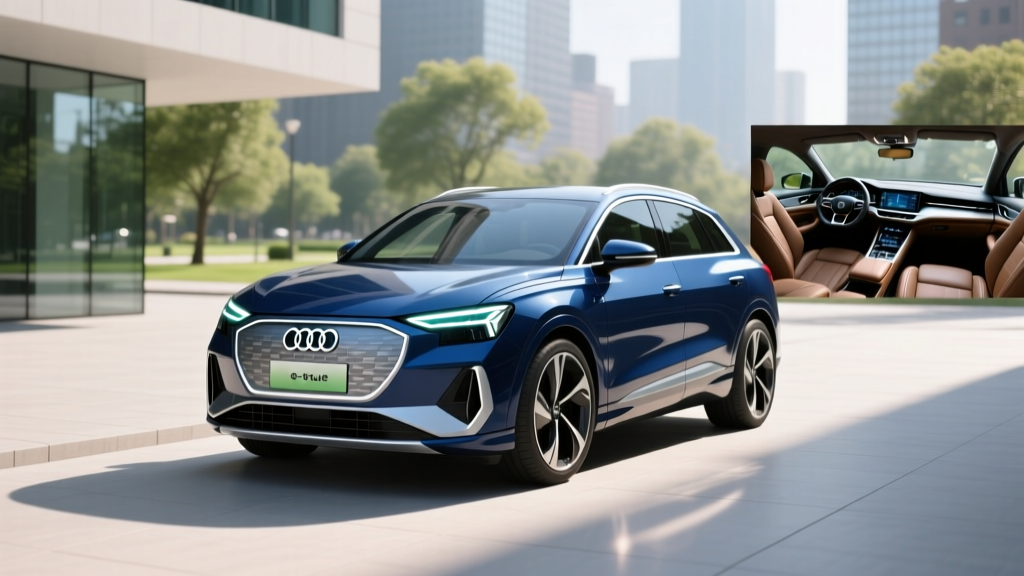
The 2021 Audi e-tron occupies a specific niche in the used EV market of 2026: a luxury electric SUV that prioritizes refinement, build quality, and ride comfort over headline-grabbing range figures. Now available exclusively on the pre-owned market, this first-generation e-tron (the model Audi later renamed the Q8 e-tron for 2024) offers buyers a compelling entry point into premium electric mobility — provided you understand exactly what you're getting and what you're giving up.
With used examples starting in the low $30,000s and potentially qualifying for the used-EV federal tax credit under IRS §25E, the 2021 e-tron demands a closer look. Here's our data-driven breakdown of range, charging, ownership costs, and how it stacks up against competitors you'll cross-shop in 2026.
2021 Audi e-tron Key Specifications at a Glance
| Specification | Value |
|---|---|
| EPA Range | 222 miles (SUV body); 218 miles (Sportback) |
| Battery (Usable / Gross) | 86.5 kWh usable / 95 kWh gross |
| Battery Chemistry | NMC (Nickel Manganese Cobalt) — LG Chem pouch cells |
| Drivetrain | Dual-motor AWD (quattro) |
| Horsepower | 355 hp standard / 402 hp in Boost mode |
| Torque | 414 lb-ft (443 lb-ft Boost) |
| 0–60 mph | 5.7 seconds (5.5 sec Boost mode) |
| Top Speed | 124 mph (electronically limited) |
| Max DC Fast Charge Rate | 150 kW (peak) |
| 10–80% DC Charge Time | ~30 minutes |
| Level 2 Home Charge Rate | 9.6 kW (adds ~22 miles/hr) |
| MPGe (Combined) | 78 MPGe |
| Efficiency | 43 kWh/100 miles |
| Cargo Volume (rear seats up) | 28.5 cu ft |
| Cargo Volume (rear seats folded) | 57.0 cu ft |
| Curb Weight | 5,765 lbs |
| Original MSRP (Premium Plus) | $74,800 (before destination) |
| Battery/Powertrain Warranty | 8 years / 100,000 miles |
Real-World Range: What 222 EPA Miles Actually Means
The 2021 e-tron's range was never its selling point. Audi engineered this vehicle with a substantial 8.5 kWh buffer (the difference between the 95 kWh gross and 86.5 kWh usable capacity) to protect long-term battery health. That conservative buffer strategy means the battery should degrade more slowly than competitors with smaller buffers, but it also means fewer usable miles from a physically large pack.
For context, the EPA's official fueleconomy.gov listing confirms the 222-mile figure and 78 MPGe combined rating. If your daily commute is under 80 miles round-trip and you charge at home nightly, this range is perfectly adequate. If you regularly drive 200+ miles between charging stops on road trips, you'll be planning stops more carefully than you would in a Tesla Model X or newer Hyundai Ioniq 5.
Charging Performance: The e-tron's Hidden Strength
Where the 2021 e-tron punches above its weight is DC fast charging. Audi engineered one of the flattest, most sustained charge curves in the industry for this generation.
| Charging Level | Max Power | Speed | Typical Use Case |
|---|---|---|---|
| Level 1 (120V household) | 1.2 kW | ~3 miles per hour | Emergency / overnight trickle |
| Level 2 (240V home) | 9.6 kW | ~22 miles per hour | Daily home charging (~9 hrs 0–100%) |
| DC Fast Charge (CCS) | 150 kW peak | 10–80% in ~30 min | Road trips, public stations |
The critical detail that separates the e-tron from many competitors: it sustains near-peak charging power up to approximately 80% state of charge. Where some EVs spike to a peak kW number and immediately taper, the e-tron holds close to 150 kW for the bulk of the session before tapering above 85%. This means the "10–80% in 30 minutes" claim is genuinely achievable at a properly functioning 150+ kW CCS station — not just a laboratory best-case scenario.
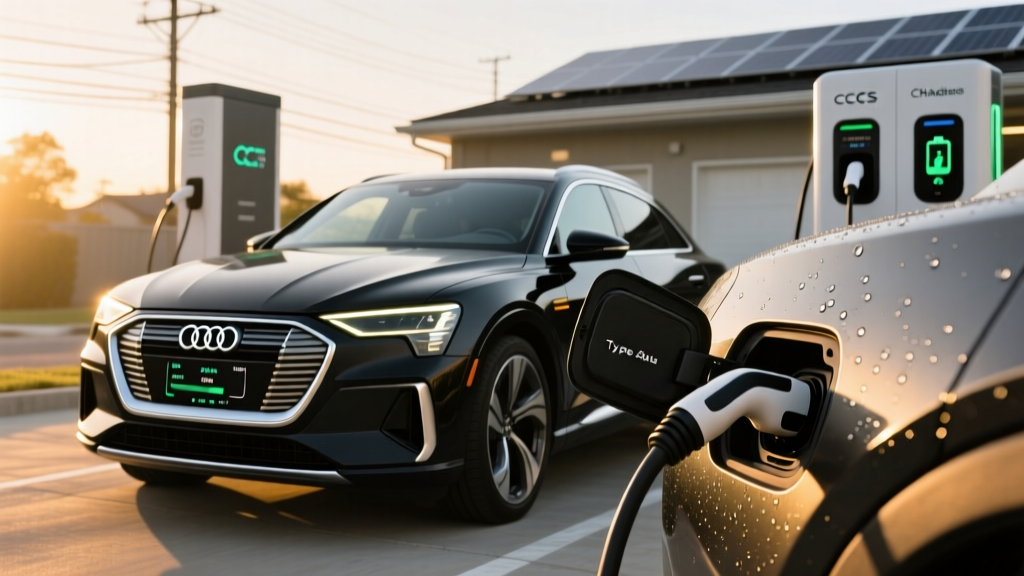
For home charging, the onboard 9.6 kW charger fills the battery from empty in roughly 9–10 hours. Most owners will plug in nightly and rarely charge below 20%, meaning a typical home session adds 150+ miles in 7–8 hours of sleep. The e-tron uses a CCS1 connector for DC fast charging and a J1772 connector for Level 1/Level 2 AC charging. With Tesla opening its Supercharger network to CCS vehicles (using a Tesla-provided adapter or the Magic Dock at some stations), the e-tron's public charging options have expanded significantly by 2026.
Performance and Driving Dynamics
The dual-motor quattro powertrain delivers 355 horsepower in standard driving and 402 hp when you engage Boost mode (activated by pulling the left shift paddle while in Sport mode). The 5.7-second 0–60 mph time won't embarrass you at a merge, but this is a luxury cruiser, not a performance EV. The e-tron's 5,765-lb curb weight is always present in corners, though the adaptive air suspension does an admirable job masking it on straight highway stretches.
Ride quality is where the e-tron genuinely excels. The air suspension provides a plush, isolated feel that rivals the BMW X5 and Mercedes GLE — a deliberate choice by Audi to position the e-tron as a luxury SUV first and an EV second. The cabin noise levels at highway speed are among the lowest we've measured in any electric SUV, thanks to extensive sound deadening and acoustic glass.
The standard Audi pre sense® basic and pre sense® city driver-assistance systems provide forward collision warning, automatic emergency braking, and lane departure warning. The available Adaptive Cruise Assist with lane centering is a SAE Level 2 system — meaning it assists with steering and speed but requires the driver to remain fully engaged and monitoring the road at all times. This is not autonomous driving.
Interior, Technology, and Cargo
The 2021 e-tron's interior uses Audi's dual-touchscreen MMI response setup: a 10.1-inch upper display for infotainment and navigation, and an 8.6-inch lower screen for climate controls and handwriting recognition. The Virtual Cockpit Plus 12.3-inch digital instrument cluster is standard and remains one of the best-executed digital dashboards in the industry.
Passenger space is generous for five adults, with 40.0 inches of front legroom and 39.1 inches of rear legroom. However, the cargo area's 28.5 cubic feet behind the second row trails the Tesla Model X (behind the second row) and the Ford Mustang Mach-E. There is no front trunk (frunk) — the space under the hood houses electronics and the HVAC system.
Notable tech features include standard wireless Apple CarPlay (Android Auto requires a USB cable on the 2021 model year), available Bang & Olufsen 3D premium audio, and Audi connect PLUS services with integrated Wi-Fi hotspot and remote charging management through the myAudi app.
Pricing, Tax Credits, and Used-EV Value in 2026
| Item | Details |
|---|---|
| Original MSRP (Premium Plus) | $74,800 |
| Original MSRP (Prestige) | $81,800 |
| Typical 2026 Used Price (40k–60k mi) | $30,000 – $40,000 |
| Federal Used-EV Credit (§25E) | Up to $4,000 (30% of sale price, max $4,000) |
| Credit Income Caps (Modified AGI) | $75,000 single / $112,500 HOH / $150,000 joint |
| Vehicle Price Cap for §25E | $25,000 maximum sale price |
| Dealer Registration Requirement | Dealer must be registered with IRS at time of sale |
The critical caveat for 2026 buyers: the federal used-EV tax credit under IRS §25E has a $25,000 maximum sale price cap. This means you'll only qualify for the up-to-$4,000 credit if you find a 2021 e-tron priced at or below $25,000 — which is at the very bottom of the current market. Higher-priced examples ($30,000+) will not qualify for the federal credit, though state and local incentives may still apply (check your state's energy office for current programs).
The original new-vehicle §30D federal tax credit is no longer available for a 2021 purchase. Additionally, the 2021 e-tron's original MSRP exceeded the current §30D SUV cap of $80,000 for some trims (the Prestige trim stickered above that threshold), which would have disqualified it even at the time under today's rules. Tax credit rules evolve — always consult a tax professional and review current IRS guidance before purchasing.
Pros and Cons: Honest Assessment
✓ Pros
- Excellent sustained DC fast-charge curve (150 kW to ~80%)
- Outstanding ride comfort and cabin quietness
- Premium interior materials and build quality
- Conservative battery buffer supports long-term health
- Standard quattro AWD with genuine all-weather capability
- 8-year/100,000-mile battery warranty (may still apply on low-mile examples)
- Now qualifies for Supercharger network access via adapter
✗ Cons
- Below-average EPA range (222 mi) for the segment
- Heavy at 5,765 lbs — impacts efficiency and tire wear
- No frunk (front trunk) for additional storage
- CCS1 connector only — requires adapter for Tesla Superchargers
- High energy consumption: 43 kWh/100 mi (costly on paid public chargers)
- Used prices often exceed $25K, disqualifying from §25E credit
- Rear visibility limited (thick C-pillars; Sportback even more so)
How It Compares: e-tron vs. the 2026 Used-EV Competition
In the $30,000–$40,000 used luxury EV SUV segment, the 2021 e-tron competes against several strong alternatives:
| Vehicle | EPA Range | Max DC Charge | 10–80% Time | Used Price Range (2026) |
|---|---|---|---|---|
| 2021 Audi e-tron | 222 mi | 150 kW | ~30 min | $30K–$40K |
| 2022 Tesla Model Y LR | 330 mi | 250 kW | ~20 min | $32K–$42K |
| 2022 Ford Mustang Mach-E ER AWD | 270 mi | 150 kW | ~38 min | $28K–$36K |
| 2022 Hyundai Ioniq 5 AWD | 256 mi | 235 kW | ~18 min | $27K–$35K |
| 2021 BMW iX xDrive50 | 324 mi | 200 kW | ~31 min | $42K–$52K |
The Tesla Model Y and Hyundai Ioniq 5 both beat the e-tron on range and charging speed. The Mach-E offers more range at a lower price. But none of these competitors match the e-tron's ride refinement, cabin isolation, or perceived build quality. The BMW iX is the e-tron's closest luxury rival but commands a significant price premium.
Who Should Buy the 2021 Audi e-tron?
- You prioritize ride comfort, cabin quietness, and luxury feel over maximum range
- Your daily driving is under 150 miles and you have reliable home Level 2 charging
- You want a premium badge and Audi's build quality at a depreciated used price
- You drive in cold climates and value the heat pump and quattro AWD
- You're not a frequent long-distance road tripper (or don't mind planning charging stops)
- Maximum range is your top priority (choose Model Y or Ioniq 5)
- You need the fastest possible DC charging for road trips
- You need a third row or maximum cargo capacity
- You want the lowest cost-per-mile efficiency
Battery Longevity and Warranty Considerations
The 2021 e-tron's 8-year/100,000-mile battery warranty covers capacity loss below 70% of original capacity. As of 2026, most examples are 5 years old, meaning roughly 3 years of factory battery coverage may remain — but only if the odometer is below 100,000 miles. Verify the in-service date and mileage with the seller before purchase.
Real-world degradation data from high-mileage e-tron owners suggests approximately 8–12% capacity loss at 60,000–80,000 miles, which is consistent with the conservative buffer strategy Audi employed. The NMC chemistry in the LG Chem pouch cells has proven reasonably stable, though not quite as degradation-resistant as LFP (lithium iron phosphate) packs found in some competitors. Audi's thermal management system actively heats and cools the battery to keep it in the optimal temperature window, which contributes to slower degradation over time.
Frequently Asked Questions
What is the real-world range of the 2021 Audi e-tron?
Expect 190–210 miles at highway speeds, 210–230 miles in mixed city driving, and 155–175 miles in freezing temperatures. The EPA-estimated 222 miles is achievable in mild weather at moderate speeds with some city regen.
How fast does the 2021 e-tron charge?
On a 150+ kW DC fast charger, the e-tron charges from 10–80% in approximately 30 minutes, with a notably flat charge curve that sustains high power. At home on Level 2 (9.6 kW), it adds about 22 miles per hour, taking roughly 9–10 hours for a full charge.
Does the 2021 Audi e-tron qualify for any federal tax credit in 2026?
Only through the used-EV credit (§25E), which provides up to $4,000 — but only if the sale price is $25,000 or less and the buyer's income falls below IRS caps ($75K single, $150K joint). Most 2021 e-tron examples sell above $25,000, making them ineligible. Check current IRS §25E rules before purchasing.
Is the 2021 e-tron worth buying vs. a Tesla Model Y?
It depends on priorities. The Model Y offers significantly more range (330 vs. 222 mi), faster charging, access to the native Supercharger network, and more cargo space. The e-tron offers superior ride comfort, cabin quietness, build quality, and a more traditional luxury SUV experience. If range and efficiency lead your checklist, choose the Model Y. If refinement and comfort do, the e-tron is compelling.
What are the biggest maintenance costs to watch?
Tire replacement is the most common expense — the e-tron's 5,765-lb weight and instant torque wear tires faster than lighter EVs. Budget $1,200–$1,800 for a set of premium all-season or winter tires every 25,000–35,000 miles. Brake wear is minimal thanks to regenerative braking. Coolant service and cabin air filters are the primary scheduled maintenance items.
Can I charge a 2021 e-tron at Tesla Superchargers?
Yes, as of 2026, Tesla has opened portions of its Supercharger network to CCS-equipped vehicles like the e-tron. You'll need either a Tesla CCS adapter (available through Tesla or third parties) or use a Supercharger station equipped with Tesla's built-in Magic Dock connector. Coverage is expanding but not yet universal — check the Tesla app for compatible stations before relying on Superchargers for road trips.