Quick Verdict: Still a Benchmark Used EV in 2026
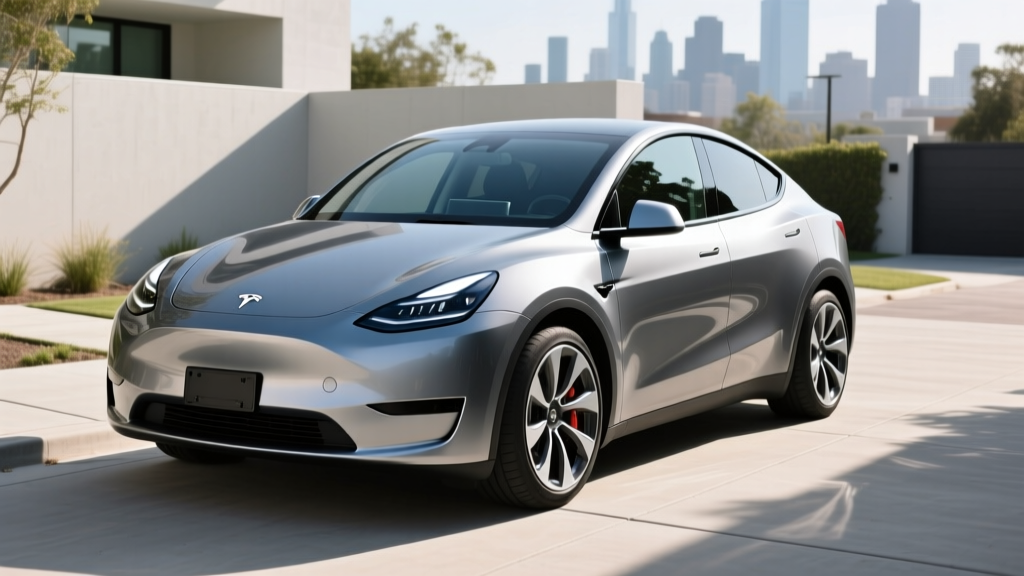
The 2020 Tesla Model Y Performance launched as the inaugural model year for Tesla's compact electric crossover, and six years later it remains one of the most compelling used EVs on the market. With a dual-motor all-wheel-drive powertrain producing roughly 456 horsepower, a 3.5-second 0-60 mph time, and an EPA-estimated 280 miles of range, it set the template that nearly every competitor has chased since. In 2026, pre-owned examples routinely sell between $22,000 and $30,000 depending on mileage and condition — and some may still qualify for the $4,000 used-EV federal tax credit under IRS §25E rules.
This review breaks down every spec that matters to a used-EV buyer: real-world range, charging speed and curve behavior, battery chemistry and degradation expectations, interior practicality, and how the 2020 Model Y Performance stacks up against rivals like the Ford Mustang Mach-E GT and Hyundai Ioniq 5.
2020 Model Y Performance: Core Specs at a Glance
| Spec | Value |
|---|---|
| EPA Range | 280 miles (original sticker; later revised to 303 mi for same hardware) |
| Battery (Usable) | ~75 kWh, NMC (Nickel Manganese Cobalt) |
| Drivetrain | Dual-Motor AWD |
| Horsepower | ~456 hp (combined) |
| 0-60 mph | 3.5 seconds |
| Top Speed | 155 mph |
| Peak DC Fast Charge | 250 kW (V3 Supercharger) |
| 10-80% DC Charge Time | ~27 minutes |
| Level 2 Home Charging | 11.5 kW / 48A (~32 mi/hr) |
| Efficiency (EPA) | 121 MPGe combined / 28 kWh/100 mi |
| Cargo (rear seats up / folded) | 30.2 / 76.2 cu ft |
| Battery Warranty (original) | 8 years / 120,000 miles (70% retention) |
| Original MSRP | $60,990 (before incentives) |
Range and Efficiency: EPA Sticker vs. Real World
The 75 kWh NMC battery pack in the 2020 Model Y Performance delivers 28 kWh per 100 miles in combined EPA testing, making it one of the most efficient dual-motor AWD crossovers of its era. For context, the Ford Mustang Mach-E GT (extended range) consumes roughly 33 kWh/100 mi. Tesla's heat pump — standard on the Model Y from launch — helps mitigate cold-weather range loss compared to EVs relying solely on resistive cabin heaters, though you will still see a 20-30% reduction in freezing temperatures.
According to fueleconomy.gov, the 2020 Model Y Performance achieves 121 MPGe combined (129 city / 116 highway). Owners tracking long-term State of Health (SoH) on forums like Tesla Motors Club report average degradation of 8-12% at 60,000 miles, meaning a six-year-old example with moderate mileage may offer roughly 250 miles of real-world range when new-equivalent.
Charging Speed: DC Fast Charge and Home Level 2
The 2020 Model Y Performance supports up to 250 kW peak DC fast charging on Tesla V3 Superchargers, which was class-leading at launch. However, peak kW is not sustained kW — understanding the charge curve is critical for road-trip planning.
| Charging Level | Power / Rate | Speed | Notes |
|---|---|---|---|
| Level 1 (120V) | ~1.4 kW | ~4 mi/hr | Emergency/trickle only |
| Level 2 (240V, 48A) | 11.5 kW | ~32 mi/hr | Home Wall Connector or equivalent |
| DC Fast (V3 Supercharger) | Peak 250 kW | 10-80% in ~27 min | Tapers significantly above 50% SoC |
| DC Fast (CCS adapter) | Up to ~175 kW | 10-80% in ~35 min | Requires Tesla CCS adapter; varies by station |
The charge curve on the 2020 Model Y Performance ramps quickly from low states of charge: you can add roughly 162 miles of range in 15 minutes at a V3 Supercharger when arriving at 10% SoC. However, charging speed tapers sharply after 50% — the car may pull only 60-80 kW between 50-80%. This means the 10-80% session takes around 27 minutes, but an 80-100% top-off can add another 25-30 minutes. For road trips, plan to charge between 10-60% for the fastest stops and skip topping off unless you need the extra range to reach your next stop.
At home, the onboard 11.5 kW charger (48 amps) is one of the fastest Level 2 acceptance rates in the segment. A full charge from 10% to 100% takes roughly 7 hours on a Tesla Wall Connector or any quality 48-amp Level 2 EVSE. This requires a 60-amp dedicated circuit — factor in $500-$1,500 for professional installation if you don't already have one, and potentially $1,500-$3,000 more if your electrical panel needs an upgrade to 200 amps.
Note: The 2020 Model Y shipped with a Tesla proprietary (NACS) connector. In 2026, Tesla's CCS adapter is widely available (~$175), enabling access to Electrify America, EVgo, and other CCS networks. With the broader industry adopting NACS, the Tesla connector is now an advantage rather than a limitation.
Performance and Drivetrain
The Performance trim's dual-motor AWD system pairs a permanent-magnet synchronous motor on the rear axle with an induction motor up front. Combined output sits at approximately 456 horsepower and 497 lb-ft of torque, launching the Model Y Performance from 0-60 mph in 3.5 seconds — verified by multiple independent tests at launch. The top speed is electronically limited to 155 mph.
Beyond straight-line speed, the Performance trim includes a lowered suspension (compared to the Long Range), 21-inch Überturbine wheels, performance brakes, and a track mode that adjusts stability control and torque distribution. In daily driving, the Model Y Performance rides firmer than the Long Range but remains compliant enough for commuting. The 21-inch wheels do reduce range by roughly 5-8% compared to the 19- or 20-inch options — a trade-off worth understanding if you're buying used and the previous owner kept the larger wheels installed.
Interior, Cargo, and Technology
The 2020 Model Y interior is defined by minimalism: a single 15-inch landscape touchscreen handles all infotainment, climate, and vehicle controls. There is no instrument cluster — speed and navigation appear on the left third of the central display. Front headroom measures 41.0 inches and rear legroom is 37.3 inches, which accommodates adults comfortably on longer trips.
Cargo capacity is a standout: 30.2 cubic feet behind the second row and 76.2 cubic feet with the rear seats folded, rivaling midsize SUVs. A small front trunk (frunk) adds 4.1 cubic feet for charging cables or groceries. The optional third-row seat (rarely equipped) technically makes the Model Y a 7-seater, but the rearmost row is only practical for small children.
Technology highlights include:
- Autopilot (standard): SAE Level 2 driver-assist with Traffic-Aware Cruise Control and Autosteer. The driver must remain engaged at all times.
- Full Self-Driving Capability (optional, $7,000 at launch): Adds Navigate on Autopilot, Auto Lane Change, Autopark, and Smart Summon. Still SAE Level 2 — not autonomous driving.
- Over-the-air updates: The 2020 Model Y continues to receive software updates in 2026, including UI refreshes, efficiency tweaks, and entertainment features.
- Sentry Mode and Dashcam: Uses the vehicle's external cameras for security recording and incident capture.
- HEPA air filtration: Bioweapon Defense Mode with a large HEPA filter — a genuine differentiator in air quality.
Notable drawbacks: The 2020 Model Y lacks a traditional instrument cluster, physical climate buttons, and Apple CarPlay/Android Auto (Tesla's proprietary system is the only option). Panel gaps and paint quality on 2020 Fremont-built examples are a known concern — inspect carefully on any used purchase. Road noise at highway speeds is more pronounced than in the refreshed 2024+ Model Y.
Used Pricing and Federal Tax Credit Eligibility
In 2026, the 2020 Tesla Model Y Performance trades on the used market between roughly $22,000 and $30,000 depending on mileage, condition, and whether FSD was purchased. Tesla's own used inventory, CarMax, Carvana, and private-party listings all fall within this range.
The original $7,500 federal new-EV credit (§30D) no longer applies to this model year for new purchases, as the vehicle was sold years ago. The used credit (§25E) is the relevant incentive for 2026 buyers.
Battery Longevity, Degradation, and Warranty
The 2020 Model Y Performance uses an NMC (Nickel Manganese Cobalt) lithium-ion battery pack with approximately 75 kWh of usable capacity. NMC chemistry offers higher energy density than LFP (lithium iron phosphate), enabling the Model Y's strong range in a compact package, but it is more sensitive to sustained high states of charge. Tesla recommends daily charging to 80-90% for NMC packs, reserving 100% charges for road trips.
The original battery and drive unit warranty covers 8 years or 120,000 miles (whichever comes first), with a guaranteed minimum 70% capacity retention. For a 2020 model, that warranty extends through the 2028 model year or 120,000 miles. Real-world degradation data from Tesla's 2024 Impact Report and owner-tracked databases suggest NMC packs retain approximately 88-92% capacity at 60,000 miles and 82-88% at 100,000 miles. A 2020 example with 50,000 miles should still deliver roughly 90% of its original range.
If the battery does require replacement out of warranty, Tesla service centers and third-party EV shops quote $12,000-$16,000 for a Model Y pack replacement in 2026 — a significant but not catastrophic cost relative to the vehicle's used value.
How It Compares: Model Y Performance vs. Key Rivals
| Spec | 2020 Model Y Perf. | 2021 Mach-E GT | 2022 Ioniq 5 AWD |
|---|---|---|---|
| EPA Range | 280 mi | 260 mi | 256 mi |
| 0-60 mph | 3.5 sec | 3.5 sec | 5.0 sec |
| Peak DC Charge | 250 kW | 150 kW | 233 kW |
| 10-80% Time | ~27 min | ~45 min | ~18 min |
| Cargo (rear up) | 30.2 cu ft | 29.7 cu ft | 27.2 cu ft |
| Used Price Range (2026) | $22K-$30K | $20K-$27K | $23K-$30K |
| Supercharger Access | Native NACS | Adapter needed | Adapter needed |
The Model Y Performance holds an edge in Supercharger network access (native NACS, no adapter), cargo space, and over-the-air software longevity. The Mach-E GT offers a more traditional interior layout with physical controls and Apple CarPlay, but its slower 150 kW peak charging is a road-trip drawback. The Ioniq 5 charges faster than the Model Y but arrived later (2022 model year), so used examples tend to be priced higher and have fewer available units.
Who Should Buy the 2020 Model Y Performance?
- Performance-oriented commuters who want sports-sedan acceleration in a crossover body with 280 miles of daily range.
- Families needing cargo space — 76.2 cu ft with seats folded handles strollers, camping gear, and Costco runs easily.
- Road-trip drivers who value Tesla's Supercharger network reliability for long-distance travel.
- Budget-conscious EV buyers who want a premium, fast EV under $25,000 with potential $4,000 tax credit eligibility.
Pros and Cons
Pros
- 3.5-second 0-60 mph — supercar acceleration in a family crossover
- Native NACS connector — seamless Supercharger access, no adapter
- 250 kW peak DC charging with strong low-SoC ramp
- Class-leading cargo space (76.2 cu ft)
- Continued OTA software updates in 2026
- Strong used-EV tax credit eligibility (up to $4,000)
- HEPA air filtration standard
Cons
- No Apple CarPlay or Android Auto
- Minimalist interior lacks physical controls — polarizing
- 2020 Fremont build quality: panel gaps and paint inconsistencies
- 21-inch wheels reduce range and ride comfort
- Road noise noticeable at highway speeds vs. 2024+ refresh
- NMC battery requires 80-90% daily charge limit (not 100%)
- FSD purchase does not transfer reliably to used buyers
Frequently Asked Questions
What is the real-world range of the 2020 Tesla Model Y Performance?
The EPA sticker reads 280 miles (later revised to 303 mi via software). In practice, expect 240-260 miles at highway speeds in moderate weather and 190-220 miles in sub-freezing temperatures. City driving with regen braking can stretch range to 270+ miles.
How fast does it charge at home and on the road?
On a V3 Supercharger, the 2020 Model Y Performance peaks at 250 kW and charges from 10-80% in approximately 27 minutes. At home on a 48-amp Level 2 charger (11.5 kW), it gains about 32 miles of range per hour, with a full 10-100% charge taking roughly 7 hours.
Does the 2020 Model Y Performance qualify for a federal tax credit?
Not the new-vehicle §30D credit — that applied at original purchase. However, under the IRS §25E used clean vehicle credit, you may qualify for up to $4,000 (30% of sale price) if you buy from a dealer at or below $25,000, meet income caps ($75K single / $150K joint), and the vehicle meets battery sourcing requirements. Verify current rules at irs.gov.
Is the 2020 Model Y Performance worth buying in 2026 vs. newer EVs?
Yes, for buyers prioritizing acceleration, Supercharger access, and cargo space under $30,000. It remains faster than most new EVs in its price range and benefits from Tesla's ongoing OTA updates. However, newer rivals like the Ioniq 5 offer faster 800V charging, and the 2024+ refreshed Model Y has better noise insulation and build quality if your budget allows.
What should I check before buying a used 2020 Model Y Performance?
Review the battery State of Health (SoH) via the Tesla app or service menu — look for less than 12% degradation at typical mileage. Inspect panel gaps and paint (known Fremont issues). Confirm whether FSD was purchased and whether it transfers (Tesla's FSD transfer policy has changed repeatedly). Check remaining warranty — the 8-year/120,000-mile battery warranty runs through 2028 for 2020 models.