The 2020 Tesla Model X Performance occupies a unique space in the used EV market in 2026. As a flagship luxury electric SUV from Tesla's pre-refresh generation, it delivers supercar-level acceleration, falcon-wing doors, and access to the Supercharger network — all at a fraction of its original $105,000+ MSRP. But buying a six-year-old luxury EV requires clear-eyed analysis of battery degradation, charging speeds that lag behind modern rivals, and the realities of owning an out-of-warranty air-suspension SUV.
This review covers the 2020 Model X Performance (sometimes badged as the "P100D" successor or simply "Model X Performance" before Tesla simplified its naming in mid-2019) with exact specs, real-world range data, charging benchmarks, and a practical ownership framework for today's used-EV shopper.
2020 Tesla Model X Performance: Core Specifications at a Glance
| Specification | 2020 Model X Performance |
|---|---|
| EPA Range | 305 miles |
| Battery (Usable) | ~100 kWh (NMC chemistry) |
| Drivetrain | Dual-Motor AWD |
| Horsepower | ~534 hp (Performance) / ~778 hp (with Ludicrous) |
| 0–60 mph | 2.7 seconds (Ludicrous Mode) |
| Top Speed | 163 mph |
| Max DC Fast Charge | 200 kW (peak) |
| 10–80% DC Charge Time | ~40 minutes |
| Level 2 Home Charging | 11.5 kW (48A) — ~34 mi/hr |
| EPA Efficiency | 96 MPGe combined (35 kWh/100 mi) |
| Cargo Volume | 88.1 cu ft (max, 5-seat); 25.7 cu ft behind 3rd row |
| Seating | 5, 6, or 7 passengers |
| Towing Capacity | 5,000 lbs |
| Battery/Drive Unit Warranty (Original) | 8 years / 150,000 miles |
| Original Base MSRP | ~$99,990 (before options) |
Range and Efficiency: EPA vs. Real-World Expectations
Real-World Highway (70 mph, moderate temps): ~250–275 miles
Real-World Cold Weather (below 32°F, mixed driving): ~200–230 miles
Expected 2026 Range (with ~10–15% degradation): ~260–275 miles (new full-charge equivalent)
The 2020 Model X Performance carries a 100 kWh battery pack using nickel-manganese-cobalt (NMC) lithium-ion cells. According to fueleconomy.gov, the EPA-rated combined range is 305 miles, with 96 MPGe combined (35 kWh per 100 miles).
However, the Model X's large frontal area, heavy curb weight (~5,181 lbs), and permanent-magnet rear/induction front motor setup mean highway efficiency suffers noticeably. On a 70-mph cruise in mild weather, expect 250–275 miles before hitting a comfortable 10% buffer. In cold weather, the resistive cabin heating (the 2020 model lacks the heat pump introduced in the 2021 refresh) compounds range loss, dropping usable range to 200–230 miles in sub-freezing conditions.
For a 2026 used buyer, battery degradation is the key variable. Tesla's NMC packs typically lose 10–15% capacity over the first 100,000 miles, with degradation slowing significantly after that. A 2020 Model X with 60,000–80,000 miles will likely show 88–92% State of Health (SoH) on the battery health screen, translating to roughly 260–275 miles at a full charge. Always request a battery health screenshot from the seller before purchasing.
Charging Speed: DC Fast Charging and Home Level 2
| Charging Level | Power / Rate | Miles Added Per Hour | Notes |
|---|---|---|---|
| Level 1 (120V, 12A) | 1.4 kW | ~3–4 mi/hr | Emergency / trickle only |
| Level 2 (240V, 48A) | 11.5 kW | ~34 mi/hr | Full overnight charge in ~9 hrs |
| DC Fast (V3 Supercharger) | 200 kW peak | ~175 mi in 30 min | Tapers above 50% SoC |
| DC Fast (V2 Supercharger) | 150 kW peak | ~130 mi in 30 min | Common at older stations |
| CCS Adapter (Electrify America, etc.) | Up to 150 kW | Varies | Requires Tesla CCS adapter (~$200) |
The 2020 Model X Performance charges at a maximum of 200 kW on Tesla V3 Superchargers. This was competitive in 2020 but falls behind 2026 rivals like the Hyundai Ioniq 9 (peak 350 kW) and the refreshed Model X (250 kW). The real-world charge curve tells the full story: the pack pulls close to 200 kW only between roughly 10–30% State of Charge, then tapers to ~120 kW by 50%, and drops below 50 kW above 80%. A 10–80% session takes approximately 40 minutes on a V3 Supercharger.
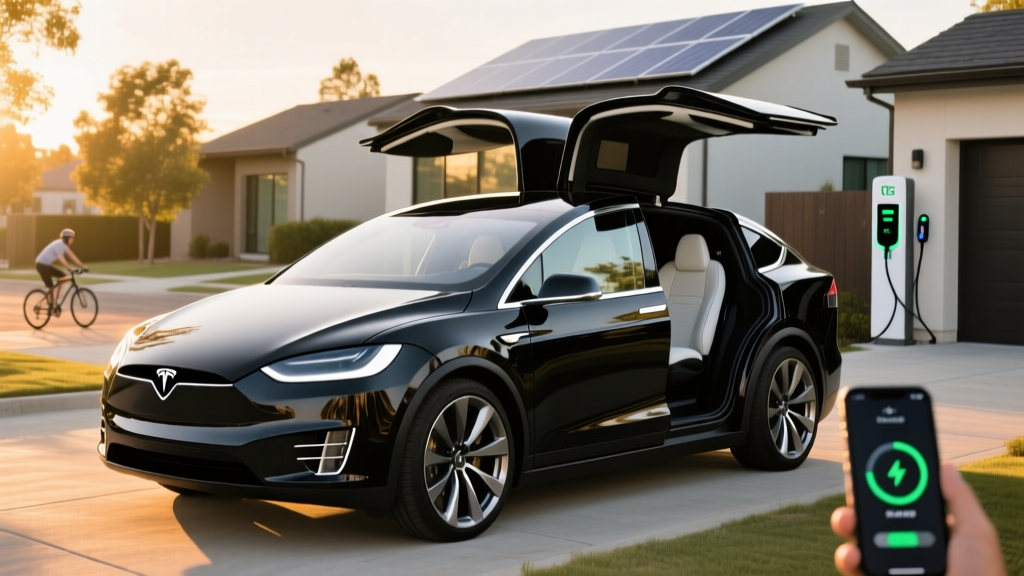
For home charging, the onboard charger supports 11.5 kW (48 amps) on a 240V/60A circuit. This adds about 34 miles of range per hour, meaning a full 0–100% charge takes roughly 9 hours. Most owners install a Tesla Wall Connector or a compatible 48A J1772 station with a Tesla adapter. A NEMA 14-50 outlet (240V/50A) is the budget-friendly alternative, delivering ~30 mi/hr of charge.
The Model X uses Tesla's proprietary connector (now standardized as NACS in North America). This gives native access to over 25,000 Supercharger stalls nationwide. For non-Tesla networks like Electrify America or EVgo, you'll need Tesla's CCS adapter, which supports up to 150 kW on compatible CCS stations.
Performance and Driving Dynamics
The 2020 Model X Performance is absurdly quick for a 5,181-pound SUV. In Ludicrous Mode, Tesla's official 0–60 mph time is 2.7 seconds — a figure that embarrassed sports cars costing three times as much. Even in standard "Sport" mode, the dual-motor AWD system delivers instant torque from the rear permanent-magnet motor and the front induction motor, yielding a 3.7-second 0–60 time.
The air suspension provides adjustable ride height (useful for rough driveways and speed bumps) and automatically lowers at highway speeds for aerodynamic efficiency. However, the 2020 generation's handling is best described as competent rather than engaging — body roll is noticeable in corners, and the steering lacks the precision of the BMW iX or the Porsche Cayenne E-Hybrid.
Regenerative braking is strong and customizable. The Model X supports one-pedal driving in "Hold" mode, though it doesn't come to a complete stop without brake application (unlike the 2021+ refresh). Towing capacity is rated at 5,000 lbs, though towing a 4,000-lb trailer will cut range roughly in half.
Interior, Tech, and Cargo: The Good and the Quirky
The 2020 Model X interior is polarizing. The minimalist dashboard centers on a 17-inch vertical touchscreen running Tesla's proprietary OS — snappy, feature-rich, and continuously updated via OTA (over-the-air) software. Navigation, media, climate controls, and vehicle settings all live on this screen. There is no traditional instrument cluster; a small secondary display behind the steering wheel shows speed and basic driving info.
Standout tech features:
- Autopilot (standard): Adaptive cruise control, lane-keeping, auto lane-change — SAE Level 2 driver assist, not self-driving
- Full Self-Driving (FSD) Capability (optional, ~$10,000 at purchase): Adds Navigate on Autopilot, Smart Summon, traffic light/stop sign recognition. Still requires full driver supervision (Level 2)
- Falcon Wing rear doors: Dramatic upward-opening doors with ultrasonic sensors for obstacle clearance
- HEPA air filtration with "Bioweapon Defense Mode"
- 17-speaker premium audio system
- Gaming and streaming on the center display (while parked)
Notable drawbacks:
- Panel gaps and interior trim quality were inconsistent in 2020 — a well-documented issue for pre-refresh Teslas
- Falcon Wing doors can be slow to open/close and occasionally struggle in heavy rain or tight spaces
- No Apple CarPlay or Android Auto (Tesla's walled garden)
- Third-row seat is tight for adults — best for children only
- The synthetic leather ("Tesla Premium Interior") shows wear on high-mileage examples
Cargo space: With the third row folded, the 5-seat Model X offers 88.1 cubic feet of cargo volume — genuinely class-leading. Behind the third row (7-seat config), you get 25.7 cu ft. The front trunk (frunk) adds 6.6 cu ft of enclosed storage, useful for charging cables and groceries.
Pricing, Tax Credits, and Used-EV Value in 2026
| Cost Factor | Amount |
|---|---|
| Original 2020 Base MSRP | ~$99,990 |
| Typical 2020 As-Tested Price (with FSD, Ludicrous) | $110,000–$120,000 |
| 2026 Used Market Price (60K–80K mi, good condition) | $38,000–$52,000 |
| Federal Used-EV Tax Credit (§25E) | Up to $4,000 (30% of sale price, max $4,000) |
| Estimated Price After Federal Credit | $34,000–$48,000 |
The 2020 Model X Performance originally started at ~$99,990, with typical as-tested prices reaching $110,000–$120,000 once buyers added FSD, Ludicrous Mode, premium paint, and 22-inch wheels.
In 2026's used market, well-maintained examples with 60,000–80,000 miles trade between $38,000 and $52,000 depending on condition, options, and battery health. This represents steep depreciation — roughly 55–65% off original MSRP — which is typical for luxury EVs of this era.
Tax credit eligibility: As a used vehicle, the 2020 Model X is ineligible for the new-vehicle §30D credit ($7,500). Instead, it may qualify for the §25E Used Clean Vehicle Credit, which provides 30% of the sale price, up to a maximum of $4,000. Eligibility requirements include:
- Sale price must be $25,000 or less to maximize the credit (30% of $25,000 = $7,500, capped at $4,000)
- Buyer AGI limits: $75,000 (single), $112,500 (head of household), $150,000 (married filing jointly)
- Vehicle must be purchased from a licensed dealer (private-party sales do not qualify)
- Vehicle must be at least 2 model years old (2020 qualifies in 2026)
- The credit can be transferred to the dealer at point of sale for an immediate price reduction
- Vehicle must have a battery capacity of at least 7 kWh (the Model X's 100 kWh easily qualifies)
Note: Tax rules can change. Always verify current eligibility with a tax professional and consult IRS.gov for the latest guidance.
Battery Warranty and Long-Term Ownership Costs
Tesla's original battery and drive unit warranty for the 2020 Model X covers 8 years or 150,000 miles (whichever comes first), with a minimum 70% capacity retention threshold. For a 2020 vehicle, this warranty expires in 2028 at the latest — meaning most 2026 buyers still have 1–2 years of factory battery coverage remaining, assuming mileage hasn't exceeded 150,000.
This is a significant advantage over buying a 2018 or 2019 Model X, where warranty coverage may have already expired. Always verify the in-service date and current mileage against the warranty terms.
Out-of-warranty repair risks:
- Battery replacement (if needed post-warranty): $15,000–$22,000 at a Tesla Service Center
- Air suspension strut replacement: $1,500–$2,500 per corner (a known wear item on high-mileage examples)
- Falcon Wing door actuator repair: $1,000–$2,000 per door
- Drive unit replacement: $5,000–$8,000
- 12V auxiliary battery: $300–$500 (standard maintenance item)
Insurance costs for the Model X remain elevated relative to mainstream EVs. Expect annual premiums of $2,500–$4,000 depending on your location, driving record, and coverage level. Get a quote before purchasing.
2020 Model X Performance vs. Key Used-EV Competitors
In the $38,000–$52,000 used-EV SUV market of 2026, the Model X Performance competes with several compelling alternatives:
2.7s 0–60, OTA updates, Supercharger network, class-leading cargo space
Superior build quality, quieter cabin, 204-mi EPA range, slower 150 kW charging
326-mi EPA, lower cost ($28K–$38K used), less cargo space, no falcon doors
310-mi EPA, 300 kW DC charging, modern interior, ~$32K–$42K used
The Model X wins on raw performance, cargo volume, and Supercharger access. It loses on interior build quality, charging speed versus 800V rivals, and ongoing maintenance costs for its complex air suspension and falcon wing mechanisms.
Pros, Cons, and Who Should Buy
- Supercar-rivaling 2.7s 0–60 acceleration in a 7-seat SUV
- 305-mi EPA range (260+ real-world in 2026 with degradation)
- Native Supercharger access — best public charging network in North America
- Class-leading 88.1 cu ft cargo volume
- Continuous OTA software updates add features over time
- Remaining factory battery warranty (through 2028 / 150K mi)
- Up to $4,000 federal used-EV tax credit
- 200 kW peak DC charging is slow vs. 2026's 350 kW standard
- Inconsistent panel gaps and interior quality for a $100K+ vehicle
- Falcon wing doors are slow, quirky, and expensive to repair
- Air suspension is a costly wear item post-warranty
- No Apple CarPlay/Android Auto
- High insurance premiums ($2,500–$4,000/year)
- Resistive heating (no heat pump) hurts cold-weather range
Who this EV suits best: The 2020 Model X Performance is ideal for performance-oriented families who need serious cargo space, want access to the Supercharger network for road trips, and can accept the quirks of a pre-refresh Tesla. It's a compelling used buy for buyers who prioritize acceleration and tech over interior refinement. It is less suited for buyers who want the fastest possible DC charging, a serene luxury cabin, or minimal long-term maintenance risk.
Frequently Asked Questions
What is the real-world range of the 2020 Tesla Model X Performance in 2026?
With typical battery degradation of 10–15%, expect 260–275 miles at a full charge in mild weather. Highway driving at 70 mph drops this to 230–250 miles. In cold weather below freezing, plan for 200–220 miles due to the lack of a heat pump.
How fast does the 2020 Model X charge on DC fast chargers and at home?
On a V3 Supercharger, it peaks at 200 kW and charges from 10–80% in approximately 40 minutes. At home on a 240V/48A Level 2 charger, it adds ~34 miles per hour, requiring about 9 hours for a full charge.
Does the 2020 Model X qualify for any federal EV tax credit?
Not the $7,500 new-vehicle credit (§30D). It may qualify for the §25E Used Clean Vehicle Credit of up to $4,000 if purchased from a dealer for $25,000 or less, and the buyer meets income limits ($75K single / $150K married filing jointly).
Is the 2020 Model X Performance worth buying vs. newer used EVs?
It depends on priorities. If you want maximum acceleration, cargo space, and Supercharger access in the $40K–$50K range, it's hard to beat. If you prefer faster DC charging, a heat pump, better interior quality, or lower maintenance risk, consider a 2022+ Model Y, Kia EV6, or BMW iX instead.
What are the biggest risks of buying a used 2020 Model X?
Air suspension failures ($1,500–$2,500 per corner), falcon wing door actuator issues ($1,000–$2,000 per door), and eventual battery replacement costs ($15,000–$22,000 out of warranty). Verify battery SoH, service history, and remaining warranty before purchase.
Is Tesla Autopilot or FSD on the 2020 Model X self-driving?
No. Both Autopilot and FSD (Supervised) are SAE Level 2 driver-assistance systems. The driver must remain fully attentive, keep hands on the wheel, and be prepared to take over at any moment. These systems assist with steering, acceleration, and braking but do not replace the driver.
Can I use non-Tesla charging networks with the 2020 Model X?
Yes, with Tesla's CCS adapter (sold separately, ~$200). This allows charging at Electrify America, EVgo, and other CCS-equipped stations at up to 150 kW. The Model X also natively supports all Tesla Supercharger and Destination Charger locations.