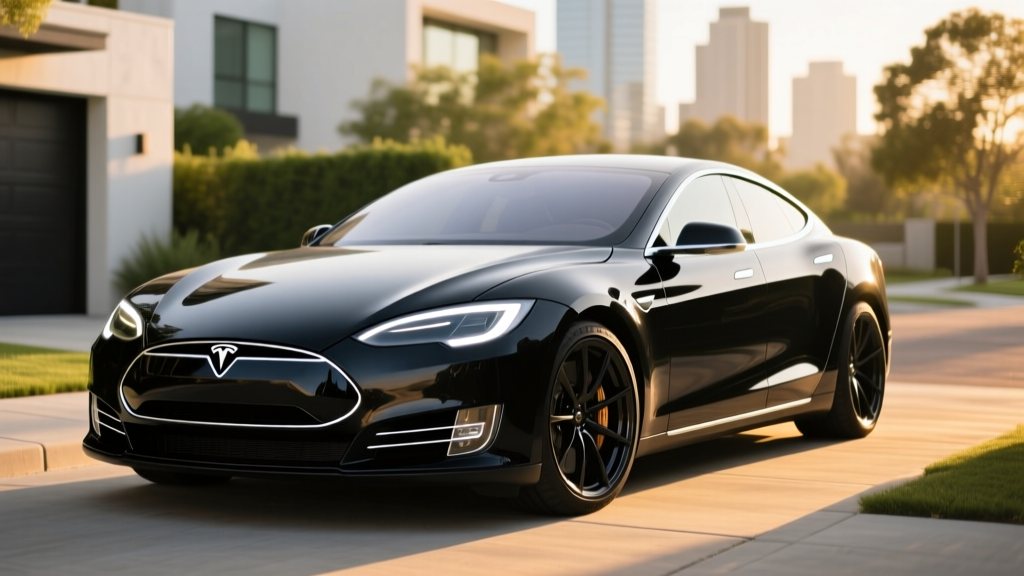
The 2020 Tesla Model S Performance remains one of the quickest production sedans ever built. With dual-motor all-wheel drive, a 100 kWh battery pack, and Ludicrous mode enabled, it delivers supercar acceleration in a five-seat luxury package. But beyond the headline numbers, how does this flagship sedan hold up in 2026 as a used EV purchase? We break down the real-world range, charging behavior, ownership costs, and whether Tesla's aging flagship still justifies its premium.
2020 Tesla Model S Performance HP and Powertrain Specs
The 2020 Model S Performance pairs a permanent-magnet synchronous motor on the rear axle with an induction motor up front. Combined output reaches 778 horsepower and approximately 841 lb-ft of torque. Tesla never published official peak HP on a dyno sheet, but independent testing and telemetry data confirm outputs in this range when launching with Ludicrous mode engaged.
| Spec | Value |
|---|---|
| Drivetrain | Dual-motor AWD |
| Front Motor | Induction (258 hp) |
| Rear Motor | Permanent-magnet synchronous (518 hp) |
| Combined Output | 778 hp / 841 lb-ft |
| 0–60 mph | 2.4 seconds (with rollout) |
| Quarter Mile | 10.6 seconds @ 125 mph |
| Top Speed | 163 mph |
| Battery (usable) | ~95 kWh (100 kWh pack, NMC) |
The front induction motor can freewheel when not needed, reducing drag and boosting highway efficiency — a trick Tesla pioneered with the original Roadster and refined across the S/X platform. The rear permanent-magnet motor provides the bulk of acceleration thrust and regenerative braking force.
Real-World Range vs. EPA Estimate
EPA Combined: 348 miles
Real-World Highway (70 mph, 72°F): ~285–310 miles
Real-World Highway (Cold, 30°F): ~230–265 miles
City/Commuter Driving: ~320–345 miles
Source: EPA via fueleconomy.gov
The 2020 Model S Performance carries a 100 kWh battery pack (approximately 95 kWh usable) using NMC (nickel-manganese-cobalt) chemistry. Tesla sourced these cells from Panasonic at the Gigafactory in Nevada. NMC offers higher energy density than LFP, which is why the Model S achieves over 340 miles of EPA range despite its 4,941-pound curb weight.
Real-world range depends heavily on driving style and conditions. The Model S Performance is a heavy sedan with wide 245/35R21 front tires (on the optional 21" Arachnids), and aggressive acceleration — the very thing buyers pay for — consumes energy quickly. On a flat 70-mph highway run in moderate temperatures, expect 285–310 miles before needing to charge. In freezing conditions, cabin heating and battery conditioning can drop that to 230–265 miles. City driving with frequent regen braking pushes range closer to the EPA sticker.
Efficiency ratings from the EPA list the 2020 Model S Performance at 111 MPGe combined (30 kWh/100 miles). That's competitive for a 5,000-pound AWD performance sedan but trails lighter EVs like the Model 3 Long Range (142 MPGe).
Charging Speed: DC Fast Charge and Home Level 2
The 2020 Model S uses the proprietary Tesla connector (now being adapted to NACS standard) and has full access to the Tesla Supercharger network — still the most reliable DC fast-charging ecosystem in the U.S.
| Charging Level | Max Rate | Speed / Notes |
|---|---|---|
| Level 1 (120V) | ~1.4 kW | ~3–4 miles/hour |
| Level 2 (240V, 48A) | 11.5 kW | ~34 miles/hour; full charge in ~9 hours |
| DC Fast (V2 Supercharger) | 200 kW peak | 10–80% in ~35 minutes |
| DC Fast (V3 Supercharger) | 200 kW peak* | 10–80% in ~35 minutes |
*The 2020 Model S Performance predates Tesla's 250 kW V3-capable battery architecture. While it can plug into a V3 Supercharger, the older pack and thermal management system limit sustained charge rates to roughly 200 kW peak, tapering significantly above 60% SoC.
This is a critical ownership detail: the 2020 Model S charges noticeably slower than the 2021+ refreshed Model S (which adopted the new heat pump and updated battery module design enabling 250 kW peaks). On a road trip, plan for 35–40 minute stops at 10–80%, compared to 18–22 minutes in a newer Model S Plaid or a Hyundai Ioniq 5 on a 350 kW charger.
The charge curve is the real story. The Model S Performance pulls close to 200 kW between 10–40% SoC, then steps down to ~140 kW by 55%, and drops below 80 kW past 70%. If you're road-tripping, the optimal strategy is to charge to 80% and go — the final 20% adds 25+ minutes for only ~70 miles of range.
At home on a Tesla Wall Connector (48A/240V), the onboard charger handles 11.5 kW, adding roughly 34 miles per hour. A full overnight charge from 20% takes about 7–8 hours. Most owners with a 40-amp circuit (common in older homes) will see ~9.6 kW, or about 28 miles/hour.
Interior, Cargo, and Technology
The 2020 Model S interior reflects Tesla's minimalist approach — a 17-inch vertically oriented touchscreen dominates the dashboard, replacing nearly all physical controls. The instrument cluster is a small 12.3-inch display behind the steering wheel. Build quality on 2020 models improved over earlier years but still drew criticism for panel gaps and material quality relative to the $100,000+ price tag.
Passenger and cargo dimensions:
- Front legroom: 42.7 inches
- Rear legroom: 35.4 inches
- Cargo (rear trunk): 26.3 cu ft
- Frunk (front trunk): 5.3 cu ft
- Total cargo: 31.6 cu ft (seats up); 58.1 cu ft (rear seats folded)
The rear seat is surprisingly spacious for a performance sedan, with enough headroom and legroom for adults on longer trips. The frunk is small compared to newer EVs (the refreshed Model S lost it entirely), but useful for charging cables and a small bag.
Standout tech features:
- 17-inch touchscreen with navigation, streaming, and gaming
- Over-the-air (OTA) software updates adding features post-purchase
- Autopilot (Level 2 driver assistance) standard — adaptive cruise + lane centering
- Full Self-Driving (FSD) capability available as paid add-on (still Level 2, requires driver supervision)
- HEPA air filtration with "Bioweapon Defense Mode"
- Sentry Mode (parked-camera surveillance)
- Dog Mode (climate control for pets with display message)
Notable drawbacks: The 2020 Model S lacks the yoke steering, rear-seat touchscreen, and refreshed interior of the 2021+ model. The vertically oriented screen is awkward for media viewing compared to landscape layouts. Turn signals and wiper stalks are conventional (a positive, depending on your view). The glass roof offers no shade, and cabin noise at highway speed is more pronounced than in a Mercedes EQS or BMW i7.
Pricing, Tax Credits, and Used Market Value
When new, the 2020 Tesla Model S Performance started at $99,990 MSRP (before destination). A fully optioned example with FSD ($10,000 at the time), 21" wheels, and premium interior pushed past $115,000.
| Item | Value |
|---|---|
| Original MSRP (base) | $99,990 |
| As-tested (typical loaded) | $112,000–$118,000 |
| Used price (2026 market, 50k mi) | $42,000–$55,000 |
| Federal tax credit (new, 2020) | Eligible for $7,500 (pre-MSRP cap era) |
| Used EV credit (§25E, 2026) | Up to $4,000 (30% of sale price, max $4,000) |
- Credit = 30% of sale price, capped at $4,000
- Vehicle must be at least 2 model years old (2020 qualifies)
- Sale price must be $25,000 or below to qualify (most 2020 Model S Performance examples exceed this)
- Buyer income caps: $75,000 single / $112,500 HOH / $150,000 joint
- Must purchase from a licensed dealer (private sales excluded)
- Source: IRS.gov §25E
Here's the catch: most 2020 Model S Performance examples sell for $42,000–$55,000 in 2026, well above the $25,000 sale-price cap for the §25E used credit. Unless you find a high-mileage or damaged example below $25,000, you will not qualify for the used EV tax credit. The original $7,500 federal credit was available to new buyers in 2020 (before Tesla hit the 200,000-vehicle cap phaseout timeline), but that ship has sailed.
Battery Warranty, Degradation, and Longevity
Tesla provides an 8-year / 150,000-mile battery and drive unit warranty on the 2020 Model S Performance, guaranteeing a minimum of 70% battery capacity retention over that period. For a 2020 model in 2026, roughly 2–4 years of factory battery warranty remain, depending on mileage.
NMC battery degradation in the Model S typically follows a curve: expect 5–8% capacity loss in the first 50,000 miles, then a slower linear decline. Data from Tesla fleet telemetry and owner forums suggest most 100 kWh packs retain 85–90% capacity at 80,000 miles. Supercharging frequently (more than 3–4 times per week) and regularly charging to 100% can accelerate degradation by 1–2% over the pack's lifetime.
If the battery needs replacement out of warranty, expect $15,000–$22,000 for a remanufactured pack at a Tesla service center. Third-party EV battery shops are emerging as a lower-cost alternative ($10,000–$14,000), but availability varies by region.
Pros, Cons, and Who Should Buy
- 0–60 in 2.4s — supercar acceleration, four doors
- 348 mi EPA range still competitive in 2026
- Access to Tesla Supercharger network
- Spacious rear seat and large cargo area
- OTA updates keep software current
- Strong depreciation = value on used market
- DC charging limited to ~200 kW (slower than modern EVs)
- Dated interior vs. 2021+ refresh and German rivals
- No federal tax credit for most used examples (above $25k cap)
- Ride quality firm on 21" wheels
- High insurance premiums (performance classification)
- Out-of-warranty battery replacement is expensive
- Performance enthusiasts who want sub-3-second 0–60 without a six-figure new-car purchase
- Long-distance commuters (200+ miles round trip) who value Supercharger access
- Small families needing rear-seat space and cargo room without an SUV
Who should look elsewhere: Buyers prioritizing the latest interior tech, fastest charging, or maximum tax incentives should consider the refreshed Model S (2021+), BMW i5, or Hyundai Ioniq 6.
Competitor Comparison
In 2026, a used 2020 Model S Performance competes against several compelling alternatives in the $45,000–$60,000 range:
| Vehicle | 0–60 | EPA Range | DC Charge Peak | Used Price (est.) |
|---|---|---|---|---|
| 2020 Tesla Model S Performance | 2.4s | 348 mi | 200 kW | $42k–$55k |
| 2021 Porsche Taycan 4S | 3.8s | 227 mi | 270 kW | $55k–$70k |
| 2022 BMW i4 M50 | 3.7s | 270 mi | 205 kW | $42k–$50k |
| 2022 Lucid Air Pure | 3.2s | 410 mi | 200 kW | $50k–$60k |
The Model S Performance still wins on straight-line acceleration and range. The Taycan charges faster and handles better but sacrifices 120+ miles of range. The Lucid Air Pure offers superior range and a more modern interior but is newer to the used market with less service history data. The BMW i4 M50 is a strong all-rounder but can't match the Tesla's performance or Supercharger network advantage.
Frequently Asked Questions
What is the real-world range of the 2020 Tesla Model S Performance?
The EPA rates it at 348 miles combined. In real-world highway driving at 70 mph in moderate weather, expect 285–310 miles. In cold weather (below freezing), range drops to approximately 230–265 miles due to cabin heating demand and reduced battery efficiency.
How fast does it charge on DC fast chargers and at home?
On a V2 or V3 Tesla Supercharger, the 2020 Model S Performance peaks at approximately 200 kW, completing a 10–80% charge in about 35 minutes. At home on a Level 2 Wall Connector (48A/240V), it charges at 11.5 kW, adding about 34 miles per hour.
Does the 2020 Model S Performance qualify for any federal EV tax credit in 2026?
Most likely not. The IRS §25E used EV credit caps eligibility at a $25,000 sale price, and nearly all 2020 Model S Performance examples sell for $42,000–$55,000. The original §30D new-vehicle credit was available in 2020 but is no longer applicable. Check IRS guidelines for your specific situation.
Is the 2020 Model S Performance worth buying vs. a newer EV?
If your priority is maximum acceleration and range at a depreciated price, yes — the $42k–$55k entry point gets you 778 hp and 348 miles of EPA range. If you want faster charging, a modern interior, or tax credit eligibility, look at a 2022+ model or a competitor like the Lucid Air Pure or BMW i4 M50.
How long will the battery last?
Tesla warranties the battery for 8 years/150,000 miles with 70% minimum capacity retention. Fleet data suggests NMC packs in the Model S retain 85–90% capacity at 80,000 miles under normal use. Out-of-warranty replacement costs $15,000–$22,000 at a Tesla service center.
Is Autopilot on the 2020 Model S self-driving?
No. Autopilot and Full Self-Driving (FSD) Capability on the 2020 Model S are SAE Level 2 driver-assistance systems. The driver must remain fully engaged, keep hands on the wheel, and monitor the road at all times. See the NHTSA's guidance on automated vehicle safety for details on automation levels.