If you are shopping for a used electric sedan in 2026, the 2020 Tesla Model 3 remains one of the most data-rich options on the market. Three production years and hundreds of thousands of miles of fleet data give us a clear picture of how its battery holds up, what real-world range looks like, and whether the federal used-EV tax credit can bring the effective price below $20,000. This review focuses on what matters to a second-owner: battery health, charging infrastructure compatibility, software support, and total cost of ownership compared to newer rivals.
2020 Model 3 Trim Lineup and Core Specs
Tesla simplified the Model 3 lineup for the 2020 model year into three trims. All share the same unibody platform and 15-inch touchscreen interior, but the battery pack and motor configuration differ substantially.
| Spec | Standard Range Plus (SR+) | Long Range AWD | Performance |
|---|---|---|---|
| EPA range | 250 mi | 322 mi | 299 mi |
| Battery (usable, approx.) | 50 kWh (LFP in later builds) / 54 kWh NMC | 75 kWh NMC | 75 kWh NMC |
| Drivetrain | RWD, single motor | Dual-motor AWD | Dual-motor AWD |
| 0-60 mph | 5.3 sec | 4.4 sec | 3.2 sec |
| Horsepower | 283 hp | 384 hp | 450 hp |
| MPGe (combined) | 141 MPGe | 134 MPGe | 125 MPGe |
| EPA efficiency | 24 kWh/100 mi | 25 kWh/100 mi | 27 kWh/100 mi |
| Original MSRP (2020) | $37,990 | $46,990 | $54,990 |
The SR+ saw a mid-year battery chemistry switch: early 2020 builds used Panasonic NMC cells, while later Fremont and Shanghai units began shipping with CATL LFP (lithium iron phosphate) prismatic cells. LFP packs are heavier but tolerate daily 100% charging without accelerated degradation — a significant advantage for high-mileage commuters buying used.
Real-World Range: What the EPA Sticker Doesn't Tell You
Long Range AWD: EPA 322 mi — expect 265–285 mi at sustained 70 mph highway speeds in mild weather; 220–245 mi in sub-30°F winter conditions. SR+: EPA 250 mi — expect 205–225 mi highway, ~175 mi in deep cold.
Tesla's thermal management system is among the best in the industry, but physics still applies. The 2020 Model 3 uses a resistive PTC heater rather than the heat pump introduced with the 2021 refresh, so winter range loss is more pronounced than in newer Model 3 Highland vehicles. Independent testing by fueleconomy.gov confirms the combined MPGe figures, but owners who highway-commute in cold climates should budget 25–30% below sticker range.
For daily city driving with regenerative braking on "Standard," most Long Range owners report achieving 95–100% of EPA range in temperate conditions. The SR+ with its smaller pack is more sensitive to HVAC load — running the cabin heater at full blast on a 20°F morning can pull efficiency above 35 kWh/100 mi.
Charging Speed: DC Fast, Level 2, and the Supercharger Advantage
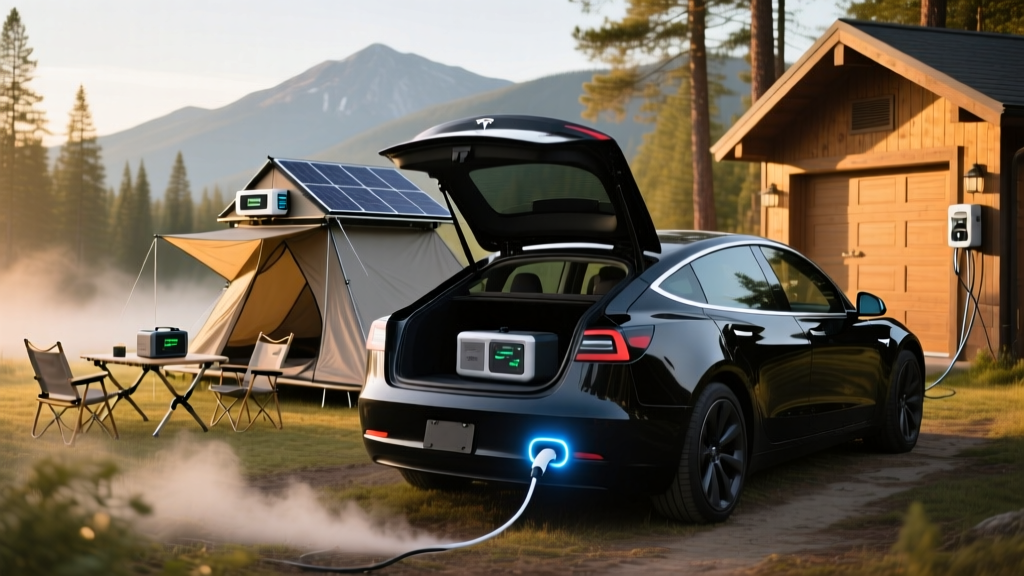
A used 2020 Model 3 still benefits from access to Tesla's Supercharger network, which in 2026 includes more than 6,500 stations and 60,000 stalls across North America. Here is what charging actually looks like:
| Charging level | Max power | Typical speed | Connector |
|---|---|---|---|
| DC fast (V3 Supercharger) | 250 kW peak | 10–80% in ~28 min (Long Range); ~22 min (SR+) | Tesla NACS (native) |
| DC fast (CCS adapter) | ~150 kW sustained | 10–80% in ~35–40 min | CCS1 via Tesla adapter |
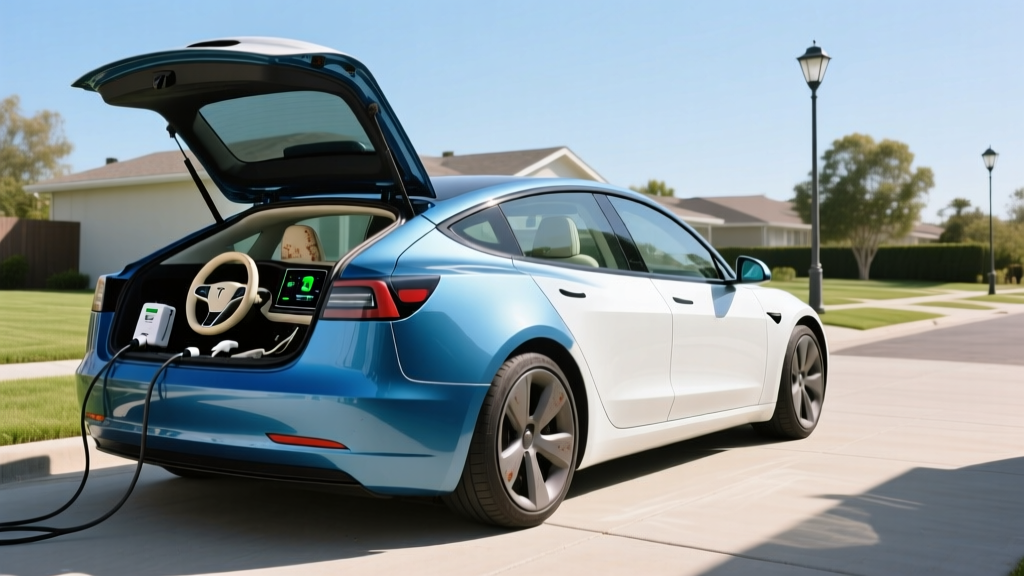
| Level 2 home (48A Wall Connector) | 11.5 kW | ~44 mi/hr added | NACS / J1772 adapter |
| Level 2 home (32A mobile) | 7.7 kW | ~30 mi/hr added | NACS |
| Level 1 (120V outlet) | 1.4 kW | ~4 mi/hr added | Standard plug |
The Long Range and Performance trims can sustain peak 250 kW only between roughly 10–30% state of charge; the curve tapers to ~100 kW by 60% and ~40 kW above 85%. Plan your road-trip stops around the 10–80% window for the fastest sessions. The SR+ peaks closer to 170 kW due to its smaller pack's lower C-rate tolerance.
One 2026 ownership note: Tesla now sells a CCS1 adapter ($175) that unlocks Electrify America, EVgo, and ChargePoint DC stations. Combined with the native Supercharger network, the 2020 Model 3 has the broadest public-charging compatibility of any used EV from its era.
Battery Degradation and Longevity: 2026 Data
With six years of fleet data, the 2020 Model 3 battery picture is reassuring. Recurrent's 2025 battery-health study of over 15,000 Model 3 vehicles showed median degradation of 8–11% at 100,000 miles for NMC packs, and 5–7% for LFP SR+ packs. Most Long Range vehicles still read 88–92% State of Health (SoH) on the Tesla service menu at the six-year mark.
Tesla's battery warranty transfers to second owners: 8 years / 100,000 miles for SR+, 8 years / 120,000 miles for Long Range and Performance, with a guaranteed 70% minimum capacity retention. A vehicle built in January 2020 exits warranty in January 2028, so buyers still have roughly two years of coverage in 2026.
Out-of-warranty pack replacement in 2026 runs $12,000–$16,000 at Tesla service centers, though third-party refurbishers now offer remanufactured packs for $8,000–$10,000. Given the degradation data, most 2020 vehicles will never need a replacement pack under normal use.
Used EV Tax Credit: Can You Claim $4,000?
The 2020 Model 3 qualifies for the IRC §25E used clean vehicle credit, which provides up to $4,000 (or 30% of sale price, whichever is lower) on eligible used EV purchases from a licensed dealer. Per IRS guidelines, the following rules apply:
- Sale price must be $25,000 or less — most 2020 SR+ examples now clear this bar; Long Range examples may not
- Buyer AGI caps: $75,000 single / $112,500 head of household / $150,000 married filing jointly
- Vehicle must be at least two model years old (2020 qualifies in 2026)
- Must purchase from a licensed dealer (private-party sales do not qualify)
- Buyer can claim the credit only once every three years
- Credit is non-refundable but can be transferred to the dealer at point of sale as a price reduction
| Trim | Avg. dealer price (60k mi) | §25E credit | Effective cost |
|---|---|---|---|
| SR+ (NMC) | $19,500 | -$4,000 | $15,500 |
| SR+ (LFP) | $20,800 | -$4,000 | $16,800 |
| Long Range AWD | $24,200 | -$4,000 | $20,200 |
| Performance | $26,500 | $0 (over cap) | $26,500 |
The Performance trim's higher resale value often pushes it above the $25,000 sale-price cap, disqualifying it. Negotiate toward the cap if the credit matters to your budget.
Interior, Cargo, and Daily Livability
The 2020 Model 3 interior is famously minimalist: a single 15-inch landscape touchscreen handles navigation, climate, media, and vehicle settings. There is no traditional instrument cluster; speed and navigation prompts appear on the left third of the screen.
- Front legroom: 42.7 inches
- Rear legroom: 35.2 inches — adequate for adults on short trips, tight for six-footers on long drives
- Trunk: 15 cu ft (plus 2.1 cu ft front trunk/frunk)
- Rear seats: 60/40 split fold for longer cargo
- Towing: Not rated — the 2020 Model 3 has no factory tow package
Build quality on 2020 Fremont-built cars improved over 2018–2019 panels, but buyers should still inspect door panel gaps and trunk alignment. Shanghai-built SR+ vehicles (identifiable by the "Made in China" door jamb sticker) generally have tighter assembly tolerances.
Driver Assistance: Autopilot and FSD in 2026
Every 2020 Model 3 includes basic Autopilot (adaptive cruise + lane centering). The $6,000 FSD package (when originally purchased) now includes city-street supervised driving, traffic-light recognition, and autosteer on surface streets. In 2026, FSD Supervised (v13.x) is markedly more capable than the 2020 launch version, and Tesla continues to push OTA updates to older hardware — though vehicles with HW3.0 may not receive the latest neural-network models optimized for HW4.0.
Pros, Cons, and Who Should Buy
- Supercharger network access remains the strongest road-trip charging ecosystem
- Over-the-air updates still add features six years post-sale
- Battery degradation data is reassuring; most packs well above warranty threshold
- Class-leading efficiency (kWh/100 mi) keeps charging costs low
- §25E used credit makes SR+ effective cost under $17,000
- No heat pump — winter range loss worse than 2021+ Highland models
- Rear seat is tighter than Hyundai Ioniq 6 and BMW i4
- No Apple CarPlay or Android Auto
- Touchscreen-only climate controls can frustrate new EV adopters
- HW3.0 may limit future FSD feature parity
Choose the 2020 Model 3 if: you want the lowest-cost entry into Tesla's Supercharger ecosystem, you commute under 60 miles daily, and you qualify for the §25E credit.
Look at a 2022+ Model 3 or Ioniq 6 instead if: you need maximum winter range, you want Apple CarPlay, or you regularly carry rear-seat adults on long trips.
Frequently Asked Questions
What is the real-world range of a used 2020 Tesla Model 3?
Long Range AWD delivers roughly 265–285 highway miles in mild weather and 220–245 in winter. The SR+ returns about 205–225 highway miles and around 175 in deep cold.
How fast does the 2020 Model 3 charge?
On a V3 Supercharger, the Long Range hits 10–80% in about 28 minutes at a peak of 250 kW. Home Level 2 charging at 48 amps adds roughly 44 miles per hour.
Does the 2020 Model 3 qualify for a federal tax credit?
Not the new-vehicle §30D credit, but it can qualify for the §25E used-EV credit of up to $4,000 if purchased from a dealer for $25,000 or less and the buyer meets income limits. Verify current rules at IRS.gov.
Is the 2020 Model 3 worth buying versus a newer EV?
At an effective $15,500–$20,200 after the used credit, it undercuts nearly every new EV on cost-per-mile-of-range. Trade-offs are winter efficiency (no heat pump), a snug rear seat, and no CarPlay.
What should I check before buying a used 2020 Model 3?
Request a battery health readout from Tesla service (SoH percentage), inspect panel gaps and suspension bushings, verify whether the car has HW3.0 or was upgraded to HW4.0, and confirm FSD transferability if the original owner purchased it.
Will Tesla still support a 2020 Model 3 with software updates?
Yes. Tesla continues to push OTA updates to 2020 vehicles as of 2026, including UI improvements, Supercharger preconditioning tweaks, and security features. Major FSD architecture changes may eventually exclude HW3.0 cars.