Quick Verdict: The Benchmark Used EV
Five years after its launch year, the 2020 Tesla Model 3 remains the most-searched used electric sedan on the market — and for good reason. It delivers EPA-estimated range up to 322 miles (Long Range AWD), access to Tesla's Supercharger network (now transitioning to NACS as the industry standard), and over-the-air software updates that have meaningfully improved the car since it left the factory. For 2026 used-EV shoppers, a well-maintained 2020 Model 3 represents one of the strongest value propositions in the segment, provided you understand its battery chemistry, real-world range behavior, and the nuances of the federal used-EV tax credit.
EPA sticker: 250 mi (Standard Range Plus RWD) / 322 mi (Long Range AWD) / 299 mi (Performance AWD)
Expect in practice: ~210–230 mi highway at 75 mph for the SR+; ~270–290 mi for the Long Range. In sub-30°F winter conditions, plan for a 20–30% range reduction across all trims. LFP-equipped Standard Range models tolerate 100% daily charging better than NMC Long Range variants, which Tesla recommends keeping at 80% for daily use.
Spec Table: 2020 Tesla Model 3 by Trim
| Specification | Standard Range Plus (RWD) | Long Range (AWD) | Performance (AWD) |
|---|---|---|---|
| EPA Range | 250 mi | 322 mi | 299 mi |
| Battery (usable) | ~50 kWh (LFP in later builds) | ~75 kWh (NMC) | ~75 kWh (NMC) |
| MPGe (combined) | 141 MPGe | 134 MPGe | 125 MPGe |
| Efficiency | 24 kWh/100 mi | 25 kWh/100 mi | 27 kWh/100 mi |
| 0–60 mph | 5.3 sec | 4.4 sec | 3.2 sec |
| Horsepower | ~271 hp | ~384 hp | ~456 hp |
| Drivetrain | RWD, single motor | Dual-motor AWD | Dual-motor AWD |
| Peak DC Charge | 170 kW | 250 kW | 250 kW |
| 10–80% DC Time | ~30 min | ~28 min | ~28 min |
| Level 2 Rate | 7.6 kW (32A) / ~30 mi/hr | 11.5 kW (48A) / ~44 mi/hr | 11.5 kW (48A) / ~44 mi/hr |
| Original MSRP (2020) | $37,990 | $46,990 | $54,990 |
Sources: fueleconomy.gov, Tesla 2020 press materials. Real-world figures reflect independent testing and owner data aggregations.
Battery Chemistry: LFP vs. NMC — What 2020 Model 3 Owners Need to Know
The 2020 Model 3 sits at an interesting inflection point in Tesla's battery strategy. Long Range and Performance trims use NMC (nickel manganese cobalt) chemistry in a ~75 kWh usable pack. These cells offer higher energy density — the reason the Long Range achieves 322 EPA miles — but they degrade faster if routinely charged to 100% or left at high state of charge in hot weather. Tesla recommends a daily charge limit of 80% for NMC packs, which effectively gives you a usable daily range of roughly 258 miles in the Long Range.
Standard Range Plus models from 2020 predominantly shipped with NMC cells from Panasonic, though Tesla began introducing LFP (lithium iron phosphate) packs from CATL in late 2020 for the Chinese-market SR and eventually in Fremont-built Standard Range models into 2021. If you're shopping a 2020 SR+ in 2026, verify the battery chemistry through the vehicle's settings menu or a Tesla service check — it affects your charging habits and long-term degradation profile.
LFP advantages: longer cycle life, tolerance for 100% daily charging (Tesla actually recommends periodic 100% charges to calibrate the BMS), and no cobalt. LFP trade-offs: lower energy density (less range in the same pack size), and noticeably reduced performance in cold weather — expect up to 30–35% range loss in freezing temperatures vs. 20–25% for NMC.
Charging Speed: Supercharger, Level 2, and the NACS Transition
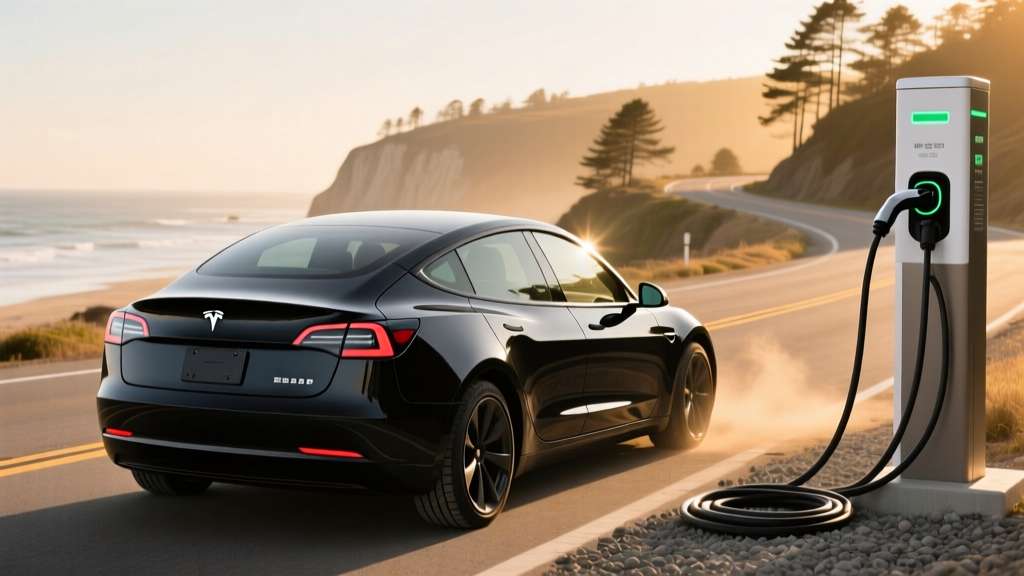
The 2020 Model 3 originally shipped with a CCS-compatible charge port in some markets but in North America uses Tesla's proprietary connector. As of 2026, the North American Charging Standard (NACS) has become the dominant connector, and Tesla's Supercharger network — now open to non-Tesla EVs via Magic Dock adapters — remains the most reliable DC fast-charging ecosystem in the U.S.
| Charging Level | Power | Speed (Long Range) | Notes |
|---|---|---|---|
| Level 1 (120V) | ~1.4 kW | ~5 mi/hr | Emergency/trickle only |
| Level 2 (240V, 48A) | 11.5 kW | ~44 mi/hr | Full overnight charge in ~7 hr |
| Level 2 (240V, 32A) | 7.6 kW | ~30 mi/hr | Common with Mobile Connector |
| DC Fast (V3 Supercharger) | Peak 250 kW | 10–80% in ~28 min | Tapers significantly above 80% |
| DC Fast (V2 Supercharger) | Peak 150 kW | 10–80% in ~38 min | Older stations, still widespread |
Charging curve reality: The Long Range and Performance trims peak at 250 kW only between roughly 10–30% state of charge. By 50% SoC, the rate drops to ~150 kW, and above 80%, it falls below 50 kW. This is why Tesla (and every other manufacturer) quotes 10–80% times — the final 20% can add another 25–35 minutes. On a road trip, plan your stops around 10–80% cycles for maximum efficiency.
For home charging, installing a Tesla Wall Connector on a 60-amp circuit delivers the full 11.5 kW (48A) the Long Range can accept. The Standard Range Plus is limited to 7.6 kW (32A) on Level 2. A typical 240V/60A home installation runs $800–$2,000 depending on panel proximity and local permit requirements — factor in a potential panel upgrade ($1,500–$3,000) if your home still has a 100-amp service.
Performance and Driving Dynamics
Even the "base" Standard Range Plus delivers a 5.3-second 0–60 mph time — quicker than most gas-powered sport sedans in its original price class. The Long Range drops that to 4.4 seconds with dual-motor all-wheel drive, while the Performance variant hits 3.2 seconds with its track-oriented tune and lower suspension.
All 2020 Model 3 trims feature a low center of gravity from the floor-mounted battery pack, resulting in flat cornering and responsive handling. The regenerative braking system is aggressive — Tesla's one-pedal driving mode allows most drivers to rarely touch the friction brake pedal in daily commuting. However, the 2020 Model 3 does not offer adjustable regen strength (unlike competitors such as the Hyundai Ioniq 5 or Chevrolet Bolt EUV), which some drivers find fatiguing on long highway descents.
Ride quality drew criticism in 2020 for being firm, particularly on broken pavement. Tesla made incremental suspension improvements through 2020 production, but the ride remains sporty rather than plush. If comfort is your priority, test-drive before buying.
Interior, Cargo, and Technology
The 2020 Model 3's interior is defined by minimalism — a single 15-inch center touchscreen controls virtually every vehicle function, including climate, mirrors, and glovebox. There is no traditional instrument cluster; speed and navigation appear in the upper-left corner of the center screen. This design polarizes buyers: some find it clean and futuristic, others find it distracting.
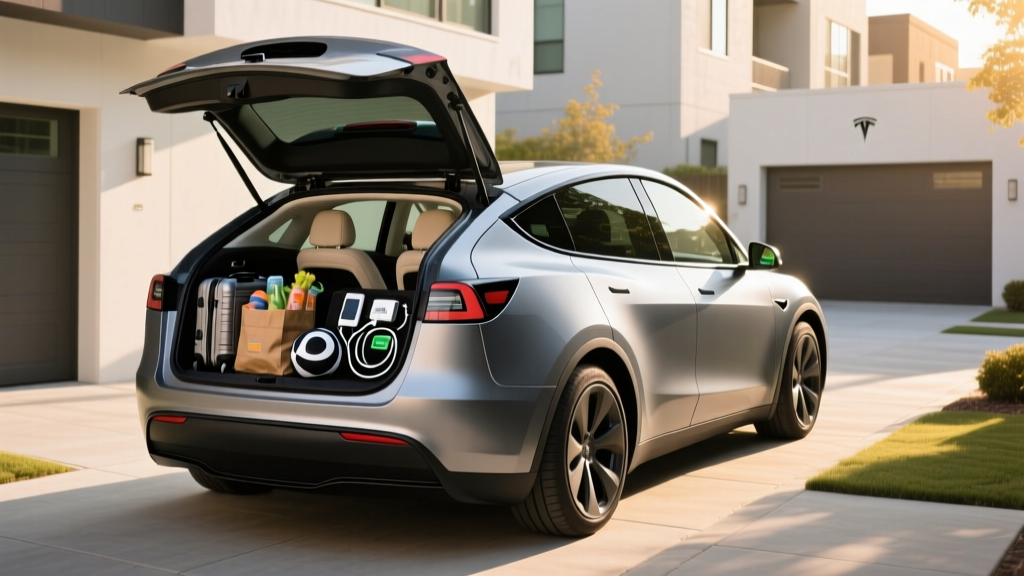
Cargo space: 15 cubic feet in the trunk (including the rear sub-trunk), plus a small front trunk (frunk) suitable for a charging cable bag or small groceries. Rear seat legroom measures 35.2 inches — adequate for adults under 6 feet on shorter trips, but tighter than a Toyota Camry or Honda Accord. The glass roof creates an airy cabin but contributes to noticeable cabin heat in summer; a sunshade is an almost mandatory accessory.
Driver assistance: The 2020 Model 3 ships with Tesla's Basic Autopilot (lane centering + adaptive cruise control). Enhanced Autopilot ($6,000 option in 2020) added auto lane change, autosteer on navigation, and Smart Summon. Full Self-Driving (FSD) was available as a $7,000+ option but remained — and as of 2026, still remains — an SAE Level 2 driver-assist system requiring continuous driver supervision. Despite the name, FSD does not make this a self-driving vehicle. The 2020 hardware suite (HW3.0) supports current FSD (Supervised) functionality, though it lacks the higher-resolution cameras and processing power of HW4.0 introduced in 2023.
Tesla Autopilot and FSD (Supervised) are SAE Level 2 systems. The driver must keep hands on the wheel (or demonstrate attentiveness via the cabin camera in newer builds) and remain fully responsible for vehicle control at all times. These systems do not handle construction zones, unmapped roads, severe weather, or erratic traffic scenarios reliably. Never treat them as autonomous driving.
Used Pricing and the Federal Used-EV Tax Credit (§25E)
As of early 2026, a 2020 Tesla Model 3 on the used market typically ranges from $18,000–$24,000 for a Standard Range Plus, $22,000–$28,000 for a Long Range, and $25,000–$32,000 for a Performance, depending on mileage, condition, and battery health. These prices reflect significant depreciation from original MSRP — making the Model 3 one of the most affordable ways into a long-range, fast-charging EV.
| Trim | Typical Used Price (2026) | Potential §25E Credit | Effective Price |
|---|---|---|---|
| Standard Range Plus | $19,000–$22,000 | Up to $4,000 | $15,000–$18,000 |
| Long Range AWD | $23,000–$27,000 | Up to $4,000 | $19,000–$23,000 |
| Performance AWD | $26,000–$31,000 | Up to $4,000 | $22,000–$27,000 |
Critical tax credit detail: The 2020 Model 3 does not qualify for the new-vehicle §30D credit (it's no longer sold new). Instead, buyers should look at the §25E Previously-Owned Clean Vehicle Credit, which provides up to $4,000 (or 30% of the sale price, whichever is less) for qualifying used EVs. To qualify:
- The vehicle must be at least two model years old (2020 qualifies in 2026) ✓
- Sale price must be $25,000 or less — this disqualifies many Performance and higher-mileage Long Range listings
- Buyer income caps: $75,000 single / $112,500 head of household / $150,000 joint (modified AGI)
- Must purchase from a licensed dealer (private-party sales do not qualify)
- The credit can be transferred to the dealer at point of sale as an immediate price reduction
Always verify current rules at IRS.gov §25E and consult a tax professional before relying on credit eligibility. Income thresholds and program availability are subject to legislative changes.
Warranty and Battery Longevity
The 2020 Model 3 came with Tesla's standard warranty package:
- Basic vehicle: 4 years / 50,000 miles (expired for most 2020 vehicles by 2024)
- Battery & drive unit: 8 years / 100,000 miles (Standard Range) or 8 years / 120,000 miles (Long Range & Performance), whichever comes first, with minimum 70% capacity retention
As of 2026, a 2020 Model 3 is likely still within its battery/drive-unit warranty if under 100K–120K miles. This is a significant safety net. Real-world data from Tesla's annual impact reports and third-party fleet analyses (such as those aggregated by Tesla Impact Reports) show that Model 3 batteries typically retain 88–92% capacity at 100,000 miles, with NMC packs showing slightly more degradation than LFP under equivalent usage.
If you're buying used, request the vehicle's battery health report through Tesla service or use third-party tools like Recurrent or the TeslaFi app (if the previous owner subscribed) to verify state of health (SoH) before purchase.
Pros, Cons, and Who Should Buy
- Class-leading efficiency (134–141 MPGe combined)
- Access to Tesla Supercharger network (17,000+ stalls in North America)
- Over-the-air updates continue improving the vehicle in 2026
- Strong battery warranty still in effect for many examples
- Excellent used value — effective price as low as $15K after §25E credit
- One-pedal driving and strong regen reduce brake wear
- Minimalist interior not for everyone; no physical climate controls
- Firm ride quality, especially on 19-inch Sport wheels
- Rear seat legroom tight for tall passengers (35.2 in)
- Glass roof causes cabin heat buildup; aftermarket sunshade recommended
- HW3.0 Autopilot hardware is dated vs. current HW4.0
- Paint quality on 2020 Fremont builds is inconsistent — inspect carefully
Best for: Daily commuters with home Level 2 charging who want maximum range per dollar and frequent road-trippers who value Supercharger reliability. The Long Range AWD is the sweet spot for most buyers — 322 EPA miles, dual-motor traction in snow, and fast 250 kW charging.
Not ideal for: Families needing spacious rear seats (consider the Model Y or Hyundai Ioniq 5), buyers in extreme cold climates without a garage (LFP range loss is punishing), or anyone wanting a traditional dashboard and physical controls.
Frequently Asked Questions
What is the real-world range of a 2020 Tesla Model 3?
The EPA rates the Long Range at 322 miles, but expect 270–290 miles in mixed highway driving at moderate speeds. At sustained 75–80 mph highway speeds, plan for roughly 250–270 miles. In freezing temperatures, reduce those figures by 20–30%. The Standard Range Plus delivers roughly 210–230 real-world miles in fair conditions.
How fast does the 2020 Model 3 charge at home and on the road?
On a V3 Supercharger, the Long Range and Performance peak at 250 kW and charge from 10–80% in approximately 28 minutes. At home on a 240V/48A Level 2 charger, the Long Range adds about 44 miles per hour of charging — a full charge overnight in roughly 7 hours. The Standard Range Plus is limited to 7.6 kW (32A) on Level 2, adding about 30 miles per hour.
Does a used 2020 Tesla Model 3 qualify for a federal tax credit?
Not the new-vehicle §30D credit, but it may qualify for the §25E Previously-Owned Clean Vehicle Credit of up to $4,000. Requirements include: sale price at or below $25,000, buyer income under $75K single/$150K joint, purchase from a licensed dealer, and the vehicle must be at least two model years old. Always confirm eligibility with a tax professional and at IRS.gov.
Is the 2020 Model 3 still worth buying vs. newer competitors?
Against a 2025–2026 Hyundai Ioniq 6, Chevrolet Equinox EV, or refreshed Tesla Model 3 Highland, the 2020 model trades interior refinement and the latest hardware for dramatically lower cost. A well-kept 2020 Long Range at $24,000 (effectively $20,000 after §25E) delivers 90% of the utility of a new $45,000+ EV for half the price. If budget is your primary driver, it's hard to beat.
What should I check before buying a used 2020 Model 3?
Prioritize: battery state of health (request a Tesla service report), drive unit noise (some early rear motors whine), suspension wear (control arms and bushings at 60K+ miles), paint and panel gaps (Fremont 2020 quality varied), and whether the vehicle has a salvage or rebuilt title (which voids the battery warranty). Also confirm whether the car includes Enhanced Autopilot or FSD — these transfer with the vehicle and add significant value.