Why the 2020 Model 3 Performance Still Matters in 2026
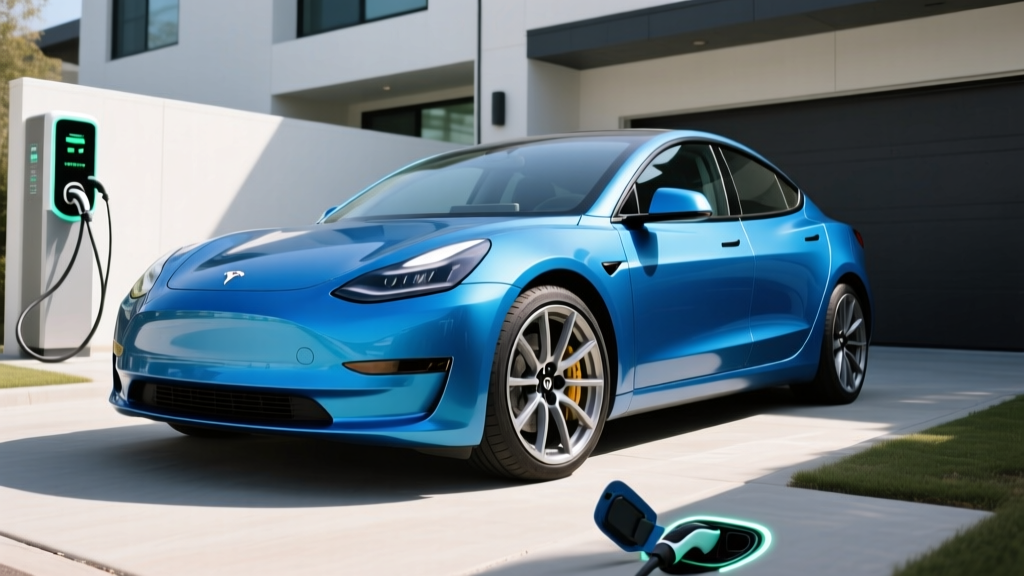
If you've been searching for the 2020 Tesla Model 3 Performance stock wheel name, you're not alone — it's one of the most common owner questions on Tesla forums. The answer is straightforward: Tesla equipped the 2020 Model 3 Performance with 20-inch Überturbine wheels (sometimes listed as the "Performance 20-inch" option in Tesla's parts catalog, part number 1118307-00-A for the wheel itself). These distinctive turbine-style forged aluminum wheels measure 20 x 9 inches with a +34 mm offset and a 5x114.3 bolt pattern, wrapped in 235/35R20 Michelin Pilot Sport 4S tires from the factory. The Standard Range Plus and Long Range AWD trims shipped with different stock wheels — 18-inch Aero wheels and 19-inch Sport wheels, respectively.
But identifying the wheels is only the beginning. The 2020 Model 3 Performance was a landmark EV — the year Tesla switched to the more accurate EPA test cycle, bumped range, and refined the dual-motor powertrain. If you're evaluating one on the used market in 2026, here's every spec, charging figure, and ownership cost you need.
2020 Model 3 Performance: Core Specs at a Glance
| Spec | Value |
|---|---|
| EPA Range | 322 miles |
| Battery (usable) | ~75 kWh (NMC 811 chemistry, Panasonic 2170 cells) |
| Drivetrain | Dual-motor AWD (permanent magnet rear + induction front) |
| Horsepower | ~456 hp (combined) |
| 0-60 mph | 3.1 seconds (with rollout subtracted) |
| Top Speed | 162 mph |
| Max DC Fast Charge | 250 kW (V3 Supercharger) |
| 10-80% DC Charge | ~27 minutes |
| Level 2 Home Charging | 11.5 kW / 48A (~44 mi/hr) |
| EPA Efficiency | 116 MPGe combined (29 kWh/100 mi) |
| Cargo Volume | 15 cu ft trunk + ~3 cu ft frunk |
| Rear Legroom | 35.2 inches |
| Battery Warranty | 8 years / 120,000 miles (70% minimum retention) |
| Original MSRP | $56,990 (before incentives) |
| Stock Wheels | 20" Überturbine forged aluminum |
Real-World Range: What 322 EPA Miles Actually Means
EPA Estimate: 322 miles
Real-World Highway (70-75 mph, mild weather): ~265-285 miles
Real-World City/Mixed: ~290-310 miles
Cold Weather (below 32°F, highway): ~220-250 miles
The 2020 Model 3 Performance was the first year Tesla's EPA range figures aligned closely with real-world mixed driving — prior years used a more generous testing methodology. The ~75 kWh usable battery (from a ~79 kWh gross pack with top/bottom buffers) paired with NMC 811 chemistry from Panasonic delivers strong energy density, but the 20-inch Überturbine wheels and 235/35R20 summer tires create more rolling resistance than the Long Range AWD's 19-inch setup.
On a 300-mile road trip at 75 mph in 70°F weather, expect to arrive with roughly 10-15% State of Charge remaining if you start at 100%. In winter conditions, the heat pump (which Tesla added to the Model 3 with the refresh, not present on 2020 models — the 2020 uses a resistive PTC heater) means cold-weather energy consumption is noticeably higher. Budget-conscious buyers in northern climates should plan for 30-35% range loss in sub-freezing highway driving.
According to EPA data on fueleconomy.gov, the 2020 Model 3 Performance rates at 116 MPGe combined, which translates to 29 kWh per 100 miles — an efficiency figure that remains competitive in 2026.
Charging Speed: DC Fast and Level 2 Home Charging
Charging speed is the single most practical spec for EV ownership. Here's what the 2020 Model 3 Performance delivers across all three charging levels:
| Level | Power / Rate | Miles Added per Hour | Notes |
|---|---|---|---|
| Level 1 (120V outlet) | ~1.2 kW | ~3-4 mi/hr | Emergency/trickle only |
| Level 2 (240V home) | 11.5 kW (48A) | ~44 mi/hr | Full charge in ~7 hours |
| DC Fast (V3 Supercharger) | 250 kW peak | ~1,000+ mi/hr (peak) | 10-80% in ~27 min |
| DC Fast (V2 Supercharger) | 150 kW peak | ~600 mi/hr (peak) | 10-80% in ~38 min |
The 2020 Model 3 Performance supports Tesla's V3 Supercharger architecture at a peak of 250 kW. However, as with all EVs, peak rate is not sustained rate. The charge curve is aggressive: you'll see 250 kW only briefly between roughly 10-20% State of Charge, after which the rate tapers to ~175 kW through 40%, then ~100 kW through 60%, and drops sharply above 80%. This is why the 10-80% time of ~27 minutes is the more meaningful metric than peak kW.
For home Level 2 charging, the onboard charger accepts up to 11.5 kW (48 amps). You'll need a NEMA 14-50 outlet or a hardwired Tesla Wall Connector on a 60-amp circuit to achieve the full 48A draw. Expect a full overnight charge from 20% to 100% in roughly 7 hours — more than adequate for daily driving.
Connector note: The 2020 Model 3 uses Tesla's proprietary connector (now formally called NACS). With Tesla opening the Supercharger network to other brands via the Magic Dock adapter, NACS has become the de facto North American standard. No adapter is needed at Superchargers.
Performance and Driving Dynamics
The dual-motor setup pairs a permanent magnet synchronous reluctance motor on the rear axle with an induction motor up front. Combined output is approximately 456 horsepower, delivered to all four wheels with torque vectoring via independent motor control. The 3.1-second 0-60 mph time (with Tesla's 1-foot rollout subtracted) puts it firmly in supercar territory, and the instant torque delivery makes it feel even quicker in real-world passing situations.
Track Mode, introduced on the Performance trim, allows adjustable front/rear torque distribution and regenerative braking intensity — useful for track days, though it disables some safety systems and should never be used on public roads. The lowered sport suspension and 20-inch Überturbine wheels give the Performance sharper turn-in than the Long Range, at the cost of a firmer ride over broken pavement.
The 2020 Model 3 Performance includes Tesla's Basic Autopilot as standard — this is an SAE Level 2 driver-assistance system with adaptive cruise control and lane-centering. Full Self-Driving (FSD) capability was available as a $7,000 option at the time (now branded "FSD Supervised" at $8,000 or $99/month in 2026). Regardless of branding, FSD remains a Level 2 system requiring active driver supervision at all times. It is not autonomous driving.
Pricing, Tax Credits, and Used Market Value in 2026
The 2020 Model 3 Performance originally carried an MSRP of $56,990 (before the $1,200 destination fee). In the 2026 used market, well-maintained examples with 40,000-70,000 miles typically sell for $24,000-$32,000 depending on condition, mileage, battery State of Health, and Autopilot/FSD status.
| Price Point | Amount |
|---|---|
| Original MSRP (2020) | $56,990 |
| Typical used price (2026, 50k mi) | $26,000 - $30,000 |
| Used EV Tax Credit (§25E) | Up to $4,000 (30% of sale price, max $4,000) |
| Effective price after §25E credit | ~$22,000 - $26,000 |
| New Model 3 Performance (2026) MSRP | ~$54,990 |
Federal tax credit note: Since this is a 2020 model, you cannot claim the new-vehicle §30D credit ($7,500). However, the §25E Previously Owned Clean Vehicle Credit may apply when purchasing from a dealer. Per IRS guidelines, the §25E credit provides 30% of the sale price up to a maximum of $4,000, subject to buyer income caps ($75,000 single / $150,000 joint filers) and a sale price cap of $25,000. The vehicle must be at least two model years old (which a 2020 model qualifies for in 2026), purchased from a licensed dealer, and you cannot have claimed the used-EV credit in the prior three years. Eligibility is complex — consult a tax professional and verify current-year rules on irs.gov.
Interior, Tech, and Cargo Practicality
The 2020 Model 3's minimalist interior centers on a 15-inch landscape touchscreen that controls virtually every vehicle function — including climate, mirrors, and glovebox. There is no instrument cluster; speed and navigation appear on the left third of the main screen. This design polarizes buyers: some find it clean and distraction-free, others miss physical controls for volume and climate.
Standard tech features include:
- Over-the-air (OTA) software updates (the 2020 Model 3 continues to receive updates in 2026)
- Navigation with real-time Supercharger routing and preconditioning
- 14-speaker premium audio with immersive sound
- Heated front and rear seats, heated steering wheel
- Sentry Mode (surveillance camera system when parked)
- Dashcam recording (front, rear, and side cameras)
- Phone-as-key via Bluetooth
- Glass roof with UV/IR blocking
Cargo space totals approximately 15 cubic feet in the trunk (with a 60/40 split-folding rear seat for longer items) and roughly 3 cubic feet in the front trunk (frunk), useful for charging cables or a small bag. Rear legroom measures 35.2 inches — adequate for average-height adults but tighter than a Model Y or midsize sedan. The absence of a hatchback (the Model 3 has a traditional trunk opening) limits practicality for bulky items compared to the Model Y's liftgate.
Battery Longevity, Degradation, and Warranty
The 2020 Model 3 Performance uses a Panasonic 2170-cell NMC 811 pack with approximately 75 kWh usable capacity. NMC chemistry offers high energy density but is more sensitive to sustained high-State-of-Charge storage than LFP (lithium iron phosphate) packs Tesla later introduced on Standard Range models.
Real-world degradation data: Based on aggregated fleet data from TeslaFi and Recurrent Auto, 2020 Model 3 Performance packs typically show 5-8% capacity loss at 60,000 miles and 8-12% at 100,000 miles when charged primarily to 80-90% daily. Owners who routinely charge to 100% and let the car sit at full charge in hot climates may see accelerated degradation.
Tesla's battery warranty covers the pack for 8 years or 120,000 miles (whichever comes first) with a guaranteed minimum of 70% capacity retention. For a 2020 model, this warranty remains active through 2028 or 120,000 miles — a meaningful safety net for used buyers in 2026. Out-of-warranty battery replacement costs range from $12,000-$16,000 at Tesla service centers, though third-party refurbishment options are emerging at lower cost.
Pros, Cons, and Who Should Buy
- 322-mile EPA range still competitive in 2026
- 250 kW DC fast charging with V3 Supercharger access
- 3.1-second 0-60 mph — supercar acceleration
- Extensive Supercharger network (NACS standard)
- Continued OTA updates and software improvements
- Strong used-market value retention
- Eligible for up to $4,000 used-EV tax credit
- No heat pump (PTC heater = higher winter energy use)
- 20" Überturbine tires are expensive (~$280-350 each) and wear faster
- Firm ride quality on rough roads
- Minimalist interior lacks physical controls
- Trunk (not hatchback) limits cargo versatility
- Tight rear legroom for taller passengers
- NMC battery less tolerant of 100% daily charging vs LFP
Who the 2020 Model 3 Performance Suits Best
Ideal for: Enthusiast commuters who want sports-car acceleration with 250+ mile daily range, single professionals or couples without large cargo needs, and drivers with reliable home Level 2 charging access. The Supercharger network makes it one of the best used EVs for road trips.
Consider alternatives if: You need family-friendly rear space (look at the Model Y or Hyundai Ioniq 5), you drive primarily in extreme cold (the lack of a heat pump hurts), or you prefer physical buttons and a traditional instrument cluster.
Frequently Asked Questions
What is the stock wheel name on the 2020 Tesla Model 3 Performance?
The factory-equipped wheel is the 20-inch Überturbine wheel — a forged aluminum turbine-style design unique to the Performance trim. Other 2020 Model 3 trims used different stock wheels: 18-inch Aero (Standard Range Plus) and 19-inch Sport (Long Range AWD).
What is the real-world range of the 2020 Model 3 Performance?
The EPA rates it at 322 miles, but real-world highway driving at 70-75 mph typically yields 265-285 miles. In sub-freezing winter conditions, expect 220-250 miles due to the resistive PTC heater (no heat pump on the 2020 model).
How fast does the 2020 Model 3 Performance charge?
At a V3 Supercharger, it peaks at 250 kW and charges from 10-80% in approximately 27 minutes. At home on a Level 2 Wall Connector (11.5 kW / 48A), it adds about 44 miles of range per hour, achieving a full overnight charge in roughly 7 hours.
Does the 2020 Model 3 Performance qualify for any federal tax credit?
Not the new-vehicle §30D credit. However, the §25E Used Clean Vehicle Credit provides up to $4,000 (30% of sale price) when purchased from a dealer, subject to income caps ($75K single / $150K joint), a $25,000 sale price cap, and a three-year claim limit. Verify eligibility with a tax professional and IRS.gov.
Is the 2020 Model 3 Performance worth buying in 2026 vs competitors?
At $24,000-$30,000 used (potentially $22,000-$26,000 after the §25E credit), it offers a compelling combination of range, charging speed, and performance that few used EVs match. Key competitors at similar price points include the 2020-2021 Ford Mustang Mach-E GT (more cargo space, slower charging), the 2021 Polestar 2 (less range, more traditional interior), and the 2020-2021 Hyundai Kona Electric (much shorter range at 258 miles EPA). For pure driving engagement and Supercharger access, the Model 3 Performance remains hard to beat.
How much do replacement Überturbine tires cost?
The factory 235/35R20 Michelin Pilot Sport 4S tires typically cost $280-$350 each, with a tread life of 20,000-30,000 miles under normal driving. Aggressive acceleration and the car's 4,000+ lb curb weight accelerate wear. Some owners downsize to aftermarket 19-inch wheels with longer-lasting all-season tires for daily driving, sacrificing some grip and the stock aesthetic.