Quick Verdict: The 2020 Taycan 4S Still Sets the Performance Sedan Benchmark
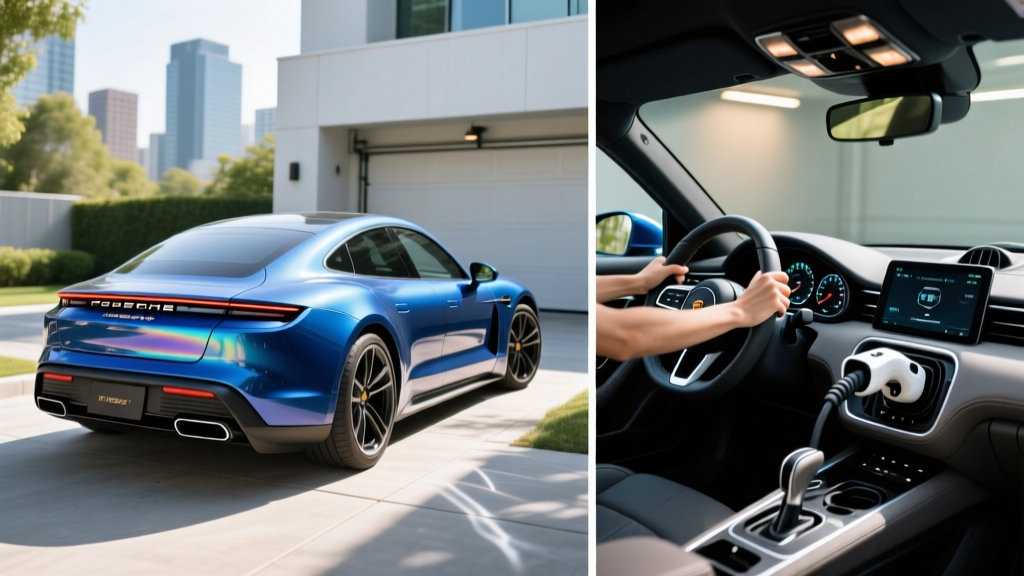
The 2020 Porsche Taycan 4S was the first electric vehicle to prove that a battery-powered sedan could deliver supercar acceleration without sacrificing daily usability. Its 800-volt architecture, two-speed rear transmission, and 562-horsepower dual-motor setup made it an instant benchmark. Now, in 2026, the Taycan 4S has entered the used-EV market at compelling prices — and a subset of buyers may even qualify for a federal tax credit on the purchase.
This review dissects the exact numbers that matter: the real-world range you can expect beyond the EPA sticker, the charging curve that made the Taycan the fastest-charging EV of its era, and the ownership economics of buying one used today. If you're cross-shopping a used Taycan 4S against a Tesla Model S, Audi e-tron GT, or newer EV sedans, the data below will drive your decision.
2020 Porsche Taycan 4S Full Spec Sheet
| Specification | 2020 Taycan 4S (Performance Battery Plus) | 2020 Taycan 4S (Standard Battery) |
|---|---|---|
| EPA Range | 203 miles | 199 miles (est.) |
| Battery (Gross / Usable) | 93.4 kWh / 83.7 kWh | 79.2 kWh / 71.0 kWh |
| Battery Chemistry | NMC (Nickel Manganese Cobalt) | NMC |
| Drivetrain | Dual-motor AWD | Dual-motor AWD |
| Horsepower (Launch Control) | 562 hp | 522 hp |
| Torque | 479 lb-ft | 472 lb-ft |
| 0-60 mph | 3.8 seconds | 3.8 seconds (Porsche est.) |
| Top Speed | 155 mph | 155 mph |
| Max DC Fast Charge | 270 kW | 225 kW |
| 10-80% DC Fast Charge | ~22.5 minutes | ~22.5 minutes |
| Level 2 AC Charge Rate | 9.6 kW (standard) / 19.2 kW (optional onboard charger) | 9.6 kW / 19.2 kW optional |
| MPGe (Combined) | 68 MPGe | 69 MPGe (est.) |
| Efficiency | 49 kWh/100 mi | ~48 kWh/100 mi |
| Original Base MSRP | $103,800 | $103,800 |
| Battery/Powertrain Warranty | 8 years / 100,000 miles | 8 years / 100,000 miles |
Sources: EPA Fueleconomy.gov, Porsche USA press archives.
0-60 mph in 3.8 Seconds: How the Taycan 4S Earns Its Badge
The 2020 Porsche Taycan 4S 0-60 time of 3.8 seconds (with Launch Control engaged and the Performance Battery Plus) was independently verified by multiple outlets at 3.4–3.6 seconds in optimal conditions — Porsche historically under-rates its acceleration figures. The dual-motor AWD system delivers instantaneous torque to all four wheels, and the two-speed transmission on the rear axle gives the Taycan a unique advantage: a short first gear for brutal launches, then a tall second gear for relaxed highway cruising and top-end efficiency.
That rear two-speed gearbox is a differentiator no competitor matched in 2020. The Tesla Model S Performance of the same era hit 0-60 in roughly 2.4 seconds — quicker on paper — but the Taycan's repeatable launch performance, brake feel, and chassis composure at speed were in a different league. Porsche engineered the Taycan's thermal management system to allow back-to-back hard launches without the power derating that plagued some competitors.
The 562 hp figure (with Launch Control on the 93.4 kWh battery) is the overboost rating. In normal driving without Launch Control, output drops to around 482 hp. That distinction matters for daily driving feel — the car is still exceptionally fast, but the full 562 hp is a burst mode, not a sustained output.
Real-World Range: What 203 EPA Miles Actually Means
EPA Sticker: 203 miles
Real-World Highway (70 mph, 72°F): ~185–195 miles
Real-World City/Mixed: ~195–210 miles (regen-heavy driving can exceed EPA)
Cold Weather (30°F, highway): ~145–165 miles (25–30% loss without preconditioning)
Hot Weather (95°F+, A/C running): ~180–195 miles
The 203-mile EPA figure for the Taycan 4S with the Performance Battery Plus was controversial at launch. Porsche's internal testing suggested higher real-world efficiency, and the EPA's test cycle at the time did not fully capture the benefits of the Taycan's 800V system and two-speed transmission. Multiple independent tests — including those by Car and Driver — found the Taycan 4S could achieve 200+ miles in mixed driving, occasionally exceeding its EPA rating.
However, at sustained highway speeds above 75 mph, expect range to dip to roughly 185–195 miles. The Taycan is a heavy sedan (approximately 4,900 lbs), and aerodynamic drag takes its toll. Cold weather is the Taycan's biggest range vulnerability: without preconditioning the battery before a drive, you can lose 25–30% of range in sub-freezing temperatures. The Taycan does include a heat pump (standard on 2020 models), which helps cabin efficiency, but the battery pack itself still suffers in the cold.
For context, the Tesla Model S Long Range of the same model year offered 373 miles of EPA range — nearly double. If road-trip range is your top priority, the Taycan is not the winner here. But Porsche traded range for charge speed and driving dynamics, which we'll cover next.
Charging Speed: The 800V Architecture Advantage
The Taycan's 800-volt electrical architecture was its most forward-looking feature in 2020, and it remains competitive in 2026. Most EVs of that era used 400V systems, limiting peak charge rates. The Taycan's 800V system enables DC fast charging at up to 270 kW (with the 93.4 kWh Performance Battery Plus).
| Charging Level | Power | Speed / Time | Notes |
|---|---|---|---|
| Level 1 (120V household) | ~1.4 kW | ~3–4 miles per hour | Emergency/trickle only; full charge in 50+ hours |
| Level 2 (240V, 40A circuit) | 9.6 kW | ~25–27 miles per hour; full charge in ~9 hours | Standard onboard charger |
| Level 2 (240V, optional 80A) | 19.2 kW | ~50–55 miles per hour; full charge in ~4.5 hours | Optional 19.2 kW onboard charger ($1,750 when new) |
| DC Fast Charge (peak) | 270 kW | 10–80% in ~22.5 minutes | Requires 350 kW-capable CCS station; NACS adapter needed for Tesla Superchargers |
| DC Fast Charge (50 kW station) | 50 kW | 10–80% in ~75 minutes | Common older public chargers; underutilizes Taycan capability |
Understanding the charge curve: The 270 kW peak rate is not sustained across the full session. The Taycan holds roughly 250–270 kW from approximately 5% to 40% State of Charge (SoC), then tapers to ~150 kW through 60%, and further drops to ~80–100 kW above 70%. This is why the 10–80% time of 22.5 minutes is the more useful metric than the peak kW figure. Above 80%, charging slows dramatically to protect the NMC cells — a full 80–100% top-off can add another 25–30 minutes.
Connector note for 2026 buyers: The 2020 Taycan 4S uses a CCS1 connector for DC fast charging. As the industry shifts toward NACS (Tesla's connector), Porsche does offer a CCS-to-NACS adapter, allowing Taycan owners to access Tesla Supercharger stations. Confirm adapter availability and compatibility with your specific model year through your dealer.
Home charging practicality: With the standard 9.6 kW onboard charger, a 240V/40A Level 2 home station replenishes the battery overnight in about 9 hours. The optional 19.2 kW onboard charger cuts that to roughly 4.5 hours but requires an 80A circuit and heavier-gauge wiring — expect $800–$1,500 in additional electrical work beyond a standard Level 2 install. For most owners, the 9.6 kW charger is sufficient for overnight replenishment.
Interior, Cargo, and Technology
The Taycan's cabin is unmistakably Porsche — minimal, driver-focused, and trimmed in high-quality materials. The dashboard features up to four screens: an 16.8-inch curved instrument cluster, an 10.9-inch central infotainment touchscreen, an 8.4-inch climate/haptic control panel, and an optional 10.9-inch passenger display.
Cargo space: The Taycan 4S offers 14.3 cubic feet in the rear trunk and 2.8 cubic feet in the front trunk (frunk). Combined, that's roughly 17.1 cu ft — adequate for a weekend trip for two but tight for a family. The rear seats fold 60/40 for longer items. Rear legroom is 32.7 inches, which is snug for taller passengers — this is a sports sedan, not a limousine.
Driver assistance: The 2020 Taycan includes Porsche InnoDrive (adaptive cruise control with lane-keeping assist, traffic sign recognition, and predictive speed adjustment based on navigation data), ParkAssist with surround-view cameras, and night vision assist (optional). This is SAE Level 2 driver assistance — you must keep your hands on the wheel and eyes on the road. It is not autonomous driving. InnoDrive is competent on highways but less refined than GM's Super Cruise or Ford's BlueCruise in hands-free operation.
Notable drawbacks: The infotainment system relies heavily on touch controls, including the climate panel, which can be distracting while driving. Apple CarPlay is wired (not wireless on the 2020 model). Rear visibility is limited by the sloping roofline, making the backup camera essential. And the rear-seat headroom is compromised for passengers over 6 feet tall.
Pricing, Tax Credits, and Used-EV Economics
When new, the 2020 Taycan 4S started at $103,800 before options — and most examples left the dealership between $115,000 and $140,000 after packages like the Premium Plus, Sport Chrono, and Performance Battery Plus. In 2026, used Taycan 4S examples typically list between $52,000 and $72,000 depending on mileage, condition, and option load.
- Credit amount: 30% of the sale price, up to a maximum of $4,000
- Vehicle eligibility: Must be at least 2 model years old (2020 qualifies in 2026), sold by a licensed dealer, and priced at $25,000 or below for the full credit to apply cleanly (credit phases with price)
- Buyer income caps: AGI ≤ $75,000 (single) / ≤ $150,000 (married filing jointly) / ≤ $112,500 (head of household)
- Point-of-sale transfer: Eligible buyers can transfer the credit to the dealer for an immediate price reduction
- Claim frequency: Once every 3 years per buyer
Source: IRS.gov §25E Used Clean Vehicle Credit. Rules subject to change — consult a tax professional before purchasing.
Important reality check: Because most used Taycan 4S examples sell well above $25,000, the §25E credit may be reduced or unavailable on many listings. The credit is 30% of the sale price capped at $4,000, so a $60,000 Taycan would technically generate $4,000 — but the vehicle price cap and income limits can disqualify buyers. This is not the $7,500 new-EV credit (§30D); it's a separate, smaller credit specifically for used vehicles. Always verify eligibility with the IRS guidelines and your tax advisor before committing.
The §30D new-EV credit does not apply to a 2020 Taycan purchased in 2026, as that credit is only for new vehicles. Additionally, when new, the Taycan exceeded the MSRP cap for sedans ($55,000) and Porsche's battery sourcing did not meet critical-mineral requirements, so it never qualified for §30D even at launch.
How Does the 2020 Taycan 4S Compare?
| Attribute | 2020 Porsche Taycan 4S | 2020 Tesla Model S Long Range | 2022 Audi e-tron GT (for reference) |
|---|---|---|---|
| 0-60 mph | 3.8 sec (tested ~3.4–3.6) | 3.7 sec | 3.9 sec |
| EPA Range | 203 mi | 373 mi | 238 mi |
| Max DC Charge | 270 kW | ~150 kW (CCS adapter) | 270 kW |
| Battery (Usable) | 83.7 kWh | ~95 kWh | 83.7 kWh |
| Used Price Range (2026) | $52,000–$72,000 | $38,000–$55,000 | $58,000–$78,000 |
| Frunk + Trunk (cu ft) | 2.8 + 14.3 = 17.1 | 5.3 + 26.3 = 31.6 | 3.0 + 12.9 = 15.9 |
The Model S wins on range and cargo by a wide margin. The Taycan wins on charge speed, build quality, driving dynamics, and long-term suspension durability (the Model S of that era had known air-suspension and panel-gap issues). The Audi e-tron GT shares the Taycan's J1 platform and 800V architecture, offering similar charging performance in a more traditionally styled package — but it launched later and commands a slightly higher used price.
Battery Longevity, Warranty, and What to Check Before Buying
Porsche warranties the Taycan's high-voltage battery for 8 years or 100,000 miles, guaranteeing a minimum of 70% capacity retention over that period. For a 2020 model, that warranty extends through 2028 — meaning most examples in 2026 still have 2+ years of battery coverage remaining.
The NMC battery chemistry used in the Taycan has proven reasonably durable. Early data from European fleet operators and Porsche's own monitoring suggest degradation of roughly 5–8% over the first 60,000 miles under normal use — well within the 70% warranty floor. However, frequent DC fast charging to 100% and regular exposure to extreme heat can accelerate degradation.
Pre-purchase checklist for used Taycan 4S buyers:
- Battery State of Health (SoH): Request a Porsche dealer diagnostic report showing current capacity as a percentage of original. Look for 92%+ on examples under 50,000 miles.
- Service records: Confirm coolant flushes and software updates were performed on schedule. The 800V system requires specific maintenance intervals.
- Air suspension: Test all ride-height settings and listen for compressor noise. The Taycan's three-chamber air suspension is robust but costly to repair ($2,500–$4,000 per corner out of warranty).
- Recall status: Check NHTSA.gov for open recalls, particularly related to the 12V battery and certain software-related service campaigns.
- Tire wear: The Taycan's instant torque and heavy weight accelerate tire wear. Budget $1,200–$2,000 for a set of Porsche-approved N-rated tires if the current set is worn.
Who Should Buy the 2020 Taycan 4S — And Who Shouldn't
- You prioritize driving dynamics, build quality, and brand prestige over maximum range
- Your daily commute is under 150 miles round-trip and you can charge at home
- You value the fastest public DC charging speeds available in a used EV
- You want a luxury EV with remaining factory battery warranty
- Acceleration and chassis composure matter more to you than cargo space
- You regularly drive 250+ miles between charging stops (range is too short for stress-free road trips)
- You need substantial rear-seat space for adults or large cargo
- You live in a region with sparse DC fast-charging infrastructure (the 203-mile range demands planning)
- Maintenance costs concern you — Porsche parts and service are premium-priced
- You want hands-free highway driving (InnoDrive requires active supervision)
Frequently Asked Questions
What is the real-world range of the 2020 Porsche Taycan 4S?
In mixed driving at moderate temperatures, expect 190–210 miles from the 93.4 kWh (83.7 kWh usable) Performance Battery Plus. Highway-only driving at 70+ mph drops that to roughly 185–195 miles. In freezing weather without preconditioning, range can fall to 145–165 miles. The EPA sticker of 203 miles is conservative — many owners report exceeding it in city-heavy driving thanks to strong regenerative braking.
How fast does the 2020 Taycan 4S charge at home and on the road?
At home on a 240V Level 2 charger with the standard 9.6 kW onboard charger, you'll add roughly 25–27 miles of range per hour, reaching a full charge in about 9 hours. The optional 19.2 kW onboard charger cuts that to ~4.5 hours but requires an upgraded home circuit. On DC fast chargers capable of 350 kW, the Taycan peaks at 270 kW and charges from 10–80% in approximately 22.5 minutes — one of the fastest charge times of any 2020-era EV.
Does the 2020 Taycan 4S qualify for any federal EV tax credit in 2026?
Not the new-EV §30D credit — that only applies to new vehicles. However, the federal used-EV credit (§25E) may apply: it offers 30% of the sale price up to $4,000, but the buyer must meet income caps (≤$150,000 AGI for married filing jointly) and the vehicle must be purchased from a licensed dealer. Because many used Taycan 4S examples sell above $25,000, the credit calculation and eligibility can be complex. Confirm with the IRS §25E guidelines and a tax professional.
Is the 2020 Taycan 4S worth buying over a Tesla Model S or Audi e-tron GT?
It depends on your priorities. The Model S offers nearly double the range (373 vs. 203 miles), significantly more cargo space, and a lower used price — making it better for road trips and families. The Taycan 4S counters with faster DC charging (270 kW vs. ~150 kW), superior build quality, a more engaging driving experience, and better suspension durability. The Audi e-tron GT shares the Taycan's platform and charging hardware but has slightly less power and a more traditional sedan design. If driving feel and charge speed are paramount, the Taycan wins. If range and practicality lead your list, the Model S is the stronger pick.
What are the biggest pros and cons of the 2020 Taycan 4S?
Pros: Benchmark driving dynamics for an EV sedan; 270 kW DC fast charging (10–80% in ~22.5 min); 800V architecture; Porsche build quality and materials; strong regenerative braking; remaining factory battery warranty through 2028; repeatable hard-launch performance without thermal derating.
Cons: Limited EPA range (203 miles); small frunk and tight rear seats; heavy reliance on touch-based climate controls; expensive maintenance and tire replacement; no wireless Apple CarPlay; 0-60 time (3.8 sec) is slower than Tesla Model S Performance; high insurance premiums typical of Porsche models.