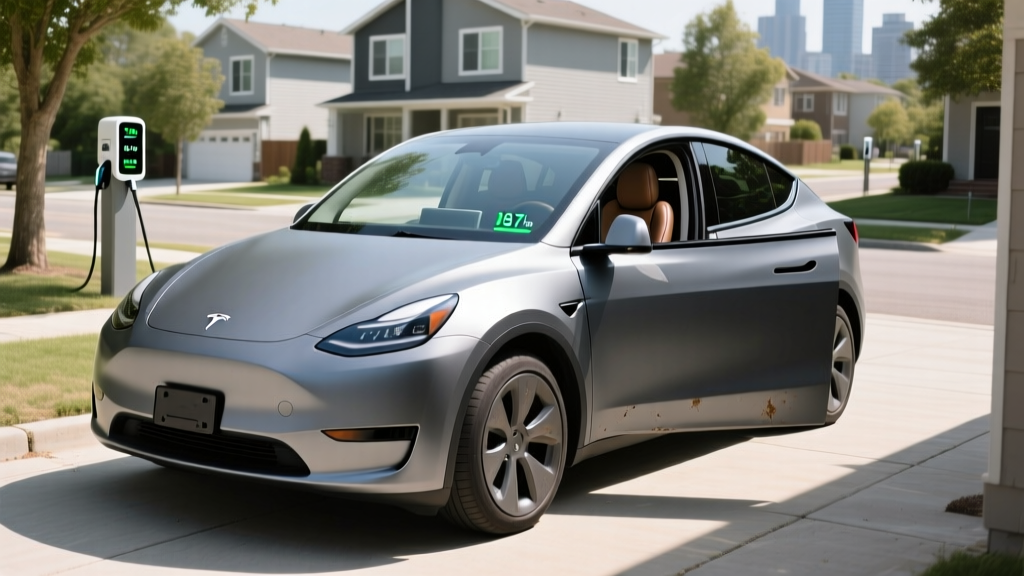
The 2020 Tesla Model Y: A Used-EV Benchmark in 2026
Five years after its debut, the 2020 Tesla Model Y remains one of the most-searched used electric vehicles on the market — and for good reason. As the first model year of Tesla's compact crossover, it introduced buyers to a practical, long-range EV with access to the Supercharger network. But as a 2026 used-car shopper, you need to look past the hype and evaluate what a five-year-old battery, outdated heat-pump architecture, and evolving tax-credit rules actually mean for your wallet.
This review covers the 2020 Model Y Long Range and Performance variants with exact specs, real-world range data, charging performance, battery longevity expectations, and whether it still holds up against newer competitors like the Hyundai Ioniq 5, Ford Mustang Mach-E, and the refreshed 2025+ Model Y.
| Spec | 2020 Model Y Long Range AWD | 2020 Model Y Performance |
|---|---|---|
| EPA Range | 316 miles | 291 miles |
| Battery (usable) | ~75 kWh (NMC) | ~75 kWh (NMC) |
| Drivetrain | Dual Motor AWD | Dual Motor AWD |
| 0-60 mph | 4.8 sec | 3.5 sec |
| Horsepower | 384 hp | 456 hp |
| MPGe (combined) | 121 MPGe | 111 MPGe |
| kWh/100 mi | 28 | 30 |
| Max DC Fast Charge | 250 kW (peak) | 250 kW (peak) |
| 10-80% DC Time | ~27 min | ~27 min |
| Level 2 Home Charge | 11.5 kW (~44 mi/hr) | 11.5 kW (~44 mi/hr) |
| Battery Warranty (new) | 8 yr / 120,000 mi | 8 yr / 120,000 mi |
| Original MSRP | $52,990 | $60,990 |
Sources: EPA fueleconomy.gov, Tesla press archives.
Real-World Range: What the EPA Sticker Doesn't Tell You
EPA Sticker: 316 miles (Long Range) / 291 miles (Performance)
Real-World Expectation: 260-285 miles highway; 240-260 miles in cold weather (below 32°F); 290-310 miles mixed city driving in moderate temps.
The 2020 Model Y Long Range earned a 316-mile EPA rating — impressive for its time and still competitive today. However, the 2020 model year predates Tesla's standard heat pump adoption (introduced broadly in the 2021 refresh). Without a heat pump, cold-weather cabin heating draws directly from the traction battery via resistive elements, which can reduce range by 25-35% in sub-freezing conditions.
In highway testing at 70 mph and 65°F, owners consistently report 260-285 miles before reaching 10% State of Charge (SoC). City driving with regenerative braking engaged recovers more energy, pushing real-world figures closer to the EPA estimate. If you live in the northern U.S. or commute at sustained highway speeds, budget for 250 usable miles in winter.
Battery degradation also factors in. A 2020 Model Y in 2026 has 5-6 years of calendar aging. Tesla's NMC cells typically lose 8-12% capacity over this period depending on charging habits. Expect a well-maintained example to deliver 275-290 miles at 100% SoC today, not the original 316.
Charging Performance: DC Fast and Level 2 Breakdown
The 2020 Model Y supports the CCS1 charging standard via its native Tesla connector (NACS), which was proprietary in 2020. As of 2026, Tesla Superchargers have opened to other brands, but your 2020 Model Y still charges natively at any V3 Supercharger stall without adapters — a significant used-EV advantage.
| Charging Level | Power | Miles Added per Hour | Notes |
|---|---|---|---|
| Level 1 (120V) | 1.4 kW | ~5 mi/hr | Emergency/trickle only |
| Level 2 (240V, 48A) | 11.5 kW | ~44 mi/hr | Home Wall Connector; full charge ~7-8 hr |
| Level 2 (240V, 32A) | 7.7 kW | ~30 mi/hr | Common portable/mobile connector setup |
| DC Fast (V3 Supercharger) | 250 kW peak | ~1,000 mi/hr (peak) | 10-80% in ~27 min; tapers sharply above 80% |
| DC Fast (CCS adapter, EA/others) | ~150-250 kW | Variable | Requires Tesla CCS adapter (included post-2023) |
The 250 kW peak figure is just that — a peak. The 2020 Model Y's charge curve ramps quickly to ~250 kW between 10-20% SoC, then begins tapering. By 50% SoC, you're seeing ~120 kW; by 80%, roughly 60 kW. The 10-80% time of approximately 27 minutes is realistic at a V3 Supercharger with a preconditioned battery. Skip preconditioning and that time stretches to 35+ minutes in cold weather.
For home charging, a Tesla Wall Connector on a 60-amp circuit delivers the full 11.5 kW (48 amps), adding roughly 44 miles of range per hour. Most owners plug in overnight and wake up fully charged. Installation costs for a 240V/60A circuit typically run $800-$2,000 depending on panel proximity — budget for a possible panel upgrade if your home has a 100A service.
Battery Chemistry, Degradation, and Longevity
The 2020 Model Y uses Nickel-Manganese-Cobalt (NMC) lithium-ion cells supplied primarily by Panasonic in the 2170 form factor. NMC offers high energy density — which is how Tesla packed ~75 kWh usable into a relatively compact pack — but it's more sensitive to high SoC storage than LFP (lithium iron phosphate) chemistry used in later Standard Range models.
For a 2026 buyer evaluating a used 2020 Model Y, battery health is paramount. Here's what to check:
- State of Health (SoH): Request a battery health reading via the Tesla service menu or third-party tools like Tessie or TeslaFi. A healthy 2020 pack should show 88-92% SoH.
- Charging history: Frequent DC fast charging to 100% and regular storage at full SoC accelerate NMC degradation. A car charged primarily at home to 80% daily will have a healthier pack.
- Warranty remaining: The original 8-year/120,000-mile battery warranty means a 2020 Model Y's coverage expires in 2028 or at 120,000 miles — whichever comes first. Tesla covers battery replacement if capacity drops below 70% of original within the warranty period.
Battery replacement out of warranty costs approximately $12,000-$16,000 at a Tesla service center, though refurbished packs may reduce this. Most 2020 Model Y batteries will not need replacement — Tesla's NMC packs are engineered for 1,500+ charge cycles, translating to 300,000+ miles before significant degradation.
Interior, Cargo, and Technology
The 2020 Model Y's interior follows Tesla's minimalist ethos: a single 15-inch center touchscreen controls everything from climate to mirrors. There's no instrument cluster — speed and navigation appear on the left third of the center display. Build quality on 2020 Fremont-built cars drew criticism for panel gaps and interior rattles, issues that improved substantially in 2021+ Austin and Shanghai production.
Practical dimensions:
- Cargo (rear seats up): 30.2 cu ft
- Cargo (rear seats folded): 76.2 cu ft
- Frunk: 4.1 cu ft
- Rear legroom: 41.6 inches
- Front legroom: 41.8 inches
- Seating: 5-passenger standard (7-seat option was available but extremely cramped third row)
The 76.2 cu ft cargo figure with seats folded beats most competitors, including the Ford Mustang Mach-E (59.7 cu ft) and Hyundai Ioniq 5 (56.2 cu ft). The optional third row, however, fits only small children and cuts cargo space — most used buyers should seek the 5-seat configuration.
Technology highlights include over-the-air (OTA) software updates (still actively supported in 2026), Sentry Mode dashcam surveillance, Dog Mode climate control, and Tesla's mobile app with remote preconditioning. The 2020 model year includes basic Autopilot (adaptive cruise + lane centering) as standard. Full Self-Driving (FSD) was an expensive add-on — but remember, FSD is SAE Level 2, meaning it requires full driver attention at all times and is not autonomous driving.
Autopilot/FSD Reality Check: The 2020 Model Y's Autopilot and FSD (Supervised) are SAE Level 2 driver-assistance systems. You must keep your hands on the wheel and eyes on the road. These systems do not make the vehicle self-driving. They assist with highway lane-keeping and adaptive cruise but can miss construction zones, emergency vehicles, and complex intersections.
Pricing, Tax Credits, and Used-EV Value
As a used vehicle in 2026, the 2020 Model Y no longer qualifies for the new-vehicle §30D federal tax credit. However, it may qualify for the Used Clean Vehicle Credit (§25E), which provides up to $4,000 or 30% of the sale price (whichever is lower) for qualifying pre-owned EVs.
| Factor | Detail |
|---|---|
| Original MSRP (Long Range) | $52,990 |
| Typical 2026 Used Price (60-80K mi) | $24,000 - $30,000 |
| §25E Used EV Credit (max) | $4,000 (30% of sale price, whichever is less) |
| Income Cap (§25E) | $75K single / $112,500 HOH / $150K joint (AGI) |
| Dealer Requirement | Must be purchased from a licensed dealer (private sales excluded) |
| Sale Price Cap | $25,000 or less to qualify for §25E |
| Effective Price (with credit, if eligible) | ~$20,000 - $21,000 |
Critical caveat: The §25E credit has a $25,000 maximum sale price cap. Many 2020 Model Y Long Range examples list above $25,000 in 2026, which disqualifies them from the credit. Shop for well-equipped examples priced at or just under $25K — higher-mileage or cosmetically imperfect cars — to capture the full $4,000 credit. Always confirm eligibility with a tax professional and reference the IRS §25E guidelines.
Insurance for a 2020 Model Y averages $1,800-$2,400/year depending on state and driving record — higher than comparable ICE crossovers due to repair costs and Tesla's aluminum/steel mixed construction. Get quotes before purchasing.
How It Stacks Up Against 2026 Competitors
The 2020 Model Y competes in the used market against newer offerings. Here's how it compares to key alternatives at similar price points:
| Attribute | 2020 Model Y LR | 2022 Ioniq 5 SEL | 2022 Mach-E Premium |
|---|---|---|---|
| Used Price (2026) | $24K-$30K | $25K-$32K | $24K-$30K |
| EPA Range | 316 mi | 303 mi (RWD) | 305 mi (ER AWD) |
| DC Fast Charge Peak | 250 kW | 235 kW | 150 kW |
| 10-80% Time | ~27 min | ~18 min (800V) | ~38 min |
| Cargo (seats folded) | 76.2 cu ft | 56.2 cu ft | 59.7 cu ft |
| Heat Pump | No | Yes | Yes (some trims) |
| Supercharger Access | Native | Adapter needed (NACS port on 2025+) | Adapter needed |
The Model Y wins on cargo space and native Supercharger access. The Ioniq 5's 800V architecture charges faster in the 10-80% window despite a lower peak kW. The Mach-E offers a more traditional interior with physical controls but charges noticeably slower. For road-trippers who value the Supercharger network, the 2020 Model Y still has the edge — though by 2026, most major networks (Electrify America, EVgo) have improved reliability substantially.
Pros, Cons, and the Final Verdict
Pros
- 316-mile EPA range still competitive in 2026
- Native Tesla Supercharger access (no adapters)
- Best-in-class cargo capacity (76.2 cu ft)
- OTA updates keep software current through 2026
- Strong performance (4.8s 0-60 LR; 3.5s Performance)
- Potential $4,000 §25E used-EV credit if priced ≤$25K
Cons
- No heat pump — significant cold-weather range loss
- 2020 build quality issues (panel gaps, rattles)
- FSD/Autopilot is Level 2 only — not self-driving
- Insurance costs above segment average
- NMC battery requires careful SoC management vs LFP
- §25E credit sale-price cap ($25K) limits eligibility
Buy the 2020 Model Y if: You need maximum cargo space, prioritize Supercharger network access for road trips, live in a moderate climate, and can find one at or under $25K to capture the §25E credit.
Skip it if: You live in a cold-weather state where the lack of a heat pump will cost you 60-80 miles of winter range, you want newer build quality (look at 2022+ Austin-built Model Y instead), or you need guaranteed sub-$21K effective pricing and can't find one under the $25K cap.
Frequently Asked Questions
What is the real-world range of the 2020 Model Y?
Expect 260-285 miles on the highway in moderate temperatures, and 240-260 miles in freezing conditions. The lack of a heat pump makes cold-weather efficiency notably worse than the 2021+ refreshed Model Y. City driving with regen can approach the 316-mile EPA figure.
How fast does the 2020 Model Y charge?
On a V3 Tesla Supercharger, it peaks at 250 kW and charges from 10-80% in approximately 27 minutes with a preconditioned battery. At home on a Level 2 Wall Connector (11.5 kW), a full charge takes 7-8 hours, adding ~44 miles of range per hour.
Does the 2020 Model Y qualify for any federal tax credit?
Not the new-vehicle §30D credit. It may qualify for the §25E Used Clean Vehicle Credit — up to $4,000 — if purchased from a dealer for $25,000 or less and your AGI falls within IRS income limits. Confirm details with a tax professional and the IRS §25E page.
Is the 2020 Model Y still worth buying in 2026?
Yes, if you find a well-maintained example with strong battery SoH (88%+) at the right price. It offers more range and cargo space than most used-EV alternatives under $30K. However, the 2022+ refresh (heat pump, better build, AMD Ryzen infotainment) is worth the premium if your budget allows $32K+.
What should I check before buying a used 2020 Model Y?
Request battery State of Health via TeslaFi or the service menu, verify remaining battery warranty (8yr/120K mi from original in-service date), check for open recalls on NHTSA.gov, inspect panel gaps and suspension components, and confirm the car has not been in a major accident that could compromise the battery pack structure.
How long will the 2020 Model Y battery last?
Tesla's NMC 2170 cells are engineered for 1,500+ full charge cycles, translating to 300,000+ miles before capacity drops below 70%. With typical ownership (charging to 80%, avoiding extreme heat storage), expect 88-92% State of Health at 5-6 years old. Out-of-warranty replacement runs $12,000-$16,000 if needed.