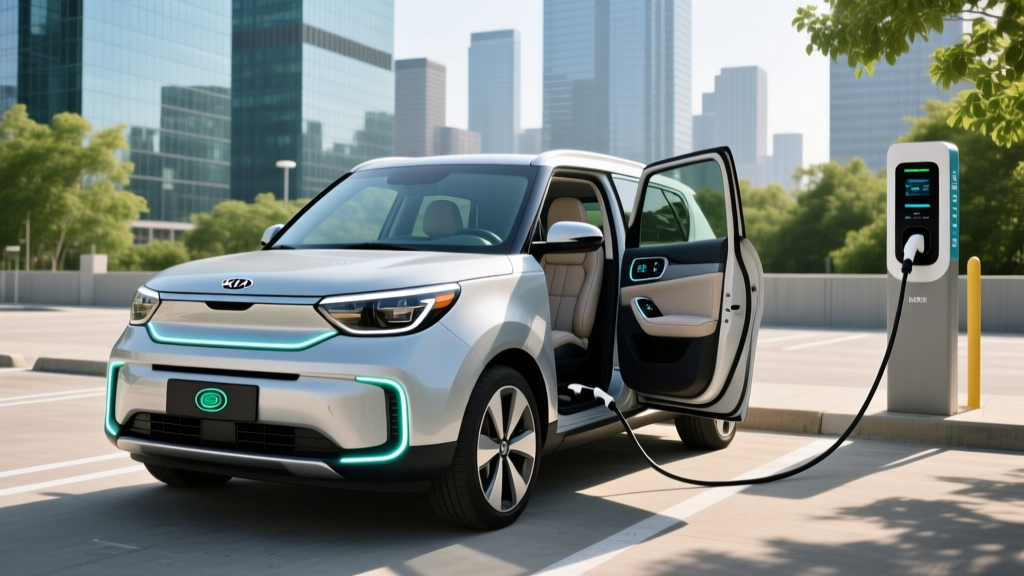
If you're considering a 2020 Kia Soul EV on the used market in 2026, here's the quick verdict: it remains one of the most practical and spacious used electric vehicles available, offering an EPA-estimated 243 miles of range from its 64 kWh battery pack. Expect to pay between $14,000 and $20,000 depending on mileage and condition. Its 100 kW peak DC fast-charging capability means a 10–80% charge in roughly 50 minutes — adequate but not class-leading by today's standards. The Soul EV's boxy hatchback design delivers best-in-class cargo space, and with home Level 2 charging, daily operating costs are a fraction of a comparable gas car. The main trade-offs are its older CCS connector (not NACS), a charging curve that tapers significantly above 80%, and real-world highway range closer to 200–215 miles.
2020 Kia Soul EV: Key Specs at a Glance
| Specification | Value |
|---|---|
| EPA Range | 243 miles |
| Real-World Range (highway/70 mph) | ~200–215 miles |
| Real-World Range (cold weather, 30°F) | ~170–190 miles |
| Battery Capacity (usable) | 64 kWh (NMC chemistry) |
| Motor Output | 201 hp / 291 lb-ft torque |
| 0–60 mph | ~7.2 seconds |
| EPA Efficiency | 120 MPGe combined (28 kWh/100 mi) |
| Peak DC Fast Charge Rate | ~100 kW (CCS1) |
| 10–80% DC Fast Charge Time | ~50 minutes |
| Level 2 Charge Rate | 7.2 kW (~25 mi/hr) |
| Cargo Volume | 24.9 cu ft (rear seats up) / 62.1 cu ft (folded) |
| Original MSRP (2020) | $33,550 (S) / $36,050 (EX Designer) |
| Used Price Range (2026 est.) | $14,000–$20,000 |
| Battery/Powertrain Warranty | 10 years / 100,000 miles (from original in-service date) |
Sources: EPA / fueleconomy.gov, Kia Motors America press materials.
Real-World Range: What the EPA Sticker Doesn't Tell You
Real-World Highway (70 mph, 75°F): ~200–215 miles
Real-World Cold Weather (30°F, mixed driving): ~170–190 miles
Real-World City/Commute (moderate speeds): ~235–250 miles
The 2020 Soul EV's 243-mile EPA figure is based on a blended city/highway test cycle that favors low-speed, regenerative-braking-heavy driving. In practice, electric vehicles consume significantly more energy at sustained highway speeds because aerodynamic drag scales with the square of velocity — and the Soul's tall, boxy profile generates more drag than a sleek sedan like the Tesla Model 3 or Hyundai Ioniq 6.
In real-world highway testing at 70 mph in mild temperatures, expect roughly 200–215 miles before the battery reaches a 5% state of charge. In cold weather (below 40°F), the lithium-ion NMC battery experiences increased internal resistance, and energy diverted to cabin heating further reduces range. Plan for 170–190 miles in winter conditions if you rely on resistive cabin heat. The Soul EV does include a heat pump on the EX Designer trim, which mitigates cold-weather losses somewhat compared to resistive-only heating systems.
For city commuters driving under 50 mph with frequent regenerative braking opportunities, hitting or even slightly exceeding the EPA figure is realistic. The Soul EV offers four levels of regenerative braking controlled by steering-wheel paddles, including a "one-pedal driving" mode at the maximum setting that can bring the car to a full stop without touching the brake pedal.
Charging Speeds and the 100 kW Limitation
| Charging Level | Power (kW) | Miles Added per Hour | Use Case |
|---|---|---|---|
| Level 1 (120V household) | ~1.4 kW | ~5 miles/hr | Emergency / overnight trickle |
| Level 2 (240V home/public) | 7.2 kW | ~25 miles/hr | Daily home charging |
| DC Fast Charge (CCS1) | Up to 100 kW peak | ~180 miles/hr (peak) | Road trips, quick top-ups |
Understanding the charge curve: The 100 kW peak rate applies only at a low state of charge (roughly 10–40% SoC). As the battery fills, the battery management system progressively reduces charging power to protect cell longevity. By 80% SoC, the rate drops to approximately 40–50 kW. This means a 10–80% session takes roughly 50 minutes at a capable CCS station — functional for road trips but noticeably slower than newer EVs like the Hyundai Ioniq 5 (which peaks at 240 kW and achieves 10–80% in ~18 minutes on an 800V architecture).
Above 80%, charging slows dramatically — expect another 30–40 minutes to go from 80% to 100%. For road-trip efficiency, plan your stops around 10–80% sessions and avoid charging to full unless you're stopping overnight.
Connector note: The 2020 Soul EV uses the CCS1 (Combined Charging System) connector for DC fast charging and a J1772 inlet for Level 1/2 AC charging. As of 2026, the industry is shifting toward Tesla's NACS standard, but CCS1 chargers remain widely available on networks like Electrify America, EVgo, and ChargePoint. Adapters (CCS-to-NACS) are available if you need access to Tesla Supercharger stations, though compatibility should be verified with Kia before purchase.
Cost of Ownership: 2020 Soul EV vs. Gas Equivalent
The strongest argument for a used Soul EV is operating cost. Here's how a five-year ownership scenario compares against a similarly sized gas-powered subcompact crossover (like a 2020 Kia Seltos or Hyundai Kona gas model averaging 29 MPG combined).
| Cost Category | 2020 Kia Soul EV (Used) | Gas Crossover (29 MPG) |
|---|---|---|
| Purchase Price (2026 est.) | $16,500 (avg. used) | $16,000 (avg. used) |
| Fuel/Energy (5 yrs, 12,000 mi/yr) | $3,200 (home L2 at $0.14/kWh) | $7,240 (at $3.50/gal) |
| Maintenance (5 yrs) | $800 (tires, cabin filter, wipers) | $2,500 (oil, filters, brakes, plugs) |
| Insurance (5 yrs, avg.) | $7,500 | $6,500 |
| 5-Year Total (purchase + operating) | $28,000 | $32,240 |
Key takeaways: The Soul EV saves roughly $4,000–$5,000 over five years primarily through fuel and maintenance savings. Home charging at a national average of $0.14/kWh yields an energy cost of about $0.053 per mile, compared to $0.121 per mile for gas at $3.50/gallon. However, insurance premiums for EVs tend to run 10–20% higher due to elevated repair costs and battery replacement considerations.
Used-EV tax credit: Under IRS §30D rules as of 2026, the federal new-vehicle tax credit no longer applies to a 2020 model. However, the used clean vehicle credit (up to $4,000 or 30% of the sale price, whichever is less) may apply if you purchase from a licensed dealer, the sale price is $25,000 or less, and you meet income thresholds ($75,000 single / $150,000 joint MAGI). Confirm eligibility with a tax professional and check the IRS for current-year rules, as sourcing requirements and caps can change.
Battery Health, Degradation, and Warranty Remaining
The 2020 Soul EV uses a 64 kWh (usable) NMC (nickel-manganese-cobalt) lithium-ion battery pack with a liquid thermal management system — a critical feature that actively cools and heats the pack to maintain optimal cell temperatures. This is a significant advantage over passively cooled EVs, as thermal management is the single biggest factor in long-term battery longevity.
Expected degradation: Based on industry data for liquid-cooled NMC packs of this era, expect roughly 8–12% capacity loss over 100,000 miles or 8 years under normal use patterns. A 2020 Soul EV with 50,000 miles in 2026 would likely retain 92–95% of its original capacity, translating to a real-world range of roughly 225–230 miles (EPA adjusted).
Warranty coverage: Kia's battery warranty covers 10 years or 100,000 miles from the original in-service date, guaranteeing the pack will retain at least 70% of its original capacity. A 2020 model first sold in mid-2020 would remain under factory battery warranty until mid-2030 or 100,000 miles — meaning most examples on the used market in 2026 still carry several years of protection. This is a major confidence factor for used-EV buyers.
Before you buy: Request a battery state-of-health (SoH) reading from a Kia dealer or use an OBD-II diagnostic tool compatible with Kia's battery management system. A SoH reading above 90% at under 60,000 miles is typical and healthy. Anything below 85% warrants caution and may indicate heavy DC fast-charging use or exposure to extreme climates without adequate thermal management.
Common Misconceptions About the 2020 Soul EV
| Myth | Fact |
|---|---|
| "It can't handle road trips." | With 200+ real-world highway miles and CCS DC fast charging, 300–400 mile trips require one 45–50 minute stop. It's not as fast as 800V EVs, but it's workable with planning. |
| "The battery will need expensive replacement soon." | Liquid-cooled NMC packs from this generation are lasting 150,000–200,000+ miles before significant degradation. Most 2020 examples still have years of factory warranty remaining. |
| "I need a special charger at home." | Any standard Level 2 (240V) EVSE with a J1772 connector works. A quality Level 2 unit costs $350–$650, and installation by a licensed electrician typically runs $500–$1,500 depending on panel proximity. |
| "Used EVs don't qualify for tax credits." | The federal used clean vehicle credit offers up to $4,000 for qualifying purchases from licensed dealers, subject to income and price caps. Check IRS guidelines. |
| "It's slow." | 201 hp and 291 lb-ft of instant torque deliver a 7.2-second 0–60 mph time — quicker than most gas-powered compact crossovers and plenty responsive for merging and passing. |
Decision Framework: Is the 2020 Kia Soul EV Right for You?
Choose the 2020 Kia Soul EV if:
- You have access to home Level 2 charging (garage, driveway, or dedicated parking with 240V outlet)
- Your daily driving is under 80 miles round-trip, with occasional 200–300 mile road trips
- You value interior space — the Soul's 24.9 cu ft cargo area beats most compact SUVs
- You want low operating costs and are willing to accept ~50-minute DC fast-charge stops on road trips
- You live in a moderate climate or have garage parking to mitigate cold-weather range loss
- Budget target is $14,000–$20,000 for a practical used EV
Look elsewhere if:
- You rely exclusively on public DC fast charging and need sub-25-minute stops (consider a used Hyundai Ioniq 5 or Tesla Model 3)
- You regularly drive 300+ miles in winter conditions between charging opportunities
- You want NACS (Tesla Supercharger) native access without an adapter
- You need all-wheel drive — the Soul EV is front-wheel drive only
- You want the latest ADAS features; the 2020 Soul EV has basic lane-keep and adaptive cruise but lacks more advanced systems
What First-Time EV Buyers Should Know Before Purchasing
Home charging is essential. The economics and convenience of EV ownership are built around home charging. If you cannot install a Level 2 charger (240V, 32–40 amp circuit), relying on public charging will erode your cost savings and add significant time to your routine. Before buying, confirm that your electrical panel has capacity for a 40-amp circuit (or budget $1,000–$2,500 for a panel upgrade if needed). A licensed electrician should evaluate your setup.
kW vs. kWh — know the difference. This is the most common point of confusion. kWh (kilowatt-hours) measures energy capacity — think of it as the size of the "fuel tank." The Soul EV has a 64 kWh battery. kW (kilowatts) measures power — the rate of energy delivery or charging. The Soul EV charges at up to 100 kW. A 100 kW charger fills a 64 kWh battery (theoretically) in about 38 minutes, but real-world charge curves make it longer.
Maintenance is minimal but not zero. EVs eliminate oil changes, spark plugs, transmission fluid, and exhaust system repairs. However, tires wear 15–25% faster on EVs due to instant torque and heavier vehicle weight. Budget for tire rotation every 5,000–7,500 miles and replacement every 30,000–40,000 miles. Cabin air filters, brake fluid checks, wiper blades, and 12V auxiliary battery replacement (every 3–5 years) round out the maintenance schedule.
Preconditioning matters. The Soul EV allows you to precondition the battery and cabin while plugged in via the Kia UVO app. Warming the battery before a DC fast-charge session in cold weather can significantly improve charging speed. Preconditioning the cabin while on shore power preserves range for your drive.
Frequently Asked Questions
How long does the 2020 Kia Soul EV battery last?
Based on degradation data from liquid-cooled NMC packs of this generation, expect 8–12% capacity loss over 100,000 miles. Many packs last 150,000–200,000+ miles before dropping below the 70% capacity threshold. Kia's 10-year/100,000-mile battery warranty provides a strong safety net, and most 2020 models sold in 2026 still have remaining factory coverage.
Can I charge the 2020 Soul EV at a Tesla Supercharger?
Not natively. The Soul EV uses the CCS1 connector, while Tesla Superchargers use NACS. As of 2026, CCS-to-NACS adapters are available from third-party manufacturers, but you should verify compatibility with Kia before relying on one. Electrify America, EVgo, and ChargePoint networks remain the primary DC fast-charging options for CCS-equipped vehicles.
What does it cost to charge a Kia Soul EV at home?
At the national average residential electricity rate of $0.14/kWh, a full 64 kWh charge costs about $8.96 and provides roughly 243 miles of EPA range. That works out to approximately $0.037 per mile for energy — about one-third the per-mile fuel cost of a 29 MPG gas car at $3.50/gallon. If your utility offers off-peak or time-of-use rates, overnight charging can drop costs to $0.08–$0.10/kWh.
Is the 2020 Soul EV good in snow and cold weather?
The Soul EV has decent ground clearance and the instant torque of its electric motor provides smooth, predictable traction control. However, it is front-wheel drive only — there is no AWD option. In cold weather (below 40°F), expect 15–25% range loss due to battery chemistry and cabin heating demands. The available heat pump (EX Designer trim) reduces this penalty compared to resistive heating. Winter tires are strongly recommended for snow-belt climates.
Does the 2020 Soul EV qualify for any tax credits in 2026?
The federal new-vehicle §30D credit no longer applies. However, the used clean vehicle credit may provide up to $4,000 (or 30% of the sale price, whichever is less) if you purchase from a licensed dealer for $25,000 or less and meet income thresholds ($75,000 single / $150,000 joint modified AGI). State and local incentives may also apply — check your state's energy office or the Alternative Fuels Data Center for details. Always consult a tax professional for your specific situation.
How does the Soul EV compare to the Kia Niro EV?
The 2020 Niro EV shares the same 64 kWh battery and 201 hp powertrain but offers slightly more EPA range (239 miles for the Niro vs. 243 for the Soul — effectively identical). The Soul EV wins on cargo space (24.9 vs. 18.5 cu ft) and rear headroom thanks to its taller roofline. The Niro EV has a marginally lower, more car-like driving position. Both use the same CCS1 charging hardware with identical charge speeds. Choose the Soul for maximum utility; choose the Niro if you prefer a lower, more traditional crossover profile.