Quick Verdict: A Proven Compact EV With One Catch
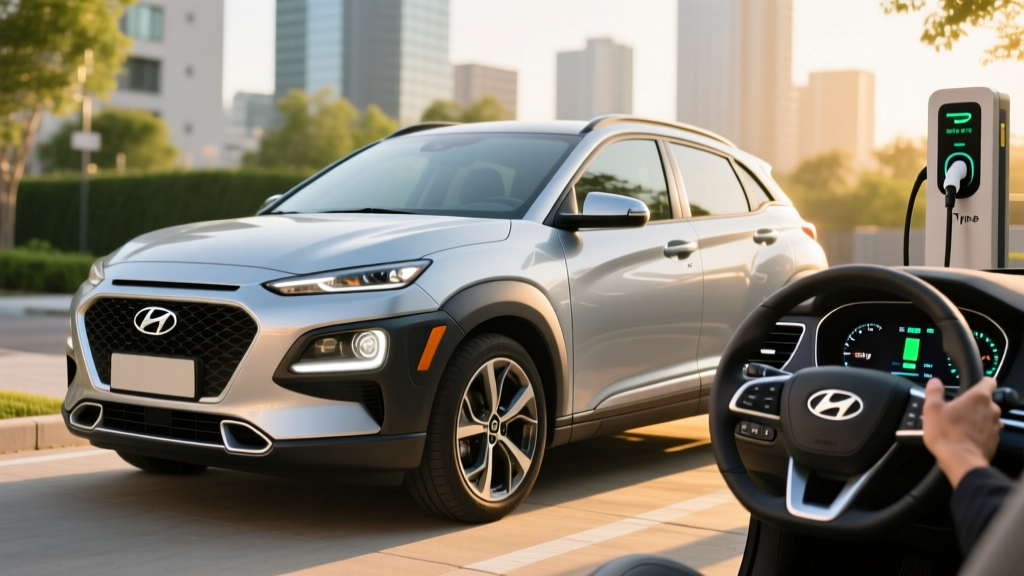
The 2020 Hyundai Kona Electric was one of the first mainstream subcompact SUVs to offer over 250 miles of EPA-estimated range at a sub-$40,000 price. Six years later, it remains a compelling used-EV buy — provided you understand its charging limitations and battery chemistry. With 201 horsepower, a 64 kWh NMC battery, and a 258-mile EPA range sticker, the Kona Electric still outpaces many newer rivals in efficiency. But its 50 kW peak DC fast-charge rate means road trips require more patience than a modern 800V architecture vehicle.
If you're shopping the used market in 2026, the Kona Electric can qualify for the up-to-$4,000 used-EV federal tax credit under IRS §25E, making it one of the most affordable ways into a 250+ mile EV. Let's break down every spec that matters.
Range, Battery, and Real-World Efficiency
| Spec | Value |
|---|---|
| EPA Range | 258 miles |
| Battery Capacity (Usable) | 64 kWh |
| Battery Chemistry | NMC (Nickel Manganese Cobalt) |
| Combined MPGe | 120 MPGe |
| Energy Consumption | 28 kWh/100 mi |
| Drivetrain | FWD (single motor) |
The 64 kWh NMC pack delivers strong energy density for its era, but NMC batteries generally experience slightly faster long-term degradation than LFP (lithium iron phosphate) chemistries found in some modern EVs. Hyundai's battery management system is conservative with charge buffers, which helps longevity. Most 2020 Kona Electric owners report State of Health (SoH) retention above 90% at 60,000 miles based on community data — solid for a six-year-old pack.
Charging Speeds: DC Fast, Level 2, and Level 1
The Kona Electric's charging profile is its most debated spec. Hyundai equipped the 2020 model with a CCS1 connector and a 50 kW peak DC fast-charge rate — competitive in 2020 but noticeably slow by 2026 standards where 150–350 kW is common.
| Charge Level | Power / Rate | Time / Speed |
|---|---|---|
| Level 1 (120V household) | ~1.4 kW | ~3–4 miles per hour |
| Level 2 (240V home/public) | 7.2 kW | ~25 miles per hour; 0–100% in ~9.5 hours |
| DC Fast Charge (CCS1) | 50 kW peak | 10–80% in ~54 minutes (warm battery) |
That 54-minute 10–80% time assumes a preconditioned battery at an ambient temperature above 60°F. In cold weather, expect the charge curve to taper earlier, pushing the session closer to 65–75 minutes. The Kona Electric does not support battery preconditioning for fast charging — a notable omission that means winter DC charging sessions will be slower unless you've driven the car hard enough to warm the pack naturally.
For home charging, the 7.2 kW onboard charger is adequate. A full overnight charge on a Level 2 home station (like a ChargePoint Home Flex or Emporia Level 2) replenishes the 64 kWh pack in roughly 9.5 hours. Installation of a 240V/40A circuit typically costs $500–$1,500 depending on panel proximity and local permitting, on top of $300–$700 for the charger unit itself.
Performance and Driving Dynamics
| Spec | Value |
|---|---|
| Motor Output | 201 hp / 290 lb-ft torque |
| 0–60 mph | 6.4 seconds |
| Drivetrain | Front-wheel drive (FWD) |
| Top Speed | 104 mph (electronically limited) |
| Curb Weight | ~3,715 lbs |
The Kona Electric's single front-mounted motor delivers punchy acceleration that catches most gas-car drivers off guard at stoplights. The 290 lb-ft of instant torque makes it genuinely quick around town, and the 6.4-second 0–60 time beats most turbocharged compact crossovers. The low center of gravity from the floor-mounted battery pack gives it composed cornering for a subcompact SUV, though the FWD layout means torque steer is noticeable under hard acceleration from a stop.
Regenerative braking offers four levels, adjustable via steering-wheel paddles. Level 3 enables near one-pedal driving in city traffic, though it doesn't bring the car to a complete hold — you'll need to tap the brake at the final stop. The friction brakes blend smoothly with regen, a calibration Hyundai got right.
Interior, Cargo, and Technology
The Kona Electric shares its cabin with the gas-powered Kona, meaning materials are durable but plasticky — hard dash surfaces, cloth or optional leatherette seats, and a straightforward layout. It's not premium, but everything is logically placed and built to last.
| Dimension | Measurement |
|---|---|
| Front Legroom | 41.5 inches |
| Rear Legroom | 34.6 inches |
| Cargo Volume (rear seats up) | 19.2 cu ft |
| Cargo Volume (rear seats folded) | 45.8 cu ft |
| Frunk | None |
Cargo space is the Kona Electric's practicality weak point. At 19.2 cubic feet behind the rear seats, it trails the Chevrolet Bolt EUV (22.6 cu ft) and significantly trails modern crossovers. There's no frunk (front trunk) either — the motor and power electronics fill the nose.
Infotainment: The 2020 model features an 8.0-inch touchscreen with Apple CarPlay, Android Auto, and a physical volume knob — a welcome ergonomic choice. The available 8.0-inch navigation unit adds EV-specific features like charging-station locator and range estimation based on terrain. The interface is dated by 2026 standards (small icons, no wireless CarPlay) but functional.
Driver Assistance: Hyundai SmartSense comes standard on all trims, including forward collision-avoidance assist with pedestrian detection, lane keeping assist, blind-spot collision warning, rear cross-traffic alert, and smart cruise control with stop-and-go. This is SAE Level 2 driver assistance — the driver must remain engaged with hands on the wheel at all times. It is not autonomous driving.
Pricing, Trims, and Tax Credit Eligibility
The 2020 Hyundai Kona Electric was sold in three trims. Here's what they cost new and what you can expect on the used market in 2026:
| Trim | Original MSRP | Est. Used Price (2026) | After Up-to-$4,000 Used Credit |
|---|---|---|---|
| SEL (base) | $37,390 | $16,000–$19,000 | $12,000–$15,000 |
| Limited | $41,540 | $18,000–$22,000 | $14,000–$18,000 |
| Ultimate | $45,290 | $20,000–$25,000 | $16,000–$21,000 |
Federal Used-EV Tax Credit (IRS §25E): As a used purchase in 2026, the Kona Electric may qualify for up to $4,000 (or 30% of the sale price, whichever is less). Eligibility requirements include:
- Vehicle must be at least 2 model years old (2020 qualifies)
- Sale price must be $25,000 or less
- Buyer income caps: $75,000 single / $112,500 head of household / $150,000 joint (MAGI)
- Vehicle must be purchased from a licensed dealer
- Credit is non-refundable — you must have tax liability to claim it (point-of-sale transfer available for qualifying buyers)
- Must not have been the original owner
The $25,000 sale-price cap is critical: higher-mileage SEL and Limited trims typically fall under this threshold, but a clean, low-mileage Ultimate trim may exceed it, disqualifying the purchase. Always verify the final negotiated price against the cap. Consult IRS guidance on §25E and a tax professional before relying on credit eligibility.
Original §30D New-Vehicle Credit: When new, the Kona Electric was eligible for the full $7,500 federal tax credit under the pre-2023 rules (before the Inflation Reduction Act added battery-sourcing and MSRP caps). Hyundai's battery supplier met the critical-mineral and component requirements at the time.
Warranty and Long-Term Ownership
| Coverage | Term |
|---|---|
| Basic (bumper-to-bumper) | 5 years / 60,000 miles |
| Powertrain | 10 years / 100,000 miles |
| EV Battery | 10 years / 100,000 miles (capacity retention above 70%) |
| Roadside Assistance | 5 years / unlimited miles |
Hyundai's 10-year/100,000-mile battery warranty is among the best in the industry and a major confidence factor for used buyers. The warranty guarantees the battery will retain at least 70% of its original capacity. For a 2020 model, that coverage extends through 2030 or 100,000 miles — meaning most used buyers still have 4+ years of protection remaining.
Important caveat: Hyundai's battery warranty is transferable to subsequent owners, but the 10-year/100,000-mile powertrain warranty reverts to 5-year/60,000-mile coverage upon transfer. The EV battery warranty, however, remains at 10/100k for the original warranty period regardless of ownership changes. Confirm warranty status with a Hyundai dealer using the VIN before purchasing.
Pros, Cons, and Who Should Buy
- 258-mile EPA range still competitive in 2026
- Excellent efficiency at 120 MPGe combined
- Punchy 201 hp / 6.4-sec 0–60 acceleration
- 10-year/100k battery warranty (transferable)
- Qualifies for up to $4,000 used-EV tax credit
- Standard Hyundai SmartSense (Level 2 ADAS)
- Compact size ideal for urban parking
- 50 kW DC fast charge is slow by modern standards
- No battery preconditioning for fast charging
- Tight rear legroom (34.6 in) and cargo space (19.2 cu ft)
- No heat pump — significant cold-weather range loss
- No frunk for additional storage
- Dated infotainment interface (wired CarPlay only)
- FWD only — no AWD option
Best for: Budget-conscious commuters and urban drivers who charge at home, drive under 60 miles daily, and rarely take road trips longer than 150 miles. The Kona Electric excels as a daily driver with low running costs (~$0.04–$0.06 per mile on home electricity vs. $0.12–$0.15 for a comparable gas crossover).
Not ideal for: Frequent road-trippers who need fast DC charging, families who need spacious rear seats and cargo room, or buyers in cold climates who need a heat pump for winter efficiency. If road trips are routine, the Chevrolet Bolt EV/EUV (55 kW DC, more interior room) or a newer Hyundai Ioniq 5 (240 kW, 800V architecture) serve better.
2020 Kona Electric vs. Key Competitors
| Spec | 2020 Kona Electric | 2020 Chevy Bolt EV | 2020 Nissan Leaf Plus |
|---|---|---|---|
| EPA Range | 258 mi | 259 mi | 226 mi |
| Battery | 64 kWh NMC | 66 kWh NMC | 62 kWh NMC |
| DC Fast Charge | 50 kW | 55 kW | 100 kW |
| 0–60 mph | 6.4 sec | 6.5 sec | 6.9 sec |
| Combined MPGe | 120 | 118 | 108 |
| Cargo (rear up) | 19.2 cu ft | 16.9 cu ft | 23.6 cu ft |
| Fast-Charge Connector | CCS1 | CCS1 | CHAdeMO |
The Kona Electric edges out the Bolt EV in efficiency and acceleration, but the Bolt offers slightly more range and a marginally faster DC charge rate. The Leaf Plus charges fastest (100 kW) and has the most cargo room, but its CHAdeMO connector is increasingly orphaned as the US market consolidates on CCS and NACS. The Leaf also lacks active thermal management for its battery, a long-term durability concern.
Frequently Asked Questions
What is the real-world range of the 2020 Hyundai Kona Electric?
The EPA rates it at 258 miles combined. In real-world driving, expect 220–240 miles on highway-heavy trips at 70 mph, and 180–210 miles in freezing temperatures. City driving with regenerative braking can match or slightly exceed the EPA estimate.
How fast does the Kona Electric charge?
On a DC fast charger, it peaks at 50 kW and takes roughly 54 minutes from 10–80% with a warm battery. At home on a Level 2 (240V, 7.2 kW) charger, it adds about 25 miles per hour and fully charges in approximately 9.5 hours. Level 1 (120V) adds only 3–4 miles per hour.
How much does a used 2020 Kona Electric cost after tax credits?
Used prices in 2026 typically range from $16,000 (SEL) to $25,000 (Ultimate). If the sale price is $25,000 or less and you meet income requirements, the up-to-$4,000 used-EV credit under §25E can bring the effective cost as low as $12,000–$15,000 for a base SEL trim.
Does the 2020 Kona Electric qualify for the federal EV tax credit?
Not the new-vehicle §30D credit (that expired at point of original sale). However, it can qualify for the used-EV credit under §25E — up to $4,000 or 30% of sale price, whichever is less — if purchased from a dealer at or below $25,000 and buyer income falls within IRS caps. See IRS §25E guidance for full details.
Is the Kona Electric worth buying vs. a newer EV?
At $12,000–$21,000 after the used credit, it's one of the most affordable 250+ mile EVs available. For a commuter who charges at home and doesn't road-trip often, it's an excellent value. If you need fast DC charging, AWD, more space, or a heat pump, newer options like the Hyundai Ioniq 5 or Tesla Model Y (both available used in the $25,000–$35,000 range) are worth the premium.
How long will the Kona Electric battery last?
Hyundai's battery warranty covers 10 years/100,000 miles with a 70% capacity retention guarantee. NMC batteries in Hyundai's thermal management system typically retain 85–92% capacity at 80,000 miles based on owner reports. With proper care (avoiding repeated 100% charges and deep discharges), the pack should last 150,000+ miles before significant degradation.
Can I charge the Kona Electric at a Tesla Supercharger?
Not natively. The Kona Electric uses a CCS1 connector. Tesla Superchargers use NACS (or the legacy Tesla connector). You would need a CCS-to-NACS adapter (available from third parties, though compatibility varies) or rely on CCS-compatible networks like Electrify America, EVgo, and ChargePoint. As of 2026, some Tesla Supercharger stations have opened to non-Tesla CCS vehicles via the Magic Dock adapter, but availability is limited.