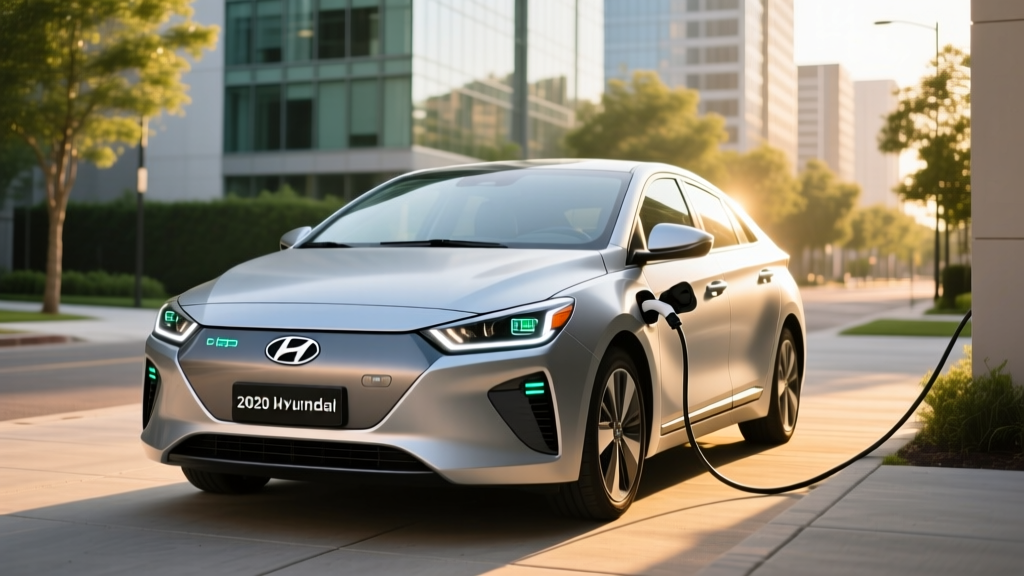
The 2020 Hyundai Ioniq Electric occupies a unique space in the used EV market. Originally sold as Hyundai's efficiency-first, range-moderate commuter, this compact hatchback was discontinued after the 2021 model year to make room for the Ioniq 5 crossover. But for budget-conscious shoppers in 2026, the 2020 Ioniq Electric remains one of the most efficient, practical used EVs available — especially when paired with the federal used-EV tax credit.
This review covers the 2020 Ioniq Electric (the battery-electric variant, not the hybrid or plug-in hybrid). We'll break down its real-world range, charging behavior, ownership economics, and whether it still holds up against newer, longer-range competitors.
2020 Ioniq Electric: Key Specifications at a Glance
| Spec | Value |
|---|---|
| EPA Range | 170 miles |
| Battery Capacity | 38.3 kWh usable (NMC lithium-ion) |
| Motor Output | 134 hp / 218 lb-ft torque |
| Drivetrain | FWD (single front motor) |
| 0–60 mph | ~9.7 seconds |
| EPA Efficiency | 133 MPGe combined (25 kWh/100 mi) |
| Max DC Fast Charge | 100 kW (CCS1) |
| 10–80% DC Charge Time | ~54 minutes |
| Level 2 Charge Rate | 7.2 kW onboard charger |
| Cargo Volume | 23.0 cu ft (rear seats up) / 55.0 cu ft (folded) |
| Rear Legroom | 35.0 inches |
| Battery Warranty | 8 years / 100,000 miles |
| Original MSRP | $33,045 (SE) / $37,020 (Limited) |
Range and Efficiency: EPA vs. Real-World Driving
Real-World Expectation: 140–160 miles highway; 170–185 miles city; 110–130 miles in freezing temperatures with cabin heat.
The 2020 Ioniq Electric carries a 38.3 kWh usable battery pack using NMC (nickel-manganese-cobalt) lithium-ion cells. That's modest by 2026 standards — most new compact EVs pack 60–80 kWh — but Hyundai engineered this car around efficiency, not brute capacity.
At 133 MPGe combined (roughly 25 kWh per 100 miles), the Ioniq Electric remains one of the most energy-efficient EVs ever sold in the U.S. According to EPA data on fueleconomy.gov, it outperforms even the Tesla Model 3 Standard Range in energy consumption per mile. That efficiency means every kilowatt-hour goes further, which matters when you're working with a smaller battery.
In real-world use, expect about 150 miles of mixed driving before you're hunting for a charger. Highway driving at 70+ mph drops range to roughly 140 miles due to aerodynamic drag, which disproportionately affects small-battery EVs. City driving with frequent regenerative braking opportunities can push range toward or slightly above the 170-mile EPA sticker. Cold weather is the Ioniq's Achilles' heel — without a heat pump (it uses resistive cabin heating), winter range loss of 25–35% is common. Plan for 110–130 miles on a full charge when temperatures dip below freezing.
Charging Speed: DC Fast Charging and Home Level 2
The 2020 Ioniq Electric uses the CCS1 connector standard, which remains widely supported at public charging networks including Electrify America, EVgo, and ChargePoint. However, its charging performance reveals the limitations of a 2020-era small-battery EV.
| Charging Level | Power / Rate | Time / Range Added |
|---|---|---|
| Level 1 (120V household) | ~1.4 kW | ~5 miles per hour of charging |
| Level 2 (240V home/public) | 7.2 kW (onboard charger max) | ~26 miles per hour; full charge in ~6 hours |
| DC Fast Charge (CCS1) | Peak 100 kW | 10–80% in ~54 minutes |
DC fast charging reality check: The Ioniq Electric peaks at roughly 100 kW, but that peak is brief. The charge curve tapers significantly above 60% state of charge (SoC). Expect sustained rates of 50–70 kW through the middle of the charge session, dropping to under 30 kW past 80%. The 10–80% time of approximately 54 minutes is slow compared to modern 800V-architecture EVs that accomplish the same in 18–25 minutes. This is the trade-off for the smaller battery — less total energy to push, but also slower absolute charge rates.
Home charging: The 7.2 kW onboard charger is adequate for overnight replenishment. A full charge from near-empty takes about 6 hours on a Level 2 home charger — perfectly fine for daily commuting. If you're installing a home Level 2 charger, budget $500–$1,500 for equipment and electrician labor depending on your panel capacity and run distance. Most 2020 Ioniq Electric owners will start each morning with a full "tank" and rarely need public charging.
Performance and Driving Dynamics
The 2020 Ioniq Electric is not a performance EV, and it doesn't pretend to be. Its single front-mounted motor produces 134 horsepower and 218 lb-ft of torque. The 0–60 mph time of roughly 9.7 seconds puts it in the territory of a conventional compact hatchback — adequate for merging and passing, but not thrilling.
Where the Ioniq shines is refinement. The single-speed reduction gear delivers smooth, linear acceleration. Road noise is well-managed, and the low center of gravity (battery pack under the floor) gives it competent, if not sporty, handling. The regenerative braking system offers adjustable levels via steering-wheel paddles, allowing everything from mild coasting to near one-pedal driving at the maximum regen setting.
One limitation worth noting: the Ioniq Electric has no towing rating. This is strictly a passenger commuter — don't plan on pulling a trailer.
Interior, Technology, and Driver Assistance
The 2020 Ioniq Electric received a mid-cycle refresh that modernized its cabin. The SE trim includes an 8-inch touchscreen with Apple CarPlay and Android Auto, a 7-inch digital instrument cluster, and Hyundai's SmartSense suite of driver-assistance features. The Limited trim adds leather seating, a 10.25-inch infotainment display with navigation, and a premium Harman Kardon audio system.
SmartSense driver assists include:
- Forward Collision-Avoidance Assist with pedestrian detection
- Lane Keeping Assist and Lane Following Assist
- Blind-Spot Collision Warning
- Rear Cross-Traffic Collision-Avoidance Assist
- Adaptive Cruise Control with Stop & Go (Limited trim)
Notable drawbacks: The rear seat, while offering 35 inches of legroom, feels tight for taller adults on longer trips. The hatchback cargo area (23.0 cu ft behind rear seats) is practical for groceries and luggage but can't match a compact crossover. The infotainment system, while functional, lacks the responsiveness and screen resolution of newer Hyundai models. And critically, the Ioniq Electric does not support over-the-air (OTA) software updates — what you bought is what you'll always have.
Pricing, Tax Credits, and Used-EV Value
The 2020 Ioniq Electric originally started at $33,045 for the SE trim and $37,020 for the Limited (including destination charges). As a new vehicle, it was eligible for the full $7,500 federal EV tax credit under the pre-2023 rules.
In 2026, this model is only available on the used market. Here's where it gets interesting for budget shoppers:
| Cost Factor | Estimated Amount |
|---|---|
| Typical Used Price (2026) | $14,000 – $19,000 (depending on mileage, condition, trim) |
| Federal Used EV Tax Credit (§25E) | Up to $4,000 (30% of sale price, max $4,000) |
| Effective Price After Credit | ~$10,000 – $15,000 |
Used EV tax credit rules (§25E): According to IRS guidelines, the used clean vehicle credit provides 30% of the sale price up to a maximum of $4,000. To qualify, the vehicle must be purchased from a licensed dealer for $25,000 or less, must be at least two model years old, and the buyer must meet income caps ($75,000 single / $112,500 head of household / $150,000 joint filers). The credit is non-refundable and can only be claimed once per vehicle. Point-of-sale transfer is available for used EV credits as of 2024, meaning you can apply the credit directly at the dealer to reduce your out-of-pocket cost. Always verify eligibility with a tax professional before purchase.
The 2020 Ioniq Electric does not qualify for the new-vehicle §30D credit since it is no longer sold new. But the used-EV credit makes it one of the most affordable entry points into electric driving available in 2026.
Ownership Costs and Who This EV Suits Best
At roughly 25 kWh per 100 miles, the Ioniq Electric costs approximately $0.04–$0.06 per mile to charge on residential electricity (national average ~$0.16/kWh). Compare that to a 30 MPG gas car at $3.50/gallon ($0.12/mile), and the per-mile fuel savings are substantial — roughly $1,000–$1,500 per year for a 12,000-mile driver.
Hyundai's battery warranty of 8 years/100,000 miles still has relevance for 2020 models in 2026 — coverage extends through the 2028 model year or 100,000 miles, whichever comes first. The warranty covers battery capacity loss below 70% of original capacity. NMC chemistry in Hyundai's pack has shown moderate degradation in owner reports — expect roughly 85–92% state of health (SoH) at 60,000 miles, which is well within warranty thresholds.
Who should buy the 2020 Ioniq Electric:
- Daily commuters with round trips under 120 miles who can charge at home
- Budget-first EV buyers seeking the lowest possible entry price with tax credit help
- Second-car households that need an efficient runabout alongside a larger vehicle for road trips
- Rideshare drivers (Uber/Lyft) in metro areas where low per-mile cost matters more than range
Who should look elsewhere:
- Road trippers — 170-mile range and 54-minute fast charges make intercity travel tedious
- Cold-climate drivers without garage parking — resistive heating decimates winter range
- Families needing rear-seat space — the Ioniq's back seat is tight for car seats and teenagers
- Anyone who needs towing — no tow rating whatsoever
2020 Ioniq Electric vs. Key Used-EV Competitors
| Spec | 2020 Ioniq Electric | 2020 Chevrolet Bolt EV | 2020 Nissan LEAF S Plus |
|---|---|---|---|
| EPA Range | 170 mi | 259 mi | 226 mi |
| Battery | 38.3 kWh (NMC) | 66 kWh (NMC) | 62 kWh (NMC) |
| DC Fast Charge | 100 kW (CCS1) | 55 kW (CCS1) | 100 kW (CHAdeMO) |
| Efficiency | 133 MPGe | 118 MPGe | 111 MPGe |
| 0–60 mph | ~9.7 sec | ~6.5 sec | ~7.4 sec |
| Typical Used Price (2026) | $14K–$19K | $14K–$18K | $12K–$16K |
| Fast Charge Network | CCS (widely available) | CCS (widely available) | CHAdeMO (declining) |
The Bolt EV offers dramatically more range and quicker acceleration at a similar used price, making it the stronger pick for most buyers. However, the Ioniq Electric's superior efficiency means lower charging costs and its CCS connector ensures better long-term charging network compatibility than the LEAF's fading CHAdeMO standard. If your commute is short and predictable, the Ioniq's range disadvantage matters less, and its refinement edge over the Bolt is noticeable.
Pros and Cons
Pros
- Class-leading energy efficiency (133 MPGe)
- Very low used pricing with $4,000 tax credit potential
- CCS1 connector — future-proof for NACS adapters
- Smooth, quiet ride quality
- Comprehensive SmartSense driver assists standard
- Hatchback versatility with 55 cu ft cargo space (seats folded)
- Battery warranty may still have coverage through 2028
Cons
- Only 170 miles EPA range — limits road-trip utility
- Slow DC fast charging (54 min 10–80%)
- No heat pump — significant winter range loss
- Tight rear seat for adults
- Discontinued model — no OTA updates or new parts pipeline
- No towing capability
- Sluggish 9.7-second 0–60 time
Frequently Asked Questions
What is the real-world range of the 2020 Ioniq Electric?
Expect 140–160 miles in mixed/highway driving and 170–185 miles in city driving with frequent regen opportunities. In freezing weather, plan for 110–130 miles due to the resistive cabin heater drawing heavily from the 38.3 kWh battery.
How fast does the 2020 Ioniq Electric charge?
On DC fast charging, it peaks at 100 kW via CCS1 but takes approximately 54 minutes from 10–80% due to charge-curve taper. At home on Level 2 (240V), the 7.2 kW onboard charger delivers a full charge in about 6 hours — adding roughly 26 miles of range per hour of charging.
Does the 2020 Ioniq Electric qualify for the federal EV tax credit?
Not the new-vehicle §30D credit, since it's discontinued. However, it can qualify for the used clean vehicle credit (§25E) — up to $4,000 (30% of sale price) if purchased from a dealer for $25,000 or less, and the buyer meets income caps ($75K single / $150K joint). Consult a tax professional and review IRS used vehicle credit guidelines to confirm eligibility.
Is the 2020 Ioniq Electric worth buying in 2026 vs. competitors?
Yes, if you prioritize efficiency, low cost, and daily commuting under 120 miles round-trip. No, if you need road-trip range, fast charging, or rear-seat space. The Chevrolet Bolt EV offers more range for similar money; the Nissan LEAF is cheaper but uses the declining CHAdeMO connector standard.
How long will the battery last?
Hyundai warrants the battery for 8 years/100,000 miles against capacity loss below 70%. NMC cells in the Ioniq typically show 8–15% degradation over 60,000 miles based on owner reports. For a 2020 model in 2026, expect roughly 85–92% state of health if the vehicle was well-maintained and not repeatedly DC fast-charged to 100%.
Can I charge the 2020 Ioniq Electric at Tesla Superchargers?
Not natively — it uses a CCS1 connector. However, as of 2025–2026, third-party CCS-to-NACS adapters (such as those from Lectron or A2Z) are becoming available, and some Hyundai models are approved for adapter use. Check Hyundai's official guidance and adapter manufacturer compatibility lists before purchasing one. Never use an uncertified adapter, as it may void warranty or damage the charge port.