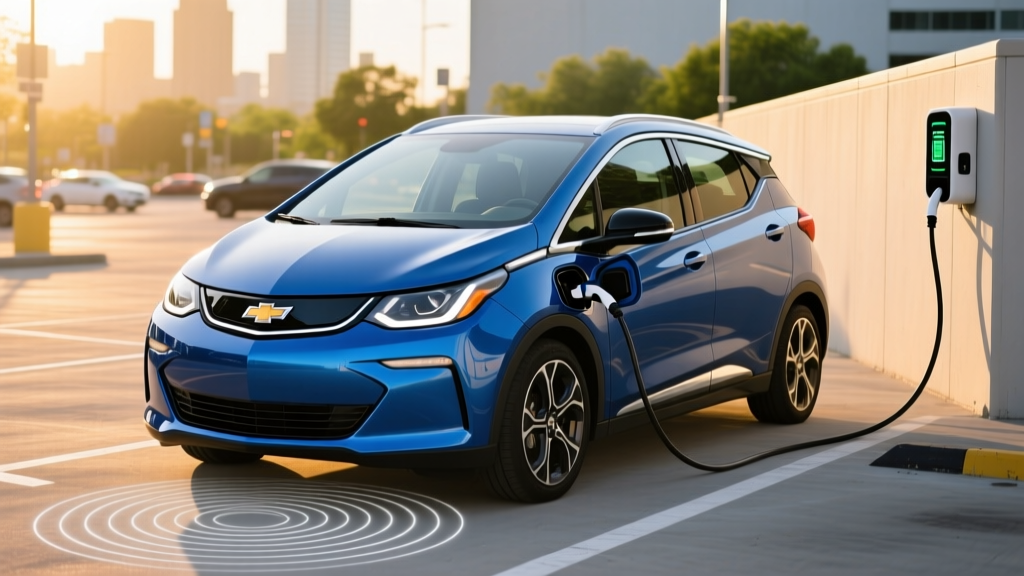
The 2020 Chevrolet Bolt EV remains one of the most compelling used electric vehicles on the market in 2026. Originally priced from $37,495, it undercut nearly every long-range competitor while delivering a then-class-leading 259 miles of EPA-estimated range. Six years later, the Bolt EV's combination of practical range, hatchback utility, and depreciated pricing makes it a top pick for budget-conscious EV buyers — provided you understand its charging limitations and battery history.
This review covers everything a prospective used buyer needs: real-world range expectations, charging speeds across Level 1, Level 2, and DC fast charging, battery health considerations, total cost of ownership, and how the 2020 Bolt EV stacks up against newer alternatives.
Range, Battery, and Real-World Efficiency
Real-World Expectation: 230–250 miles in mixed city/highway driving; 180–210 miles sustained highway at 70+ mph; 160–190 miles in freezing temperatures (below 32°F) without preconditioning.
The 2020 Bolt EV is powered by a 66 kWh (usable) lithium-ion NMC (nickel-manganese-cobalt) battery pack manufactured by LG Chem. This was an upgrade from the original 2017 model's 60 kWh pack, achieved through improved cell chemistry rather than a larger physical pack. The NMC chemistry offers strong energy density but requires more careful thermal management than LFP (lithium iron phosphate) alternatives found in some newer competitors.
Efficiency is rated at 118 MPGe combined (120 city / 108 highway), translating to roughly 28 kWh per 100 miles — among the most efficient EVs of its era and still competitive today. In temperate, city-heavy driving, many owners report exceeding the EPA range estimate thanks to aggressive regenerative braking. Highway driving at sustained speeds above 65 mph increases consumption to approximately 32–35 kWh/100mi, reducing range proportionally.
Cold weather is the Bolt EV's biggest range vulnerability. Unlike newer GM EVs, the 2020 model lacks a dedicated battery heat pump for cabin heating, relying instead on resistive heating that draws heavily from the traction battery. Expect a 25–35% range reduction in sub-freezing conditions, particularly on short trips where the cabin and battery never fully warm. Preconditioning while plugged in mitigates this significantly.
Charging Speeds: The Bolt EV's Achilles Heel
Charging is where the 2020 Bolt EV shows its age most clearly. While adequate for overnight home charging, its DC fast-charging performance falls well behind modern competitors.
| Charging Level | Power / Rate | Speed (Miles Added) | Notes |
|---|---|---|---|
| Level 1 (120V) | ~1.4 kW | ~4 miles per hour | Emergency/top-up only; 65+ hours for full charge |
| Level 2 (240V, 32A) | 7.7 kW | ~25 miles per hour | Full charge in ~9.5 hours; ideal for overnight |
| Level 2 (240V, 48A) | 11.5 kW (with upgraded onboard charger) | ~37 miles per hour | Optional $750 upgrade at time of purchase; rare on used market |
| DC Fast Charge (CCS) | Peak 55 kW | ~90 miles in 30 minutes | 10–80% in approximately 65–75 minutes; severe taper above 80% |
The 55 kW peak DC charge rate was acceptable in 2020 when paired with 50 kW public chargers, but on modern 150–350 kW stations, the Bolt EV cannot take advantage of available power. The charge curve tapers noticeably after 56% state of charge (SoC), dropping to roughly 38 kW, and falls further to 24 kW past 68%. A 10–80% session typically takes 65–75 minutes — nearly double what a Hyundai Ioniq 5 or Tesla Model 3 can achieve.
For daily driving and overnight home charging, this is largely irrelevant. Most owners charge from 20–80% overnight on Level 2, which takes roughly 6 hours and adds ~150 miles. But for road trips requiring multiple DC fast-charge stops, plan for longer dwell times. The Bolt EV is a commuter champion, not a cross-country cruiser.
The 2020 Bolt EV uses a CCS1 (Combined Charging System) connector, which remains the most widely deployed standard on non-Tesla public charging networks including Electrify America, EVgo, and ChargePoint. As of 2026, CCS1 infrastructure remains robust even as newer vehicles adopt NACS, so finding compatible chargers is not a concern.
Performance and Driving Dynamics
| Specification | Value |
|---|---|
| Drivetrain | Front-wheel drive (single motor) |
| Horsepower | 200 hp |
| Torque | 266 lb-ft |
| 0–60 mph | 6.5 seconds |
| Battery (usable) | 66 kWh, NMC |
| EPA Range | 259 miles |
| MPGe (combined) | 118 MPGe (28 kWh/100mi) |
| Max DC Charge Rate | 55 kW (CCS1) |
| Level 2 Charge Rate | 7.7 kW standard / 11.5 kW optional |
| Cargo Volume | 56.6 cu ft (rear seats folded) / 16.9 cu ft (behind rear seats) |
| Rear Legroom | 36.5 inches |
| Curb Weight | 3,563 lbs |
| Original MSRP (LT) | $37,495 |
| Original MSRP (Premier) | $41,895 |
The Bolt EV's 200 hp electric motor delivers instant torque that makes it surprisingly quick off the line. The 6.5-second 0–60 mph time outpaces most compact crossovers, and the low center of gravity from the under-floor battery pack gives it composed handling for an economy hatchback. Regenerative braking offers two modes: "Drive" with mild regen and "Low" with aggressive one-pedal driving capability that can bring the car to a full stop without touching the brake pedal.
The ride is firm but well-damped, though the Michelin Energy Saver tires prioritize efficiency over grip. Road noise becomes noticeable above 60 mph — a reminder that this was engineered as an affordable EV, not a luxury vehicle. The Bolt EV does not offer all-wheel drive or a towing rating.
Interior, Tech, and Driver Assistance
Inside, the 2020 Bolt EV features a 10.2-inch touchscreen running Chevrolet's Infotainment 3 system with wireless Apple CarPlay and Android Auto — a genuine convenience that many 2026 vehicles still require a cable for. The 8-inch digital instrument cluster displays range, energy flow, and regen levels clearly. An electronic precision shifter replaces the traditional gear lever.
Premier trims add heated leather front seats, a heated steering wheel, Bose premium audio, and a surround-view camera. Both trims include a rearview camera, rear parking sensors, and automatic emergency braking as standard.
Driver-assistance technology is where the 2020 Bolt EV shows its vintage. Available features include:
- Lane Keep Assist with Lane Departure Warning — steering correction if drifting
- Forward Collision Alert — visual and audible warnings
- Automatic Emergency Braking — low and high speed
- Following Distance Indicator
- Adaptive Cruise Control (Premier only, optional)
Notably absent: there is no hands-free driving system (GM's Super Cruise was never offered on the Bolt EV), no rear cross-traffic alert on base LT trims, and no over-the-air software updates for the powertrain. The infotainment system does receive periodic OTA updates, but the driving experience is fixed from the factory.
Used Pricing and Federal Tax Credit Eligibility
As of early 2026, the 2020 Chevy Bolt EV trades in the used market between approximately $12,000 and $18,000, depending on mileage, condition, trim level, and battery state of health. Premier trims with low mileage command the top of that range, while higher-mileage LT models sit near the bottom. This represents a steep depreciation from the original $37,495–$41,895 MSRP — excellent news for used buyers.
| Scenario | Estimated Cost |
|---|---|
| Used LT (40k–60k miles) | $13,000–$15,000 |
| Used Premier (25k–45k miles) | $15,000–$18,000 |
| Federal Used EV Tax Credit (§25E) | Up to $4,000 (30% of sale price, max $4,000) |
| Estimated Net Cost After Credit | $9,000–$14,000 |
Important tax credit note: The 2020 Bolt EV is only available used, so the new vehicle §30D credit ($7,500) does not apply. However, the IRS §25E Used Clean Vehicle Credit may provide up to $4,000 or 30% of the sale price (whichever is less) if you meet these requirements:
- The vehicle is purchased from a licensed dealer (not a private party)
- The sale price is $25,000 or less (virtually all 2020 Bolt EVs qualify)
- Your modified adjusted gross income does not exceed $75,000 (single), $112,500 (head of household), or $150,000 (joint)
- You have not claimed the used EV credit for another vehicle in the prior 3 years
- The vehicle is at least 2 model years old (2020 qualifies in 2026)
Always consult a tax professional and verify current IRS rules before purchase. The credit can be transferred to the dealer at point of sale as an immediate price reduction under current law.
Battery Health, Warranty, and the LG Chem Recall Factor
The 2020 Bolt EV carries GM's standard EV warranty: 8 years / 100,000 miles for the battery and electric propulsion components, with a capacity retention threshold of 60% or less triggering a warranty claim. As of 2026, most 2020 models are still within this warranty window by age, though higher-mileage examples may have exceeded the mileage limit.
However, any used Bolt EV buyer must understand the LG Chem battery cell recall. In 2021–2022, GM recalled all 2017–2022 Bolt EV and Bolt EUV models due to manufacturing defects in certain LG battery cells that posed a fire risk when charged to full capacity. GM replaced affected battery modules with new, redesigned cells at no cost to owners.
Before purchasing a used 2020 Bolt EV:
- Verify via the NHTSA VIN lookup tool whether the recall repair was completed
- Request documentation from the seller showing the battery module replacement
- A completed recall repair actually benefits the buyer — the replacement modules use updated cell chemistry with improved longevity
- Unrepaired examples should be avoided or negotiated at a significant discount to account for the pending repair
Beyond the recall, NMC battery degradation in the Bolt EV has proven moderate. Owners typically report 8–12% capacity loss over 5 years / 60,000 miles under normal use patterns. Avoid examples that were consistently charged to 100% and left sitting in hot climates, as this accelerates degradation. GM's battery management system includes a buffer (total pack capacity is ~70 kWh with ~66 kWh usable) that helps protect long-term health.
How the 2020 Bolt EV Compares to Alternatives
Pros
- 259-mile EPA range still competitive at this price point
- Exceptional efficiency (118 MPGe) keeps charging costs low
- Surprisingly spacious hatchback cargo area (56.6 cu ft)
- Quick acceleration (6.5s 0–60) with smooth one-pedal driving
- Wireless Apple CarPlay / Android Auto
- Used pricing under $18k, potentially under $14k after §25E credit
- Strong battery warranty (8yr/100k mi) still active on many examples
- CCS1 connector compatible with widespread public charging
Cons
- Slow DC fast charging (55 kW peak, ~70 min 10–80%)
- Significant cold-weather range loss (25–35%)
- No heat pump for efficient cabin heating
- Limited driver-assistance tech vs. newer EVs
- Firm ride and noticeable road noise
- No frunk (front trunk) — space used by power electronics
- LG Chem recall history requires careful verification
- No Super Cruise or hands-free driving option
Against a used Nissan Leaf Plus (2020), the Bolt EV wins decisively on range (259 vs. 226 miles), charging standard (CCS1 vs. CHAdeMO, which is losing infrastructure support), and battery thermal management. The Leaf's air-cooled battery degrades faster in hot climates.
Compared to a used Tesla Model 3 Standard Range Plus (2020), the Tesla offers faster charging, Supercharger network access, and more advanced driver assists — but at a higher used price ($18,000–$23,000) and with less cargo versatility. The Bolt EV is the better value play for buyers who don't need long-distance road-trip capability.
A used Hyundai Kona Electric (2020) is the closest rival: similar range (258 miles EPA), similar price, and slightly better DC charging (64 kW peak). The Kona sacrifices some cargo space and rear legroom. Either is an excellent choice; the Bolt EV edges ahead on interior room and hatchback practicality.
Who Should Buy the 2020 Chevy Bolt EV?
The 2020 Bolt EV is ideal for:
- Daily commuters driving 30–80 miles round trip who can charge at home overnight
- Second-car households wanting an affordable EV for errands and local driving
- Budget-conscious first-time EV buyers who want proven range without a new-car premium
- Urban and suburban drivers who rarely take road trips exceeding 200 miles
- Rideshare drivers seeking low operating costs (electricity at $0.04–$0.06 per mile vs. $0.12–$0.15 for gas)
The 2020 Bolt EV is not ideal for:
- Frequent road-trippers who need fast DC charging (look at a used Model 3 or Ioniq 5)
- Cold-climate drivers without garage parking (range loss is significant)
- Buyers wanting the latest ADAS technology or hands-free driving
- Those who need AWD, towing capability, or more than 5 passenger seats
Frequently Asked Questions
What is the real-world range of the 2020 Chevy Bolt EV?
Expect 230–250 miles in mixed driving, 180–210 miles on sustained highway trips, and 160–190 miles in freezing weather. The 259-mile EPA estimate is achievable in city-dominant, temperate conditions with moderate climate control use.
How fast does the 2020 Bolt EV charge?
On a Level 2 home charger (240V, 32A), it adds about 25 miles per hour and fully charges in roughly 9.5 hours. On a DC fast charger, it peaks at 55 kW and takes approximately 65–75 minutes to go from 10–80% SoC. Plan road-trip stops accordingly.
Does the 2020 Chevy Bolt EV qualify for a federal tax credit?
Not the new-vehicle §30D credit — it's only available used. However, you may qualify for the §25E Used Clean Vehicle Credit of up to $4,000 if you buy from a dealer for $25,000 or less and meet income limits ($75k single / $150k joint). Verify current IRS rules before purchasing.
Is the 2020 Bolt EV battery reliable after the recall?
Examples that received the recall battery module replacement are generally in better shape than pre-recall units, as the replacement modules use updated LG cell designs. Always verify recall completion via the NHTSA VIN lookup before purchase. Remaining battery warranty coverage is 8 years / 100,000 miles from the original in-service date.
How much does it cost to charge a 2020 Bolt EV at home?
At the US average residential electricity rate of ~$0.17/kWh (2026 EIA data), a full 66 kWh charge costs approximately $11.20 and provides about 230–259 real-world miles. That works out to roughly $0.04–$0.05 per mile — compared to $0.12–$0.15 per mile for a 30 MPG gas car at $3.50/gallon.
Is the 2020 Bolt EV worth buying vs. newer used EVs?
For daily commuting and local driving under $18,000 (and potentially under $14,000 after the §25E credit), the 2020 Bolt EV offers the best range-per-dollar ratio on the used market. If you need fast road-trip charging, advanced driver assists, or cold-weather optimization, consider spending $5,000–$8,000 more on a used Tesla Model 3, Hyundai Ioniq 5, or Ford Mustang Mach-E.