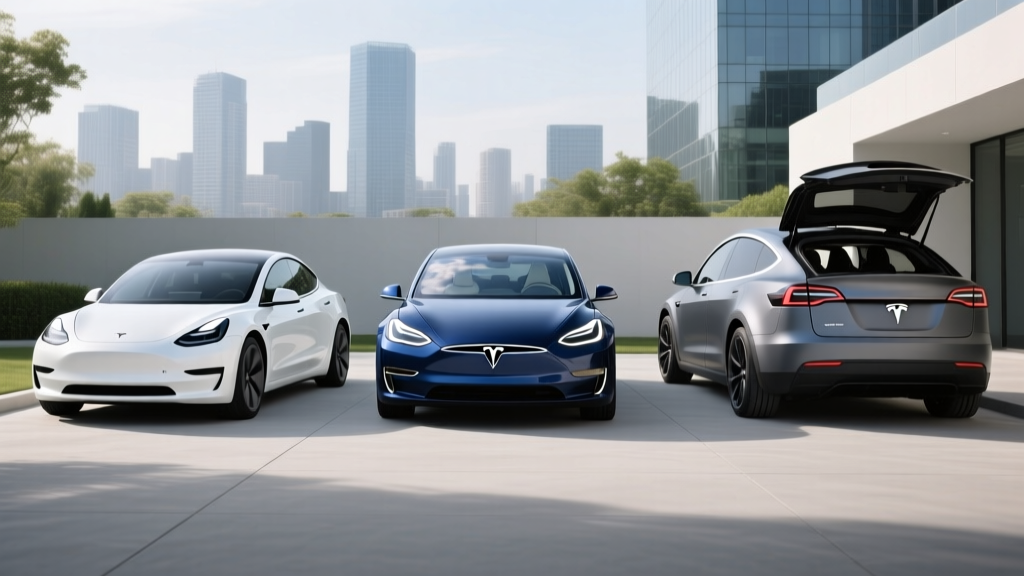
The 2019 Tesla Lineup at a Glance: What You're Buying in 2026
Shopping for a used Tesla in 2026 means the 2019 model year deserves serious attention. It was a pivotal year: the Model 3 hit full production stride, the Model S and X received meaningful range and powertrain upgrades (including the introduction of the Long Range and Performance variants with permanent-magnet reluctance motors up front), and Tesla's Supercharger network expanded rapidly. These vehicles are now depreciated enough to be accessible on the used market, yet modern enough to deliver usable range, DC fast-charging capability, and over-the-air software updates that continue into 2026.
But buying a six-to-seven-year-old EV requires a different calculus than buying new. Battery degradation, warranty remaining, charging-port standards, and eligibility for the used-EV federal tax credit (IRS §25E, up to $4,000) all matter. This guide breaks down each 2019 Tesla model with the exact numbers you need — EPA range, real-world expectations, battery chemistry and capacity, charging speeds, and total ownership costs — so you can decide which one, if any, fits your driving life.
2019 Tesla Model 3: The Volume Seller That Holds Up
The 2019 Model 3 was available in three primary configurations: Standard Range Plus (SR+), Long Range RWD, and Long Range AWD (Dual Motor). A Performance variant sat at the top. By mid-2019, Tesla had largely phased out the mid-range battery option, simplifying the lineup. The Long Range variants use a ~75 kWh usable NMC (nickel-manganese-cobalt) battery pack, while the SR+ uses a ~50 kWh usable pack, also NMC. Notably, Tesla did not offer LFP (lithium iron phosphate) chemistry in the Model 3 until the 2021 refresh with the China-built Standard Range models, so every 2019 Model 3 you encounter will have NMC cells.
| Specification | Standard Range Plus | Long Range RWD | Long Range AWD | Performance |
|---|---|---|---|---|
| EPA Range | 240 mi | 322 mi | 310 mi | 310 mi |
| Battery (usable) | ~50 kWh, NMC | ~75 kWh, NMC | ~75 kWh, NMC | ~75 kWh, NMC |
| Drivetrain | RWD | RWD | Dual Motor AWD | Dual Motor AWD |
| Horsepower | 283 hp | 283 hp | 346 hp | 450 hp |
| 0-60 mph | 5.3 sec | 5.2 sec | 4.4 sec | 3.2 sec |
| Efficiency (EPA) | 138 MPGe / 24 kWh/100mi | 133 MPGe / 25 kWh/100mi | 120 MPGe / 28 kWh/100mi | 116 MPGe / 29 kWh/100mi |
| Cargo Volume | 15 cu ft (trunk) + 3.1 cu ft (frunk) | |||
| Original MSRP (2019) | $39,990 | $48,990 | $52,990 | $58,990 |
| Typical Used Price (2026) | $17,000–$21,000 | $20,000–$25,000 | $22,000–$27,000 | $24,000–$30,000 |
EPA sticker: 310 miles. In practice, expect ~260–280 miles on highway road trips at 70-75 mph in moderate temperatures. In cold weather (below 30°F), plan for 220–250 miles due to cabin heating demands and reduced battery efficiency. City driving with regenerative braking can exceed the EPA estimate, yielding 300+ miles in stop-and-go conditions. Battery degradation on a 2019 pack at ~80,000 miles typically reduces total capacity by 8–12%, so a Long Range that started at 310 miles may show 275–285 miles at 100% SoC today.
Charging Speed: DC Fast Charge and Home Level 2
The 2019 Model 3 supports Tesla's proprietary NACS connector natively — a significant advantage in 2026 as NACS has become the dominant North American charging standard. Here's what you can expect at the plug:
| Charging Level | Max Power | Speed / Time |
|---|---|---|
| Level 1 (120V household) | ~1.4 kW | ~4–5 miles per hour |
| Level 2 (240V home, 48A) | 11.5 kW | ~37 miles per hour / full charge in ~8 hours |
| DC Fast Charge (V2 Supercharger) | Peak 150 kW | 10–80% in ~30 minutes |
| DC Fast Charge (V3 Supercharger) | Peak 250 kW (Long Range) | 10–80% in ~22 minutes (Long Range); ~28 min (SR+) |
Charging-curve reality: The Long Range Model 3 can sustain ~250 kW only briefly (roughly 10–30% SoC at optimal battery temperature). Above 50% SoC, the rate tapers to ~100 kW, and above 80% it drops below 50 kW. This is why Tesla and most EV analysts quote 10–80% times — the final 20% takes nearly as long as the first 60%. On a V2 Supercharger (150 kW max, often shared between two stalls), expect 10–80% in 35–45 minutes depending on state of charge and battery temperature. Always precondition your battery by navigating to a Supercharger in the car's navigation — this warms the pack and enables peak charge rates.
2019 Tesla Model S: The Flagship Sedan's Mid-Life Refresh
2019 was a transition year for the Model S. Early 2019 production carried over the older drivetrain configurations, but by mid-2019, Tesla introduced the Standard Range, Long Range, and Performance trims with a new permanent-magnet reluctance motor on the front axle (replacing the older induction motor), improving efficiency substantially. The Long Range variant achieved an EPA-rated 370 miles — a remarkable figure at the time and still competitive in 2026.
All 2019 Model S variants use a ~100 kWh usable NMC battery pack. The pack is physically large, heavy, and mounted low in the chassis, contributing to the car's planted handling but also its ~4,900-lb curb weight.
| Specification | Standard Range | Long Range | Performance (Ludicrous) |
|---|---|---|---|
| EPA Range | 285 mi | 370 mi | 345 mi |
| Battery (usable) | ~100 kWh, NMC | ~100 kWh, NMC | ~100 kWh, NMC |
| Drivetrain | Dual Motor AWD | Dual Motor AWD | Dual Motor AWD |
| Horsepower | ~518 hp | ~518 hp | ~762 hp |
| 0-60 mph | 4.2 sec | 3.7 sec | 2.4 sec |
| Efficiency (EPA) | 101 MPGe / 33 kWh/100mi | 111 MPGe / 30 kWh/100mi | 100 MPGe / 34 kWh/100mi |
| Cargo Volume | 26.3 cu ft (rear hatch) + 5.3 cu ft (frunk) | ||
| Original MSRP (2019) | $79,990 | $89,990 | $99,990 |
| Typical Used Price (2026) | $30,000–$38,000 | $35,000–$45,000 | $40,000–$55,000 |
EPA: 370 miles. Real-world highway driving at 70 mph in mild weather yields approximately 310–330 miles. The Model S is a large, heavy sedan, and its efficiency drops noticeably at sustained highway speeds compared to the lighter Model 3. In winter conditions, expect 260–290 miles — the 100 kWh pack provides a larger buffer than the Model 3, but the sedan's higher consumption per mile narrows the advantage. For a 2019 example with 70,000–90,000 miles, anticipate 5–10% degradation, putting real-world highway range around 290–310 miles in fair weather.
Model S Charging: Slower Than Model 3 on V3 Superchargers
The 2019 Model S maxes out at approximately 200 kW on DC fast chargers (via V3 Superchargers) and around 120–150 kW on older V2 stations. The 10–80% charge time on a V3 Supercharger is roughly 30–35 minutes. On Level 2 at home (48A/11.5 kW), the 100 kWh pack requires about 9–10 hours for a full charge — plan for overnight charging. The Model S uses the NACS connector natively, giving it full access to Tesla's Supercharger network and, in 2026, a growing number of third-party NACS stations.
2019 Tesla Model X: The Falcon-Wing SUV
The 2019 Model X shares its platform and powertrain with the Model S, including the mid-2019 motor upgrade. It's available in Standard Range, Long Range, and Performance trims. The headline feature remains the rear falcon-wing doors, which provide dramatic access to the second and optional third rows but add mechanical complexity. The Model X also offers a 5,000-lb towing capacity (when equipped with the tow package), making it the most capable hauler in the 2019 Tesla lineup.
| Specification | Long Range | Performance |
|---|---|---|
| EPA Range | 325 mi | 305 mi |
| Battery (usable) | ~100 kWh, NMC | ~100 kWh, NMC |
| Drivetrain | Dual Motor AWD | Dual Motor AWD |
| Horsepower | ~518 hp | ~762 hp |
| 0-60 mph | 4.6 sec | 2.7 sec |
| Cargo Volume | Up to 88 cu ft (with seats folded) + 6.6 cu ft (frunk) | |
| Seating | 5, 6, or 7 passengers | |
| Towing Capacity | 5,000 lbs (with tow pkg) | |
| Original MSRP (2019) | $89,990 | $99,990 |
| Typical Used Price (2026) | $35,000–$48,000 | $42,000–$58,000 |
Real-world range for the Long Range Model X: expect 270–295 miles on highway trips in fair weather and 230–260 miles in cold conditions. The Model X's aerodynamic drag (it's a tall SUV with falcon-wing door seams) and ~5,400-lb weight work against efficiency. Charging speeds mirror the Model S: ~200 kW peak DC, ~30–35 minutes for 10–80% on V3 Superchargers.
Battery Health, Warranty, and What to Check Before Buying
Battery longevity is the single biggest concern for any used-EV buyer. Here's where the 2019 Teslas stand:
- Battery/Powertrain Warranty: Model 3 Long Range and Performance — 8 years / 120,000 miles. Model 3 SR+ — 8 years / 100,000 miles. Model S and X — 8 years / 150,000 miles. The warranty guarantees the battery retains at least 70% of original capacity. (Tesla warranty details)
- Real-world degradation data: Tesla's own impact reports and third-party fleet data (from sources like Recurrent Auto) show that 2019-era NMC packs typically lose 8–12% capacity over the first 100,000 miles, with the steepest drop in the first 20,000 miles before leveling off. Many 2019 Teslas are still within warranty as of early 2026.
- What to check: Request the car's State of Health (SoH) reading — accessible through the Tesla service menu or via third-party tools like Tessie or TeslaFi. Look for consistent SoH above 88% for a 60,000-mile example. Also verify whether the car has had any battery replacement under warranty, which resets the clock.
NMC care tips for a 2019 Tesla: Unlike LFP batteries (which tolerate regular 100% charges), NMC packs last longest when daily charging is limited to 80–90% SoC. Reserve 100% charges for road trips. Avoid leaving the car at very low SoC (below 10%) for extended periods, especially in extreme heat.
Federal Tax Credits and 2026 Used-EV Incentives
Buying a 2019 Tesla in 2026 means you are purchasing a used vehicle, so the new-vehicle §30D credit does not apply. However, the §25E used clean vehicle credit may provide up to $4,000 (or 30% of the sale price, whichever is lower) if you meet all requirements:
- Vehicle price cap: Sale price must be $25,000 or less.
- Buyer income cap: Adjusted gross income ≤ $75,000 (single), $112,500 (head of household), or $150,000 (joint).
- Vehicle age: Must be at least 2 model years old (2019 qualifies).
- Dealer requirement: Must be purchased from a licensed dealer (not a private party).
- Battery capacity: Must have at least 7 kWh (all 2019 Teslas qualify).
- First-time transfer: The vehicle must not have been previously transferred to a buyer after August 16, 2022, under this credit.
- Point-of-sale transfer: You can apply the credit at the dealer to reduce the purchase price directly. (IRS §25E rules)
Practical impact: A 2019 Model 3 SR+ priced at $19,500 from a qualifying dealer could net a $4,000 credit, bringing effective cost to ~$15,500 for eligible buyers. A Model S Long Range at $38,000 exceeds the $25,000 price cap and would not qualify. This makes the Model 3 the clear winner for credit-eligible buyers.
Autopilot, Tech, and the Software Experience in 2026
The 2019 Tesla models shipped with Tesla's Hardware 3 (HW3) computer, which Tesla has confirmed supports the current FSD (Supervised) software stack as of 2026. However, some 2019 vehicles built in early 2019 may still have Hardware 2.5 — verify this before purchasing, as HW2.5 does not support the latest FSD features and Tesla has offered free upgrades in some cases.
Infotainment: All 2019 Teslas feature the 15-inch center touchscreen (Model S/X) or 15-inch horizontal screen (Model 3). The software experience remains one of the strongest points: navigation with Supercharger routing, over-the-air updates, streaming media, and a responsive UI. However, the 2019 Model 3 lacks some hardware features added in later refreshes — no heated rear seats (unless enabled via software purchase), no heat pump (introduced in the 2021 Model 3 refresh), and the older MCU1 in some early 2019 Model S/X units can feel sluggish compared to MCU2.
Autopilot and FSD (Supervised) cannot navigate unmapped roads, handle all construction zones, reliably detect stopped emergency vehicles, or drive without an attentive human behind the wheel. You are liable for every driving decision. Treat these as advanced cruise control and lane-keeping aids, not autonomous systems.
Pros and Cons: The Honest Assessment
Pros
- Access to the Tesla Supercharger network — the most reliable and expansive DC fast-charging network in North America (17,000+ stalls in the US as of 2026)
- NACS connector standard — no adapter needed for Superchargers, and growing third-party NACS infrastructure
- Over-the-air software updates continue to add features and improve functionality
- Strong performance across all trims — even the SR+ is quick by any standard
- Low running costs: electricity at ~$0.13/kWh home charging equates to ~$0.04/mile for the Model 3 Long Range
- Minimal maintenance: no oil changes, brake pads last 80,000+ miles thanks to regenerative braking
Cons
- No heat pump in 2019 models — cabin heating in cold weather draws significantly from the battery, reducing winter range by 15–25%
- Build quality inconsistency on 2019 Model 3 (early Fremont production) — check panel gaps, paint, and interior trim carefully
- Model S/X MCU1 units (early 2019) may need a $1,500–$2,500 infotainment upgrade for modern responsiveness
- Insurance premiums tend to run 15–30% higher than comparable gas vehicles
- FSD (Supervised) subscription ($99/month or $8,000 outright purchase as of 2026) is expensive for a Level 2 system
- Model X falcon-wing doors: complex mechanisms can be costly to repair out of warranty ($2,000–$4,000 per door actuator)
Who Should Buy a 2019 Tesla in 2026?
Choose the 2019 Model 3 Long Range if: You're a commuter or small family needing 260+ real-world miles of range, home charging access, and the lowest cost of entry into the Tesla ecosystem. It's the best value proposition and the most likely to qualify for the $4,000 used-EV credit.
Choose the 2019 Model S Long Range if: You want a premium sedan with 300+ real-world miles, a hatchback cargo area, and don't mind paying $35,000–$45,000 on the used market. Ideal for executives or frequent road-trippers who value ride comfort and range buffer.
Choose the 2019 Model X if: You need three-row seating, towing capability, and all-weather AWD in an EV. Budget at least $40,000 and set aside a maintenance reserve for the falcon-wing door mechanisms.
Look elsewhere if: You lack home charging access (public-only charging in a 2019 Tesla is livable but expensive at $0.30–$0.50/kWh on DC fast chargers), you live in an extreme-cold climate where a heat-pump-equipped newer EV would serve you better, or you want the latest ADAS hardware (HW4, introduced in 2023).
Frequently Asked Questions
What is the real-world range of a 2019 Tesla Model 3 Long Range in 2026?
With typical battery degradation (8–12% over 60,000–80,000 miles), expect 275–285 miles at 100% SoC on the dash. Highway driving in mild weather nets about 260–280 miles; city driving can reach 300+. In sub-freezing temperatures, plan for 220–250 miles per charge.
How fast does a 2019 Tesla charge at home and on road trips?
At home on a 240V/48A Level 2 charger, the Model 3 Long Range adds ~37 miles per hour and charges fully in about 8 hours. On V3 Superchargers, 10–80% takes ~22 minutes for the Long Range. On older V2 Superchargers, add 10–15 minutes to that.
Does a 2019 Tesla qualify for any federal tax credit in 2026?
The new-vehicle §30D credit does not apply. The §25E used-EV credit offers up to $4,000 if the sale price is $25,000 or less, you buy from a licensed dealer, and your income falls within IRS caps ($75K single / $150K joint). This primarily benefits Model 3 SR+ buyers. (IRS §25E details)
Is a 2019 Tesla worth buying over a newer used EV like a 2022 Hyundai Ioniq 5 or 2022 Ford Mustang Mach-E?
The 2019 Tesla's key advantages are Supercharger network access, NACS native compatibility, and continued OTA updates. Competitors from 2022 offer heat pumps, 800V architecture (Ioniq 5), and newer interiors, but may require CCS-to-NACS adapters for Supercharger access. If Supercharger access and software ecosystem are priorities, the 2019 Tesla remains compelling. If cold-weather efficiency and modern build quality matter more, consider the newer alternatives.
What should I check before buying a used 2019 Tesla?
Verify Hardware 3 (not HW2.5), check battery State of Health via TeslaFi or the service menu, inspect for uneven panel gaps and paint defects (common on early Model 3), confirm remaining battery warranty mileage, and test all door handles, windows, and (for Model X) falcon-wing door actuators. A pre-purchase inspection at a Tesla Service Center ($0–$200) is strongly recommended.
How long will the battery in a 2019 Tesla last?
Tesla's NMC packs from this era are designed to retain 70%+ capacity at 120,000–150,000 miles (depending on model). Fleet data from Recurrent Auto shows most 2019 Teslas still at 88–92% SoH at 70,000 miles. With proper charging habits (daily limit 80–90%, avoid prolonged low SoC), these packs should remain functional well past 150,000 miles. Out-of-warranty battery replacement runs $12,000–$16,000 for the Model 3 and $18,000–$22,000 for Model S/X.