If you're searching for a 2019 Tesla Model Y, there's an important clarification to make right away: Tesla never produced a Model Y for the 2019 model year. The Model Y was officially unveiled in March 2019, but customer deliveries did not begin until March 2020. If you're shopping the used market and seeing listings that reference 2019, they are almost certainly referring to the 2020 Model Year (first production batch) or are mislabeled.
This guide covers the earliest Model Y production vehicles (2020–2021 model years) — what you'll actually find on the used market if you were hoping to buy a "2019" Model Y — and provides the exact range, charging, battery, and ownership data you need to evaluate one in 2026.
What the 2019 Model Y Announcement Actually Delivered
Tesla announced the Model Y on March 14, 2019, as a compact electric crossover built on the Model 3 platform. Pre-orders opened that night with a $2,500 refundable deposit. However, the first vehicles rolled off the Fremont production line in early 2020, with deliveries starting March 13, 2020. The earliest Model Y vehicles you can buy are therefore 2020 model year units.
If you encounter a listing for a "2019 Model Y," verify the actual build date on the vehicle's B-pillar sticker or through Tesla's app. It will almost certainly show a manufacture date in 2020.
Specs at a Glance: 2020–2021 Model Y Long Range & Performance
| Specification | Long Range AWD (2020) | Performance AWD (2020) |
|---|---|---|
| EPA Range | 316 miles | 280 miles (later revised to 303 mi) |
| Battery Capacity (usable) | ~75 kWh (NMC) | ~75 kWh (NMC) |
| Battery Chemistry | NMC (Nickel Manganese Cobalt) | NMC |
| Drivetrain | Dual-Motor AWD | Dual-Motor AWD |
| Horsepower | ~384 hp (combined) | ~456 hp (combined) |
| 0–60 mph | 4.8 seconds | 3.5 seconds |
| Top Speed | 135 mph | 155 mph |
| MPGe (combined) | 121 MPGe | 111 MPGe |
| Efficiency | 28 kWh/100 mi | 30 kWh/100 mi |
| Max DC Fast Charge | 250 kW (V3 Supercharger) | 250 kW (V3 Supercharger) |
| 10–80% DCFC Time | ~27 minutes | ~27 minutes |
| Level 2 Home Charge Rate | 11.5 kW (~44 mi/hr) | 11.5 kW (~44 mi/hr) |
| Cargo Volume (rear seats up) | 30.2 cu ft | 30.2 cu ft |
| Cargo Volume (rear seats folded) | 76.2 cu ft | 76.2 cu ft |
| Frunk | 4.1 cu ft | 4.1 cu ft |
| Rear Legroom | 35.6 inches | 35.6 inches |
| Battery Warranty | 8 yr / 120,000 mi | 8 yr / 120,000 mi |
| Original Base MSRP | $52,990 | $60,990 |
Real-World Range: What EPA Stickers Don't Tell You
The early Model Y uses an NMC (nickel manganese cobalt) battery pack with approximately 75 kWh of usable capacity. NMC chemistry offers strong energy density but is more sensitive to extreme temperatures than the LFP (lithium iron phosphate) packs Tesla later introduced in Standard Range models. If you live in a cold climate, plan for 20–30% range reduction in winter.
Efficiency is a strong suit. At 28 kWh per 100 miles (Long Range), the Model Y remains one of the most efficient electric crossovers ever sold. That translates to roughly $0.04–$0.06 per mile when charging at home on a national-average electricity rate of $0.16/kWh — dramatically cheaper than a comparable gasoline crossover.
Charging Speed: DC Fast Charging and Home Level 2
| Charging Level | Power | Speed | Notes |
|---|---|---|---|
| Level 1 (120V household) | ~1.4 kW | ~5 mi/hr | Emergency only; full charge in 50+ hours |
| Level 2 (240V home) | 11.5 kW max | ~44 mi/hr | Full charge in ~7–8 hours; needs 48A circuit |
| DC Fast (V3 Supercharger) | 250 kW peak | 10–80% in ~27 min | Peak rate tapers above 50% SoC |
| DC Fast (CCS adapter, third-party) | Up to 150–250 kW | Varies by station | Requires Tesla CCS adapter (sold separately) |
A critical detail for early Model Y buyers: the 250 kW peak charge rate is only sustainable at low states of charge (roughly 10–30% SoC) and with a preconditioned battery. The charge curve tapers significantly above 50%, and charging from 80–100% is very slow. For road trips, plan your stops around 10–80% increments for the fastest overall travel time.
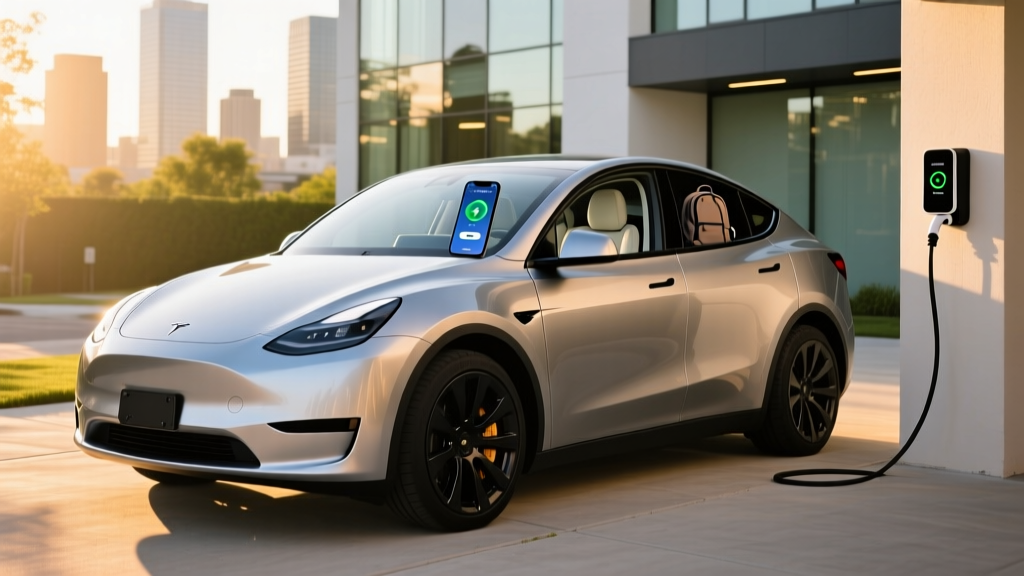
For home charging, you'll want a Tesla Wall Connector or equivalent Level 2 EVSE on a 60-amp breaker (delivering 48 amps continuous). This adds roughly 44 miles of range per hour of charging — more than enough for overnight replenishment. A typical home Level 2 installation runs $800–$2,000 depending on your electrical panel capacity and run distance, per U.S. Department of Energy guidance. Older homes may need a panel upgrade ($1,500–$3,000 additional).
Used Pricing in 2026 and Federal Tax Credit Eligibility
As of early 2026, a used 2020 Tesla Model Y Long Range typically sells for $22,000–$30,000 depending on mileage, condition, and battery health. Performance variants command $25,000–$33,000. These prices have declined significantly from original MSRPs of $52,990–$60,990, making early Model Y units one of the best value propositions in the used EV market.
| Cost Factor | Details |
|---|---|
| Used Market Price (Long Range AWD) | $22,000–$30,000 |
| Federal Used EV Credit (§25E) | Up to $4,000 (30% of sale price, max $4,000) |
| Price After Potential Credit | $18,000–$26,000 |
| Credit Income Cap (2026) | $75K single / $112.5K HOH / $150K joint MAGI |
| Vehicle Price Cap | Sale price must be ≤ $25,000 |
| Vehicle Age Requirement | Must be at least 2 model years old (2020 qualifies) |
| Dealer Requirement | Must purchase from a licensed dealer (not private party) |
The new EV tax credit (§30D, up to $7,500) does not apply to used vehicle purchases. However, the Used Clean Vehicle Credit (§25E) can provide up to $4,000 — but with strict eligibility requirements. The vehicle must sell for $25,000 or less, you must buy from a licensed dealer, and your modified adjusted gross income must fall below IRS thresholds. Many used Model Y Long Range units currently list above the $25,000 cap, so negotiate carefully or look for higher-mileage examples. Always verify current rules at IRS.gov §25E before purchase.
Tech, Safety, and Driver Assistance
The early Model Y shares its electronics platform with the refreshed Model 3, including a 15-inch center touchscreen running Tesla's proprietary infotainment OS. Standard features include navigation with real-time Supercharger routing, over-the-air software updates, Sentry Mode dashcam recording, and a comprehensive suite of driver-assist features under the Autopilot brand.
The 2020 Model Y earned the IIHS Top Safety Pick+ award and a 5-star NHTSA overall safety rating. Standard active safety includes automatic emergency braking, lane departure warning, blind spot monitoring, and side collision warning. The optional FSD package (originally $7,000, now $8,000) adds features like Navigate on Autopilot, Auto Lane Change, and Smart Summon — but remains a Level 2 system requiring constant supervision.
Notable tech drawbacks of the 2020–2021 Model Y include the absence of the refreshed interior (no ventilated seats, no ambient lighting strip, older steering wheel), and early-build units may exhibit panel gap inconsistencies and rattles that Tesla improved in later production runs.
Pros and Cons: The Early Model Y Verdict
Pros
- Class-leading efficiency (28 kWh/100 mi) keeps charging costs low
- Access to Tesla Supercharger network — the most reliable DC fast-charging infrastructure in the U.S.
- 316-mile EPA range (Long Range) remains competitive with 2026 new EVs
- Massive cargo space (76.2 cu ft folded) and optional 7-seat configuration
- Over-the-air updates continue to add features years after purchase
- Strong used-market depreciation means significant savings vs. new
Cons
- Early build quality: panel gaps, wind noise, and suspension clunks reported
- NMC battery degrades faster than LFP if regularly charged to 100%
- No heat pump in 2020 models — cabin heating draws significant battery in cold weather
- Rear seat comfort is mediocre compared to competitors like the Hyundai Ioniq 5
- Used units priced above $25,000 miss the $4,000 federal used-EV credit
- FSD purchase does not transfer to second owners in most cases
Who Should Buy an Early Model Y?
The 2020–2021 Model Y Long Range is ideal for families and commuters who want crossover practicality, Supercharger access for road trips, and a low cost per mile. It works especially well for buyers who can charge at home and drive 30–80 miles daily. The 76.2 cu ft cargo area handles strollers, groceries, and camping gear with ease.
It's less ideal for buyers in extreme cold climates (no heat pump means significant winter range loss), those who prioritize interior luxury and ride comfort, or anyone who needs to tow (the 2020 Model Y has a 3,500-lb tow rating, but towing cuts range roughly in half).
Frequently Asked Questions
Was there ever a 2019 Tesla Model Y?
No. Tesla announced the Model Y in March 2019 but did not begin production or deliveries until March 2020. The earliest Model Y vehicles are 2020 model year. Any listing advertising a "2019 Model Y" is either mislabeled or referring to the announcement date rather than the model year.
What is the real-world range of the 2020 Model Y Long Range?
Expect 270–290 miles on the highway at 70–75 mph, 220–250 miles in cold weather (below freezing), and up to 310–320 miles in mixed city driving with regenerative braking. The EPA sticker says 316 miles, but sustained highway speeds and cold temperatures reduce that figure meaningfully.
How fast does the 2020 Model Y charge?
At a V3 Supercharger (250 kW peak), the 2020 Model Y charges from 10–80% in approximately 27 minutes. At home on a Level 2 Wall Connector (11.5 kW / 48A), it gains about 44 miles of range per hour, fully charging overnight in 7–8 hours.
Does a used Model Y qualify for a federal tax credit?
It may qualify for the Used Clean Vehicle Credit (§25E) of up to $4,000, but only if the sale price is $25,000 or less, you purchase from a licensed dealer, and your income falls below IRS caps ($75K single / $150K joint). The new-vehicle §30D credit does not apply to used purchases. Verify current eligibility at IRS.gov.
How long will the 2020 Model Y battery last?
Tesla warranties the battery for 8 years or 120,000 miles (whichever comes first), guaranteeing at least 70% capacity retention. Real-world data from early Model 3 and Model Y packs suggests NMC batteries retain roughly 85–90% capacity at 100,000 miles when not routinely charged to 100%. Setting your daily charge limit to 80–90% maximizes longevity.
Is the early Model Y worth buying over newer competitors?
At $22,000–$30,000 used (potentially $18,000–$26,000 after the §25E credit), the 2020 Model Y offers more range and Supercharger access than most new EVs costing twice as much. However, newer competitors like the Hyundai Ioniq 5, Kia EV6, and refreshed 2024+ Model Y offer better build quality, heat pumps, and faster sustained charging. If budget is your priority, the early Model Y is outstanding value. If refinement matters more, test-drive a newer alternative.
Does the 2020 Model Y have a heat pump?
No. Tesla introduced the heat pump with the Model Y refresh in late 2020/early 2021 (some 2021 models have it). The 2020 Model Y uses resistive cabin heating, which draws significantly more energy in cold weather — contributing to the 20–30% winter range loss.