The 2019 Tesla Model S Performance remains one of the most compelling used electric vehicles on the market in 2026. With Ludicrous Mode delivering supercar-beating acceleration and a 100 kWh battery pack providing genuine cross-country range, it set the template every luxury EV sedan has chased since. But buying a seven-year-old flagship EV requires clear-eyed analysis of battery degradation, out-of-warranty risk, and how its charging architecture holds up against modern 800V competitors. Here is the data-driven breakdown.
Quick Verdict: Still the Acceleration King, With Caveats
If your priority is effortless 0-60 mph performance wrapped in a spacious five-seat sedan with access to the Supercharger network, the 2019 Model S Performance still delivers. Its 348-mile EPA range (Long Range variant) and ~2.4-second 0-60 time (with Ludicrous+) remain competitive with 2026 luxury EVs costing twice as much. However, buyers must account for potential battery degradation (typically 8-12% at this age), an aging interior, and the near-certainty that the original 8-year/150,000-mile battery warranty has expired or will soon. This is an EV for enthusiasts who understand used-EV risk, not for buyers wanting worry-free ownership.
Range, Efficiency, and Real-World Expectations
EPA Estimated Range: 348 miles (Model S Long Range, 2019) / 345 miles (Performance variant with 21" wheels)
Real-World Expectation: Expect 270-310 miles in mixed driving at moderate temperatures. Sustained highway speeds above 75 mph reduce range to approximately 240-270 miles. In freezing conditions (below 32°F), anticipate a 20-30% reduction, yielding 220-260 miles without preconditioning.
The 2019 Model S Performance uses a ~100 kWh battery pack (approximately 95-98 kWh usable capacity) with NMC (nickel-manganese-cobalt) chemistry. Tesla's thermal management system is among the best in the industry, which has helped these packs age more gracefully than early Nissan Leafs or Chevrolet Bolts. According to data aggregated by fueleconomy.gov, the 2019 Model S Long Range achieves 111 MPGe combined (30 kWh/100 miles), while the Performance variant with larger wheels drops slightly to 109 MPGe combined.
For context, degradation on a 2019 pack with 60,000-90,000 miles typically sits in the 8-14% range, meaning your actual full-charge range might be 295-320 miles rather than the original 348. Tesla's battery management system includes a buffer that protects against deep discharge damage, but capacity loss is a normal electrochemical reality for NMC chemistry after hundreds of charge cycles.
Charging Speed: Supercharger Access vs. Modern Competition
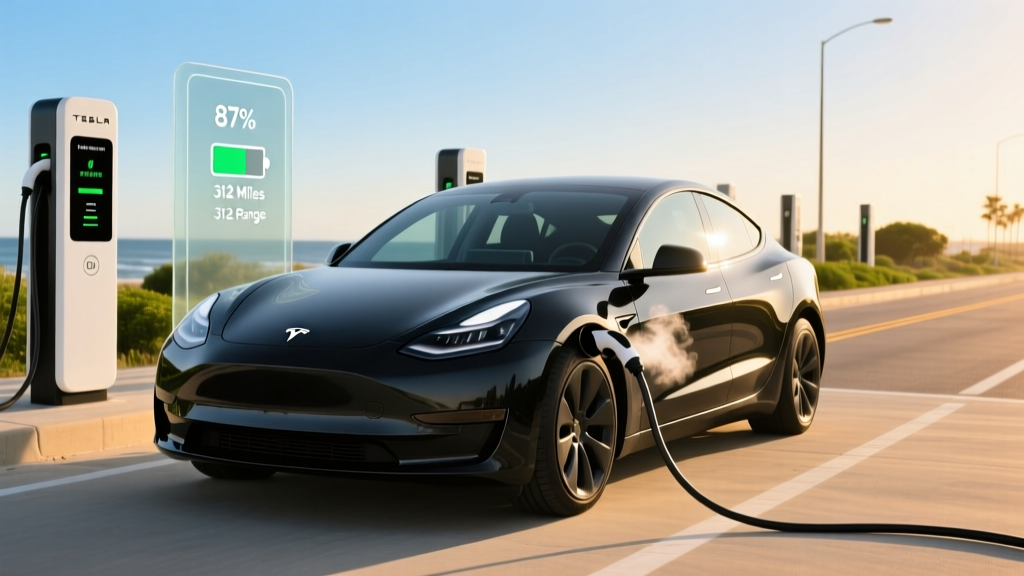
The 2019 Model S Performance charges via Tesla's proprietary connector (now called NACS — North American Charging Standard). In 2019, Tesla was rolling out V3 Superchargers capable of 250 kW peak, and the Model S can accept up to approximately 200 kW at a V3 stall under ideal conditions.
| Charging Level | Power (kW) | Speed / Time | Notes |
|---|---|---|---|
| Level 1 (120V household) | ~1.4 kW | ~3-4 miles per hour | Emergency/trickle only |
| Level 2 (240V home, 48A) | 11.5 kW | ~34 miles per hour | Full charge in ~9 hours |
| DC Fast Charge (V3 Supercharger) | Up to 200 kW peak | 10-80% in ~35-40 minutes | Peak only below 30% SoC; tapers significantly above 60% |
| DC Fast Charge (V2 Supercharger) | Up to 150 kW | 10-80% in ~45-50 minutes | Still common on older corridors |
Charging curve reality: The 200 kW peak rate is only achievable at a V3 Supercharger when the battery is preconditioned (the car does this automatically when you navigate to a Supercharger) and the state of charge is below approximately 30%. From 50-80%, expect rates closer to 60-90 kW. This is noticeably slower than 2026 competitors on 800V architectures (Hyundai Ioniq 5, Porsche Taycan) that sustain higher rates deeper into the charge cycle. A typical 10-80% session takes 35-40 minutes at a V3 stall, versus 18-22 minutes for the fastest modern EVs.
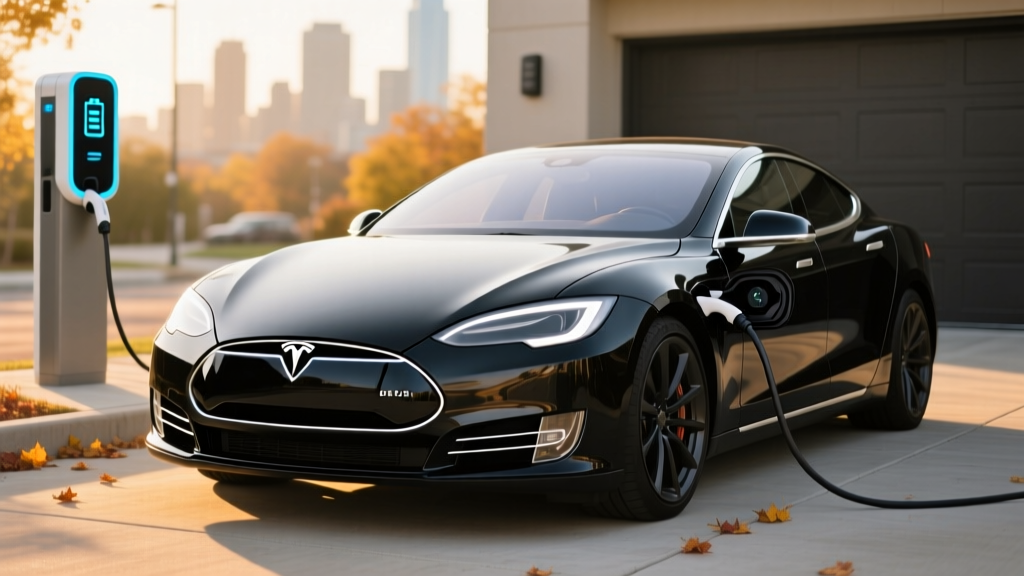
For home charging, the onboard charger accepts up to 11.5 kW (48 amps) on a Level 2 circuit, which requires a 60-amp dedicated breaker. Most owners install a Tesla Wall Connector (~$400 for the unit) and report $500-$1,500 in electrician costs depending on panel proximity and local permit requirements.
Performance: The Numbers That Still Shock
| Specification | 2019 Model S Performance (Ludicrous+) |
|---|---|
| 0-60 mph | 2.4 seconds |
| Quarter Mile | ~10.4 seconds |
| Horsepower | ~762 hp (combined dual motor) |
| Torque | ~713 lb-ft |
| Drivetrain | AWD (Dual Motor: permanent magnet front + induction rear) |
| Top Speed | 163 mph |
| Battery Capacity | ~100 kWh (NMC chemistry) |
| EPA Range | 345 miles (Performance, 21" wheels) |
| Efficiency | 109 MPGe combined / 31 kWh/100 mi |
| Cargo Volume | 26.3 cu ft (rear) + 5.3 cu ft (frunk) = 31.6 cu ft total |
| Rear Legroom | 35.4 inches |
| Curb Weight | ~4,941 lbs |
The 2019 model year was significant because Tesla introduced the "Raven" front suspension (adaptive air dampers adapted from the Model X) and the permanent-magnet synchronous reluctance motor on the front axle, replacing the older induction motor. This improved efficiency, range, and ride quality substantially. If you are shopping for a 2019 Model S, confirm whether the car has the Raven suspension — early 2019 builds may still carry the older setup.
The dual-motor AWD system provides exceptional traction in rain and light snow, though the car's 4,900+ lb weight means winter tires are strongly recommended for cold-climate owners. Regenerative braking is strong enough for one-pedal driving in most conditions, though it does not bring the car to a complete stop without brake application (unlike some newer EVs).
Tech, Interior, and Driver Assistance
The 2019 Model S interior is a study in minimalism — some would say spartan. A 17-inch portrait touchscreen handles nearly all vehicle functions, including climate controls, media, and navigation. The infotainment system received significant software updates over the years, and as of 2026, most 2019 Model S vehicles running current Tesla firmware support streaming media, Tesla Arcade gaming, and the improved navigation with real-time traffic.
Autopilot and FSD: The 2019 Model S came with Tesla's enhanced Autopilot hardware (HW3, also called "Full Self-Driving Computer"). This enables Autosteer, Traffic-Aware Cruise Control, Navigate on Autopilot, and Smart Summon. If the previous owner purchased the Full Self-Driving (FSD) package, it transfers with the vehicle — a significant value-add given the $8,000-$15,000 original cost.
Important: Tesla Autopilot and FSD (Supervised) are SAE Level 2 driver-assistance systems. The driver must remain fully attentive, keep hands on the wheel, and be prepared to take over at any moment. These are not self-driving systems. Only Level 4 services like Waymo operate without driver supervision, and those are limited robotaxi services, not consumer vehicles.
Notable drawbacks: The 2019 interior materials (synthetic leather, piano black plastic) have not aged as well as competitors from Mercedes or Audi. Panel gaps were inconsistent even when new. The lack of Apple CarPlay and Android Auto frustrates many used buyers. The panoramic glass roof provides an airy cabin but offers no shade — a retractable cover was not available. Road noise at highway speeds is more pronounced than in the refreshed 2021+ Model S.
Used Pricing, Ownership Costs, and Tax Credit Reality
The 2019 Model S Performance originally carried an MSRP of approximately $99,990 (before options and destination). With FSD, premium interior upgrades, and larger wheels, many examples stickered above $115,000.
In the 2026 used market, expect to pay:
- $35,000-$45,000 for examples with 70,000-100,000+ miles
- $45,000-$58,000 for examples with 30,000-70,000 miles in good condition
- $58,000-$70,000 for low-mileage (<30,000 mi), well-maintained examples with FSD
Federal Tax Credit on a Used 2019 Model S
Under IRS §25E (Used Clean Vehicle Credit), you may qualify for up to $4,000 (or 30% of the sale price, whichever is less) when purchasing a used EV from a licensed dealer. Key requirements:
- Sale price must be $25,000 or less — this eliminates most 2019 Model S Performance examples from eligibility
- Buyer income caps: $75,000 single / $112,500 head of household / $150,000 joint (modified AGI)
- Vehicle must be at least 2 model years old (2019 qualifies in 2026)
- Must purchase from a licensed dealer (private-party sales do not qualify)
- Credit is non-refundable and can only be claimed once per vehicle in its lifetime
Bottom line: Because nearly all 2019 Model S Performance vehicles sell for well above $25,000, the federal used-EV tax credit will not apply in most cases. Some high-mileage examples priced at or below $25,000 may qualify, but these are rare and typically come with significant wear or battery degradation concerns. Always verify eligibility with a tax professional and check the vehicle's credit history via the IRS portal.
Battery Warranty and Long-Term Ownership Risk
The 2019 Model S Performance came with Tesla's battery and drive unit warranty: 8 years or 150,000 miles, whichever comes first, with a minimum 70% capacity retention guarantee. For a 2019 model year vehicle, this warranty expires no later than December 31, 2027, and many examples have already exceeded the mileage threshold.
If the battery falls below 70% state of health (SoH) while under warranty, Tesla will replace or refurbish it at no cost. Out of warranty, a full battery replacement for the 100 kWh pack runs approximately $15,000-$22,000 at a Tesla Service Center (parts and labor). Third-party EV shops sometimes offer refurbished packs for $10,000-$15,000.
Before purchasing, request a battery health report from Tesla or use the car's built-in range estimator (charge to 100% and note the displayed range vs. the original 345-mile EPA figure). A car showing 300+ miles at 100% SoC has degraded roughly 13% — acceptable for a 7-year-old NMC pack. Anything below 280 miles suggests heavier degradation and should factor into your negotiation.
How It Compares: 2019 Model S vs. Key Alternatives
In the 2026 used market at similar price points ($40,000-$60,000), the 2019 Model S Performance competes with:
- 2020-2021 Porsche Taycan 4S: Superior build quality, handling, and 800V charging (10-80% in ~22 min), but less range (~200-227 mi EPA) and significantly less cargo space.
- 2021-2022 Tesla Model S (refreshed): Plaid or Long Range with the new interior, yoke option, rear screen, and 405-mile range — but typically $65,000+ used.
- 2020-2021 Audi e-tron GT: Shares the Taycan platform with similar trade-offs: great driving dynamics, weaker range, higher used pricing.
- 2022 Lucid Air Pure/Touring: Newer, 400+ mile range, but used examples remain above $55,000 and the service network is far smaller.
Choose the 2019 Model S Performance if: You want the most acceleration per dollar, need 300+ miles of range, value Supercharger network access for road trips, and accept the interior/build-quality trade-offs and out-of-warranty risk.
Look elsewhere if: You prioritize premium interior materials, want the fastest DC charging speeds available, need a vehicle still under factory warranty, or require Apple CarPlay/Android Auto integration.
Pros and Cons
Pros
- 2.4-second 0-60 mph remains elite in 2026
- 345-mile EPA range covers most road trips with one stop
- Supercharger network access (now partially open to other brands, but native integration is seamless)
- Spacious cabin with 31.6 cu ft total cargo (sedan with hatchback utility)
- Over-the-air updates have added features years after purchase
- Dual-motor AWD with excellent traction management
- Strong regenerative braking for one-pedal driving
Cons
- Interior materials and build quality lag behind German competitors
- DC fast-charging speed (200 kW peak) is outpaced by 800V rivals
- Battery warranty expiring or expired on most examples
- No Apple CarPlay or Android Auto
- Road noise and ride quality inferior to 2021+ refreshed Model S
- Used-EV tax credit ($4,000) rarely applies due to $25K price cap
- Insurance premiums are high ($2,400-$4,000/year depending on state and record)
Who Should Buy the 2019 Model S Performance?
Ideal for: Performance enthusiasts who want supercar acceleration in a practical five-seat sedan, frequent road-trippers who benefit from Supercharger infrastructure, and tech-forward buyers who appreciate OTA updates and Tesla's software ecosystem. It works well as a primary vehicle for households with home Level 2 charging.
Not ideal for: Buyers who want a worry-free warranty experience, those who prioritize luxury interior ambiance, apartment dwellers without reliable home charging access, or anyone whose budget cannot absorb a potential $15,000+ battery replacement in the next few years.
Frequently Asked Questions
What is the real-world range of the 2019 Tesla Model S Performance?
The EPA rates it at 345 miles, but real-world mixed driving typically yields 270-310 miles. Sustained highway driving at 75+ mph drops this to 240-270 miles. In freezing weather without preconditioning, expect 220-260 miles. Battery degradation on a 2019 example will further reduce these figures by 8-14% depending on mileage and charging history.
How fast does the 2019 Model S charge at home and on the road?
At home on a Level 2 charger (11.5 kW / 48A), you gain approximately 34 miles per hour, achieving a full charge in about 9 hours. On a V3 Supercharger (up to 200 kW peak), a 10-80% charge takes approximately 35-40 minutes, though the rate tapers significantly above 60% state of charge. At older V2 Superchargers (150 kW), expect 45-50 minutes for the same session.
Does the 2019 Model S Performance qualify for a federal tax credit?
The original $7,500 new-vehicle credit (§30D) is no longer available. The used-EV credit (§25E) offers up to $4,000, but only on vehicles sold for $25,000 or less by a licensed dealer, with buyer income caps. Since most 2019 Model S Performance examples sell for $35,000-$70,000, the vast majority do not qualify. Consult a tax professional and verify at IRS.gov.
Is the 2019 Model S Performance worth buying in 2026 vs. newer EVs?
It depends on your priorities. For raw acceleration (2.4s 0-60), range (300+ real-world miles), and Supercharger access, it remains exceptional value at $40,000-$55,000. However, if you want faster DC charging, a more refined interior, active warranty coverage, or the latest driver-assist hardware, a newer used Porsche Taycan, refreshed Model S, or Lucid Air may be worth the premium.
What are the biggest risks of buying a used 2019 Model S?
The primary risk is an out-of-warranty battery replacement costing $15,000-$22,000. Secondary concerns include air suspension failure ($2,000-$4,000 per corner), touchscreen delamination or failure ($1,500-$2,500), and drive unit replacement ($5,000-$8,000). Always get a pre-purchase inspection from a Tesla Service Center or qualified independent EV shop, and check the battery SoH before committing.
Does the 2019 Model S have the Raven suspension and HW3 computer?
Most 2019 Model S vehicles built from approximately April 2019 onward received the Raven adaptive air suspension and the HW3 (Full Self-Driving) computer. Early 2019 builds may still have the older suspension and HW2.5 hardware. Check the build date on the driver's door jamb sticker and confirm hardware version in the car's Software menu before purchasing.