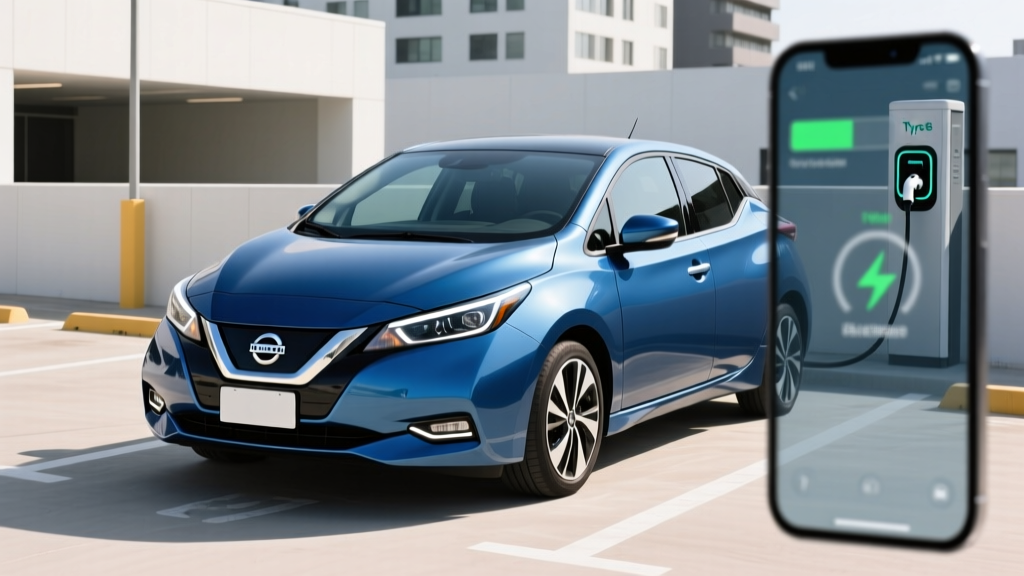
The second-generation Nissan Leaf arrived for the 2018 model year with sharper styling and more range, but it was the 2019 model year that turned heads. Nissan introduced the Leaf PLUS (62 kWh battery, 226-mile EPA range) alongside the carryover standard Leaf (40 kWh, 151 miles), giving buyers a genuine choice between an affordable commuter and a more capable daily driver. As of 2026, the 2019 Leaf is firmly in used-EV territory — but its specs, quirks, and value proposition still matter if you are shopping the pre-owned market.
This guide covers every critical 2019 Nissan Leaf spec — battery chemistry, real-world range, CHAdeMO charging speeds, efficiency, cargo dimensions, ProPILOT Assist capabilities, and whether it qualifies for the used-EV federal tax credit under current IRS §25E rules. If you are cross-shopping a used Bolt, Model 3, or e-Golf, the data below will help you decide.
2019 Nissan Leaf Specs at a Glance
| Specification | Leaf S / SV / SL (40 kWh) | Leaf PLUS (62 kWh) |
|---|---|---|
| EPA Range | 151 miles | 226 miles (SL: 215 mi) |
| Battery Capacity (Usable) | 40 kWh (NMC) | 62 kWh (NMC) |
| Motor Output | 110 kW / 147 hp | 160 kW / 214 hp |
| Torque | 236 lb-ft | 250 lb-ft |
| Drivetrain | FWD (single motor) | FWD (single motor) |
| 0–60 mph | ~7.9 seconds | ~6.5 seconds |
| Max DC Fast Charge | 50 kW (CHAdeMO) | 100 kW (CHAdeMO) |
| Level 2 Charge Rate | 6.6 kW (onboard charger) | 6.6 kW (onboard charger) |
| MPGe (Combined) | 112 MPGe | 104 MPGe |
| kWh per 100 mi | 30 kWh | 32 kWh |
| Cargo Volume (rear seats up) | 23.6 cu ft | 23.6 cu ft |
| Cargo Volume (rear seats folded) | 30.0 cu ft | 30.0 cu ft |
| Base MSRP (2019 new) | $29,990 (S) | $36,550 (S PLUS) |
| Original Federal Tax Credit (new) | $7,500 (§30D, 2019 rules) | $7,500 (§30D, 2019 rules) |
| Battery Warranty | 8 yr / 100,000 mi | 8 yr / 100,000 mi |
Real-World Range: What the EPA Numbers Don't Tell You
40 kWh Leaf: EPA 151 miles. Expect 120–135 miles at sustained highway speeds (70+ mph) and 90–110 miles in sub-freezing winter conditions.
62 kWh Leaf PLUS: EPA 226 miles (215 for the heavier SL trim with 17-inch wheels). Expect 185–200 miles highway and 150–170 miles in cold weather.
The Leaf's EPA-rated figures assume a mix of city and highway driving at moderate temperatures. In practice, the Leaf's lack of an active liquid thermal management system for the battery means efficiency drops noticeably in extreme heat or cold. The battery relies on passive air cooling, which also means sustained highway driving in summer heat can trigger power-reduction ("turtle mode") to protect the cells.
For a commuter doing 30–40 miles of mixed driving daily with home charging, even the 40 kWh Leaf provides comfortable margin. The Leaf PLUS stretches that to genuine day-trip territory — a 180-mile round trip is feasible in mild weather without a mid-trip charge, though you will want to plan a DC stop for any route beyond 150 miles one-way.
Charging Speeds: The CHAdeMO Limitation
Charging is where the 2019 Leaf's age shows most clearly. Nissan stuck with the CHAdeMO DC fast-charging standard while the rest of the market moved to CCS and, increasingly, NACS (the Tesla connector). Here is what you get:
| Charging Level | Rate | 40 kWh Leaf | 62 kWh Leaf PLUS |
|---|---|---|---|
| Level 1 (120V household) | ~1.4 kW | ~4 miles per hour | ~4 miles per hour |
| Level 2 (240V home/public) | 6.6 kW | ~22 miles per hour; full charge ~7 hr | ~22 miles per hour; full charge ~11 hr |
| DC Fast (CHAdeMO) | 50 kW (std) / 100 kW (PLUS) | 0–80% in ~40 min | 0–80% in ~45 min (tapers above 80%) |
The standard 40 kWh Leaf is capped at 50 kW on CHAdeMO — adequate for topping up but slow for road trips. The Leaf PLUS bumps that to 100 kW peak, but the charging curve tapers significantly past 80% state of charge. Expect 10–80% in roughly 45 minutes under ideal conditions (preconditioned battery, moderate ambient temperature, a full-power CHAdeMO station). In practice, many public CHAdeMO stations deliver 50 kW regardless of the car's peak capability.
The bigger issue in 2026: CHAdeMO infrastructure is shrinking. Electrify America, EVgo, and ChargePoint have prioritized CCS and NACS deployment. If you rely on public DC fast charging, you will find fewer CHAdeMO plugs at new stations. Home Level 2 charging at 6.6 kW is perfectly adequate for daily use, and a full overnight charge is a non-issue for either battery size.
Battery Chemistry, Degradation, and Warranty
Both Leaf batteries use NMC (nickel-manganese-cobalt) lithium-ion cells supplied by AESC (Automotive Energy Supply Corporation, originally a Nissan–NEC joint venture). NMC offers higher energy density than LFP (lithium iron phosphate), which is why Nissan could fit 62 kWh into the Leaf PLUS without enlarging the pack footprint. The trade-off: NMC cells are more sensitive to heat, and the Leaf's passive air-cooling system does them no favors in hot climates.
Long-term degradation data from Leaf owners suggests the 40 kWh pack loses roughly 5–10% capacity over the first 5 years under moderate use, while the 62 kWh pack shows similar percentage loss — meaning the PLUS retains more absolute range even after degradation. However, Leafs in hot states (Arizona, Texas, Florida) have historically shown faster degradation than those in cooler climates. This is the single biggest risk factor when buying a used 2019 Leaf.
Nissan's battery warranty covers 8 years or 100,000 miles against defects and excessive capacity loss. For the 2019 model year, that warranty extends through 2027 — giving a used buyer some remaining coverage. Nissan defines "excessive loss" as dropping below 9 bars out of 12 on the battery capacity gauge (roughly 70–75% of original capacity). If the car you are evaluating shows fewer than 11 bars at ~60,000 miles, that is a yellow flag worth investigating.
Efficiency, Performance, and Driving Impressions
The standard Leaf returns 112 MPGe combined (30 kWh/100 mi), while the Leaf PLUS rates at 104 MPGe combined (32 kWh/100 mi). Both figures are competitive for their era, though newer EVs like the Hyundai Kona Electric (120 MPGe) and Tesla Model 3 RWD (132 MPGe) have since raised the bar.
Performance is where the Leaf PLUS surprises. The 160 kW (214 hp) motor delivers brisk acceleration — 0–60 mph in approximately 6.5 seconds — with instant torque that makes highway merging effortless. The standard Leaf's 147 hp and ~7.9-second 0–60 time are adequate for commuting but feel leisurely when loaded with passengers. Both versions are front-wheel drive with a single-speed reduction gear; there is no AWD option.
One-pedal driving via Nissan's e-Pedal mode is strong, bringing the car to a complete stop using regenerative braking alone. The ride is comfortable and quiet at city speeds, though wind and tire noise become noticeable above 70 mph. The steering is light and numb — fine for parking, uninspiring on back roads.
Interior, Cargo, and Technology
The 2019 Leaf's cabin is functional rather than luxurious. Hard plastics dominate the lower dash and door panels, but the seats are comfortable and the driving position is good. Rear legroom measures 33.5 inches — adequate for adults on short trips, tight for tall passengers on longer drives. Front legroom is a generous 42.1 inches.
Cargo space is 23.6 cubic feet behind the rear seats and 30.0 cubic feet with the 60/40 split rear seats folded. That is competitive with a compact hatchback like the Honda Civic Hatchback (25.7 cu ft) but falls short of the Chevrolet Bolt EV (56.6 cu ft with seats folded). The Leaf does not offer a front trunk (frunk); the space under the hood houses the motor and power electronics.
The infotainment system uses a 7-inch touchscreen (SV and SL trims) or a smaller 5-inch display on the base S trim. Apple CarPlay and Android Auto are standard on SV and SL. The SL trim adds navigation, a Bose 7-speaker audio system, and LED headlights. All trims include a rearview camera; SV and SL add Nissan's Around View Monitor (360-degree camera).
ProPILOT Assist, available on SV and standard on SL, combines adaptive cruise control with lane-centering steering — an SAE Level 2 driver-assist system. It works well on well-marked highways but requires continuous driver engagement and hands on the wheel. It is not autonomous driving and will disengage if lane markings fade. The system is a generation behind current offerings like Ford BlueCruise or GM Super Cruise in terms of hands-free capability and mapping precision.
Pricing, Tax Credits, and Used-EV Value in 2026
When new, the 2019 Leaf started at $29,990 (S trim, 40 kWh) and reached $43,550 for a fully loaded Leaf PLUS SL. The $7,500 federal tax credit under the old §30D rules applied to all trims, since the 2019 Leaf met the battery-sourcing and MSRP requirements of that era. Nissan had not yet hit the 200,000-vehicle manufacturer cap that triggered credit phase-outs (that cap was eliminated by the Inflation Reduction Act in 2023 anyway).
Today, as a used vehicle, the 2019 Leaf may qualify for the IRS §25E Used Clean Vehicle Credit, which offers up to $4,000 (30% of the sale price, capped at $4,000) if all conditions are met:
| Used-Credit Requirement (§25E) | Detail |
|---|---|
| Maximum Sale Price | $25,000 or less |
| Buyer Income Cap (AGI) | $75,000 single / $112,500 head of household / $150,000 married filing jointly |
| Vehicle Age | Model year at least 2 years before the calendar year of purchase (2019 qualifies in 2026) |
| Battery Capacity | At least 7 kWh (both Leaf packs qualify) |
| Dealer Requirement | Must be purchased from a licensed dealer (private-party sales do not qualify) |
| Credit Amount | 30% of sale price, up to $4,000 maximum |
In the 2026 used market, a 2019 Leaf S (40 kWh) with average mileage typically lists between $10,000 and $14,000, while a Leaf PLUS SV/SL ranges from $14,000 to $19,000. At a $14,000 sale price, the 30% credit yields $4,000 (hitting the cap), bringing the effective cost to $10,000. At $18,000, the credit is $4,000 (still capped), netting $14,000. These figures make the used Leaf one of the cheapest ways into EV ownership — provided the battery health checks out.
Consult a tax professional to confirm your eligibility, as income limits and dealer-reporting requirements apply. Rules are current for 2026 and subject to legislative change.
Biggest Pros and Cons
- Low used-EV entry price (often under $15,000 after credit)
- Comfortable ride and quiet cabin at city speeds
- e-Pedal one-pedal driving is intuitive and effective
- Standard CHAdeMO DC fast charging (no adapter needed at legacy stations)
- ProPILOT Assist provides solid Level 2 highway support on SV/SL
- Strong battery warranty remainder through 2027
- CHAdeMO network is shrinking — fewer DC stations being built
- Passive air-cooled battery degrades faster in hot climates
- 40 kWh model's 151-mile EPA range is limiting for road trips
- No liquid thermal management — performance drops in extreme heat
- Cargo space (23.6 cu ft) trails key competitors like the Bolt EV
- Base S trim has a small 5-inch non-touch display and minimal features
- 50 kW DC cap on standard Leaf is painfully slow by modern standards
Is the 2019 Nissan Leaf Worth Buying in 2026?
The 2019 Leaf makes sense for a specific buyer: someone with reliable home Level 2 charging, a daily commute under 60 miles round-trip, and a budget that prioritizes low upfront cost over road-trip flexibility. The Leaf PLUS (62 kWh) is the stronger pick — 226 miles of EPA range gives real breathing room, and the 100 kW CHAdeMO peak is adequate for occasional longer trips if you plan around CHAdeMO-equipped stations.
The standard 40 kWh Leaf at 151 EPA miles is best reserved for a pure city commuter or second car. Its 50 kW DC cap and shrinking CHAdeMO infrastructure make road trips an exercise in patience.
Cross-shopping the 2019 Leaf? The Chevrolet Bolt EV (same era, 238-mile range, CCS charging, 56.6 cu ft cargo) is generally the stronger used buy if you can find one. The Hyundai Kona Electric (258-mile range, CCS) is also worth considering. The Tesla Model 3 (2018–2019, Supercharger access, NACS) commands a premium but offers superior range, charging infrastructure, and thermal management. The Leaf wins primarily on price — if your budget is strictly under $15,000 after the used-EV credit, it remains a viable and practical EV.
Frequently Asked Questions
What is the real-world range of the 2019 Nissan Leaf?
The 40 kWh Leaf delivers about 120–135 miles at highway speeds in mild weather, dropping to 90–110 miles in freezing conditions. The 62 kWh Leaf PLUS manages 185–200 miles highway in mild weather and 150–170 miles in cold. These figures assume moderate driving; aggressive acceleration and hilly terrain reduce range further.
How fast does the 2019 Leaf charge at home and on DC?
On a 240V Level 2 home charger, the Leaf charges at 6.6 kW, adding roughly 22 miles of range per hour. A full charge takes about 7 hours (40 kWh) or 11 hours (62 kWh). On DC fast charging, the standard Leaf peaks at 50 kW (CHAdeMO), while the Leaf PLUS peaks at 100 kW — but the charge curve tapers significantly above 80% SoC, so plan for 40–50 minutes for a 10–80% session.
Does the 2019 Nissan Leaf qualify for a federal tax credit in 2026?
As a used vehicle, the 2019 Leaf can qualify for the IRS §25E Used Clean Vehicle Credit of up to $4,000, provided the sale price is $25,000 or less, the buyer's AGI is within income limits ($75K single / $150K joint), the car is purchased from a licensed dealer, and the vehicle is at least 2 model years old. The 2019 model year meets the age requirement in 2026. Confirm eligibility with a tax professional; rules may change.
How much does a used 2019 Leaf cost after the tax credit?
Typical 2026 listing prices range from $10,000–$14,000 for a 40 kWh model and $14,000–$19,000 for a Leaf PLUS. With the maximum $4,000 used-EV credit, effective costs can drop to $6,000–$10,000 for the standard Leaf and $10,000–$15,000 for the PLUS — among the cheapest EV entries available.
Is the 2019 Leaf worth buying vs. a used Bolt EV or Model 3?
The Chevrolet Bolt EV (238-mile range, CCS charging, larger cargo area) is generally the better all-around used EV if prices are comparable. The Tesla Model 3 offers superior Supercharger infrastructure, range, and thermal management but at a higher used price. The Leaf's advantage is its rock-bottom entry price and comfortable commuter manners. Choose the Leaf if budget is paramount and your driving is predictable; choose the Bolt or Model 3 if you need road-trip flexibility or live in a hot climate where the Leaf's passive cooling is a liability.
What is the battery warranty on a used 2019 Leaf?
Nissan's lithium-ion battery warranty covers 8 years or 100,000 miles (whichever comes first) against defects and capacity loss below 9 of 12 bars on the capacity gauge. For a 2019 model, coverage extends through 2027. A pre-purchase check of the battery capacity bars (visible in the instrument cluster) is essential — aim for 11 or 12 bars on any vehicle with under 70,000 miles.