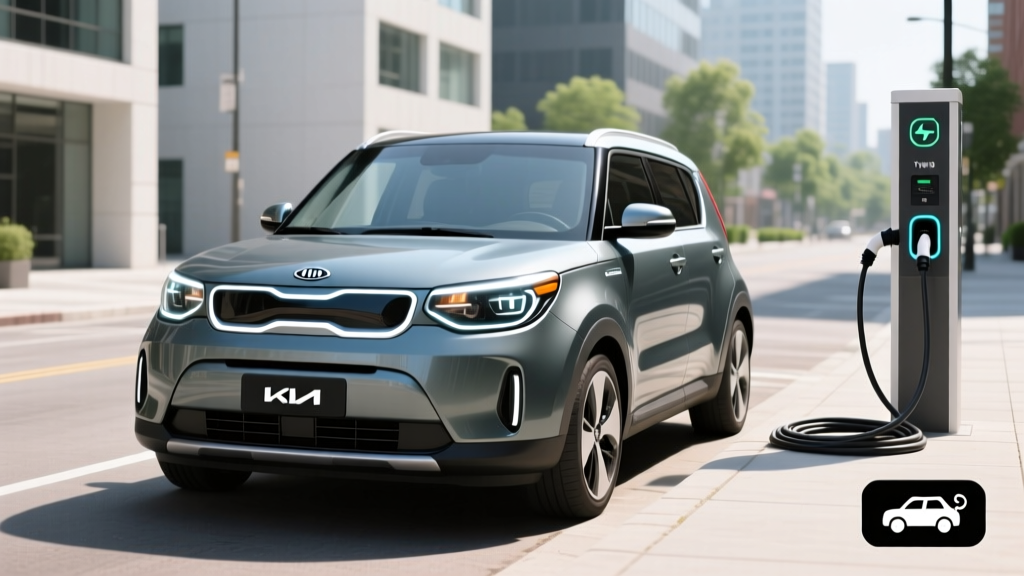
Quick Answer: Is the 2019 Kia Soul EV Still Worth Buying in 2026?
The 2019 Kia Soul EV is a budget-friendly used electric hatchback with an EPA-rated 111 miles of range and a 27 kWh usable battery. It works as a second car or short-commute runabout, but its CHAdeMO DC fast-charging connector is now a major liability as the U.S. public network shifts overwhelmingly to NACS (Tesla) and CCS. Expect to pay $8,000–$13,000 on the used market. Home Level 2 charging is essentially mandatory for this car — public fast-charging will feel slow and increasingly inconvenient.
2019 Kia Soul EV: Core Specs at a Glance
| Spec | Value |
|---|---|
| EPA Range | 111 miles |
| Battery (usable) | 27 kWh (NMC lithium-ion) |
| EPA Efficiency | 108 MPGe combined (31 kWh/100 mi) |
| Motor Output | 109 hp / 210 lb-ft torque |
| 0–60 mph | ~11.2 seconds |
| Level 2 AC Charging | 6.6 kW onboard charger (~5 hrs 0–100%) |
| DC Fast Charging | CHAdeMO only, ~50 kW peak |
| 10–80% DC Charge | ~33 minutes (at 50 kW station) |
| Battery Warranty (original) | 10 years / 100,000 miles (capacity ≥70%) |
| Used Price Range (2026) | $8,000–$13,000 depending on mileage/condition |
Real-World Range: What 111 Miles Actually Means
The EPA sticker says 111 miles, but real-world results depend heavily on your climate and driving style. In mild weather (60–75°F) at city speeds, owners routinely report 115–125 miles thanks to regenerative braking efficiency. Highway driving at 70+ mph cuts that to roughly 85–95 miles. Cold weather (below 30°F) without preconditioning can drop range to 70–85 miles — a 20–35% loss typical of NMC batteries without a heat pump.
EPA Rating: 111 miles
Real-World Expectation: 85–125 miles depending on temperature, speed, and terrain. Plan trips around 80 miles of usable range to preserve battery health and avoid range stress.
The 2019 Soul EV lacks a battery heat pump, relying on resistive cabin heating that draws heavily from the 27 kWh pack. If you live in the upper Midwest or Northeast, winter commuting on a single charge is feasible, but weekend road trips will require careful planning around the shrinking CHAdeMO fast-charging network.
The CHAdeMO Problem: Why Charging Access Is Your Biggest Risk
This is the single most important ownership consideration for a 2019 Soul EV in 2026. The car uses the CHAdeMO DC fast-charging connector, a standard championed by Nissan and Mitsubishi that has lost the format war in North America. Tesla's NACS is now the dominant standard, with CCS1 as the runner-up. Electrify America, EVgo, and most other networks have been phasing out CHAdeMO stalls or not replacing aging hardware.
| Network | CHAdeMO Availability (2026) | Notes |
|---|---|---|
| Tesla Supercharger | None (no adapter exists for CHAdeMO→NACS) | Largest U.S. network; inaccessible |
| Electrify America | Limited legacy stalls only | New sites are CCS/NACS only |
| EVgo | Select legacy locations | Check EVgo app before relying on it |
| ChargePoint | Some older stations | Varies by region |
Bottom line: if you cannot charge at home, this car will be a daily frustration. Home Level 2 charging (240V, 6.6 kW) replenishes the 27 kWh battery in about 4.5–5 hours, which is perfectly adequate for overnight top-ups. But relying on public CHAdeMO chargers for road trips or apartment living is increasingly impractical.
Cost Breakdown: What Ownership Really Costs
At $8,000–$13,000 on the used market, the 2019 Soul EV is one of the cheapest electric vehicles you can buy. But low purchase price doesn't tell the whole story. Here's how the five-year costs stack up against a comparable used gas car.
| Cost Category | 2019 Kia Soul EV (Used) | 2019 Kia Soul Gas (Used, ~$10K) |
|---|---|---|
| Purchase Price | $10,500 (avg) | $10,000 (avg) |
| Fuel / Electricity (5 yrs, 12K mi/yr) | $2,700 (home charging at $0.14/kWh) | $6,750 (gas at $3.50/gal, 28 MPG) |
| Maintenance (5 yrs) | $1,200 (tires, wipers, cabin filter, brake fluid) | $3,500 (oil, filters, brakes, spark plugs) |
| Insurance (5 yrs avg) | $6,500 ($1,300/yr) | $5,500 ($1,100/yr) |
| Battery Replacement Risk | $0–$8,000 (if out of warranty & degraded) | $0 |
| 5-Year Total (no battery failure) | ~$20,900 | ~$25,750 |
Fuel savings are the Soul EV's strongest argument. Charging at home at the U.S. average of ~$0.16/kWh (EIA data) costs about $4.50 to fully recharge the 27 kWh pack — compared to roughly $45 to fill the gas Soul's 14-gallon tank. Over 60,000 miles, that's a savings of approximately $4,000 in energy alone.
Maintenance is minimal: no oil changes, no spark plugs, and regenerative braking extends pad life significantly. The main recurring costs are tires (EVs wear tires faster due to instant torque and extra weight), cabin air filter, and brake fluid flushes.
Used EV tax credit: Under IRS §30D rules, the used clean vehicle credit offers up to $4,000 (or 30% of the sale price, whichever is less) on qualified used EVs purchased from a dealer. At a $10,500 purchase, the credit would be $3,150 — but income caps ($75K single / $150K joint), dealer registration requirements, and the vehicle's original MSRP all factor in. Consult a tax professional before relying on this credit.
Battery Health: What to Check Before Buying
The 2019 Soul EV uses a 30.5 kWh gross / 27 kWh usable NMC (nickel-manganese-cobalt) battery pack with air-cooled thermal management. Air cooling is simpler and cheaper than liquid cooling, but it allows the battery to run hotter during fast charging and in summer heat, which can accelerate long-term degradation.
Kia's original battery warranty covers 10 years / 100,000 miles with a capacity retention threshold of 70%. For a 2019 model, that warranty runs through 2029 — giving you several years of remaining coverage, assuming the vehicle hasn't exceeded 100,000 miles and the battery hasn't been damaged or improperly serviced.
Pre-purchase checklist:
- Check the Soul EV's State of Health (SoH): Use an OBD-II dongle with an app like SoulEV Spy to read actual battery capacity. A healthy 2019 pack should show 85–95% SoH at typical mileage.
- Verify warranty transferability: Kia's 10-year battery warranty transfers to subsequent owners in most states, but confirm with a Kia dealer using the VIN.
- Look for DC fast-charge history: Frequent 50 kW CHAdeMO sessions on an air-cooled pack generate heat stress. A car charged primarily on Level 2 will likely have better long-term health.
- Inspect for battery recalls: Check NHTSA's recall database for any open battery-related recalls on the specific VIN.
EV vs Gas: Is the Soul EV Right for Your Driving Pattern?
| Factor | 2019 Soul EV | 2019 Soul Gas (2.0L) |
|---|---|---|
| EPA Range / Tank Range | 111 miles | ~380 miles (14.2 gal × 28 MPG) |
| Refuel/Recharge Time | ~5 hrs (Level 2 home) | ~5 minutes (gas station) |
| Cost per Mile (Energy) | ~$0.045/mi | ~$0.125/mi |
| Road-Trip Practicality | Poor (CHAdeMO scarcity, 111-mi range) | Excellent |
| Daily Commute (sub-50 mi) | Excellent — silent, smooth, cheap | Good |
| Cold-Weather Usability | Fair (70–85 mi range, resistive heat) | Excellent |
| Cargo Space | 24.4 cu ft (battery eats some room) | 24.4 cu ft |
| Acceleration | 11.2s 0–60 (adequate for city) | ~9.0s 0–60 |
Decision Framework: Should You Buy the 2019 Kia Soul EV?
Buy it if:
- Your daily round-trip commute is under 60 miles
- You have access to home Level 2 charging (garage or driveway with 240V outlet)
- This will be a second car — not your only vehicle for road trips
- You live in a mild or moderate climate (minimal sub-20°F winters)
- You want the lowest possible cost-per-mile commuter vehicle
- Battery SoH checks out above 85% and warranty is intact
Pass on it if:
- You live in an apartment without charging access
- You need a primary car for 200+ mile highway trips
- You live in a region with harsh winters and need full range year-round
- You can't find a reliable CHAdeMO station near your regular routes
- Battery SoH is below 80% or the warranty has been voided
Common Misconceptions About the 2019 Soul EV
| Myth | Fact |
|---|---|
| "You can use a CHAdeMO-to-NACS adapter at Tesla Superchargers." | No such adapter exists for DC fast charging. CHAdeMO and NACS/CCS use fundamentally different communication protocols. Magic Dock only works for CCS vehicles. |
| "The battery will need replacing soon and cost $20,000." | NMC packs in the Soul EV typically degrade 1–2% per year under normal use. At 7 years old, expect 85–92% SoH. Full replacement (if ever needed) runs $6,000–$8,000 from Kia, but most packs outlast the car. |
| "It qualifies for the full $7,500 federal tax credit." | The $7,500 credit applies only to new EVs. On the used market, the §25E used clean vehicle credit offers up to $4,000 (30% of sale price) with income and dealer requirements. See IRS guidelines. |
| "111 miles of range is useless." | The average American drives ~37 miles per day (FHWA data). For a commuter car charged overnight at home, 111 miles is more than adequate — as long as it's not your only car. |
| "Level 1 (120V) charging is fine for daily use." | Level 1 adds roughly 4 miles of range per hour on the Soul EV. A full recharge from empty takes 25+ hours. Level 2 (240V) is strongly recommended and adds ~22 miles per hour. |
What a First-Time EV Buyer Should Know
If the 2019 Soul EV is your entry point into electric driving, here are the practical realities no brochure will tell you:
Home charging is non-negotiable for this car. A basic Level 2 home charger (240V, 32A) costs $300–$600 for the unit plus $500–$1,500 for professional installation, depending on whether your electrical panel needs an upgrade. Total: roughly $800–$2,100. This investment pays for itself within the first year of fuel savings for most drivers.
kW vs kWh — know the difference. The Soul EV's battery holds 27 kWh (kilowatt-hours) of energy — that's the "tank size." Its DC fast charger accepts up to 50 kW (kilowatts) of power — that's the "pump speed." Confusing these is the most common EV newcomer mistake.
Plan for charging-curve taper. The 50 kW peak charge rate only holds from roughly 10–60% State of Charge. Above 60%, the rate tapers significantly to protect the battery. That's why the 10–80% time is ~33 minutes, not the 20 minutes that raw math might suggest. Above 80%, charging slows to a trickle — plan to unplug at 80% on road trips.
Insurance may cost more. Used EVs can carry a 10–20% insurance premium over equivalent gas cars due to higher repair costs after collisions. Get quotes before purchasing.
Tires wear faster. The Soul EV's instant torque and ~3,300-lb curb weight (heavier than the gas Soul) accelerate tire wear. Budget for replacement every 30,000–40,000 miles with low-rolling-resistance EV-rated tires.
Frequently Asked Questions
How long does the 2019 Kia Soul EV battery last?
Based on degradation data from similar NMC packs, expect 85–92% State of Health at 7 years of age with normal use. Kia's 10-year/100,000-mile battery warranty (through 2029 for a 2019 model) covers capacity loss below 70%. Most Soul EV batteries outlast 150,000 miles before approaching the 70% threshold.
Can I fast-charge a 2019 Soul EV on road trips in 2026?
Technically yes, but practically it's difficult. CHAdeMO stations are dwindling as networks prioritize NACS and CCS. Use the PlugShare app to verify CHAdeMO availability along your route before any trip over 100 miles. For most owners, this car should stay within its home-charging radius.
What does it cost to charge the 2019 Soul EV at home?
A full 27 kWh charge at the U.S. residential average of ~$0.16/kWh costs about $4.32 and provides roughly 111 miles of range. That works out to approximately $0.039 per mile — compared to $0.12–$0.15 per mile for a gas car getting 28 MPG at $3.50/gallon. Source: fueleconomy.gov.
Is the 2019 Soul EV a good first EV?
Yes — with caveats. It's affordable, easy to drive, and cheap to run if you charge at home. But its limited range, CHAdeMO-only fast charging, and lack of a heat pump mean it works best as a commuter car or second vehicle, not a sole household car for families who road-trip regularly.
Does the 2019 Kia Soul EV qualify for any tax credits in 2026?
Not the $7,500 new-vehicle credit — that's only for new purchases. However, the IRS §25E used clean vehicle credit may provide up to $4,000 (or 30% of the sale price) if you buy from a registered dealer and meet income limits ($75,000 single / $150,000 joint). The vehicle must also meet original MSRP requirements. Always verify current rules at irs.gov and consult a tax professional.
How does the 2019 Soul EV compare to the 2020+ Soul EV?
The 2020 model year brought a dramatically upgraded 64 kWh battery with 243 miles of EPA range and a CCS fast-charging connector — a substantially more capable car. If your budget allows ($16,000–$22,000 used), the 2020+ Soul EV is a far better long-term choice. The 2019 model makes sense only at a steep discount for buyers with very short commutes and reliable home charging.