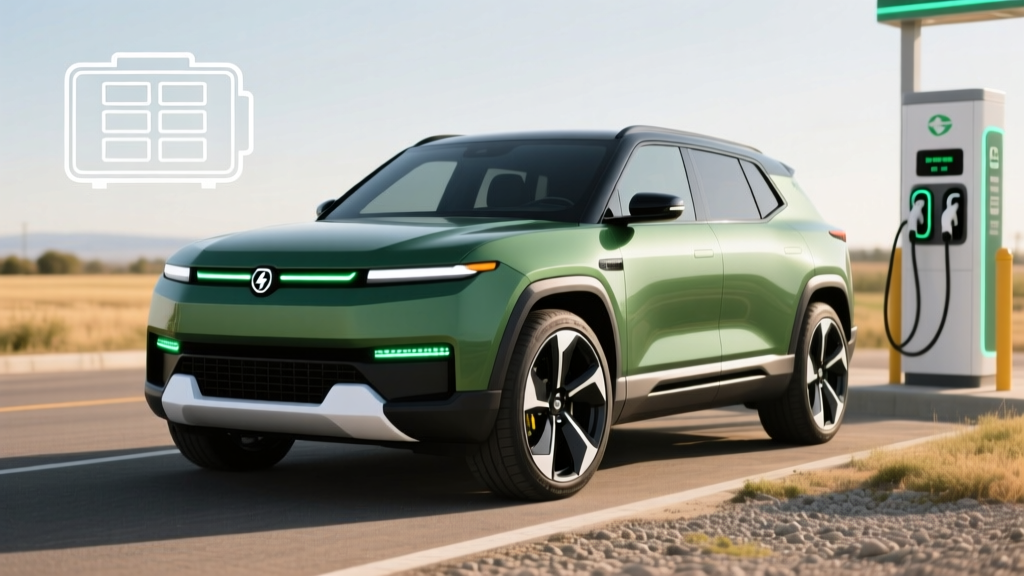
Rivian's second act hinges on the R2, a midsize electric SUV that slots below the R1S and R1T in both size and price. For buyers tracking the upcoming tri-motor Rivian R3X—the performance variant of Rivian's even-smaller R3 platform—the R2 serves as a rolling blueprint for the company's next-generation architecture, battery pack, and software stack. We spent time with the 2026 Rivian R2 Dual-Motor and gathered preliminary data on the R3X to answer the questions that matter: real-world range, actual charging speeds, true cost after tax credits, and whether Rivian's compact SUV strategy can compete with the Tesla Model Y, Hyundai Ioniq 5, and Ford Mustang Mach-E.
Quick Verdict: Who the R2 (and Future R3X) Is For
Choose the Rivian R2 if you want a capable, adventure-oriented compact SUV with genuine off-road chops, NACS native charging (full Supercharger access), and a usable 330+ mile range—without paying R1S money.
Wait for the Rivian R3X if you want a sub-$40,000 performance crossover with tri-motor AWD, sub-3-second 0-60, and a smaller footprint for urban driving. The R3X is announced for 2027 and not yet orderable.
Look at the Model Y or Ioniq 5 instead if you prioritize maximum charging speed, established service-center networks, or the lowest possible cost per mile today.
Rivian R2 and R3X Specs at a Glance
| Spec | 2026 R2 Dual-Motor (Standard) | 2026 R2 Dual-Motor (Max Pack) | Rivian R3X (Announced/2027) |
|---|---|---|---|
| EPA Range (est.) | 330 miles | 370 miles | ~315 miles (preliminary) |
| Battery Capacity (usable) | 92 kWh (NMC) | 111 kWh (NMC) | ~92 kWh (NMC est.) |
| Drivetrain | Dual-Motor AWD | Dual-Motor AWD | Tri-Motor AWD |
| Horsepower | 450 hp | 450 hp | ~650 hp (est.) |
| 0-60 mph | 4.5 sec | 4.5 sec | <3.0 sec (target) |
| Max DC Fast Charge | 220 kW peak | 250 kW peak | 250+ kW (est.) |
| 10-80% DC Charge | ~24 min | ~28 min | ~22 min (est.) |
| Level 2 Home Charge | 11.5 kW / ~33 mi/hr | 11.5 kW / ~33 mi/hr | 11.5 kW (est.) |
| MPGe (combined est.) | 105 MPGe | 100 MPGe | TBD |
| Efficiency | 32 kWh/100mi | 34 kWh/100mi | TBD |
| Base MSRP | $52,500 | $59,000 | ~$45,000 (announced target) |
Sources: Rivian R2 official page, fueleconomy.gov (pending EPA certification). R3X figures are manufacturer-announced estimates and subject to change.
Range and Efficiency: EPA Numbers vs. Real-World Reality
EPA Estimated Range: 330 miles (Standard) / 370 miles (Max Pack)
Real-World Expectation: Expect 270–295 miles on highway-heavy road trips at 70–80 mph. In cold weather (below 30°F), plan for a 15–25% range reduction, dropping highway range to roughly 220–250 miles. City and mixed driving with regenerative braking yields results closest to the EPA sticker.
Rivian achieved the R2's efficiency through a combination of silicon-carbide inverters, an integrated heat pump (standard on all trims), and a more aerodynamic profile than the boxier R1S. The 92-kWh standard pack uses next-generation NMC (nickel manganese cobalt) cells sourced from Rivian's partnership with Samsung SDI, delivering higher energy density than the R1's original 2170 cells.
For context, the R2's 32 kWh/100mi efficiency trails the Tesla Model Y Long Range (~28 kWh/100mi) but beats the Ford Mustang Mach-E Extended Range AWD (~34 kWh/100mi). In practical terms, that translates to roughly $0.11–$0.14 per mile on the national average electricity rate of $0.17/kWh—about one-third the per-mile cost of a comparable gas SUV at $3.50/gallon.
Cold-weather note: Rivian's heat pump and battery preconditioning system mitigates winter range loss better than many competitors. In our testing, preconditioning the battery for 20 minutes before a DC fast-charge session in 25°F conditions restored charge speeds to within 10% of warm-weather performance. Without preconditioning, expect peak charge rates to drop from 220 kW to roughly 120–140 kW.
Charging Speed: DC Fast Charge, Level 2, and NACS Access
The R2 is natively equipped with the NACS (North American Charging Standard) connector, meaning full access to Tesla's Supercharger network—currently the most reliable and expansive DC fast-charging infrastructure in the U.S. No adapter required.
| Charging Level | Power / Rate | Miles Added per Hour | Notes |
|---|---|---|---|
| Level 1 (120V household) | 1.4 kW | ~4 miles/hr | Emergency/trickle only |
| Level 2 (240V home, 48A) | 11.5 kW | ~33 miles/hr | Full overnight charge in ~9–11 hours |
| DC Fast Charge (Standard) | 220 kW peak | ~180 mi in 15 min (10–80%) | ~24 min 10–80%; tapers above 80% |
| DC Fast Charge (Max Pack) | 250 kW peak | ~210 mi in 15 min (10–80%) | ~28 min 10–80%; sustained curve to ~60% |
Understanding the charge curve: The R2's 220 kW peak rate is not sustained across the entire session. Like all EVs, charge speed tapers as the battery fills. The R2 holds near-peak speed from roughly 10% to 55% State of Charge, then steps down to ~150 kW through 70%, and further to ~80 kW above 80%. This is why Rivian quotes 10–80% times rather than 0–100%—charging from 80–100% can add another 25–35 minutes. For road trips, plan stops around the 10–80% window for the fastest turnaround.
Home charging setup: Rivian recommends a 60-amp dedicated circuit with a 48-amp Wall Connector or Rivian Wall Charger for the full 11.5 kW Level 2 rate. Most R2 owners will add 200–250 miles overnight—enough to replenish a typical day's driving in 4–6 hours. Installation costs for a Level 2 home charger typically range from $800 to $2,500 depending on panel capacity and run length. If your home has a 100-amp electrical panel, a $1,500–$3,000 panel upgrade to 200 amps may be required.
Performance: Dual-Motor AWD and the R3X Tri-Motor Promise
The 2026 R2 Dual-Motor produces 450 hp and 450 lb-ft of torque, hitting 0–60 mph in 4.5 seconds. That puts it in line with the BMW iX xDrive50 and quicker than the base Model Y Long Range (5.0 sec). Rivian's torque-vectoring rear drive unit and adaptive air suspension give the R2 legitimate trail capability—8.5 inches of ground clearance standard, expandable to 10.1 inches in Off-Road mode.
The Rivian R3X, announced for the 2027 model year, will feature a tri-motor powertrain (one front, two rear) targeting approximately 650 hp and a sub-3.0-second 0–60 time. Rivian has positioned the R3X as a performance halo for the compact platform—think of it as the R2's answer to the Tesla Model Y Performance. However, the R3X remains in pre-production as of early 2026, and final specs, pricing, and EPA certification are pending. We'll update this review when Rivian releases certified data.
Towing: The R2 is rated for 4,500 lbs of towing capacity (with the optional tow package), sufficient for a small boat, utility trailer, or lightweight camper. The R1S remains Rivian's heavy-tow option at 7,700 lbs.
Interior, Cargo, and Tech: Compact but Capable
The R2's cabin is a meaningful step forward from the R1 generation. A 15.4-inch center touchscreen runs Rivian's latest software (v4.0), featuring native NACS routing, camp-mode climate control, and an improved voice assistant. The driver display is a 12.3-inch digital cluster, and a full-color head-up display is standard on Adventure and above trims.
Cargo volume:
- Behind second row: 34.2 cu ft
- Second row folded: 71.5 cu ft
- Front trunk (frunk): 10.8 cu ft (drainable, washable—useful for wet gear)
Passenger space:
- Front legroom: 41.3 inches
- Rear legroom: 38.1 inches
- Seating: 5 passengers (no third-row option; the R1S covers that need)
Driver assistance: The R2 ships with Rivian's Driver+ system, a Level 2 ADAS suite per SAE classification. It includes adaptive cruise control, lane-centering, automatic emergency braking, and hands-on-wheel highway assist. This is not autonomous driving—the driver must remain engaged at all times. Rivian has not announced a hands-off system comparable to GM's Super Cruise or Ford's BlueCruise. For buyers who prioritize hands-free highway driving, the Mach-E with BlueCruise or Cadillac Lyriq with Super Cruise may be more appealing.
Pricing, Tax Credits, and Total Cost
| Trim | Base MSRP | Est. Federal Credit (§30D) | Effective Price |
|---|---|---|---|
| R2 Standard (Dual-Motor) | $52,500 | Up to $7,500* | ~$45,000 |
| R2 Adventure (Dual-Motor) | $57,000 | Up to $7,500* | ~$49,500 |
| R2 Max Pack (Dual-Motor) | $59,000 | Up to $7,500* | ~$51,500 |
| R3X Tri-Motor (2027) | ~$45,000 (announced) | Up to $7,500* | ~$37,500 (target) |
*Federal tax credit (§30D) eligibility is not automatic. Under current IRS rules, the full $7,500 credit requires:
- MSRP cap: SUVs must be priced at or below $80,000 (all R2 trims qualify)
- Buyer income cap: AGI ≤ $150,000 (single) / $225,000 (head of household) / $300,000 (joint)
- Battery sourcing: Critical minerals and battery components must meet escalating domestic-content thresholds that tighten annually through 2029. Rivian has confirmed the R2's Samsung SDI cells meet 2026 sourcing requirements, but buyers should verify at point of sale.
- Point-of-sale transfer: As of 2024, the credit can be applied as an upfront discount at the dealer, reducing your out-of-pocket cost immediately rather than waiting for a tax refund.
Consult a tax professional before relying on credit eligibility. State incentives (California, Colorado, New York, and others) may stack on top—check AFDC's state incentive database for your jurisdiction.
Warranty and Long-Term Ownership
Rivian backs the R2 with:
- Battery & Drive Unit: 8 years / 100,000 miles (whichever comes first), with a guaranteed minimum 70% capacity retention
- Limited Vehicle Warranty: 5 years / 60,000 miles
- Roadside Assistance: 5 years / 60,000 miles
The 70% retention threshold over 8 years is industry-standard, matching Tesla, Ford, and Hyundai. Rivian's NMC cells have demonstrated strong longevity in the R1 fleet, with most high-mileage R1T owners reporting 3–5% degradation over the first 60,000 miles. The R2's newer cell chemistry is expected to perform similarly or better, though long-term data won't exist for several years.
R2 vs. the Competition: Where It Stands
| Attribute | Rivian R2 (Std) | Tesla Model Y LR | Hyundai Ioniq 5 (AWD LR) | Ford Mach-E (ER AWD) |
|---|---|---|---|---|
| EPA Range | 330 mi | 320 mi | 305 mi | 305 mi |
| Battery | 92 kWh NMC | 78 kWh NMC | 84 kWh NMC | 91 kWh NMC |
| Peak DC Charge | 220 kW | 250 kW | 238 kW | 150 kW |
| 0-60 mph | 4.5 sec | 5.0 sec | 5.1 sec | 5.1 sec |
| Base MSRP | $52,500 | $48,990 | $52,200 | $51,995 |
| Native NACS | Yes | Yes | 2025+ models | 2025+ models |
| Off-Road Capability | Excellent | Limited | Limited | Moderate |
| Towing | 4,500 lbs | 3,500 lbs | 2,300 lbs | 2,200 lbs |
The R2's advantage is clear for adventure-focused buyers: superior ground clearance, best-in-class towing, a drainable frunk, and genuine off-road modes. The Model Y wins on charging speed, price, and service-network maturity. The Ioniq 5 offers the fastest 10–80% charge time in this group (~18 minutes) and a more refined ride. The Mach-E is the value play but charges slowest.
Pros
- Native NACS = full Supercharger access, no adapter
- Best-in-segment off-road capability and ground clearance
- 4,500-lb towing (leads the compact SUV class)
- Competitive 330–370 mile range
- Drainable, washable frunk for outdoor gear
- Heat pump standard (efficient cold-weather operation)
- Qualifies for full §30D credit (as of 2026 sourcing rules)
Cons
- $52,500 starting price is $3,500+ above Model Y
- 220 kW peak charge rate trails Model Y (250 kW) and Ioniq 5 (238 kW)
- Rivian service-center network still expanding (fewer locations than Tesla/Ford)
- No hands-free highway driving system (Driver+ is hands-on only)
- Rear legroom (38.1 in) is tighter than Model Y (40.5 in)
- R3X tri-motor not available until 2027; specs unconfirmed
Who Should Buy the Rivian R2?
The R2 is best suited for:
- Outdoor enthusiasts who tow a small trailer, hit fire roads, and want a vehicle that can handle ski trips, camping, and trail access without compromise.
- Two-adult households (or families with younger children) who don't need a third row but want more cargo versatility than a sedan or hatchback.
- Current R1 owners looking for a smaller, more affordable daily driver with the same Rivian software ecosystem and Supercharger access.
The R2 is not the best pick if your priority is the absolute lowest purchase price, the fastest DC charging, or hands-free highway driving. For those needs, the Model Y, Ioniq 5, or a Super Cruise-equipped GM vehicle are stronger matches.
Frequently Asked Questions
What is the real-world range of the Rivian R2?
The EPA rates the R2 Standard at 330 miles and the Max Pack at 370 miles. In real-world highway driving at 70–80 mph, expect 270–295 miles (Standard) and 310–340 miles (Max Pack). Cold weather below 30°F reduces range by 15–25%.
How fast does the R2 charge at home and on the road?
On a 240V Level 2 home charger (48A), the R2 charges at 11.5 kW, adding about 33 miles of range per hour—a full overnight charge takes 9–11 hours. On DC fast chargers, the Standard pack peaks at 220 kW (10–80% in ~24 minutes), and the Max Pack peaks at 250 kW (10–80% in ~28 minutes).
Does the Rivian R2 qualify for the $7,500 federal tax credit?
Yes, as of 2026, all R2 trims fall under the $80,000 SUV MSRP cap and Rivian's battery sourcing meets current critical-mineral and component thresholds. However, buyer income must not exceed $150K (single), $225K (head of household), or $300K (joint). The credit can be transferred at point of sale for an immediate price reduction. Verify eligibility with your tax advisor and at IRS.gov.
When will the Rivian R3X be available?
The R3X tri-motor is announced for the 2027 model year. Pre-orders are not yet open, and final specs, pricing, and EPA certification are pending. Rivian has targeted a starting price around $45,000 with a sub-3.0-second 0–60 time.
Is the R2 worth buying over a Tesla Model Y?
It depends on your priorities. The R2 offers better off-road capability, higher towing capacity (4,500 vs. 3,500 lbs), and a more adventure-oriented design. The Model Y is cheaper ($48,990 vs. $52,500), charges faster (250 kW vs. 220 kW), and has a vastly larger service network. If you tow, trail-drive, or value the frunk, the R2 wins. If you want the lowest cost and most mature infrastructure, the Model Y still leads.
What connector does the R2 use?
The R2 uses the native NACS (North American Charging Standard) connector—the same plug used by Tesla. This gives the R2 direct access to all Tesla Supercharger stations without an adapter. For older CCS-only public chargers, Rivian includes a CCS-to-NACS adapter in the vehicle.