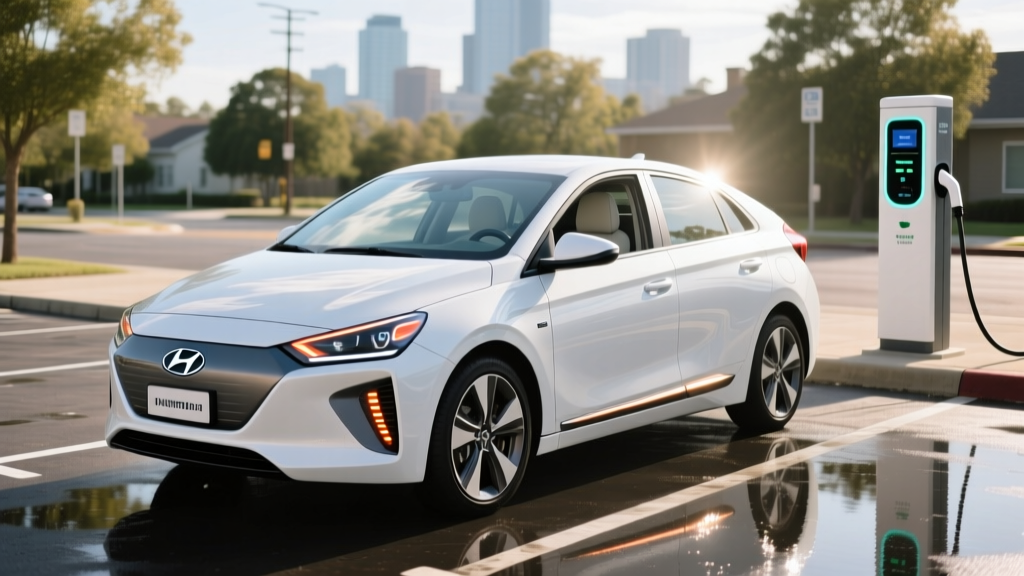
The 2019 Hyundai Ioniq Electric occupies a specific niche in the used EV market: it is one of the most energy-efficient battery-electric vehicles ever sold in the United States, yet its 124-mile EPA range limits it to a very particular use case. If you're searching for a hyundai ioniq 2019 on the pre-owned market in 2026, you're likely weighing its exceptional efficiency against its modest range and aging fast-charge hardware. This review breaks down every number that matters—from real-world range expectations and DC charging curves to used-market pricing and federal tax credit eligibility—so you can decide whether this compact hatchback earns a spot in your driveway.
Quick Verdict: Who Should Buy the 2019 Ioniq Electric?
The 2019 Ioniq Electric is a compelling used commuter EV for drivers with predictable daily routes under 80 miles round-trip and access to reliable Level 2 home charging. Its 136 MPGe combined efficiency rating means you'll spend less per mile on electricity than almost any other EV on the road. However, its 124-mile EPA range, 50 kW peak DC charging, and modest 119-horsepower output make it a poor fit for road trips, cold-climate drivers without a garage, or anyone who needs versatility beyond urban commuting. Think of it as a highly efficient electric appliance—excellent within its design envelope, frustrating outside it.
Choose the 2019 Ioniq Electric if: You commute under 40 miles each way, charge at home overnight, live in a mild climate, and want the lowest cost-per-mile EV available on the used market.
Look elsewhere if: You regularly drive over 100 miles in a day, need DC fast charging for road trips, live in a region with harsh winters, or want more than 119 horsepower.
Range and Efficiency: 124 EPA Miles, but What's Real?
The 2019 Hyundai Ioniq Electric carries a 28 kWh lithium-ion polymer battery pack (approximately 27.5 kWh usable) using NMC (nickel-manganese-cobalt) cell chemistry supplied by LG Chem. Hyundai pairs this with a 100 kW (119 hp / 218 lb-ft) permanent-magnet synchronous motor driving the front wheels. The result is an EPA-estimated range that was impressive for a mainstream compact in 2019.
EPA Estimated Range: 124 miles
Real-World Expectations:
- City / mixed driving (65°F+): 120–135 miles (the Ioniq's efficiency shines in stop-and-go traffic where regenerative braking recovers energy)
- Highway at 70 mph (65°F): 100–110 miles (aerodynamic drag hits the small battery hard)
- Cold weather (30°F, city mix): 85–100 miles (NMC chemistry loses 15–25% capacity in freezing temps, compounded by resistive cabin heating)
- Cold weather highway (30°F, 70 mph): 70–85 miles (worst-case scenario)
The Ioniq Electric has no heat pump—it uses a PTC resistive heater for cabin warmth, which draws significant power from an already small battery. Preconditioning the cabin while still plugged in at home is essential in winter.
For context, the EPA's official fuel economy data rates the 2019 Ioniq Electric at 136 MPGe combined (145 city / 125 highway), consuming just 25 kWh per 100 miles. That efficiency figure remains among the best of any EV sold in the US, rivaled only by the Tesla Model 3 and Hyundai's own later Ioniq 5. It means that even with a small battery, your electricity cost per mile is rock-bottom—roughly $0.03–$0.04 per mile at the national average residential rate of $0.16/kWh.
| Specification | Value |
|---|---|
| EPA Range | 124 miles |
| Battery Capacity (Usable) | ~27.5 kWh (NMC chemistry) |
| Motor Output | 100 kW / 119 hp / 218 lb-ft |
| 0–60 mph | ~9.3 seconds |
| Drivetrain | FWD (single motor) |
| EPA Efficiency | 136 MPGe combined (25 kWh/100mi) |
| Max DC Fast Charge | ~50 kW (CCS Combo) |
| Level 2 Charge Rate | 6.6 kW onboard charger |
| Cargo Volume | 23.0 cu ft (rear seats up) / 55.0 cu ft (folded) |
| Original MSRP | $36,595 (base) / $37,095 (Limited) |
| Battery Warranty | 8 years / 100,000 miles (original owner) |
Charging Speeds: DC Fast Charge and Home Level 2
Charging is where the 2019 Ioniq Electric shows its age most clearly. Hyundai equipped this model with a CCS Combo 1 DC fast-charging port and a peak charge rate of approximately 50 kW. On a 50 kW station, you can expect:
| Charging Level | Power / Rate | Time / Range Added |
|---|---|---|
| Level 1 (120V household) | ~1.2 kW | ~4 miles per hour; full charge ~24 hours |
| Level 2 (240V, 6.6 kW onboard) | 6.6 kW | ~23 miles per hour; 0–100% in ~4.5 hours |
| DC Fast Charge (CCS) | Peak ~50 kW | 10–80% in ~40 minutes; 80% in ~54 minutes |
A few important caveats about DC fast charging this vehicle:
- The 50 kW peak is not sustained. The charge curve tapers noticeably above 60% State of Charge (SoC). Expect an average of roughly 35–40 kW across a 10–80% session, which is why the full 10–80% takes around 40 minutes rather than the ~30 minutes a true sustained 50 kW rate would deliver.
- 50 kW is slow by 2026 standards. Modern EVs from Hyundai's own Ioniq 5 (which peaks at 240 kW on 800V architecture) make this look dated. On a road trip, you'll spend more time at chargers than you'd like.
- Cold-weather charging is slower. The Ioniq Electric lacks active battery thermal preconditioning for DC charging. If you arrive at a fast charger with a cold battery, expect peak rates closer to 30–35 kW until the pack warms through use.
For daily use, Level 2 home charging at 6.6 kW is the sweet spot. A full overnight charge from 20% to 100% takes about 3.5 hours, which is more than adequate for a commuter vehicle. A 32-amp or 40-amp Level 2 home station (such as a ChargePoint Home Flex or Emporia Vue) is the recommended setup.
Performance and Driving Dynamics
The 2019 Ioniq Electric is not a performance vehicle, and it doesn't pretend to be. The single front-mounted motor produces 119 horsepower and 218 lb-ft of torque. The instant torque delivery that characterizes all EVs gives it decent punch off the line, but the 0–60 mph time of approximately 9.3 seconds puts it firmly in economy-car territory. For comparison, a 2024 Hyundai Ioniq 5 SEL hits 60 in about 5.1 seconds.
Where the Ioniq Electric earns praise is in ride quality and refinement. The low center of gravity from the floor-mounted battery pack gives it composed handling for a compact hatchback, and road noise is well-isolated. The regenerative braking system offers adjustable levels via steering-wheel paddles, enabling a quasi-one-pedal driving experience (though it does not come to a complete stop at the strongest setting, unlike Hyundai's later models).
The front-wheel-drive layout means traction can be an issue in snow and ice, especially given the relatively narrow 205/55R16 low-rolling-resistance tires. Winter tire upgrades are strongly recommended for cold-climate owners.
Interior, Cargo, and Technology
Inside, the 2019 Ioniq Electric feels like a well-equipped compact Hyundai from its era—functional, logically laid out, but dated compared to the screen-dominant interiors of 2026 EVs.
Infotainment: The base SE trim features a 7-inch touchscreen with Apple CarPlay and Android Auto. The Limited trim upgrades to an 8-inch screen with built-in navigation, a premium Infinity audio system (8 speakers), and Hyundai's Blue Link connected services. The system is responsive enough, and the physical buttons for climate and audio are a welcome usability feature.
Driver Assistance (ADAS): The Ioniq Electric comes equipped with Hyundai SmartSense, which includes:
- Forward Collision-Avoidance Assist (FCA) with pedestrian detection
- Lane Keeping Assist (LKA)
- Blind-Spot Collision Warning (BCW)
- Rear Cross-Traffic Collision Warning (RCCW)
- Smart Cruise Control (SCC) with stop-and-go — this is a SAE Level 2 driver-assistance system, meaning you must keep your hands on the wheel and eyes on the road at all times
Cargo and passenger space:
- Rear cargo (seats up): 23.0 cubic feet
- Rear cargo (seats folded): 55.0 cubic feet
- Front headroom: 39.1 inches
- Front legroom: 42.5 inches
- Rear legroom: 35.7 inches
- Seating: 5 passengers (though the rear middle seat is tight)
There is no front trunk (frunk). The battery's placement under the rear seats and cargo floor does eat into rear-seat headroom slightly compared to the hybrid Ioniq variant, and taller passengers will notice the floor height.
Pricing, Used Market Value, and Tax Credits in 2026
The 2019 Hyundai Ioniq Electric was offered in two trims when new:
| Trim | Original MSRP | Est. Used Price (2026) |
|---|---|---|
| SE | $36,595 | $14,000 – $17,500 |
| Limited | $37,095 | $15,500 – $19,000 |
Used prices vary significantly by mileage, battery State of Health (SoH), and regional demand. A low-mileage example (under 40,000 miles) in a coastal metro will command a premium; higher-mileage units in the Midwest may sell for less. Always request a battery health report from the dealer or use an OBD-II reader with an app like Car Scanner to check remaining capacity.
Does the 2019 Ioniq Electric Qualify for the Federal EV Tax Credit?
Since the 2019 Ioniq Electric is only available as a used vehicle in 2026, the relevant incentive is the §25E Used Clean Vehicle Credit, not the §30D new-vehicle credit. Here's what you need to know per current IRS guidelines:
- Credit amount: 30% of the sale price, up to a maximum of $4,000
- Vehicle price cap: The sale price must be $25,000 or less (most used 2019 Ioniq Electrics qualify)
- Buyer income caps: Adjusted gross income must not exceed $75,000 (single), $112,500 (head of household), or $150,000 (married filing jointly)
- Vehicle age requirement: The vehicle must be at least 2 model years old (a 2019 model qualifies)
- Dealer requirement: Must be purchased from a licensed dealer (private-party sales do not qualify)
- One-time use: You can only claim the used EV credit once every 3 years
- Point-of-sale transfer: You may transfer the credit to the dealer at purchase to reduce the upfront price
On a $16,000 used 2019 Ioniq Electric SE, the 30% credit would be $4,800, but the cap limits it to $4,000. That brings your effective cost to approximately $12,000—making this one of the most affordable ways to get into a reliable, efficient EV in 2026. Consult a tax professional to confirm your personal eligibility.
Battery Longevity, Warranty, and What to Watch For
Hyundai backed the 2019 Ioniq Electric's battery with an 8-year / 100,000-mile warranty against defects and capacity loss below 70% of original capacity. For the original owner, this warranty is still active through model year 2027. However, Hyundai's battery warranty is not fully transferable to subsequent owners in most states—it typically converts to a 5-year / 60,000-mile powertrain warranty for the second owner. Verify warranty status with a Hyundai dealer using the VIN before purchasing.
Real-world degradation data from owner forums and fleet studies suggests the LG Chem NMC cells in the 2019 Ioniq Electric hold up well under moderate use. Most examples at 60,000–80,000 miles show 88–94% State of Health, which is acceptable. The liquid-cooled thermal management system (active cooling and heating) helps preserve cell health compared to passively cooled packs.
If the battery does need replacement out of warranty, expect a cost in the $5,000–$8,000 range for a refurbished pack through Hyundai or a third-party EV battery specialist. This is relatively affordable compared to larger-pack EVs, but it's still a significant expense relative to the vehicle's used value.
2019 Ioniq Electric vs. Key Competitors
In the used EV market around $14,000–$19,000, the 2019 Ioniq Electric competes with several alternatives. Here's how it stacks up:
| Vehicle | EPA Range | Battery | DC Fast Charge | Est. Used Price |
|---|---|---|---|---|
| 2019 Hyundai Ioniq Electric | 124 mi | 28 kWh NMC | 50 kW | $14K–$19K |
| 2019 Nissan LEAF (40 kWh) | 151 mi | 40 kWh NMC | 50 kW (CHAdeMO) | $13K–$17K |
| 2019 Chevrolet Bolt EV | 238 mi | 60 kWh NMC | 55 kW (CCS) | $15K–$20K |
| 2019 Volkswagen e-Golf | 125 mi | 35.8 kWh NMC | 50 kW (CCS) | $14K–$18K |
The 2019 Chevrolet Bolt EV is the strongest competitor on range and versatility—238 EPA miles from a 60 kWh pack makes it a genuinely usable single-car EV. If your budget can stretch to $17,000–$20,000, the Bolt is the more capable vehicle. However, the Ioniq Electric counters with superior efficiency (the Bolt averages 28 kWh/100mi vs the Ioniq's 25) and a more refined interior.
The Nissan LEAF offers more range but uses the CHAdeMO charging standard, which has lost the infrastructure war to CCS and NACS in North America. CHAdeMO chargers are increasingly scarce on newer public charging stations, making the LEAF a riskier long-term bet for public charging access.
Pros
- Best-in-class efficiency (136 MPGe / 25 kWh/100mi)
- Lowest electricity cost per mile of any used EV in this price range
- Refined ride quality and quiet cabin
- Comprehensive ADAS suite standard (Smart Cruise, LKA, FCA)
- Apple CarPlay / Android Auto standard
- Liquid-cooled battery with good long-term SoH data
- Eligible for up to $4,000 used EV tax credit
- Affordable used pricing ($14K–$19K)
Cons
- Only 124 miles EPA range (under 90 in cold weather)
- 50 kW DC fast charging is slow for 2026 standards
- No battery preconditioning for DC charging
- Modest 119 hp; 9.3-second 0–60 time
- Resistive cabin heater drains battery in winter
- Small rear seat and limited cargo space
- CCS charging infrastructure reliability varies by network
- Battery warranty may not fully transfer to second owner
Frequently Asked Questions
What is the real-world range of the 2019 Hyundai Ioniq Electric?
In mild weather with mixed city/highway driving, expect 110–130 miles. Highway-only driving at 70 mph drops this to roughly 100–110 miles. In freezing temperatures, plan for 85–100 miles in the city and as low as 70–85 miles on the highway. The small 28 kWh battery leaves little margin for error on longer trips.
How fast does it charge at home and on the road?
At home on a 240V Level 2 charger, the Ioniq Electric charges at 6.6 kW, adding about 23 miles of range per hour and reaching a full charge from empty in roughly 4.5 hours. On a DC fast charger, it peaks around 50 kW, achieving a 10–80% charge in approximately 40 minutes. This is adequate for overnight home charging but slow for road-trip stops.
Is the 2019 Ioniq Electric worth buying in 2026?
Yes, but only for the right buyer. If you need a dedicated commuter car for trips under 50 miles each way and can charge at home, the Ioniq Electric offers unbeatable efficiency and a very low effective price (especially after the $4,000 used EV tax credit). If you need versatility for road trips, more range, or faster charging, spend more on a used Chevrolet Bolt EV or look for a newer Ioniq 5.
Does the 2019 Ioniq Electric qualify for any tax credits?
As a used vehicle, it does not qualify for the §30D new EV credit. However, it is eligible for the §25E Used Clean Vehicle Credit—30% of the sale price up to $4,000, provided you buy from a licensed dealer for $25,000 or less and your income falls below IRS thresholds ($75K single / $150K married filing jointly). See the IRS used vehicle credit page for full details.
How long will the battery last?
Based on real-world degradation data, the 28 kWh NMC pack in the 2019 Ioniq Electric typically retains 88–94% capacity at 60,000–80,000 miles. With proper care (avoiding frequent 100% charges, minimizing DC fast charging in extreme heat, and using scheduled charging to reduce time at high SoC), the battery should remain functional well past 100,000 miles. The original 8-year/100,000-mile warranty may still apply depending on ownership history.
Can I road-trip the 2019 Ioniq Electric?
Technically yes, but it requires significant planning. With 100–110 real-world highway miles and 40-minute DC fast-charge stops, a 300-mile trip will require at least two charging stops totaling over an hour of downtime. The Ioniq Electric is best suited as a commuter and city car; pair it with a gas or hybrid vehicle for longer trips.
Does the 2019 Ioniq Electric have Apple CarPlay and Android Auto?
Yes. Both Apple CarPlay and Android Auto are standard on all trims via a wired USB connection. The SE trim uses a 7-inch display; the Limited trim uses an 8-inch screen with integrated navigation.
Sources: EPA Fuel Economy — 2019 Hyundai Ioniq Electric, IRS Used Clean Vehicle Credit (§25E), Hyundai Motor America specifications.