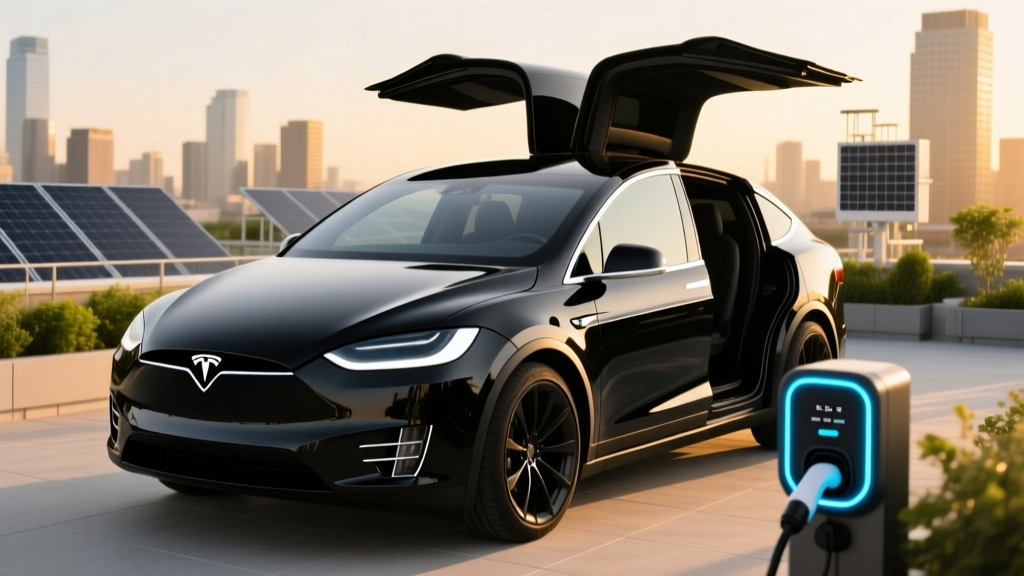
The 2018 Tesla Model X occupies a strange space in the used EV market. It's a full-size, three-row electric SUV with falcon-wing rear doors, a massive 100 kWh battery option, and access to Tesla's Supercharger network — all for a fraction of its original $100,000+ sticker. But buying a six-year-old luxury EV requires clear eyes. Battery degradation, out-of-warranty repair risk, and outdated hardware are real factors. This review breaks down exactly what the 2018 Model X delivers in range, charging, performance, and daily usability so you can decide if it's a smart used buy or a money pit waiting to happen.
2018 Tesla Model X Specs at a Glance
| Specification | 75D | 100D | P100D |
|---|---|---|---|
| EPA Range | 238 mi | 295 mi | 289 mi |
| Battery (usable) | ~75 kWh (NMC) | ~100 kWh (NMC) | ~100 kWh (NMC) |
| 0–60 mph | 5.2 sec | 4.7 sec | 2.9 sec (Ludicrous) |
| Horsepower | ~518 hp | ~518 hp | ~762 hp |
| Drivetrain | Dual-Motor AWD | Dual-Motor AWD | Dual-Motor AWD |
| Efficiency (MPGe) | 93 MPGe | 97 MPGe | 89 MPGe |
| Peak DC Charge Rate | ~120 kW | ~120 kW | ~120 kW |
| Original MSRP | ~$79,500 | ~$96,000 | ~$140,000+ |
| Battery Warranty | 8 yr / 150,000 mi | 8 yr / 150,000 mi | 8 yr / 150,000 mi |
Note: The 2018 Model X was offered exclusively with NMC (nickel-manganese-cobalt) battery chemistry. Tesla's LFP batteries were not available in the Model X in this model year. Source: fueleconomy.gov
Real-World Range: What to Actually Expect
The 100D's EPA rating of 295 miles sounds generous for a 5,000+ lb SUV. In practice, plan for 240–265 miles in mixed driving, 220–240 miles at sustained 75 mph highway speeds, and as low as 190–210 miles in freezing temperatures with cabin heat running. The 75D's 238-mile EPA figure translates to roughly 180–200 miles on the highway in winter.
The Model X's boxy shape and 2,400+ lb curb weight per axle work against it at highway speeds. Efficiency drops noticeably above 70 mph — expect around 38–42 kWh/100mi on the highway versus the EPA combined rating of roughly 35 kWh/100mi for the 100D. Cold weather hits the NMC pack hard: a 15–25% range reduction is typical below 32°F, even with Tesla's battery preconditioning.
If you're shopping for a 2018 Model X today, pay attention to the vehicle's current State of Health (SoH). A 100D with 80,000 miles and 90% SoH effectively has about 90 kWh usable — translating to roughly 265 miles EPA-equivalent when new, or around 220 miles in real-world conditions. Always request a battery health reading or third-party diagnostic before purchase.
Charging Speed and Infrastructure
The 2018 Model X uses Tesla's proprietary connector (now being rebranded as NACS) and charges on the older V2 Supercharger architecture at a peak of roughly 120 kW. It cannot natively use V3/V4 Superchargers at their full 250+ kW rates — the onboard charge system caps around 120 kW regardless of stall capability.
| Charging Level | Power / Rate | Time or Miles Added |
|---|---|---|
| Level 1 (120V household) | ~1.4 kW | ~3–4 miles/hour |
| Level 2 (240V, 48A home charger) | ~11.5 kW | ~30–34 miles/hour |
| DC Fast Charge (V2 Supercharger) | Peak ~120 kW | 10–80% in ~40–45 min |
| DC Fast Charge (CCS adapter + 350 kW station) | Limited to ~120 kW | 10–80% in ~40–45 min |
Home charging is where the Model X shines for daily use. A Tesla Wall Connector or equivalent Level 2 unit on a 60A circuit delivers a full overnight charge. For most owners, plugging in at home means starting every day with a full battery — the 10–80% DC fast-charge time only matters on road trips.
One practical note: Tesla sells a CCS adapter (approximately $250) that lets the 2018 Model X charge at non-Tesla DC fast chargers like Electrify America. However, the vehicle's ~120 kW peak cap means you won't see faster speeds even at 350 kW stalls. The charge curve tapers significantly above 60% SoC — expect speeds to drop to 60–70 kW by the time you reach 70%, and below 30 kW past 90%.
Performance and Driving Dynamics
Even the "base" 75D Model X hits 60 mph in 5.2 seconds with 518 combined horsepower from its dual motors. The P100D in Ludicrous mode is absurd for a three-row SUV: 2.9 seconds to 60 mph with 762 hp. Instant torque delivery and a low center of gravity (battery pack under the floor) make it feel surprisingly planted in corners, though the 5,400+ lb curb weight is noticeable during hard braking and quick direction changes.
The adaptive air suspension was standard on all 2018 Model X trims, offering adjustable ride height and automatic lowering at highway speeds for efficiency. Regenerative braking is strong enough for near one-pedal driving in most conditions, though the 2018 firmware doesn't offer the adjustable regen levels found in newer Teslas.
All 2018 Model X vehicles shipped with Hardware 2.5 for Autopilot, Tesla's SAE Level 2 driver-assistance system. This includes adaptive cruise control, lane-keeping, and automatic lane changes. It is not self-driving — the driver must remain fully engaged with hands on the wheel and eyes on the road. Some 2018 models may have received hardware upgrades for Full Self-Driving (Supervised) capability, but verify the specific vehicle's hardware generation before relying on FSD features.
Tesla Autopilot and FSD (Supervised) on the 2018 Model X are SAE Level 2 systems. The driver is responsible for all vehicle operation at all times. These systems can struggle with construction zones, faded lane markings, heavy rain, and complex intersections. Never treat them as autonomous driving.
Interior, Cargo, and Practicality
The Model X offers seating for five, six, or seven passengers depending on configuration. The six-seat layout with second-row captain's chairs is the most comfortable, while the seven-seat option adds a third-row bench best suited for children or short trips.
- Cargo (behind 3rd row): ~21.8 cu ft
- Cargo (3rd row folded): ~77.5 cu ft
- Cargo (all rear rows folded): ~88.1 cu ft
- Front trunk (frunk): ~6.6 cu ft
- Second-row legroom: ~38.4 inches
- Third-row legroom: ~32.7 inches
The falcon-wing rear doors are the Model X's most polarizing feature. They open upward, providing excellent access to the second and third rows in tight parking spaces — but they're slow to operate (5–7 seconds), can struggle in heavy rain, and are expensive to repair if the actuators or sensors fail. Many long-term owners report at least one falcon-wing service visit during ownership.
The 17-inch center touchscreen runs Tesla's infotainment software, which receives over-the-air updates. In 2018 trim, the hardware is older (MCU1 or early MCU2 depending on build date) — MCU1 units are noticeably sluggish by 2026 standards and may have been recalled for eMMC memory failure. Verify whether the vehicle received the free MCU2 upgrade from Tesla.
Pricing, Tax Credits, and Used-Buying Economics
As of early 2026, a used 2018 Tesla Model X trades between roughly $28,000 and $55,000 depending on trim, mileage, condition, and battery health. The P100D commands a premium, while high-mileage 75D examples sit at the bottom of the range.
| Trim | Used Price Range (2026) | Used EV Tax Credit (§25E) | Effective Price |
|---|---|---|---|
| 75D | $28,000–$36,000 | Up to $4,000 | $24,000–$32,000 |
| 100D | $34,000–$44,000 | Up to $4,000 | $30,000–$40,000 |
| P100D | $42,000–$55,000 | Up to $4,000 | $38,000–$51,000 |
Tax credit details: The 2018 Model X is not eligible for the new-vehicle §30D credit (which has MSRP caps of $80,000 for SUVs, income limits, and battery-sourcing requirements — see IRS §30D rules). However, it may qualify for the §25E used clean vehicle credit of up to $4,000 (30% of sale price, capped at $4,000). Requirements include: sale price under $25,000 (note: many 2018 Model X examples exceed this cap), buyer income under $75,000 single / $150,000 joint, purchase from a licensed dealer, and the vehicle must be at least two model years old. Consult a tax professional for your specific eligibility.
Insurance costs: Expect $2,400–$4,000 annually for a 2018 Model X, depending on your location, driving record, and coverage. Tesla vehicles carry higher premiums due to repair costs — get quotes before committing to a purchase.
Battery Warranty and Degradation
Tesla's battery and drive unit warranty for the 2018 Model X covers 8 years or 150,000 miles (whichever comes first), with a capacity retention threshold of 70%. For a 2018 model, that warranty window expires in 2026 at the latest based on age alone — meaning most 2018 Model X vehicles are at or past warranty expiration.
NMC battery degradation in the 2018 Model X typically follows this pattern:
- Year 1–2: 3–5% loss (initial drop)
- Year 3–5: ~1% per year
- Year 6–8: ~0.5–1% per year, totaling 8–15% loss
A 2018 Model X 100D with 70,000 miles might show 88–93% SoH — translating to roughly 260–275 EPA-equivalent miles when fully charged. This is acceptable for most use cases, but factor in continued 1% annual degradation going forward.
If the battery fails outside warranty, replacement costs range from $15,000 to $22,000 for a refurbished pack through Tesla, or potentially less through third-party EV repair shops. This is a critical risk to budget for when buying any out-of-warranty EV.
Pros, Cons, and Verdict
- Massive 100 kWh battery delivers 240+ real-world miles even with degradation
- Dual-motor AWD with strong performance across all trims
- Access to Tesla Supercharger network (most reliable DC network in the US)
- Three-row seating with generous cargo space
- Air suspension and premium ride quality
- OTA software updates still supported
- Falcon-wing doors are a known reliability and repair-cost risk
- Out-of-warranty battery replacement could cost $15,000–$22,000
- DC fast charging capped at ~120 kW (slow vs. modern 250+ kW EVs)
- Older MCU1 infotainment hardware may be sluggish or already replaced
- High insurance premiums ($2,400–$4,000/year)
- Used EV tax credit (§25E) has a $25,000 sale-price cap many won't meet
Who Should Buy the 2018 Tesla Model X?
- You need a three-row electric SUV and can't stretch to a new Model X ($80K+) or Rivian R1S
- You have home Level 2 charging and most daily driving is under 100 miles
- You value Supercharger network access for road trips
- You can budget $2,000–$3,000/year for potential out-of-warranty repairs
- You need fast DC charging for frequent long-distance travel (modern EVs charge 2x faster)
- You want a warranty safety net — consider a certified pre-owned 2021+ Model X or new Hyundai Ioniq 9
- Your budget can't absorb a potential $15,000+ battery replacement
- You only need two rows — a used Model Y or Model 3 offers lower risk and cost
The 2018 Model X 100D remains the sweet spot: the best range, reasonable performance, and the lowest used pricing relative to its original MSRP. Verify battery SoH, confirm MCU2 status, check falcon-wing service history, and get an insurance quote before signing. For the right buyer with home charging and realistic expectations about repair risk, it's still a compelling electric SUV at the right price.
Frequently Asked Questions
What is the real-world range of the 2018 Tesla Model X?
The 100D achieves roughly 240–265 miles in mixed real-world driving, 220–240 miles at highway speeds, and 190–210 miles in freezing weather. The 75D delivers 180–210 miles depending on conditions. Battery degradation (typically 8–15% by year 6–8) further reduces these figures.
How fast does the 2018 Model X charge at home and on DC fast chargers?
On a Level 2 home charger (240V, 48A), the Model X adds approximately 30–34 miles per hour, fully charging overnight. On DC fast chargers (Tesla V2 Supercharger or CCS adapter), it peaks at ~120 kW, reaching 10–80% in about 40–45 minutes. It cannot utilize newer V3/V4 Supercharger speeds above 120 kW.
Does the 2018 Model X qualify for any federal EV tax credit?
It does not qualify for the new-vehicle §30D credit. It may qualify for the §25E used clean vehicle credit of up to $4,000, but only if the sale price is under $25,000, buyer income is under $75,000 (single) or $150,000 (joint), and the purchase is through a licensed dealer. Many 2018 Model X examples exceed the $25,000 price cap. Consult a tax professional and review IRS §25E guidelines.
Is the 2018 Model X worth buying vs. competitors like the Jaguar I-PACE or Audi e-tron?
The Model X 100D offers more range (240+ real-world miles vs. ~200 for the 2019 I-PACE and ~190 for the 2019 e-tron), Supercharger network access, and more cargo space. The I-PACE and e-tron offer better build quality, quieter cabins, and more conventional door designs. If range and charging infrastructure are your priorities, the Model X wins. If build quality and reliability are paramount, consider the alternatives — but verify their battery health and charging access equally.
What are the biggest risks of buying a used 2018 Model X?
The top risks are: (1) out-of-warranty battery replacement at $15,000–$22,000, (2) falcon-wing door actuator or sensor failures ($1,500–$3,000+ per door), (3) air suspension component wear, and (4) higher-than-average insurance costs. A pre-purchase inspection by a Tesla-qualified independent shop is strongly recommended.
Can I still get over-the-air updates on a 2018 Model X?
Yes. Tesla continues to push OTA software updates to 2018 Model X vehicles, though feature availability depends on hardware generation. Vehicles with MCU2 and Hardware 2.5 or 3.0 receive the most current software. MCU1-equipped vehicles may have limited functionality unless upgraded.