Quick Verdict: A Used Luxury EV Bargain With Caveats
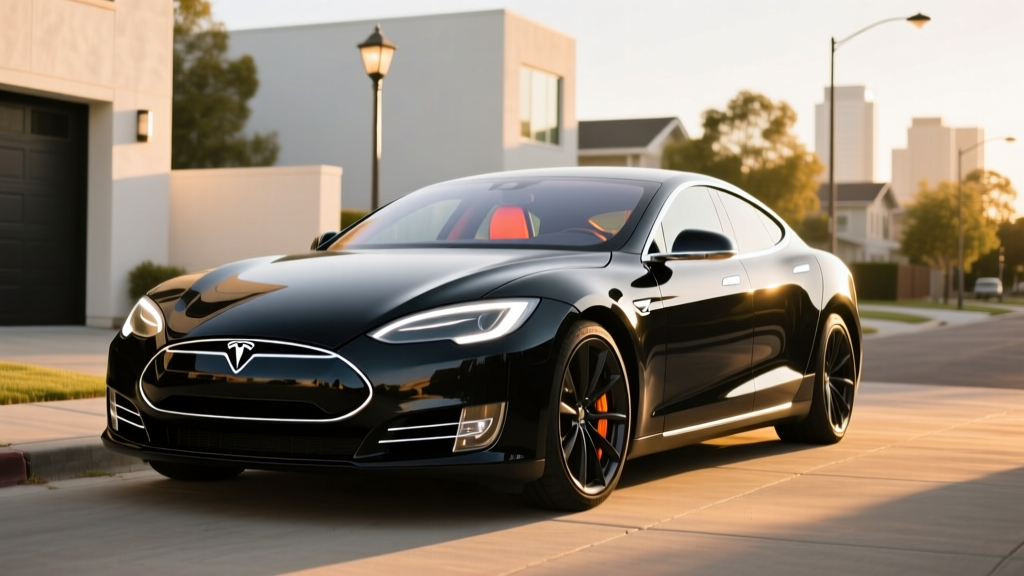
The 2018 Tesla Model S 75D occupies a specific niche in the used EV market: a dual-motor, all-wheel-drive luxury sedan with respectable acceleration and decent range at a price that has depreciated significantly from its original $74,500+ MSRP. In 2026, well-maintained examples trade between $22,000 and $32,000 depending on mileage, condition, and battery health — making the 75D one of the most affordable entries into the Tesla Supercharger network with premium sedan comfort.
But buying a 6-to-8-year-old EV demands scrutiny that a new-car purchase does not. Battery degradation, outdated charging hardware, expired warranties, and the absence of modern efficiency features like a heat pump all factor into total ownership cost. This review breaks down every number that matters.
Performance: 2018 Model S 75D 0-60 and Drivetrain
The headline number for most shoppers searching for this specific model is acceleration. The 2018 Model S 75D delivers a 0-60 mph time of 4.2 seconds (Tesla's published figure), with some independent tests clocking it between 4.0 and 4.4 seconds depending on tire condition, surface temperature, and state of charge.
The dual-motor all-wheel-drive layout produces a combined 328 horsepower (242 kW) and approximately 325 lb-ft of torque. Unlike the rear-wheel-drive 75 variant (0-60 in 4.3 sec), the 75D's front motor provides traction advantages in rain and light snow, plus marginal efficiency gains from regenerative braking on both axles.
| Metric | Value |
|---|---|
| 0-60 mph | 4.2 seconds |
| Top Speed | 140 mph |
| Horsepower (combined) | 328 hp (242 kW) |
| Torque (combined) | ~325 lb-ft |
| Drivetrain | Dual-motor AWD |
| Drive Modes | Chill / Sport |
For context, the 2018 BMW 540i xDrive — a contemporary gas-powered competitor — hits 60 mph in 4.8 seconds. The 75D's instant torque delivery makes it feel quicker than the raw number suggests in city driving, though it lacks the sustained high-speed punch of the 100D or P100D variants.
Battery, Range, and Real-World Efficiency
The 2018 Model S 75D uses a 75 kWh gross battery pack (approximately 72.5 kWh usable) with NMC (nickel-manganese-cobalt) chemistry. Tesla did not offer LFP packs in the Model S lineup during this era — LFP was reserved for the standard-range Model 3 beginning in 2021.
EPA Estimated Range: 259 miles
Real-World Highway (70 mph, moderate climate): ~220–235 miles
Real-World Highway (cold weather, below 32°F): ~180–200 miles
City/Commuter Driving (with regen): ~245–260 miles
The 75D lacks a heat pump (Tesla introduced heat pumps with the 2021 Model S refresh). In freezing temperatures, cabin heating draws directly from the traction battery via resistive elements, consuming 3–5 kW continuously and reducing range by 25–35% compared to the EPA sticker.
Efficiency ratings from fueleconomy.gov list the 2018 Model S 75D at 103 MPGe combined (101 city / 106 highway), translating to approximately 33 kWh per 100 miles. This is notably less efficient than modern EVs — the 2025 Hyundai Ioniq 6 achieves 140 MPGe — reflecting the older powertrain's heavier curb weight (~4,800 lbs) and less advanced inverter technology.
Charging Speeds: DC Fast, Level 2, and Supercharger Access
This is where the 2018 Model S 75D shows its age most clearly. The vehicle uses Tesla's proprietary connector (now being retrofitted with NACS adapters for non-Tesla networks) and charges at rates that were competitive in 2018 but lag behind 2025–2026 platforms.
| Charging Level | Max Rate | Speed / Time |
|---|---|---|
| DC Fast Charge (Supercharger V2) | ~120 kW peak | 10–80% in ~40 minutes |
| DC Fast Charge (Supercharger V3/V4) | ~120 kW (hardware-limited) | No benefit over V2; same ~40 min 10–80% |
| Level 2 (Tesla Wall Connector) | 11.5 kW (48A) | ~34 miles of range per hour |
| Level 2 (Standard 240V/32A outlet) | 7.7 kW | ~23 miles of range per hour |
| Level 1 (120V household) | ~1.4 kW | ~4 miles of range per hour |
Charge curve reality: The 75D peaks at approximately 120 kW only when the battery is between 10–30% state of charge. Above 50% SoC, the rate tapers significantly — dropping to ~60 kW by 70% and ~30 kW by 85%. This means the 10–80% time of roughly 40 minutes is realistic, but charging from 80–100% can add another 30+ minutes. Plan road-trip stops accordingly: leaving at 80% SoC is far more time-efficient than topping off completely.
The 75D cannot access CCS or CHAdeMO networks without a third-party adapter (such as the Setec CCS adapter, ~$250–$350), which unlocks Electrify America and other non-Tesla DC networks. Tesla's Magic Dock adapter at some Supercharger stalls also enables CCS vehicles to charge, but this does not expand the 75D's options since it already uses Tesla's native connector.
Interior, Cargo, and Technology
The 2018 Model S interior was already controversial at launch — minimalist to the point of spartan, with a portrait-oriented 17-inch touchscreen controlling virtually every vehicle function. Material quality improved over the 2012–2016 models (synthetic leather, better fit-and-finish), but it does not match a contemporary Mercedes E-Class or BMW 5 Series for perceived luxury.
| Dimension | Measurement |
|---|---|
| Passenger Volume | 94 cu ft |
| Front Legroom | 42.7 in |
| Rear Legroom | 35.4 in |
| Cargo (rear trunk) | 26.3 cu ft |
| Cargo (front trunk / frunk) | 5.3 cu ft |
| Cargo (rear seats folded) | 58.1 cu ft |
| Seating Capacity | 5 (standard) or 7 (optional rear-facing jump seats) |
Tech features (2018 spec):
- 17-inch capacitive touchscreen with navigation, media, and vehicle controls
- Over-the-air (OTA) software updates — still actively supported by Tesla in 2026
- Basic Autopilot (standard): traffic-aware cruise control, autosteer within lane markings
- Enhanced Autopilot (optional, ~$5,000 at purchase): auto lane change, autosteer on highways, self-park, Summon
- Full Self-Driving capability (optional, ~$3,000–$8,000 depending on purchase date): traffic light and stop sign recognition, city street autosteer — SAE Level 2 only, driver must remain fully engaged
- HEPA air filtration with "Bioweapon Defense Mode"
- Panoramic glass roof (fixed, no shade — can cause cabin heat in summer)
Notable drawbacks for 2026 buyers:
- No Apple CarPlay or Android Auto — Tesla's proprietary infotainment only
- No heat pump — resistive cabin heating significantly reduces cold-weather range
- Older MCU1 (Media Control Unit) in early 2018 builds may be sluggish; Tesla offered a paid upgrade to MCU2 ($1,500–$2,500) — verify which unit the car has
- No USB-C ports (USB-A only)
- Rear seat comfort is adequate but not limousine-class; headroom is limited by the sloping roofline
Pricing, Tax Credits, and Total Ownership Cost
The 2018 Model S 75D originally carried a base MSRP of approximately $74,500 (before the $1,200 destination fee), with typical as-tested prices reaching $80,000–$90,000 with Enhanced Autopilot, premium interior, and other options.
As of early 2026, used-market pricing for the 75D ranges as follows:
| Condition / Mileage | Typical Price Range |
|---|---|
| Excellent, under 40,000 mi | $28,000–$32,000 |
| Good, 40,000–80,000 mi | $24,000–$28,000 |
| Fair, 80,000–120,000 mi | $20,000–$24,000 |
| High mileage / cosmetic issues | $16,000–$20,000 |
Buying from a dealer? The 2018 Model S 75D may qualify for the federal used clean vehicle credit under IRS §25E — up to $4,000 or 30% of the sale price (whichever is less). Requirements as of 2026:
- Sale price must be $25,000 or less (this eliminates most low-mileage examples)
- Buyer income caps: $75,000 single / $112,500 head of household / $150,000 joint (MAGI)
- Vehicle must be at least 2 model years old (2018 qualifies)
- Must purchase from a licensed dealer (private-party sales excluded)
- Credit is non-refundable but can be transferred to the dealer as a point-of-sale discount
Ongoing ownership costs to budget for:
- Insurance: $1,800–$2,800/year depending on state, driving record, and coverage level (EVs generally carry higher premiums)
- Electricity (home charging at $0.14/kWh): ~$4.60 per 100 miles, or roughly $690/year at 15,000 miles
- Supercharging (road trips at ~$0.35/kWh): ~$11.55 per 100 miles
- Tires: $800–$1,400 per set (the 75D's weight and torque wear tires faster than gas sedans; expect 25,000–35,000 miles per set)
- Cabin air filter: $50–$100 every 2–3 years
- Brake fluid flush: $150–$200 every 2 years
- 12V battery replacement: $300–$500 every 3–5 years (the auxiliary battery still requires periodic replacement)
Battery Warranty and Degradation: What to Expect at 6–8 Years
The 2018 Model S 75D shipped with Tesla's battery and drive unit warranty: 8 years or 120,000 miles (whichever comes first), with a guaranteed minimum capacity retention of 70%. For most 2018 examples, this warranty expired in 2026 or will expire soon based on the date-of-delivery clock.
Observed degradation data: Based on aggregated owner reports and fleet data, NMC packs in the 75D typically show:
- Year 1–2: 2–4% capacity loss (initial settling)
- Year 3–5: Gradual linear loss of ~1% per year
- Year 6–8: Total degradation of 8–15% from original capacity
A 75D with 12% degradation would retain roughly 228 miles of its original 259-mile EPA range — adequate for most commutes but noticeable on road trips. Before purchasing, check the battery health through the car's service menu or request a Tesla service center diagnostic.
Out-of-warranty battery replacement cost: $12,000–$18,000 for a refurbished or new pack through Tesla, or $8,000–$14,000 through independent EV shops. This is the single largest financial risk of buying a used Model S and should be factored into your purchase budget — ideally, negotiate the price down to leave a $10,000 reserve.
How the 75D Compares to Key Alternatives
| Attribute | 2018 Model S 75D | 2019 Model 3 LR AWD | 2019 Jaguar I-PACE | 2019 Audi e-tron |
|---|---|---|---|---|
| EPA Range | 259 mi | 310 mi | 234 mi | 204 mi |
| 0-60 mph | 4.2 sec | 4.4 sec | 4.5 sec | 5.7 sec |
| Peak DC Charge | ~120 kW | ~170 kW | ~105 kW | ~150 kW |
| Battery (kWh) | 75 (NMC) | 75 (NMC/NCA) | 90 (NMC) | 95 (NMC) |
| Cargo Space | 31.6 cu ft total | 15 cu ft trunk | 23.2 cu ft | 28.5 cu ft |
| Supercharger Access | Native | Native | Adapter needed | Adapter needed |
| Heat Pump | No | No | Yes | Yes |
Choose the Model S 75D if: You want maximum interior space, the largest cargo capacity in this price bracket, native Supercharger access, and sedan prestige at a steep discount. It's ideal for commuters with home charging who take 2–3 road trips per year within the Supercharger network.
Choose the Model 3 Long Range instead if: Range is your top priority (310 mi EPA vs. 259 mi), you want faster DC charging, and you don't need the Model S's extra cabin and trunk space.
Choose the Jaguar I-PACE or Audi e-tron if: Build quality, ride refinement, and dealer service infrastructure matter more than range and charging speed. Both offer heat pumps for better cold-weather efficiency, but sacrifice Supercharger convenience.
Frequently Asked Questions
What is the real-world range of the 2018 Model S 75D?
Expect 220–235 miles on the highway at moderate temperatures, 245–260 miles in city driving with regenerative braking, and 180–200 miles in cold weather (below freezing). The EPA sticker of 259 miles is achievable only in ideal conditions — moderate climate, mixed driving, and conservative speeds.
How fast does the 2018 Model S 75D charge?
On a Tesla Supercharger (V2 or V3), it peaks at approximately 120 kW and charges from 10–80% in about 40 minutes. On a home Level 2 charger at 11.5 kW (48A Tesla Wall Connector), a full charge takes roughly 7–8 hours, adding about 34 miles of range per hour.
Does the 2018 Model S 75D qualify for any federal tax credit?
Not the §30D new-vehicle credit. However, if you buy from a dealer for $25,000 or less and meet income requirements ($75K single / $150K joint), you may qualify for the §25E used clean vehicle credit of up to $4,000. Check current rules at IRS.gov and consult a tax professional.
Is the 2018 Model S 75D worth buying in 2026?
Yes, for the right buyer. If you find a well-maintained example with under 80,000 miles, verified battery health above 88%, and a price under $26,000, it offers luxury-sedan space, 4.2-second acceleration, and Supercharger access at a fraction of its original cost. The main risks are out-of-warranty battery replacement ($12K–$18K), aging suspension components, and the lack of a heat pump for cold-climate buyers.
What are the biggest problems with the 2018 Model S 75D?
Common issues reported by owners include: MCU1 screen delamination or failure (verify MCU2 upgrade), door handle mechanism failures ($400–$800 per handle), air suspension compressor wear at higher mileages ($1,500–$3,000 per corner), and panoramic roof creaking. Tesla service costs are above average for the luxury segment.
Can the 2018 Model S 75D use non-Tesla chargers?
Natively, no — it uses Tesla's proprietary connector. However, third-party CCS adapters (Setec, ~$300) allow charging at Electrify America and other CCS networks. As Tesla's Supercharger network increasingly opens to other brands via Magic Dock, the proprietary connector advantage is narrowing, but 75D owners still have the widest DC fast-charging access of any used EV in this price range.