Quick Verdict: The 2018 Model 3 at a Glance
The 2018 Tesla Model 3 was the vehicle that brought electric mobility to the mass market. Eight years later, it remains one of the most common used EVs on the road — and one of the most practical entry points into Tesla ownership. If you're shopping for a 2018 Tesla Model 3 on the used market in 2026, you're likely looking at a vehicle with 60,000 to 100,000 miles on the odometer, priced between $14,000 and $22,000 depending on trim, condition, and battery health.
The 2018 Model 3 came in three primary configurations: the Standard Range (rear-wheel drive), the Mid Range, and the Long Range (available in RWD or Dual Motor AWD). The Long Range variant is the one most buyers pursue, thanks to its 310-mile EPA range — still competitive with many new EVs sold today. But buying an eight-year-old EV requires careful attention to battery degradation, software version support, charging hardware, and the nuances of the used-EV federal tax credit.
This review covers every spec, real-world expectation, and ownership consideration you need before signing on a used 2018 Model 3.
| Spec | Standard Range RWD | Mid Range RWD | Long Range RWD | Long Range Dual Motor AWD |
|---|---|---|---|---|
| EPA Range | 220 mi | 264 mi | 310 mi | 310 mi |
| Battery (usable) | ~50 kWh | ~62 kWh | ~75 kWh | ~75 kWh |
| Chemistry | NMC 2170 | NMC 2170 | NMC 2170 | NMC 2170 |
| 0-60 mph | 5.6 sec | 5.5 sec | 5.1 sec | 4.5 sec |
| Horsepower | 271 hp | 271 hp | 271 hp | 346 hp |
| Drivetrain | RWD | RWD | RWD | AWD (Dual Motor) |
| Efficiency (MPGe) | 130 MPGe | 130 MPGe | 130 MPGe | 125 MPGe |
| Efficiency (kWh/100mi) | 26 kWh | 26 kWh | 26 kWh | 27 kWh |
| Max DC Fast Charge | ~120 kW | ~120 kW | ~145 kW | ~145 kW |
| 10-80% DC Time | ~35 min | ~40 min | ~40 min | ~40 min |
| Level 2 Home Charge | 32A / 7.7 kW | 32A / 7.7 kW | 48A / 11.5 kW | 48A / 11.5 kW |
| Original MSRP | $35,000 | $44,000 | $49,000 | $54,000 |
| Battery Warranty | 8 yr / 100,000 mi | 8 yr / 120,000 mi | 8 yr / 120,000 mi | 8 yr / 120,000 mi |
Real-World Range: What to Actually Expect
EPA Sticker: 310 miles
Real-World Highway (70 mph, moderate temps): ~255–275 miles
Real-World City/Mixed: ~280–300 miles
Cold Weather (below 30°F): ~200–230 miles (30–35% reduction typical for NMC chemistry without heat pump)
The 2018 Model 3 Long Range carries approximately 75 kWh of usable battery capacity using Tesla's 2170-format NMC (nickel-manganese-cobalt) cells. On the EPA combined cycle, it achieves 310 miles. But EPA testing includes substantial city driving, where regenerative braking recaptures energy and speeds stay low.
On a sustained 70 mph highway run in 65–75°F weather, expect 255 to 275 miles of practical range before you'd want to stop and charge. The Model 3's efficiency — roughly 26 kWh per 100 miles combined — was class-leading in 2018 and still holds up. For context, the 2024 Hyundai Ioniq 6 SE Long Range achieves 361 miles but uses an 84 kWh battery to do it.
Cold weather is the 2018 Model 3's Achilles' heel. Unlike 2021-and-later Model 3s equipped with a heat pump, the 2018 model uses a resistive PTC heater for cabin warmth. This draws significant power from the traction battery. In sub-freezing temperatures, range can drop 30–35%, and DC fast charging speeds will be severely limited unless you precondition the battery by navigating to a Supercharger in the car's navigation system before arriving.
Battery degradation note: An eight-year-old NMC pack with 80,000 miles typically retains 85–92% of its original capacity, depending on charging habits. Owners who frequently charged to 100% and used DC fast charging exclusively will see more degradation than those who kept daily charges between 20–80%. Before buying, check the car's battery health reading in the service menu or request a third-party diagnostic. A car showing 88% state of health (SoH) on a Long Range pack still offers roughly 273 EPA-equivalent miles when new-range conditions apply.
Charging Speeds: DC Fast, Level 2, and Level 1
| Charging Level | Connector | Max Power (kW) | Speed (miles/hour) | Typical Use Case |
|---|---|---|---|---|
| Level 1 (120V household) | NACS (Tesla) | 1.4 kW | ~5 mi/hr | Emergency / overnight trickle |
| Level 2 (240V home) | NACS (Tesla) | 11.5 kW (48A) LR / 7.7 kW (32A) SR | ~37 mi/hr (LR) / ~25 mi/hr (SR) | Daily home charging |
| DC Fast Charge | NACS (Tesla Supercharger) | 145 kW peak (LR) / 120 kW peak (SR) | ~200+ mi/hr at peak | Road trips |
| CCS Adapter (DC) | NACS-to-CCS adapter | ~120 kW (adapter-limited) | ~170 mi/hr at peak | Non-Tesla networks |
The 2018 Model 3 uses Tesla's proprietary connector (now standardized as NACS — North American Charging Standard). It does not natively have a CCS port. However, Tesla sells an official NACS-to-CCS adapter (approximately $175) that enables charging on Electrify America, EVgo, and other CCS networks. This is essential for road trips outside the Supercharger network.
DC fast-charging curve reality: The Long Range peaks at roughly 145 kW, but only between approximately 10–30% state of charge. From 30–60%, the rate tapers to around 100 kW, and above 80% it drops below 40 kW. A 10–80% session takes approximately 40 minutes at a V2 or V3 Supercharger. At a V3 Supercharger (250 kW capable), the 2018 Model 3 cannot take full advantage of the higher peak — its onboard charge architecture caps at around 145 kW regardless of the station's capability.
For home charging, the Long Range supports 48 amps on a 60-amp circuit (11.5 kW), adding about 37 miles of range per hour. A full charge from 20–80% at home takes roughly 4 hours — easily accomplished overnight. The Standard Range trims are limited to 32 amps (7.7 kW), adding about 25 miles per hour. Home Level 2 installation typically costs $500–$1,500 for the charger and basic electrical work, but can reach $2,500+ if your panel needs an upgrade. Always get a quote from a licensed electrician before committing.
Performance and Driving Dynamics
Even in its base form, the 2018 Model 3 delivers instant electric torque that makes it feel quicker than its numbers suggest. The Standard Range RWD hits 0–60 mph in 5.6 seconds with 271 horsepower from a single rear permanent-magnet motor. The Long Range Dual Motor AWD drops that to 4.5 seconds with a combined 346 hp from front induction and rear permanent-magnet motors.
The Performance variant, also available in 2018, achieves a 3.3-second 0–60 time — but those examples are rarer on the used market and command a premium.
Driving dynamics were a revelation for the segment in 2018. The low center of gravity from the under-floor battery pack gives the Model 3 minimal body roll, and the steering — while numb in its weighting — is precise. The single-pedal driving mode, enabled by strong regenerative braking, makes stop-and-go traffic nearly effortless. The suspension tuning is firm, which some buyers appreciate for sportiness and others find harsh on rough pavement. Road noise is noticeable at highway speeds, a common complaint in early Model 3 production.
Interior, Tech, and Cargo
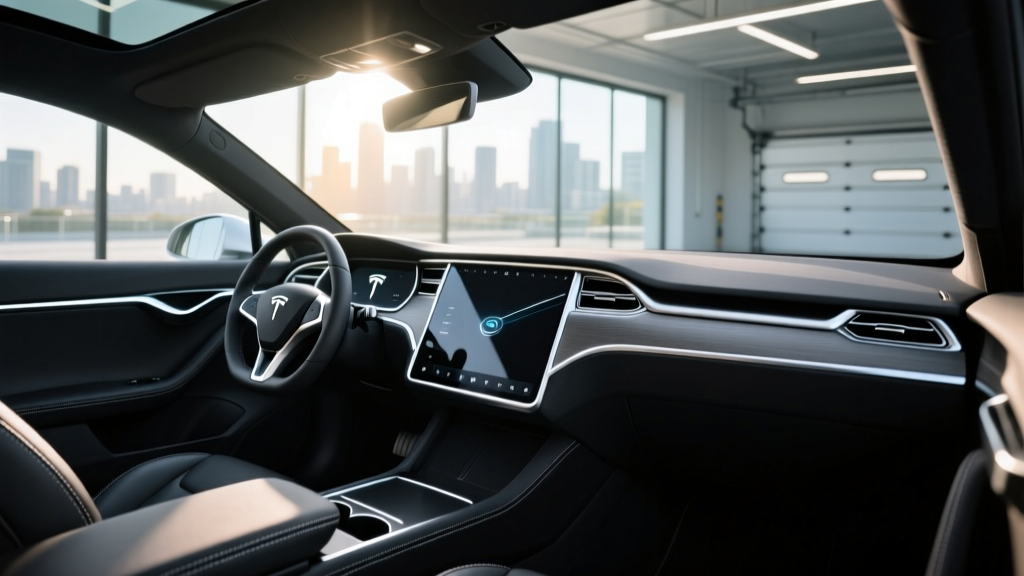
The 2018 Model 3's interior is defined by radical minimalism. There is no instrument cluster — all information is displayed on the central 15-inch touchscreen. Speed, range, navigation, media, and climate controls all live on this single screen. This design polarizes: some owners find it clean and distraction-free; others miss physical buttons and a dedicated speedometer directly in their sightline.
Cargo and passenger space:
- Rear trunk: 15.0 cubic feet
- Front trunk (frunk): 3.1 cubic feet
- Total cargo: 18.1 cubic feet (expands to ~43 cu ft with rear seats folded)
- Front legroom: 42.7 inches
- Rear legroom: 35.2 inches
- Front headroom: 40.3 inches
- Rear headroom: 37.1 inches
The rear seat is the Model 3's most common complaint. At 35.2 inches of legroom, it's tight for adults on longer trips. The seat cushion sits low, creating a "knees-up" seating position. For families with small children in car seats, it works fine. For regularly carrying four adults, competitors like the 2018 Chevrolet Bolt (35.6 in rear legroom) or a used Model Y offer more room.
Tech features (as of 2018 production, with OTA updates through 2026):
- 15-inch central touchscreen with navigation, streaming (Spotify, Netflix, YouTube while parked), and gaming
- Over-the-air software updates — Tesla continues to push updates to 2018 vehicles, though newer features like the redesigned UI from 2024+ models may not fully apply
- Basic Autopilot included: adaptive cruise control and lane-centering (SAE Level 2 driver assist — not self-driving)
- Enhanced Autopilot / Full Self-Driving (Supervised) available as paid add-ons — still SAE Level 2 requiring full driver attention
- Sentry Mode (cameras record when parked), Dog Mode (climate stays on for pets), and Summon (low-speed parking assist)
- No Apple CarPlay or Android Auto — Tesla uses its proprietary infotainment system exclusively
Used Pricing and the §25E Used EV Tax Credit
As of early 2026, used 2018 Tesla Model 3 pricing breaks down roughly as follows:
| Trim | Mileage Range | Typical Price | After §25E Credit (if eligible) |
|---|---|---|---|
| Standard Range RWD | 70,000–100,000 mi | $14,000–$16,500 | $10,000–$12,500 |
| Mid Range RWD | 60,000–90,000 mi | $16,000–$19,000 | $12,000–$15,000 |
| Long Range RWD | 60,000–90,000 mi | $18,000–$21,000 | $14,000–$17,000 |
| Long Range Dual Motor AWD | 55,000–85,000 mi | $19,500–$23,000 | $15,500–$19,000 |
Critical tax credit distinction: The 2018 Model 3 does not qualify for the §30D new-vehicle credit (that applies only to new purchases). Instead, used buyers should look at the §25E Previously Owned Clean Vehicle Credit. This credit provides up to $4,000 or 30% of the sale price (whichever is less) for qualifying used EVs. Key eligibility rules per the IRS:
- Sale price cap: The vehicle must sell for $25,000 or less — most 2018 Model 3s meet this
- Buyer income limits: Modified AGI must not exceed $75,000 (single), $112,500 (head of household), or $150,000 (joint)
- Dealer requirement: Must be purchased from a licensed dealer (private-party sales do not qualify)
- First-time transfer rule: The vehicle must not have been previously sold as a used EV after August 16, 2022, to another buyer who claimed the credit
- Model year rule: The vehicle must be at least two model years old (2018 qualifies)
If you meet all criteria, a $17,000 Long Range RWD could effectively cost you $13,000 after the credit. The credit can be transferred to the dealer at point of sale as a price reduction, or claimed on your tax return. Consult a tax professional to confirm your specific eligibility, as rules are subject to change.
Battery Warranty and Longevity
The 2018 Model 3's battery and drive unit warranty varies by trim:
- Standard Range: 8 years / 100,000 miles, whichever comes first, with minimum 70% capacity retention
- Mid Range / Long Range (RWD and AWD): 8 years / 120,000 miles, whichever comes first, with minimum 70% capacity retention
This is a critical point for 2026 buyers: the 8-year warranty on a 2018 Model 3 has expired or is expiring in 2026. A car built in January 2018 lost its battery warranty in January 2026. A car built in December 2018 retains coverage through December 2026. Check the exact manufacture date (found on the driver's door jamb sticker) to determine remaining warranty.
If the battery has degraded below 70% capacity while still under warranty, Tesla will replace or refurbish it at no cost. Out-of-warranty battery replacement for a 75 kWh Long Range pack typically runs $12,000–$16,000 at a Tesla service center, though third-party options are emerging at lower prices. In practice, most 2018 Model 3 batteries are holding 85–92% capacity at this age, making an imminent replacement unlikely for a well-maintained example.
The 2170 NMC cells in the 2018 Model 3 have proven durable. Data aggregated from fleet reports and owner communities shows average degradation of roughly 8–12% over the first 100,000 miles, with the curve flattening significantly after the initial break-in period. To maximize longevity, Tesla recommends daily charging to 80–90% for NMC batteries and reserving 100% charges for trips.
Pros, Cons, and Who Should Buy
- 310-mile EPA range (Long Range) still competitive in 2026
- Access to Tesla Supercharger network — the most reliable DC fast-charging infrastructure in the US
- Over-the-air updates keep software current
- Low running costs: ~$0.04–0.06/mile on home electricity vs $0.12–0.15/mile on gas
- Strong performance even in base trim (5.6 sec 0–60)
- Minimal maintenance (no oil changes, brake pads last 100k+ miles with regen)
- §25E used-EV credit up to $4,000 if eligible
- No heat pump — significant cold-weather range loss (30–35%)
- Cramped rear seat (35.2 in legroom) for adult passengers
- All controls on touchscreen — no physical buttons, no Apple CarPlay/Android Auto
- Battery warranty expiring or expired in 2026
- HW2.5 limits FSD (Supervised) capability vs newer Tesla vehicles
- Road noise and firm ride quality on rough surfaces
- Build quality inconsistencies in early 2018 production (panel gaps, paint)
- CCS charging requires a purchased adapter
Who the 2018 Model 3 suits best:
- Commuters with home charging: The Long Range's 310-mile range means most daily commuters charge only 2–3 times per week at home. Running costs are minimal.
- Tech-forward buyers on a budget: Tesla's software, Supercharger network, and OTA updates provide an ownership experience that legacy automakers still can't match at this price point.
- Solo drivers or couples: The tight rear seat makes this best for 1–2 regular occupants. Families needing frequent rear-seat use should consider a used Model Y or Ioniq 5.
- Warm-climate buyers: Without a heat pump, the 2018 Model 3 is significantly better suited to temperate or warm regions. If you live in Minnesota or Maine, the cold-weather range hit is a serious consideration.
Who should look elsewhere:
- Families needing spacious rear seating — consider a used Model Y, Ford Mustang Mach-E, or Kia EV6
- Cold-climate drivers who need maximum winter range — look for a 2021+ Model 3 with heat pump or a Hyundai Ioniq 5/6 with heat pump and preconditioning
- Buyers who want Apple CarPlay — Tesla will never offer it; consider a used Polestar 2, BMW i4, or Hyundai Ioniq 5
2018 Model 3 vs Key Used Competitors
At the $15,000–$22,000 used price point, the 2018 Model 3 competes with several other used EVs. Here's how it compares on the metrics that matter most:
| Metric | 2018 Tesla Model 3 LR | 2018 Chevy Bolt EV | 2019 Nissan Leaf Plus | 2018 BMW i3 (120 Ah) |
|---|---|---|---|---|
| EPA Range | 310 mi | 238 mi | 226 mi | 153 mi |
| DC Fast Charge Peak | 145 kW | 55 kW | 100 kW | 50 kW |
| 10-80% DC Time | ~40 min | ~60+ min | ~45 min | ~45 min |
| 0-60 mph | 5.1 sec | 6.5 sec | 6.5 sec | 6.9 sec |
| Rear Legroom | 35.2 in | 35.6 in | 33.5 in | 31.9 in |
| Supercharger Access | Native | CCS (w/ adapter) | CCS (CHAdeMO native) | CCS |
| Heat Pump | No | No | No | Yes (optional) |
| Typical Used Price | $18,000–$21,000 | $13,000–$16,000 | $14,000–$17,000 | $16,000–$19,000 |
The Model 3 Long Range wins decisively on range and charging speed. The Bolt is cheaper and has a roomier interior but suffers from slow DC charging (55 kW peak) and a discontinued production line, raising long-term parts concerns. The Leaf Plus uses the CHAdeMO connector, which is being phased out in favor of NACS and CCS, making public charging harder to find. The i3 is a quirky city car with a carbon-fiber tub but lacks the range for road trips. For most buyers, the 2018 Model 3 Long Range remains the best all-around used EV at this price — if you can accept the rear-seat compromises and cold-weather limitations.
Frequently Asked Questions
What is the real-world range of a used 2018 Tesla Model 3?
The Long Range variant achieves 310 miles on the EPA combined cycle. In real-world highway driving at 70 mph, expect 255–275 miles. In cold weather below 30°F, plan for 200–230 miles due to the resistive heater and lack of a heat pump. The Standard Range delivers approximately 220 EPA miles, or about 170–185 highway miles in practice.
How fast does the 2018 Model 3 charge at home and on road trips?
At home on a Level 2 (240V) charger, the Long Range charges at up to 11.5 kW (48A), adding roughly 37 miles per hour — a full overnight charge. On DC fast charging, it peaks at 145 kW, completing a 10–80% session in approximately 40 minutes at a Tesla Supercharger. The Standard Range charges more slowly, peaking at around 120 kW DC.
Does the 2018 Tesla Model 3 qualify for any federal tax credit?
Not the §30D new-vehicle credit. However, it may qualify for the §25E Previously Owned Clean Vehicle Credit of up to $4,000 if purchased from a dealer for $25,000 or less and the buyer meets income caps ($75K single / $150K joint). Verify current rules on IRS.gov and consult a tax professional.
Is the 2018 Model 3's battery warranty still active?
The 8-year battery warranty on a 2018 Model 3 expires (or has expired) in 2026 depending on the exact build month. The Long Range carries an 8-year/120,000-mile warranty with a 70% capacity retention guarantee. Check the manufacture date on the door jamb sticker to determine remaining coverage.
Should I worry about Tesla Hardware 2.5 vs 3.0?
Yes, if you care about FSD (Supervised). Hardware 2.5 (most 2018 vehicles) has lower-resolution cameras and less processing power than Hardware 3.0 (introduced late 2018/early 2019). HW2.5 limits FSD's capability and may not support future feature improvements. Basic Autopilot works fine on both. Check the vehicle's "Software" menu or ask Tesla service to confirm the hardware version.
Is the 2018 Model 3 worth buying in 2026 vs newer used EVs?
If you prioritize range, Supercharger access, and software at a sub-$20,000 price, the 2018 Model 3 Long Range is still one of the best values in the used EV market. If you need a roomier back seat, a heat pump for cold climates, or newer hardware, consider a 2021+ Model 3 (used, ~$22,000–$28,000) or a used Hyundai Ioniq 5. The 2018 Model 3 rewards informed buyers who understand its trade-offs.