Quick Verdict: Is a Used 2018 Tesla Model 3 Still Worth It in 2026?
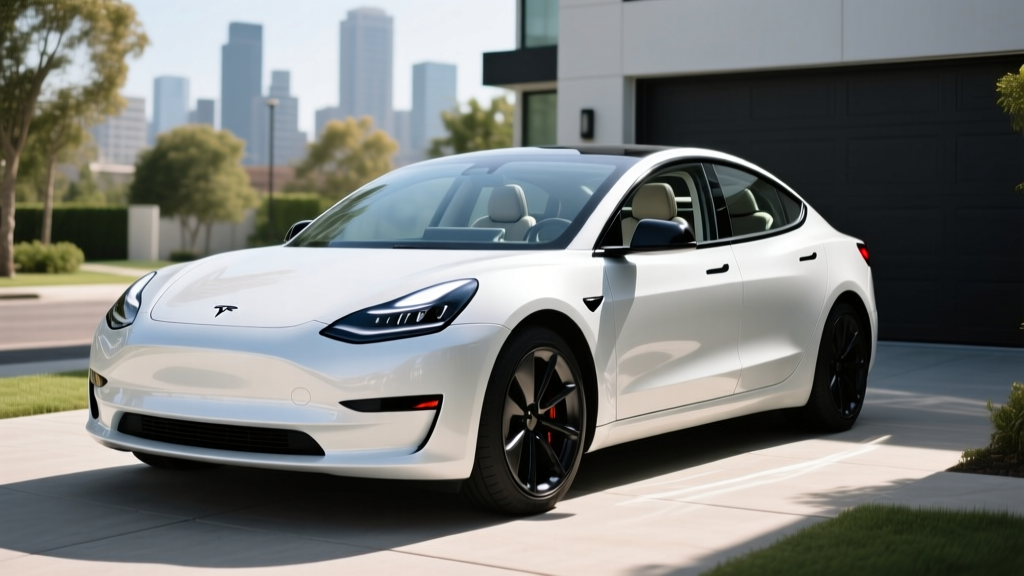
The 2018 Tesla Model 3 was the car that proved electric vehicles could go mainstream. Eight years later, it remains one of the most compelling used EVs on the market — but buying a pre-owned Model 3 requires careful homework on battery degradation, charging hardware, and software feature availability. If you're searching for a 2018 Tesla Model 3 for sale, this guide gives you the exact numbers and ownership realities you need to make an informed purchase.
The 2018 model year was the first full production year for the Model 3, offered primarily as the Long Range RWD and Long Range AWD (Dual Motor). The Standard Range variant didn't arrive until 2019, so nearly every 2018 Model 3 you'll encounter packs the larger battery. That's good news for range, but it also means you're looking at vehicles with 80,000–120,000+ miles on the odometer. Battery health is the single most important variable in your purchase decision.
2018 Tesla Model 3 Core Specifications
| Spec | Long Range RWD | Long Range AWD (Dual Motor) | Performance AWD |
|---|---|---|---|
| EPA Range | 310 miles | 310 miles | 310 miles |
| Battery (Usable) | ~75 kWh (NMC) | ~75 kWh (NMC) | ~75 kWh (NMC) |
| 0–60 mph | 5.1 sec | 4.5 sec | 3.3 sec |
| Horsepower | ~271 hp | ~346 hp | ~450 hp |
| Drivetrain | RWD | AWD (Dual Motor) | AWD (Dual Motor) |
| MPGe (Combined) | 130 MPGe | 120 MPGe | 116 MPGe |
| Efficiency | 26 kWh/100 mi | 28 kWh/100 mi | 29 kWh/100 mi |
| Max DC Fast Charge | ~145 kW peak | ~145 kW peak | ~145 kW peak |
| 10–80% DCFC Time | ~35–40 min | ~35–40 min | ~35–40 min |
| Level 2 Home Charge | 11.5 kW (~44 mi/hr) | 11.5 kW (~44 mi/hr) | 11.5 kW (~44 mi/hr) |
| Cargo Volume | 15 cu ft trunk + 3.1 cu ft frunk (18.1 cu ft total) | ||
| Rear Legroom | 35.2 inches | ||
| Original MSRP (2018) | $49,000 | $54,000 | $64,000 |
| Typical Used Price (2026) | $16,000–$21,000 | $18,000–$24,000 | $22,000–$28,000 |
Sources: EPA / fueleconomy.gov, Tesla historical spec sheets.
Real-World Range: What the EPA Sticker Doesn't Tell You
Real-World Expectation: Expect 250–280 miles in mixed driving at highway speeds (70–75 mph). In cold weather (below 32°F / 0°C), range drops to 200–240 miles due to cabin heating demands and reduced battery efficiency. City driving with regenerative braking can push closer to the 300-mile mark.
The 2018 Model 3 Long Range earned its 310-mile EPA sticker in ideal test-cycle conditions. In practice, efficiency depends heavily on your driving style, climate, and tire condition. The Model 3's heat pump wasn't introduced until the 2021 refresh, so 2018 models use resistive cabin heating — a significant energy draw in winter. If you live in a cold-weather state, plan for a 25–35% range reduction from November through February.
For a used 2018 Model 3, you also need to factor in battery degradation. Tesla's NMC batteries in this generation typically show 8–12% degradation at 100,000 miles. A 2018 Long Range with 100k miles and 10% degradation would deliver roughly 279 miles at full charge under EPA conditions — still competitive with many new EVs on the market in 2026.
Pro tip for used buyers: Request the vehicle's State of Health (SoH) data. You can check this through the car's service menu or third-party apps like TeslaFi. A healthy 2018 battery should show 88% or higher capacity retention.
Charging Speeds: DC Fast Charging and Home Level 2
The 2018 Model 3 uses Tesla's proprietary connector (now being transitioned to the NACS standard) and accesses the Supercharger network — still the most reliable DC fast-charging infrastructure in the US. Here's what to expect:
| Charging Method | Max Power | Charging Speed | Notes |
|---|---|---|---|
| Level 1 (120V outlet) | ~1.4 kW | ~5 miles/hour | Emergency/trickle only |
| Level 2 (240V home) | 11.5 kW (48A) | ~44 miles/hour | Full charge in ~8 hours |
| DC Fast (V2 Supercharger) | ~145 kW peak | 10–80% in ~35–40 min | Peak rate only below 50% SoC |
| DC Fast (V3 Supercharger) | ~145 kW (capped) | 10–80% in ~35–40 min | 2018 Model 3 cannot reach 250 kW |
Key charging nuance: The 2018 Model 3's onboard charging architecture caps DC fast charging at roughly 145–150 kW, even when plugged into a V3 Supercharger capable of 250 kW. The charge curve peaks early (around 20–40% SoC) and tapers significantly above 60%. If you frequently road-trip, plan for 35–40 minute stops from 10% to 80% — not the 15-minute stops that newer EVs with 800V architectures can achieve.
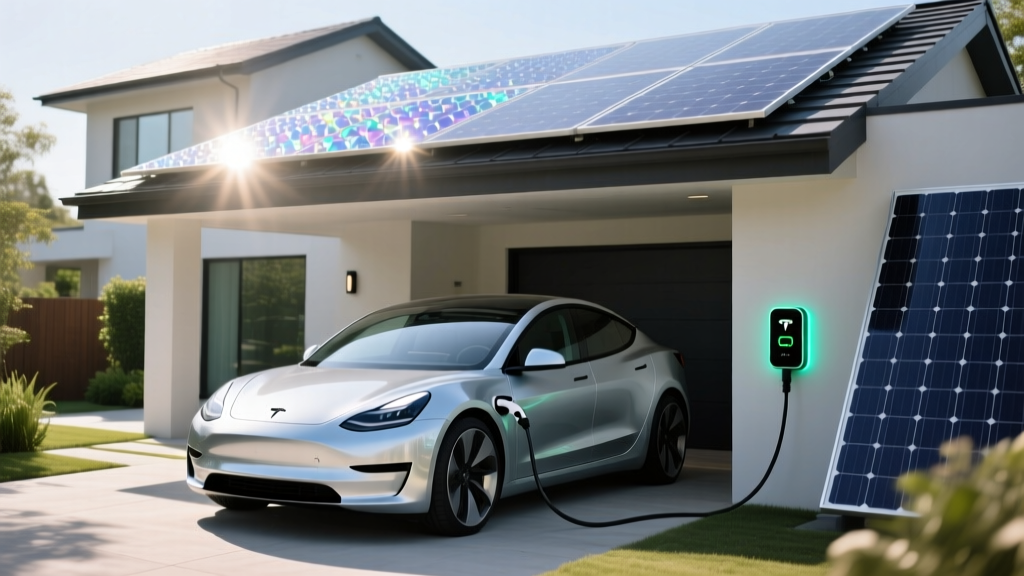
For home charging, the 2018 Model 3 supports up to 48 amps on a Level 2 circuit, which requires a 60-amp breaker. Most buyers install a Tesla Wall Connector or a compatible J1772/NACS Level 2 unit. Expect $500–$1,500 for home installation if your electrical panel has capacity; add $1,500–$3,000 if you need a panel upgrade to 200A service. Always get a quote from a licensed electrician before purchase.
Battery Chemistry, Degradation, and Warranty Coverage
The 2018 Model 3 Long Range uses an NMC (nickel manganese cobalt) lithium-ion battery with approximately 75 kWh of usable capacity. NMC chemistry offers high energy density — that's how Tesla fit 310 miles of range into a relatively compact sedan — but it's more sensitive to high state-of-charge storage and extreme heat than LFP (lithium iron phosphate) chemistry used in later Standard Range models.
Degradation data from owner fleets: Analysis from TeslaFi user data and Recurrent Auto shows the 2018-era NMC pack typically loses about 5% capacity in the first 25,000 miles (an initial "break-in" drop), then degrades roughly linearly at about 1–1.5% per 20,000 additional miles. At 100,000 miles, most packs retain 88–92% of original capacity.
Warranty status in 2026: Tesla's battery warranty on the 2018 Long Range is 8 years / 120,000 miles (whichever comes first), with a capacity retention threshold of 70%. This means most 2018 Model 3s have either recently exited or are about to exit their battery warranty window. If the battery drops below 70% capacity while still within the warranty period, Tesla will replace or refurbish it at no cost. Out of warranty, a replacement battery costs roughly $12,000–$16,000 through Tesla service centers.
The drive unit (motor) warranty is also 8 years / 120,000 miles. Tesla's permanent-magnet synchronous motors have proven highly reliable, with failure rates well under 2% in fleet data.
Used Pricing and the Federal Tax Credit Question
As of early 2026, used 2018 Tesla Model 3 pricing breaks down as follows:
| Trim | Mileage Range | Typical Price (2026) | Original MSRP |
|---|---|---|---|
| Long Range RWD | 70k–100k mi | $16,000–$21,000 | $49,000 |
| Long Range AWD | 70k–100k mi | $18,000–$24,000 | $54,000 |
| Performance AWD | 60k–90k mi | $22,000–$28,000 | $64,000 |
Does a used 2018 Model 3 qualify for a federal tax credit?
Yes — but only the used-EV tax credit (IRS §25E), not the new-vehicle §30D credit. Here are the rules as of 2026:
- Credit amount: 30% of the sale price, up to a maximum of $4,000
- Vehicle price cap: The used vehicle must sell for $25,000 or less to qualify
- Buyer income caps: AGI must not exceed $75,000 (single), $112,500 (head of household), or $150,000 (joint)
- Vehicle age requirement: Must be at least 2 model years old (2018 easily qualifies)
- Dealer requirement: Must be purchased from a licensed dealer (private-party sales don't qualify)
- First-time transfer: The credit applies only once per vehicle VIN after its original sale
Practical impact: If you buy a 2018 Model 3 Long Range RWD for $18,000 from a qualifying dealer, you could claim $4,000 (30% of $18,000 = $5,400, capped at $4,000). That brings your effective cost to $14,000 — an extraordinary value for a 310-mile-range EV. However, if you buy a Performance trim for $26,000, it exceeds the $25,000 sale-price cap and you'd receive no credit. Always confirm eligibility with a tax professional and review current IRS §25E guidelines before purchasing.
Technology, Driver Assistance, and Interior
The 2018 Model 3's interior is defined by its radical minimalism: a single 15-inch center touchscreen controls virtually everything, from climate to mirrors to glovebox. There's no traditional instrument cluster — speed and navigation info appear on the left third of the center screen. Love it or hate it, the setup has aged reasonably well thanks to Tesla's over-the-air (OTA) software updates.
Infotainment highlights:
- 15-inch touchscreen with navigation, Spotify, Netflix/YouTube (while parked), and arcade games
- OTA updates continue in 2026, though 2018 hardware (HW2.5) limits some newer features
- No Apple CarPlay or Android Auto — Tesla's proprietary system only
- Premium audio with 14 speakers, subwoofer, and immersive sound
Driver assistance — SAE Level 2, not self-driving:
The 2018 Model 3 shipped with Hardware 2.5 (HW2.5), which supports basic Autopilot (lane centering + adaptive cruise). Enhanced Autopilot adds auto lane change, navigate on Autopilot, and summon. FSD was available as a paid add-on, but HW2.5 has limitations in processing capability compared to HW3.0 (introduced April 2019) and HW4.0. Tesla has not offered a free hardware upgrade for HW2.5 vehicles, so FSD performance on a 2018 model may be noticeably behind current-model FSD.
Interior space: The Model 3 offers 15 cubic feet of trunk space plus a 3.1-cubic-foot frunk, totaling 18.1 cu ft — adequate for two suitcases and a week's groceries. Rear legroom is 35.2 inches, which is tight for taller passengers on long trips. The glass roof creates an airy feel but offers no shade option beyond the factory tint, which some owners find insufficient in hot climates.
Pros and Cons of Buying a 2018 Model 3 in 2026
Pros
- 310-mile EPA range still competitive with 2026 new EVs
- Access to Tesla Supercharger network (most reliable DCFC in the US)
- Low running costs: ~$0.04–$0.08/mile on home electricity vs. $0.12–$0.18/mile for gas
- OTA updates keep software current (navigation, UI, features)
- Strong safety ratings: 5-star NHTSA, IIHS Top Safety Pick+
- Used-EV tax credit can reduce effective price to $14,000–$17,000
- Proven powertrain reliability — motors rarely fail
Cons
- Battery warranty expired or expiring — out-of-pocket replacement is $12k–$16k
- DC fast charge capped at ~145 kW — slower than 2024+ competitors (Hyundai Ioniq 5, Kia EV6 at 240+ kW)
- No heat pump — significant winter range loss in cold climates
- HW2.5 limits Autopilot/FSD capability vs newer hardware
- Build quality inconsistencies (panel gaps, paint issues) were common in 2018 production
- No Apple CarPlay/Android Auto
- Rear seat is tight for adults on long trips
- Suspension firmness — ride quality is sporty, not plush
2018 Model 3 vs. Key Used-EV Competitors
If you're cross-shopping a 2018 Model 3, here's how it stacks up against other used EVs in a similar price bracket:
| Vehicle | EPA Range | DCFC Speed | Typical Used Price | Key Advantage |
|---|---|---|---|---|
| 2018 Tesla Model 3 LR | 310 mi | ~145 kW | $16,000–$24,000 | Supercharger network, range |
| 2019 Chevrolet Bolt EV | 238 mi | ~55 kW | $12,000–$16,000 | Lower price, hatchback cargo |
| 2018 Nissan Leaf Plus | 226 mi | ~100 kW (CHAdeMO) | $11,000–$15,000 | Budget-friendly, widely available |
| 2020 Hyundai Kona Electric | 258 mi | ~75 kW | $16,000–$20,000 | Strong efficiency, CarPlay support |
The Model 3 wins on range and charging infrastructure. The Bolt and Leaf are cheaper but lack comparable DCFC speeds (the Bolt's ~55 kW cap makes road trips painful). The Kona Electric is a strong alternative if you want CarPlay and don't need 300+ miles of range. For road-trippers, the Model 3's Supercharger access is nearly impossible to beat in 2026 — even as other networks expand.
Who Should Buy a Used 2018 Tesla Model 3?
- Daily commuters with home Level 2 charging — wake up to a full "tank" every morning for $3–$5 in electricity
- Tech-savvy buyers who value OTA updates, the Supercharger network, and Tesla's software ecosystem
- Budget-conscious EV adopters who want 300+ mile range without paying new-car prices
- Warm-climate drivers — the lack of a heat pump matters less in southern states
- You live in a cold climate and need maximum winter range (look at 2021+ Model 3 with heat pump, or a Hyundai Ioniq 5)
- You prioritize fast DC charging for frequent road trips (newer 800V vehicles charge 30–50% faster)
- You need spacious rear seating for adults (consider a Model Y or Ioniq 5)
- You want CarPlay/Android Auto (look at Hyundai, Kia, or Ford EVs)
Frequently Asked Questions
What is the real-world range of a used 2018 Tesla Model 3?
Expect 250–280 miles in mixed driving at highway speeds, and 200–240 miles in cold weather (below freezing). Factor in 8–12% battery degradation for high-mileage examples. A 2018 Long Range with 100,000 miles and 90% SoH delivers roughly 279 miles under ideal EPA conditions.
How fast does the 2018 Model 3 charge at home and on the road?
On a Level 2 home charger (48A/11.5 kW), it adds about 44 miles of range per hour — a full charge takes roughly 8 hours. On DC fast chargers, it peaks at about 145 kW, reaching 10–80% in 35–40 minutes. It cannot take advantage of 250 kW V3 Superchargers at full speed due to hardware limitations.
How much does a used 2018 Model 3 cost after tax credits?
Typical used prices range from $16,000 to $28,000 depending on trim and mileage. If you buy from a licensed dealer for $25,000 or less and meet income requirements, the federal used-EV credit (§25E) can reduce your effective cost by up to $4,000. A Long Range RWD at $18,000 could cost you as little as $14,000 after the credit.
Is a 2018 Model 3 worth buying versus newer used EVs?
It depends on your priorities. The 2018 Model 3 offers the best combination of range, Supercharger access, and price in the sub-$25,000 used-EV market. However, it lacks a heat pump, charges slower than 800V competitors, and its Autopilot hardware is outdated. If cold-weather range or fast road-trip charging is critical, consider a 2022+ Model 3 or a Hyundai Ioniq 5 instead.
Does the 2018 Model 3 qualify for the federal EV tax credit?
Not the new-vehicle §30D credit, but it can qualify for the used-EV credit (§25E) — up to $4,000 — if the sale price is $25,000 or less, you buy from a licensed dealer, and your income falls below IRS thresholds ($75k single / $150k joint). Check IRS guidelines and consult a tax professional before relying on the credit.
What should I check before buying a used 2018 Model 3?
Prioritize these items: (1) Battery State of Health — request SoH data via the service menu or TeslaFi; aim for 88%+. (2) Drive unit noise — listen for whining or grinding from the motors. (3) Suspension and bushings — check for clunking over bumps, common at 80k+ miles. (4) 12V battery — the small auxiliary battery often needs replacement at 4–5 years. (5) Title and accident history — request a Carfax or AutoCheck report. (6) Software/Hardware version — confirm whether the car has HW2.5 or if it was upgraded to HW3.0 (rare but possible via service).
For the latest EPA data, visit fueleconomy.gov. For safety ratings, check NHTSA and IIHS.