Quick Verdict: The 2018 Model 3 Performance Still Hits Hard in 2026
The 2018 Tesla Model 3 Performance was the car that made the EV industry take Tesla seriously as a performance brand, not just a compliance-car maker. With a factory-rated 0-60 mph time of 3.3 seconds, dual-motor all-wheel drive, and an EPA-estimated 310 miles of range, it undercut every gas-powered sports sedan on price while outperforming most of them on acceleration. Nearly eight years later, the 2018 Model 3 Performance remains one of the most sought-after used EVs on the market — and for good reason. But buying a first-year production Model 3 in 2026 comes with caveats that every prospective owner needs to understand before signing on the dotted line.
This review covers the exact specs, real-world range expectations, charging behavior, battery health considerations, and used-EV tax credit eligibility you need to evaluate a 2018 Model 3 Performance today.
Spec Table: 2018 Tesla Model 3 Performance at a Glance
| Specification | Value |
|---|---|
| EPA Range | 310 miles |
| Battery Capacity (usable) | ~75 kWh (NMC chemistry) |
| Drivetrain | Dual-motor AWD |
| Horsepower | ~450 hp (combined) |
| Torque | ~471 lb-ft |
| 0-60 mph | 3.3 seconds |
| Top Speed | 155 mph |
| EPA Efficiency | 120 MPGe combined (28 kWh/100 mi) |
| Max DC Fast Charge | ~145 kW peak (CCS via adapter or retrofitted NACS) |
| 10-80% DC Fast Charge | ~35-40 minutes |
| Level 2 Home Charging | Up to 11.5 kW (48A) / ~37 mi/hr |
| Cargo Volume | 15 cu ft trunk + ~3 cu ft frunk |
| Seating | 5 passengers |
| Original MSRP | $64,000 (before incentives) |
| Battery Warranty (original) | 8 years / 120,000 miles, 70% retention |
Real-World Range: What 310 EPA Miles Actually Means on the Road
Real-World Highway (70-75 mph): ~240-265 miles
Real-World City / Mixed: ~275-300 miles
Cold Weather (below 32°F): ~200-240 miles (25-35% reduction)
The EPA's 310-mile estimate for the 2018 Model 3 Performance was class-leading at launch and remains competitive today. However, the Performance trim's stickier tires, sportier tuning, and the tendency of owners to exercise that 3.3-second 0-60 capability all conspire against maximum range in practice.
On a 70-mph highway loop in moderate temperatures (65-75°F), expect to see consumption around 30-33 kWh/100 mi, which translates to roughly 240-265 miles before the buffer runs out. City driving with regenerative braking engaged recovers meaningful energy, and mixed commuting can stretch the range closer to the EPA figure — particularly if you're a disciplined right foot.
Cold weather is the great equalizer for all EVs, and the 2018 Model 3 Performance is no exception. The NMC battery pack loses efficiency in freezing temperatures, and cabin heating (resistance-based in the 2018 model year, before Tesla switched to the more efficient heat pump in the 2021 refresh) draws significant power. In sub-freezing conditions, plan for 200-240 miles of usable range and precondition the battery whenever possible to mitigate losses.
For authoritative EPA data, consult fueleconomy.gov's side-by-side comparison tool, which lists the official 120 MPGe combined rating and detailed city/highway breakdowns for the 2018 Long Range AWD variant (the Performance shares the same battery and very similar efficiency).
Charging Speed: DC Fast, Level 2, and the 2018 Model 3's Curve
The 2018 Model 3 Performance uses a ~75 kWh (usable) NMC lithium-ion battery pack. Charging speed is one area where this early Model 3 shows its age compared to newer EVs with 800V architectures, but it remains practical for road trips and daily use.
| Charging Level | Power | Speed / Notes |
|---|---|---|
| Level 1 (120V household) | ~1.4 kW | ~5 miles per hour — emergency/trickle only |
| Level 2 (240V home, 48A) | 11.5 kW | ~37 miles per hour — full overnight recharge |
| Level 2 (240V, 32A Mobile Connector) | 7.7 kW | ~25 miles per hour |
| DC Fast Charge (Supercharger V2) | ~145 kW peak | 10-80% in ~35-40 minutes |
| DC Fast Charge (Supercharger V3/V4) | ~145 kW peak (car-limited) | Same — battery is the bottleneck, not the charger |
The 2018 Model 3 Performance peaks at roughly 145 kW on DC fast charging, but like all EVs, it does not sustain that peak for the entire session. The charge curve is aggressive in the 10-50% range, then tapers progressively. By the time you hit 80%, charging power drops to roughly 30-40 kW. This means a 10-80% session takes approximately 35-40 minutes at a V2 or V3 Supercharger — perfectly adequate for a meal break, but noticeably slower than a 2024+ Model 3 Highland or Hyundai Ioniq 5, which can hit 10-80% in 18-20 minutes.
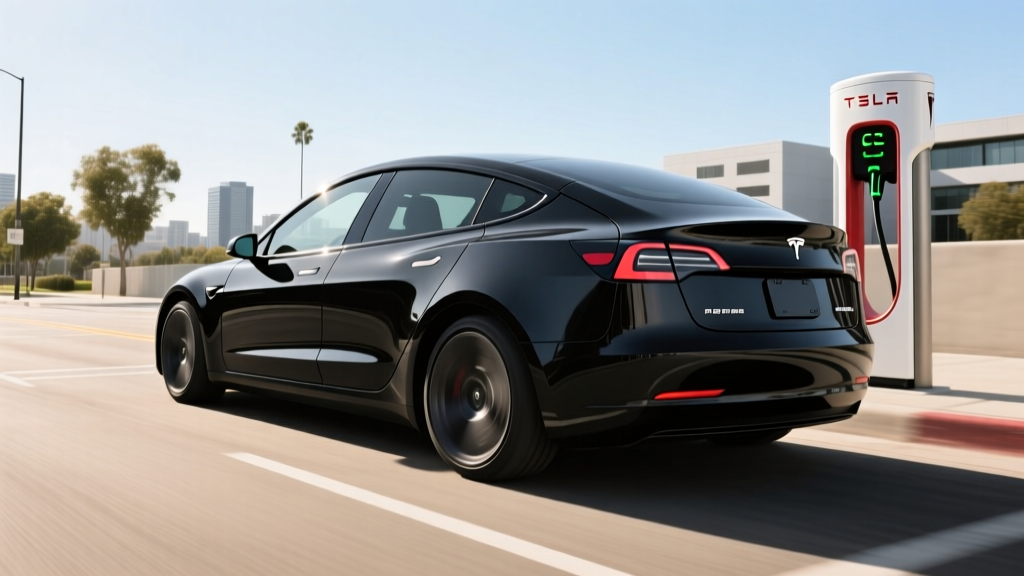
One important note for 2026 buyers: the 2018 Model 3 originally shipped with Tesla's proprietary connector (now designated NACS). Tesla has opened the Supercharger network to non-Tesla EVs, and adapters are widely available. If the car still has its original Tesla connector, you'll use NACS natively at Superchargers and will need a NACS-to-J1772 adapter for public Level 2 stations and a NACS-to-CCS adapter for third-party DC fast chargers (Electrify America, EVgo, etc.). Verify which adapters are included with the specific vehicle you're evaluating.
Performance: The 0-60 Time That Still Turns Heads
The headline number — 0-60 mph in 3.3 seconds — was verified by Tesla and independently confirmed by multiple automotive publications at launch. In Track Mode (introduced via an over-the-air update in 2019), the Performance variant adjusts torque distribution between the front and rear motors for sharper cornering, though it does not increase straight-line acceleration.
The dual-motor AWD system produces an estimated 450 horsepower and 471 lb-ft of torque. Instant electric torque delivery makes the 3.3-second time feel even more violent than the number suggests — there's no turbo lag, no transmission shift, just relentless, linear thrust. Even in 2026, this car will surprise passengers and keep up with far more expensive sports cars off the line.
The Performance trim also includes larger brakes, a lowered sport suspension, 20-inch Performance wheels (on most examples), and carbon fiber spoiler trim. The sport suspension delivers sharp handling at the expense of some ride comfort over rough pavement — a trade-off worth understanding if your daily commute includes potholed streets.
Pricing, Used Market, and Federal Tax Credit in 2026
The 2018 Tesla Model 3 Performance originally carried an MSRP of approximately $64,000 (before any incentives). In the 2026 used-EV market, well-maintained examples with 60,000-90,000 miles typically list between $22,000 and $30,000, depending on condition, mileage, battery health, and whether the vehicle has a clean title.
Under current IRS rules, a used EV can qualify for a federal tax credit of 30% of the sale price, up to a maximum of $4,000, provided:
• The sale price is $25,000 or less
• The buyer's modified adjusted gross income is below $75,000 (single) / $112,500 (head of household) / $150,000 (joint)
• The vehicle is at least two model years old (2018 qualifies)
• The vehicle is purchased from a licensed dealer (private-party sales do not qualify)
• The credit is claimed on your tax return — point-of-sale transfer is available for §25E as of 2024+
This means a 2018 Model 3 Performance purchased from a dealer for $24,500 could net a $4,000 credit (30% of $24,500 = $7,350, but capped at $4,000), bringing the effective cost to $20,500. That is extraordinary value for a 310-mile, 3.3-second AWD performance sedan. However, the $25,000 sale price cap is a hard ceiling — if the car sells for $25,500, the credit drops to zero. Work with the dealer to structure the transaction accordingly.
For the most current rules, always verify eligibility on IRS.gov's used clean vehicle credit page. Tax situations vary, and consulting a tax professional is recommended before making a purchase decision based on credit eligibility.
Interior, Tech, and Daily Livability
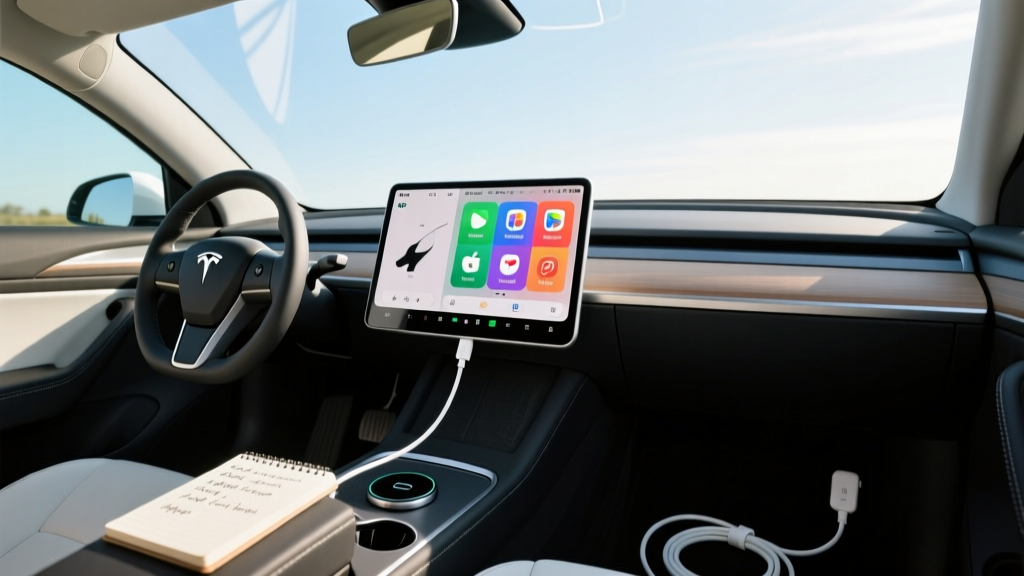
The 2018 Model 3's interior is famously minimalist: a single 15-inch center touchscreen handles virtually every function — climate, media, navigation, vehicle settings, and even the speedometer (there is no traditional instrument cluster). This design polarizes buyers. Some find it refreshingly clean; others miss physical buttons and find touchscreen-only climate adjustments distracting while driving.
Cargo and passenger space: The trunk offers 15 cubic feet, supplemented by a small front trunk (frunk) of approximately 3 cubic feet. Rear legroom measures 35.2 inches — adequate for adults on shorter trips but tighter than a Toyota Camry or Honda Accord. The glass roof creates an airy cabin feel but does reduce headroom slightly compared to a traditional steel roof.
Driver assistance: The 2018 Model 3 Performance ships with Tesla's Autopilot hardware suite (HW2.5 or HW3.0, depending on build date — HW3.0 was introduced mid-2019 and some earlier cars were retrofitted). Basic Autopilot includes Traffic-Aware Cruise Control and Autosteer (lane centering). Full Self-Driving (FSD) Capability was a $5,000-$8,000 option that enables features like Navigate on Autopilot, Auto Lane Change, and Smart Summon.
Over-the-air updates: One of the 2018 Model 3's enduring advantages is Tesla's OTA update capability. Many 2018 examples have received interface improvements, new features (like Track Mode, Sentry Mode, and improved regenerative braking profiles), and security patches years after delivery. Verify the car's software version and update history during a pre-purchase inspection.
Battery Health, Warranty, and What to Check Before Buying
The 2018 Model 3 Performance uses an NMC (nickel manganese cobalt) lithium-ion battery pack with approximately 75 kWh of usable capacity. NMC offers high energy density (enabling the 310-mile range in a compact pack) but is more sensitive to sustained high states of charge and extreme temperatures than LFP chemistry.
Original battery warranty: 8 years or 120,000 miles, whichever comes first, with a minimum 70% capacity retention guarantee. For a 2018 model, this warranty expires in 2026 at the latest — meaning most 2018 Model 3 Performances are either at the tail end of their battery warranty or already out of coverage. This is a critical factor in your purchase decision.
Degradation reality: Based on aggregated owner data from sources like TeslaFi and Recurrent Auto, a typical 2018 Model 3 Long Range/Performance with 80,000-100,000 miles shows approximately 8-14% battery degradation. That translates to a real-world maximum range of roughly 265-285 EPA-adjusted miles — still very usable, but not the original 310.
What to check:
- Request a battery health report from Tesla (available at any Service Center) or use third-party tools to read the State of Health (SoH)
- Verify whether the car has HW3.0 (needed for the latest FSD features) — some 2018 builds still have HW2.5
- Inspect for the known early-Model 3 issues: paint quality inconsistencies, panel gaps, and potential drive unit whine
- Check if the 12V auxiliary battery has been replaced (original lead-acid 12V batteries in 2018 models are likely due for replacement if not already done)
- Confirm the vehicle's Supercharger eligibility — some early Model 3s had free unlimited Supercharging tied to the original owner; this typically does not transfer on resale
Pros and Cons: The Honest Scorecard
Pros
- 0-60 in 3.3 sec — supercar acceleration at a used-sedan price
- 310 EPA miles (265-285 real-world at 80k+ miles) is still excellent
- Access to the Tesla Supercharger network (largest, most reliable DC fast-charging network)
- OTA updates continue to add features years after purchase
- Strong safety ratings (NHTSA 5-star, IIHS Top Safety Pick+)
- Minimal maintenance — no oil changes, minimal brake wear thanks to regen
- Used-EV tax credit up to $4,000 if purchased under $25,000
Cons
- Battery warranty expiring or expired in 2026 — replacement cost $12,000-$16,000 if needed
- DC fast charging limited to ~145 kW (35-40 min 10-80%) — slower than modern rivals
- Touchscreen-only controls can be distracting for climate/media adjustments
- Rear seat is snug for tall adults on long trips
- Early build-quality issues (panel gaps, paint) are common on 2018 examples
- Firm sport suspension transmits road imperfections
- No heat pump (resistance heating) — cold-weather range loss is significant
2018 Model 3 Performance vs. Key Used-EV Competitors
| Attribute | 2018 Tesla Model 3 Perf. | 2019 BMW i3s (120 Ah) | 2019 Chevrolet Bolt EV |
|---|---|---|---|
| EPA Range | 310 mi | 153 mi | 238 mi |
| 0-60 mph | 3.3 sec | 6.9 sec | 6.5 sec |
| DC Fast Charge (peak) | ~145 kW | ~50 kW | ~55 kW |
| Battery (usable) | ~75 kWh NMC | 42.2 kWh NMC | 60 kWh NMC |
| AWD Available | Yes (standard) | No (RWD) | No (FWD) |
| Used Price Range (2026) | $22,000-$30,000 | $16,000-$22,000 | $14,000-$19,000 |
The Model 3 Performance dominates on range, acceleration, and charging speed. The BMW i3s is a fun city car but its 153-mile range and 50 kW charging limit make it impractical for road trips. The Bolt EV offers solid range at a lower price, but its slow DC fast charging (~55 kW, 10-80% in over an hour) and FWD-only drivetrain can't match the Tesla's all-weather capability and road-trip convenience.
Who Should Buy the 2018 Model 3 Performance in 2026?
This car is ideal for the performance-oriented commuter who wants thrilling acceleration, a long electric range for daily driving, and the ability to road-trip on the Supercharger network without range stress. It also suits budget-conscious enthusiasts who want sports-car acceleration for under $25,000 (after the used-EV credit) — a price point where no gas-powered car can match the combination of speed, efficiency, and technology.
It is not the best choice for families needing generous rear-seat space (look at the Model Y or Hyundai Ioniq 5), for buyers in extreme cold climates without garage parking (the lack of a heat pump hurts), or for anyone uncomfortable with touchscreen-only vehicle controls.
Frequently Asked Questions
What is the real-world range of the 2018 Tesla Model 3 Performance?
Expect 240-265 miles on the highway at 70-75 mph in moderate temperatures, 275-300 miles in mixed city driving, and 200-240 miles in cold weather (below 32°F). With 80,000+ miles and typical degradation (8-14%), subtract another 25-40 miles from these figures for a realistic maximum.
How fast does the 2018 Model 3 Performance charge?
On a DC fast charger (Supercharger or equivalent), it peaks at ~145 kW and takes approximately 35-40 minutes from 10-80%. On a home Level 2 charger at 48A/11.5 kW, it adds roughly 37 miles per hour, fully recharging overnight in about 7-8 hours from empty.
How much does a 2018 Model 3 Performance cost after tax credits?
Used examples typically list for $22,000-$30,000 in 2026. If you purchase from a licensed dealer for $25,000 or less and meet IRS income requirements, you may qualify for the §25E used clean vehicle credit of up to $4,000, bringing the effective price as low as $18,000-$21,000.
Does the 2018 Tesla Model 3 qualify for the federal EV tax credit?
It does not qualify for the §30D new-vehicle credit (which applies to new purchases only). However, it may qualify for the §25E used clean vehicle credit (up to $4,000) if the sale price is $25,000 or less, the buyer meets income caps, and the purchase is through a licensed dealer. Always verify current rules at IRS.gov.
Is it worth buying a 2018 Model 3 Performance vs. a newer EV?
If your budget is under $30,000 and you prioritize performance and range, the 2018 Model 3 Performance offers acceleration and Supercharger network access that no other used EV at this price can match. The trade-offs are an expiring battery warranty, slower DC fast charging vs. 2023+ models, and early-production build quality. For buyers who can stretch to $35,000-$40,000, a 2021-2022 Model 3 Long Range offers a heat pump, better build quality, and remaining battery warranty.
What's the biggest risk of buying a 2018 Model 3 Performance?
Battery warranty expiration. The 8-year/120,000-mile warranty is ending or has ended for all 2018 examples. A battery replacement costs $12,000-$16,000. Mitigate this risk by checking the battery's State of Health before purchasing, reviewing Tesla service records, and budgeting for the possibility of a future battery investment.