The Short Answer: Tesla Model Y Curb Weight by Trim
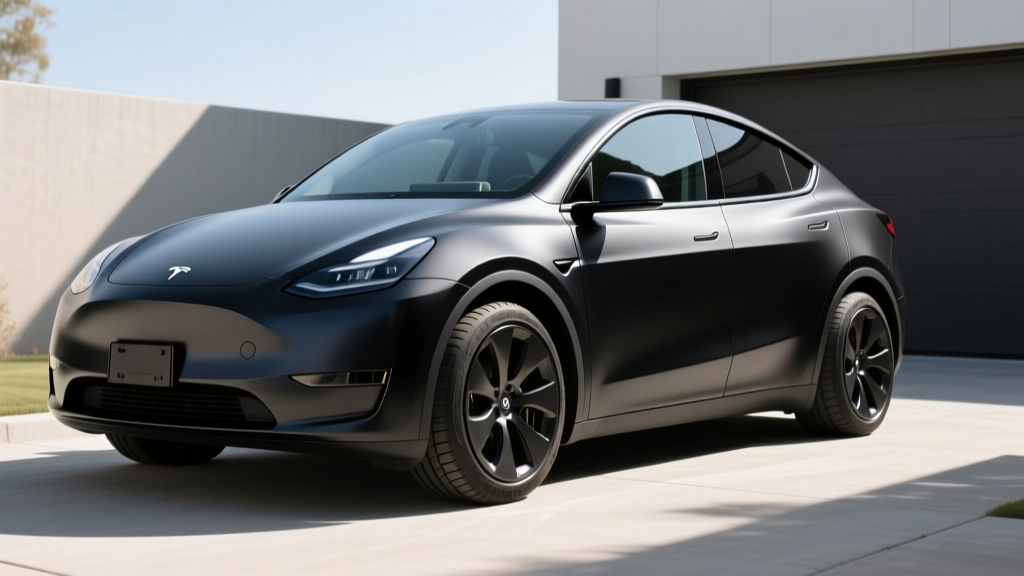
If you've been searching for exactly how much the Tesla Model Y weighs, the answer depends on which trim and model year you're looking at. For the current-generation (Juniper refresh) Model Y sold in the U.S., curb weights span from roughly 4,363 pounds for the Rear-Wheel Drive (RWD) model up to approximately 4,600 pounds for the Long Range All-Wheel Drive (AWD) variant. The Performance dual-motor trim sits in between at around 4,500 pounds.
| Trim | Curb Weight (lbs) | Drivetrain | EPA Range | 0-60 mph | Base MSRP |
|---|---|---|---|---|---|
| Long Range RWD | ~4,363 | Rear-Wheel Drive | 320 mi | 5.8 sec | $44,990 |
| Long Range AWD | ~4,600 | Dual-Motor AWD | 305 mi | 4.8 sec | $47,990 |
| Performance AWD | ~4,500 | Dual-Motor AWD | 285 mi | 3.5 sec | $52,490 |
Why does weight matter for an EV buyer? Heavier vehicles consume more energy per mile, which directly affects real-world range, tire wear, and braking distances. The Model Y's weight is driven primarily by its battery pack — the single largest mass component in any electric vehicle — plus the Juniper generation's added sound insulation, structural reinforcements, and larger thermal management hardware.
Real-World Range vs. the EPA Sticker
The Juniper Model Y uses a 78.1 kWh (usable) battery pack with NMC (nickel manganese cobalt) chemistry in the Long Range and Performance trims. NMC offers higher energy density than LFP, which is why these trims achieve more range despite carrying more weight from the dual-motor AWD system. The RWD variant previously used an LFP (lithium iron phosphate) pack in earlier model years, but the current U.S.-spec Juniper Long Range RWD has shifted to NMC to hit the 320-mile target. LFP packs are heavier per kWh but tolerate repeated 100% charging better — a trade-off worth understanding if you plan to charge to full regularly.
Efficiency for the Long Range AWD comes in at 122 MPGe combined (per fueleconomy.gov), which translates to roughly 28 kWh per 100 miles. That's competitive with the Hyundai Ioniq 5 and slightly better than the Ford Mustang Mach-E, largely thanks to Tesla's heat pump and aero optimization in the Juniper body.
Charging Speed: DC Fast, Level 2, and the Charge Curve
Charging speed is where the Model Y's weight and battery size interact most directly. A larger, heavier pack can accept more total power but takes longer to fill from empty. Here's what to expect:
| Charging Level | Power | Speed / Time | Notes |
|---|---|---|---|
| Level 1 (120V outlet) | ~1.4 kW | ~3-4 mi/hr | Emergency/trickle only |
| Level 2 (240V, 48A) | 11.5 kW | ~44 mi/hr; full in ~8 hr | Home Wall Connector or equivalent |
| DC Fast Charge (V3 Supercharger) | Peak 250 kW | 10-80% in ~22 min | Peak rate only; tapers above 60% |
| DC Fast Charge (V4 Supercharger) | Peak 250+ kW | 10-80% in ~20 min | Newer stations; cable-cooled connector |
A critical nuance: the Model Y peaks at 250 kW only when the battery is preconditioned (via navigation to a Supercharger) and at a low state of charge (around 10-15%). The charge curve tapers significantly above 60% SoC, and charging from 80-100% can take as long as the 10-80% portion. On road trips, plan your stops around the 10-80% window to minimize time plugged in.
For home charging, the onboard charger maxes out at 11.5 kW (48 amps on a 60-amp circuit). A Tesla Wall Connector on a NACS plug delivers the full rate. If your home has a 200-amp electrical panel with spare capacity, installation typically runs $800-$2,000 depending on conduit length and local permitting. Homes needing a panel upgrade to 200A can see costs of $2,500-$5,000 total.
Performance, Efficiency, and What the Weight Means on the Road
The Model Y's ~4,600-pound curb weight (Long Range AWD) is substantial, but Tesla's dual-motor torque delivery masks it well. The Long Range AWD produces approximately 384 horsepower and hits 0-60 mph in 4.8 seconds. The Performance trim bumps output to roughly 456 hp with a 3.5-second sprint. Both use Tesla's adaptive damping suspension in the Juniper generation, which manages the vehicle's mass noticeably better than the pre-2025 Model Y over rough pavement.
Where you'll feel the weight most is in tire wear. The Model Y's mass combined with instant torque accelerates tire consumption — expect 25,000-35,000 miles from a set of OEM all-season tires, which is below the 40,000-50,000 miles typical of lighter ICE crossovers. Budget $1,200-$1,800 for a replacement set of EV-rated tires (higher load index, low rolling resistance).
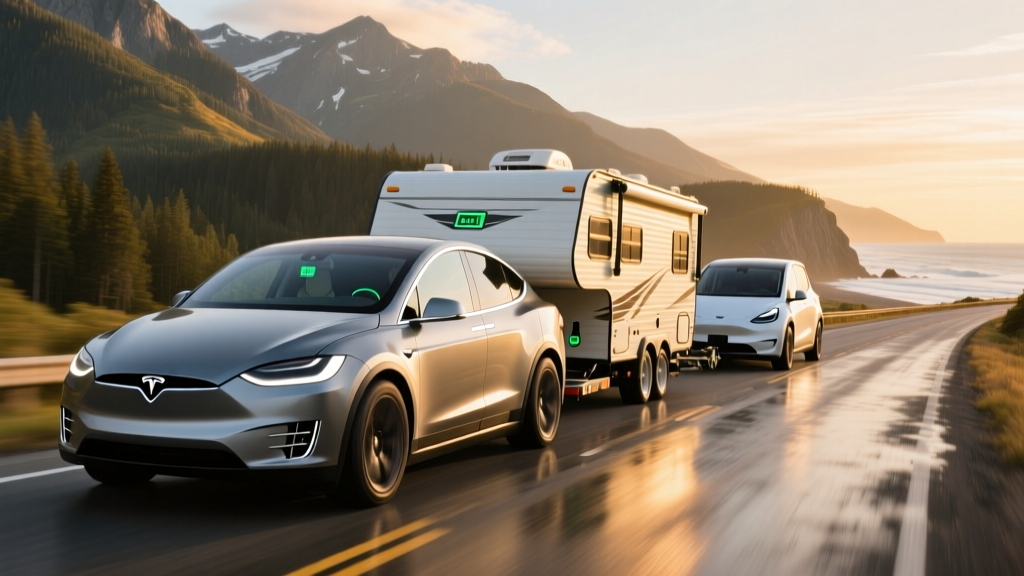
Towing capacity is rated at 3,500 pounds across all trims with the factory tow package. The vehicle's weight actually helps with trailer stability, but towing cuts range roughly in half — expect 140-160 miles on a full charge when pulling a loaded trailer.
Pricing, Tax Credits, and True Cost
| Trim | Base MSRP | Destination | As-Tested (typical) | §30D Credit Eligible? |
|---|---|---|---|---|
| Long Range RWD | $44,990 | $1,390 | $46,380 | Yes — up to $7,500* |
| Long Range AWD | $47,990 | $1,390 | $49,380 | Yes — up to $7,500* |
| Performance AWD | $52,490 | $1,390 | $53,880 | Yes — up to $7,500* |
*Federal tax credit eligibility under IRS §30D requires meeting ALL of the following:
- MSRP cap: SUVs/vans must be under $80,000 (all Model Y trims qualify)
- Buyer income cap: AGI ≤ $150,000 (single), $225,000 (head of household), $300,000 (joint)
- Battery sourcing: Critical minerals and battery components must meet phased-in domestic/free-trade sourcing thresholds (Tesla's U.S. production has largely met these for 2025-2026, but verify at purchase)
- Point-of-sale transfer: You can apply the credit as a down-payment reduction at the dealer, lowering your financed amount immediately
If you qualify for the full $7,500, the Long Range RWD Model Y effectively starts around $37,490 — making it one of the most affordable 300+ mile EVs on the market. Always confirm current eligibility on the IRS website and with your tax professional before relying on the credit, as sourcing rules tighten annually.
Cargo, Passenger Space, and Daily Practicality
The Model Y remains one of the most space-efficient compact EV SUVs despite its relatively sleek roofline:
- Cargo volume (rear seats up): 30.2 cu ft
- Cargo volume (rear seats folded): 72.1 cu ft
- Front trunk (frunk): 4.1 cu ft
- Rear legroom: 41.6 inches
- Front headroom: 41.0 inches
- Seating: 5-passenger standard (7-seat option discontinued for Juniper in the U.S.)
The Juniper refresh improved interior materials and added ventilated front seats, ambient lighting, and a rear-seat touchscreen. The cabin is quieter than the pre-2025 model — Tesla added acoustic glass and additional insulation, which contributes to the modest weight increase over the prior generation.
Warranty, Tech, and Driver Assistance
Tesla's warranty coverage for the Model Y:
- Basic vehicle: 4 years / 50,000 miles
- Battery & drive unit: 8 years / 120,000 miles (Long Range & Performance); 8 years / 100,000 miles (RWD)
- Battery degradation guarantee: Tesla warrants the pack retains at least 70% capacity during the warranty period
On the tech front, the 15.4-inch center touchscreen runs Tesla's latest software with native navigation, streaming, and over-the-air updates. Autopilot (basic adaptive cruise + lane centering) is standard. Full Self-Driving (Supervised) remains a $8,000 add-on or $99/month subscription — and it's critical to understand this is an SAE Level 2 system. You must keep your hands on the wheel and eyes on the road at all times. It is not autonomous driving. Only Level 4 services like Waymo operate without a human driver.
How the Model Y Stacks Up Against Competitors
| Vehicle | Curb Weight | EPA Range | Starting MSRP | Max DC Charge |
|---|---|---|---|---|
| Tesla Model Y LR AWD | ~4,600 lbs | 305 mi | $47,990 | 250 kW |
| Hyundai Ioniq 5 (Long Range AWD) | ~4,500 lbs | 290 mi | $49,500 | 350 kW (800V) |
| Ford Mustang Mach-E (ER AWD) | ~4,800 lbs | 290 mi | $50,995 | 150 kW |
| Kia EV6 (Long Range AWD) | ~4,500 lbs | 282 mi | $48,700 | 350 kW (800V) |
The Model Y sits in the middle of its competitive set on weight but leads on EPA range per dollar after the tax credit. Hyundai and Kia's 800V architecture charges faster (10-80% in ~18 minutes), but the Tesla Supercharger network remains the most reliable public charging ecosystem in the U.S. — a factor that matters on road trips.
Pros
- Best-in-class range per dollar after §30D credit
- Supercharger network reliability
- Strong cargo space (72 cu ft folded)
- Quiet, refined Juniper cabin
- OTA updates add features over time
Cons
- DC fast-charge speed trails 800V rivals
- High tire wear due to weight + torque
- No Apple CarPlay / Android Auto
- FSD subscription cost adds up
- Panel upgrade may be needed for home L2
Who Should Buy the Model Y — and Who Shouldn't
Choose the Model Y if: You want the longest range per dollar in a compact SUV, rely on road-trip charging infrastructure, need 30+ cu ft of cargo space, and qualify for the full federal tax credit. The Long Range RWD at ~$37,500 after credit is the value pick.
Look elsewhere if: You want the fastest possible DC charging (Hyundai Ioniq 5 or Kia EV6 with 800V), prefer Apple CarPlay, need a third row (Kia EV9 or Rivian R1S), or drive in extreme cold frequently (all EVs lose range, but a larger pack like the Rivian R1T's gives more buffer).
Frequently Asked Questions
Why does the Tesla Model Y weigh so much?
The Model Y's weight comes primarily from its 78.1 kWh battery pack, which accounts for roughly 1,000-1,100 pounds of the vehicle's total mass. The dual-motor AWD system, structural battery tray, thermal management hardware, and the Juniper generation's added sound insulation contribute the rest. For comparison, a gas-powered Toyota RAV4 weighs about 3,600 pounds — but it carries no comparable energy storage.
Does the Model Y's weight affect tire wear?
Yes, significantly. The combination of ~4,600 lbs and instant electric torque wears tires 20-30% faster than a comparable ICE crossover. Plan on replacing tires every 25,000-35,000 miles and choose EV-rated tires with a higher load index.
Can I charge the Model Y at non-Tesla chargers?
Yes. The Juniper Model Y uses the NACS (North American Charging Standard) connector natively. With the industry's ongoing shift to NACS through 2025-2026, most major networks (Electrify America, EVgo) are adding NACS cables. You can also use a NACS-to-CCS adapter at legacy CCS stations.
Is the Model Y safe?
The Model Y has earned a 5-Star Overall Safety Rating from NHTSA and top marks from IIHS. Its low center of gravity (from the floor-mounted battery pack) gives it excellent rollover resistance despite the high curb weight.
What's the cheapest way to buy a Model Y in 2026?
The Long Range RWD at $44,990 MSRP, minus the $7,500 federal tax credit (if eligible), brings the effective price to $37,490 before destination and state incentives. This is the lowest entry point for a new 300+ mile EV in the U.S. market.