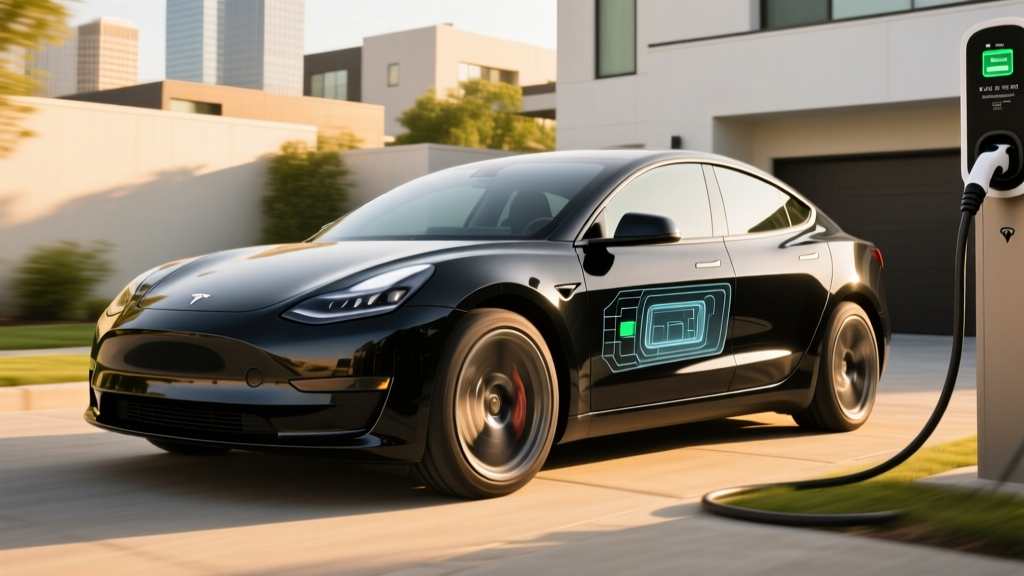
The 2018 Tesla Model 3 Performance rewrote the rulebook on what a sub-$60,000 sedan could do. With a 3.3-second 0-60 mph time, dual-motor all-wheel drive, and an EPA-estimated 310 miles of range, it embarrassed sports cars costing three times as much while delivering daily-driver practicality. Now, in the used-EV market of 2026, it's become one of the most compelling bargains in electrification — if you know what to look for.
This buyer's guide covers every spec that matters for a used 2018 Model 3 Performance: real-world range expectations, battery health considerations, charging speeds, Autopilot capabilities, and whether it still qualifies for any federal incentives. If you're cross-shopping this against a newer EV or a gas sport sedan, here's the data you need.
2018 Model 3 Performance Specs at a Glance
| Spec | Value |
|---|---|
| EPA Range | 310 miles |
| Battery (usable) | ~75 kWh (NMC) |
| Drivetrain | Dual-Motor AWD |
| 0-60 mph | 3.3 seconds |
| Horsepower | ~450 hp (combined) |
| Torque | ~471 lb-ft |
| Top Speed | 155 mph |
| MPGe (combined) | 120 MPGe |
| Efficiency | 28 kWh/100 mi |
| Max DC Fast Charge | ~145 kW peak |
| Level 2 Charge Rate | 11.5 kW (48A) |
| Cargo Volume | 15 cu ft (trunk) + ~3 cu ft (frunk) |
| Original MSRP | $64,000 (before incentives) |
| 2026 Used Price Range | $22,000–$32,000 |
| Battery Warranty (original) | 8 yr / 120,000 mi |
Real-World Range: What 310 EPA Miles Actually Means
Real-World Highway (70 mph, 72°F): ~250–270 miles
Real-World City/Mixed (moderate climate): ~270–295 miles
Cold Weather (below 32°F, highway): ~190–220 miles
Track Day / Aggressive Driving: Expect 120–160 miles
The 2018 Model 3 Performance's 310-mile EPA estimate was class-leading at launch. But EPA testing uses low average speeds and mild acceleration — it doesn't reflect sustained highway driving or cold-weather battery behavior.
In real-world highway testing at 70 mph in moderate temperatures, owners consistently report 250–270 miles before needing to charge. The Model 3's aerodynamic efficiency (0.23 Cd drag coefficient) helps at speed, but the Performance trim's 20-inch wheels and stickier tires add rolling resistance versus the Long Range RWD model.
Cold weather is the equalizer. Lithium-ion NMC batteries lose efficiency below freezing, and without preconditioning to a Supercharger, you'll see range drop to roughly 190–220 miles in sub-32°F highway driving. The Model 3 does have a heat pump? No — the 2018 model uses resistive cabin heating, which draws significantly more energy than the heat pump Tesla introduced in the 2021 Model 3 refresh. Budget-conscious buyers in cold climates should factor in a 25–35% winter range penalty.
According to fueleconomy.gov, the 2018 Model 3 Long Range AWD (the Performance shares its powertrain) achieves 120 MPGe combined, translating to 28 kWh per 100 miles. That efficiency figure remains competitive with 2026 EVs like the Hyundai Ioniq 6 (140 MPGe) and BMW i4 eDrive40 (109 MPGe).
Battery: 75 kWh NMC Chemistry and Long-Term Degradation
The 2018 Model 3 Performance uses a ~75 kWh usable (82 kWh gross) nickel-manganese-cobalt (NMC) lithium-ion battery pack. NMC offers higher energy density than the LFP (lithium iron phosphate) chemistry Tesla later adopted for Standard Range models, which is how the Performance achieves its 310-mile rating in a relatively compact pack.
NMC vs. LFP trade-offs for used buyers:
- NMC (this car): Higher energy density, better cold-weather performance, but degrades faster if routinely charged to 100%. Tesla recommends daily charging to 80–90% for NMC packs.
- LFP (2021+ Standard Range): Lower energy density but can be charged to 100% daily without accelerated degradation. LFP wasn't available in the 2018 Performance.
After 7–8 years on the road, real-world degradation data from owner communities and TeslaFi telemetry suggests most 2018 Model 3 Performance packs retain 85–92% of original capacity at 80,000–100,000 miles. A pack showing less than 80% State of Health (SoH) at this mileage may indicate aggressive DC fast-charging habits or frequent 100% charges without preconditioning.
Tesla's original battery warranty covers 8 years or 120,000 miles (whichever comes first) against defects and capacity loss below 70%. For a 2018 model, that warranty expires in 2026 at the latest — meaning most used examples are at or beyond warranty expiration. A pre-purchase battery health check via the car's service menu or a third-party OBD-II scan tool is essential.
Charging Speed: DC Fast, Level 2, and Supercharger Access
The 2018 Model 3 Performance charges via Tesla's proprietary connector (pre-NACS standardization) and accesses the Tesla Supercharger network natively. Here's how fast it actually charges:
| Level | Power | Speed | Notes |
|---|---|---|---|
| Level 1 (120V) | ~1.4 kW | ~4–5 mi/hr | Emergency/trickle only |
| Level 2 (240V, 48A) | 11.5 kW | ~37 mi/hr | Home Wall Connector or public L2 |
| Level 2 (240V, 32A mobile) | 7.7 kW | ~25 mi/hr | Tesla Mobile Connector on dryer outlet |
| DC Fast (V2 Supercharger) | ~145 kW peak | 10–80% in ~30 min | Sustained rate tapers above 60% |
| DC Fast (V3 Supercharger) | ~150 kW peak | 10–80% in ~28 min | 2018 Model 3 cannot reach V3's 250 kW peak |
Charging curve reality: The 2018 Model 3 Performance peaks around 145–150 kW at low state of charge (10–20%), then tapers progressively. By 60% SoC, the rate drops to roughly 80 kW; above 80%, it falls below 40 kW. This means a 10–80% session takes about 28–32 minutes at a V2 or V3 Supercharger, but a 10–95% session can stretch past 55 minutes. Plan road trips around 80% charges for time efficiency.
For home charging, a Tesla Wall Connector on a 60-amp circuit delivers the full 11.5 kW (48 amps), adding roughly 37 miles of range per hour — enough to fully replenish the battery overnight. Installation typically costs $800–$2,000 depending on panel capacity and conduit run length, per licensed electrician estimates.
With Tesla opening its Supercharger network to non-Tesla EVs via NACS adapters, the network is busier than in 2018. However, Tesla vehicles still benefit from seamless plug-and-charge integration and real-time stall availability in the navigation system.
Performance: The 0-60 Time That Started the Panic
The headline number: 3.3 seconds from 0 to 60 mph, verified by Tesla and independent testers including Motor Trend and Car and Driver. With dual electric motors (a permanent-magnet rear motor and an induction front motor), the Model 3 Performance delivers instant torque with no turbo lag, no gear shifts, and no drama.
Combined output sits at approximately 450 horsepower and 471 lb-ft of torque. The dual-motor AWD system can vector torque front-to-rear in milliseconds, providing exceptional grip even in wet conditions. The 2018 Performance included Track Mode (added via OTA update), which allows adjustable regenerative braking, torque distribution, and stability-control intervention for closed-course driving.
For context, the 2018 BMW M3 does 0-60 in about 3.9 seconds and costs roughly $70,000. The 2018 Porsche Panamera 4S hits 60 in 4.2 seconds at over $100,000. The Model 3 Performance undercut both on price and acceleration while carrying five passengers and offering 310 miles of range.
By 2026 standards, the 3.3-second time remains quick but no longer exceptional — the current Model 3 Performance (2024 refresh) does 0-60 in 2.9 seconds, and the Hyundai Ioniq 5 N manages 3.25 seconds. However, the 2018 model's combination of speed, range, and used-market pricing is still difficult to match.
Tech, Interior, and Driver Assistance
The 2018 Model 3's interior was polarizing at launch and remains so. There are no physical buttons — everything routes through a 15-inch center touchscreen. Climate controls, mirror adjustments, glovebox release, and even the vent direction are screen-operated. Minimalists love it; traditionalists find it distracting.
Infotainment: The 2018 Model 3 launched without Apple CarPlay or Android Auto — a decision Tesla has maintained. Instead, you get Tesla's native interface with built-in navigation, Spotify, Tidal, Netflix/YouTube (while parked), and a web browser. Over-the-air updates have continuously added features since 2018, including improved voice commands, dashcam functionality, and Sentry Mode (surveillance recording while parked).
Autopilot and FSD: The 2018 Model 3 shipped with Tesla's HW2.5 computer. Many units have since been upgraded to HW3 (also called "Full Self-Driving Computer") via retrofit, enabling Tesla's FSD (Supervised) software. However, FSD (Supervised) is a Level 2 driver-assistance system per SAE classification — the driver must remain fully engaged, hands on or near the wheel, and eyes on the road at all times.
Tesla Autopilot and FSD (Supervised) are Level 2 systems. The vehicle can steer, accelerate, and brake under certain conditions, but the driver is legally and practically responsible for all driving decisions. This is not autonomous or self-driving capability. Level 4 autonomy (no driver needed) exists only in geofenced robotaxi services like Waymo in select cities.
Standard Autopilot includes Traffic-Aware Cruise Control and Autosteer (lane-centering). Enhanced Autopilot adds Navigate on Autopilot, Auto Lane Change, Autopark, and Summon. FSD (Supervised) adds traffic-light and stop-sign recognition and city-street autosteering, though its performance varies significantly by geography and road complexity.
Drawbacks to note: The 2018 Model 3 has no heads-up display, no traditional instrument cluster, and early-build models had notable panel-gap and paint-quality issues. The glass roof provides an airy cabin but no shade — aftermarket sunshades are a popular accessory. Rear-seat legroom (35.2 inches) is adequate but tight for adults on long trips compared to a midsize sedan.
Used Pricing and Federal Tax Credit Eligibility
In the 2026 used-EV market, the 2018 Model 3 Performance typically lists between $22,000 and $32,000 depending on mileage, condition, battery health, and whether FSD was purchased (a $5,000–$8,000 add-on when new that doesn't always transfer or add equivalent resale value).
| Item | Amount |
|---|---|
| Original MSRP (2018) | ~$64,000 |
| 2026 Used Price Range | $22,000–$32,000 |
| Federal Used EV Credit (§25E) | Up to $4,000 (30% of sale price, capped) |
| Federal New EV Credit (§30D) | Not applicable (used vehicle) |
| Estimated Price After §25E Credit | ~$18,000–$28,000 |
Does it qualify for the federal EV tax credit? The $7,500 new-EV credit under IRS §30D does not apply to used vehicles. However, the §25E Used Clean Vehicle Credit offers up to $4,000 (30% of the sale price, capped at $4,000) for qualifying used EVs. Key requirements per IRS guidelines:
- Sale price must be $25,000 or less to maximize the credit (30% of $25,000 = $7,500, but capped at $4,000)
- Buyer income limits: $75,000 single / $112,500 head of household / $150,000 joint (modified AGI)
- Vehicle must be at least 2 model years old (2018 qualifies in 2026)
- Must purchase from a licensed dealer (private-party sales do not qualify)
- Credit is non-refundable — you must have sufficient tax liability to claim it
- Can only be claimed once per vehicle (check if a prior owner already used it)
This means a $24,000 used 2018 Model 3 Performance bought from a dealer could net a $4,000 credit for qualifying buyers, dropping the effective cost to $20,000 — an extraordinary value for a 310-mile, 3.3-second AWD sedan.
Pros, Cons, and the Verdict
Pros
- 3.3-second 0-60 mph still thrilling in 2026
- 310-mile EPA range remains practical for road trips
- Tesla Supercharger network access (largest in North America)
- Over-the-air updates continue to add features
- Low running costs: ~$0.04–$0.08/mi on home electricity
- Strong safety ratings (IIHS Top Safety Pick, 5-star NHTSA)
- Potential $4,000 used-EV tax credit
Cons
- No Apple CarPlay or Android Auto
- Resistive cabin heating (no heat pump) hurts winter range
- Battery warranty expiring or expired on most examples
- 145 kW peak DC charge rate is slow vs. 2026 EVs (250–350 kW)
- Early-build quality issues (panel gaps, paint, suspension noise)
- FSD purchase may not transfer; verify before buying
- Rear-seat space tight for tall adults
Who Should Buy the 2018 Model 3 Performance?
Best for: Enthusiast commuters who want sports-car acceleration with EV running costs, solo drivers or couples who don't need rear-seat space daily, and Tesla-curious buyers who want Supercharger access without paying new-car prices.
Skip it if: You need a family hauler (the Model Y or a 3-row EV is better), you live in extreme cold and need maximum winter range (consider a 2021+ Model 3 with a heat pump), or you rely on Apple CarPlay for navigation and music.
Key competitors in the used market: The 2018–2019 Chevrolet Bolt EV is cheaper (~$12,000–$16,000) but slower and limited to 238 miles of range. The 2019–2020 Hyundai Kona Electric offers 258 miles but lacks AWD and performance. The 2018 BMW i3s is fun but has only 114 miles of range. None match the Model 3 Performance's combination of speed, range, and charging infrastructure.
Frequently Asked Questions
What is the real-world range of the 2018 Model 3 Performance?
Expect 250–270 miles in real-world highway driving at moderate temperatures, 270–295 miles in mixed city/suburban use, and 190–220 miles in cold-weather highway driving below freezing. The EPA sticker says 310 miles, but sustained highway speeds, cold temperatures, and aggressive acceleration all reduce range.
How fast does it charge on DC fast chargers and at home?
At a Tesla Supercharger, the 2018 Model 3 Performance peaks at roughly 145 kW and charges from 10–80% in about 28–32 minutes. At home on a Level 2 Wall Connector (11.5 kW / 48 amps), it adds approximately 37 miles of range per hour, fully charging overnight in about 8 hours.
Does the 2018 Model 3 Performance qualify for the federal EV tax credit?
Not the $7,500 new-vehicle credit (§30D). However, it may qualify for the §25E Used Clean Vehicle Credit of up to $4,000, provided the sale price is $25,000 or less, you buy from a licensed dealer, your income falls below IRS thresholds ($75K single / $150K joint), and the credit hasn't already been claimed on that VIN. Consult a tax professional and verify at IRS.gov.
Is the 2018 Model 3 Performance still worth buying in 2026?
Yes, for the right buyer. At $22,000–$32,000 used (potentially $18,000–$28,000 after the §25E credit), it offers acceleration, range, and charging access that still competes with 2026 EVs costing twice as much. However, verify battery health, check for FSD transfer, and understand that the battery warranty is likely expired. A pre-purchase inspection is essential.
What's the biggest risk of buying a used 2018 Model 3 Performance?
Battery degradation outside warranty coverage. If the pack has degraded below 80% State of Health, a replacement costs $12,000–$16,000 at a Tesla Service Center. Always check battery health via the car's service menu or an OBD-II tool before purchasing, and prefer examples with documented Supercharger usage patterns and moderate mileage (under 80,000 miles).
Can I use non-Tesla chargers with the 2018 Model 3 Performance?
Yes, with an adapter. The 2018 Model 3 uses Tesla's proprietary connector. Tesla includes a J1772 adapter for public Level 2 chargers in the glovebox. For CCS DC fast chargers (Electrify America, EVgo), you'll need a Tesla-to-CCS adapter (available from Tesla or third parties for ~$200–$250). Note that charging speeds on non-Tesla DC chargers may be limited by adapter compatibility.