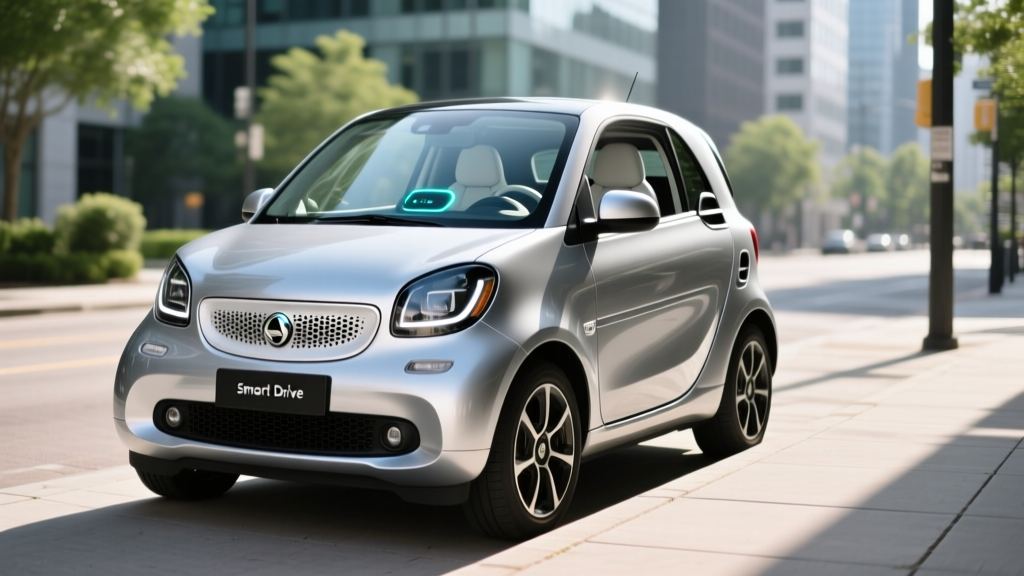
If you're considering a 2018 Smart Fortwo Electric Drive as a used EV purchase, here's the direct answer: it's a legitimate but extremely niche option best suited as a dedicated city commuter for someone with reliable home charging and a short daily drive. With an EPA-rated range of just 58 miles, a tiny 17.6 kWh battery, and DC fast charging that doesn't exist on this model, the Fortwo ED is a budget-friendly urban runabout — not a primary vehicle for most households. Used prices in 2026 typically range from $7,000 to $12,000 depending on mileage and condition, making it one of the cheapest ways into electric driving, but the trade-offs in range, charging speed, and practicality are substantial.
Quick Verdict: 2018 Smart Fortwo Electric Drive
Buy it if: You need a sub-$10,000 city-only commuter, have Level 2 home charging, and drive under 40 miles round-trip daily.
Skip it if: You need highway range, fast charging, back seats, cargo space, or live in a cold climate where range drops 30%+.
Range, Battery, and Efficiency: The Numbers That Matter
The 2018 Smart Fortwo Electric Drive (also badged as the EQ Fortwo in some markets) packs a 17.6 kWh lithium-ion battery (NMC chemistry), of which approximately 16.7 kWh is usable. The EPA rates it at 58 miles of combined range, with an efficiency rating of 108 MPGe combined (119 city / 94 highway) according to fueleconomy.gov.
Real-World Range Expectations
EPA Sticker: 58 miles combined
Real-world city driving (moderate temps): 50–60 miles
Highway driving (65–70 mph): 40–48 miles
Cold weather (below 30°F): 35–45 miles
The Fortwo ED has no active battery thermal management (no liquid cooling or heat pump). In freezing temperatures, expect 25–35% range loss. This is a critical limitation in northern climates.
At 108 MPGe combined, the Fortwo ED is efficient in energy terms — it consumes roughly 31 kWh per 100 miles. For context, a 2026 Hyundai Ioniq 6 SE achieves 140 MPGe combined with a 361-mile EPA range from its 77.4 kWh pack. The Smart's efficiency figure is respectable for its era, but the tiny battery means you'll be plugging in constantly.
| Spec | Value |
|---|---|
| EPA Range | 58 miles |
| Battery Capacity | 17.6 kWh total / ~16.7 kWh usable |
| Battery Chemistry | NMC (Nickel Manganese Cobalt) |
| Motor Output | 80 hp (60 kW) / 118 lb-ft torque |
| 0–60 mph | 11.4 seconds |
| Top Speed | 81 mph (electronically limited) |
| EPA Efficiency | 108 MPGe combined (119 city / 94 hwy) |
| Level 2 Charge Rate | 7.2 kW (onboard charger) |
| DC Fast Charging | Not available |
| Charge Time (Level 2, 0–100%) | ~2.5 hours |
| Charge Time (Level 1, 120V) | ~13–16 hours |
| Connector | J1772 (Level 2 AC) |
| Cargo Volume | 9.2 cu ft |
| Curb Weight | ~2,300 lbs |
| Original MSRP (2018) | $24,650 (coupe) / $28,150 (cabrio) |
| Used Price Range (2026) | $7,000–$12,000 |
| Battery Warranty (original) | 8 years / 100,000 miles |
Charging Realities: No Fast Charging, No Compromises
The 2018 Fortwo ED's charging profile is the single biggest ownership constraint. There is no DC fast charging capability — the car can only accept AC power through its J1772 port. This means you will never charge this car in under 2.5 hours, even at the most powerful public station.
| Charging Level | Power (kW) | Time to Full | Miles Added/Hour |
|---|---|---|---|
| Level 1 (120V household) | ~1.2 kW | 13–16 hours | ~4–5 miles |
| Level 2 (240V, 32A) | 7.2 kW (max onboard) | ~2.5 hours | ~24 miles |
| DC Fast Charge | N/A — not supported | N/A | N/A |
The 7.2 kW onboard charger is adequate for overnight replenishment on a home Level 2 unit. A standard Level 2 home charger installation (240V, 40A circuit) runs $800–$2,000 depending on your electrical panel's proximity to the parking spot and whether a panel upgrade is needed. Because the battery is so small, even a basic 120V outlet can add roughly 30 miles of range overnight — enough for many city commutes.
Real-world charging tip: The lack of DC fast charging means road trips are impractical. Even if your destination is within range, you'd need a multi-hour stop at a Level 2 public charger to get back home. This car is a dedicated local vehicle.
Cost Breakdown: Purchase, Charging, and Ownership Economics
The financial case for a used 2018 Smart Fortwo ED is where the math gets interesting — and where it falls short for some buyers.
| Cost Category | Smart Fortwo ED (Used) | 2018 Honda Fit (Used) |
|---|---|---|
| Purchase Price (2026 used market) | $9,500 (avg) | $13,000 (avg) |
| Fuel/Energy (5 yrs, 12K mi/yr) | $2,400 (electricity @ $0.15/kWh) | $7,500 (gas @ $3.50/gal, 33 MPG) |
| Maintenance (5 yrs) | $1,200 | $3,500 |
| Insurance (5 yrs avg) | $5,500 | $5,000 |
| Federal Tax Credit | $0 (used EV credit expired/ineligible) | $0 |
| Estimated Battery Replacement Risk | $0–$8,000 (see below) | N/A |
| Total 5-Year Cost (best case) | $18,600 | $29,000 |
Key savings driver: The Fortwo ED's tiny battery means low electricity costs. At the national average of $0.15/kWh, a full charge costs roughly $2.64. Driving 12,000 miles per year consumes about 3,720 kWh, costing approximately $558 annually in electricity — versus $1,500+ for gas in a comparable subcompact.
Maintenance advantage: EVs have no oil changes, no spark plugs, no transmission fluid, and regenerative braking extends pad life dramatically. Smart Fortwo ED maintenance is limited to tire rotations, cabin air filter, brake fluid checks, and wiper blades.
Tax credit reality: The federal used EV tax credit (§25E, up to $4,000) was available through 2025 but has been subject to legislative changes. As of 2026, verify current status on IRS.gov. Even when available, the credit is limited to 30% of the sale price — so on a $9,500 Smart, the maximum would be $2,850, not $4,000. Income caps apply.
Smart Fortwo ED vs. Gas and Hybrid Alternatives
How does a used 2018 Smart Fortwo Electric Drive compare against other small, efficient used vehicles in the same price range?
| Vehicle | Powertrain | EPA Range/MPG | Fuel Cost/Year | Practicality |
|---|---|---|---|---|
| 2018 Smart Fortwo ED | BEV | 58 mi range / 108 MPGe | ~$558 | 2 seats, 9.2 cu ft cargo |
| 2018 Honda Fit | Gas | 33 MPG combined | ~$1,509 | 5 seats, 52.7 cu ft cargo |
| 2018 Toyota Prius c | HEV | 46 MPG combined | ~$1,087 | 5 seats, 17.1 cu ft cargo |
| 2017–2018 Fiat 500e | BEV | 84 mi range / 112 MPGe | ~$540 | 4 seats, 7.0 cu ft cargo |
| 2018 BMW i3 (60 Ah) | BEV | 81 mi range / 111 MPGe | ~$555 | 4 seats, 15.1 cu ft cargo |
The Fortwo ED has the lowest range and least practicality of any option here. The Fiat 500e offers 45% more range for similar energy costs. The BMW i3, while pricier used, offers DC fast charging (CCS) and more interior space. The Prius c eliminates range anxiety entirely while still cutting fuel costs significantly.
Where the Smart wins: Purchase price. At $7,000–$12,000, it's often the cheapest BEV available on the used market. If your budget is strictly under $10K and you need an EV (perhaps for HOV lane access, local emissions rules, or personal preference), the Fortwo ED may be your only option.
Battery Health, Degradation, and Longevity Concerns
The 17.6 kWh NMC battery in the 2018 Fortwo ED is now 7–8 years old. NMC chemistry typically loses 10–20% capacity over 8 years under normal use, though the Smart's passive (air-cooled) thermal management may accelerate degradation in hot climates.
What to check before buying:
- Request a battery State of Health (SoH) reading from a Smart/Mercedes-Benz dealer. Anything below 80% SoH significantly reduces an already-limited range.
- Check if the original 8-year/100,000-mile battery warranty is still active. For a 2018 model, coverage extends through 2026 — you may be near the expiration window.
- Look for uneven cell degradation symptoms: sudden range drops at low SoC, or the car showing 10% charge but dying within minutes.
Battery replacement cost: A new or refurbished 17.6 kWh pack for the Fortwo ED runs approximately $6,000–$10,000 installed as of 2026, according to independent EV repair shops. Given the car's total value, a battery failure could be a total-loss scenario. This is the single biggest financial risk of ownership.
Common Misconceptions About the 2018 Smart Fortwo ED
| Myth | Fact |
|---|---|
| "It qualifies for the $7,500 federal tax credit" | No. The §30D new EV credit never applied to used purchases, and the Smart brand is discontinued. The used EV credit (§25E) maxes at 30% of sale price, up to $4,000, with income limits. |
| "58 miles of range is enough for anyone in a city" | Only if your round-trip commute is under 40 miles AND you don't make detours, run errands, or drive in cold weather. Real-world range can drop to 35–45 miles in winter. |
| "I can fast-charge it on road trips" | The Fortwo ED has no DC fast charging port. Maximum charge rate is 7.2 kW AC, requiring 2.5 hours for a full charge. |
| "EV batteries always last 15+ years" | Many do, but passively-cooled small packs in hot climates can degrade faster. Budget for potential replacement risk on any 8-year-old EV with no liquid cooling. |
| "Smart parts are easy to find" | Mercedes-Benz discontinued the Smart brand in the US after 2019. Parts availability is declining, and fewer mechanics are trained to service them. |
First-Time EV Buyer Checklist: What to Know Before You Buy
If the 2018 Smart Fortwo Electric Drive would be your first EV, here are the ownership realities no brochure will tell you:
1. Home charging is nearly mandatory. With no DC fast charging and only 58 miles of range, relying on public Level 2 chargers is impractical for daily use. You need a dedicated 240V outlet or hardwired Level 2 charger at home. Confirm your electrical panel has capacity (a 40A circuit requires a panel with at least 50A of spare capacity). If you live in an apartment without charging access, this car is not viable.
2. Cold weather is a dealbreaker in northern states. Without a heat pump or battery preconditioning, the Fortwo ED loses 25–35% of its range below freezing. A 58-mile EPA range becomes 38–43 miles on a cold January morning in Chicago or Boston. Cabin heating draws directly from the traction battery, compounding the loss.
3. Insurance may surprise you. Despite its low value, EV insurance premiums can be 15–25% higher than equivalent gas cars due to specialized repair requirements and battery replacement costs. Get a quote before committing to the purchase.
4. Smart brand discontinuation matters. Mercedes-Benz pulled the Smart Fortwo from the US market after the 2019 model year. While Mercedes-Benz dealers are technically obligated to service them, parts availability and technician familiarity are declining. Body panels, trim pieces, and Smart-specific electronics may require long lead times or used-part sourcing.
5. Safety is a real consideration. The Smart Fortwo earned a "Marginal" rating in the IIHS small overlap front test. While its Tridion safety cell is structurally sound, the car's tiny size and weight (~2,300 lbs) put it at a physics disadvantage in collisions with larger vehicles. Check IIHS ratings for full details.
Decision Framework: Should You Buy the 2018 Smart Fortwo Electric Drive?
If-Then Buying Guide
BUY the 2018 Smart Fortwo ED if ALL of these are true:
- Your daily round-trip drive is under 35 miles (leaving a 20+ mile buffer)
- You have confirmed Level 2 home charging access (garage, driveway, or installed charger)
- You live in a mild climate (rarely below 35°F in winter)
- This will be a secondary vehicle — you have another car for longer trips
- Your total budget is under $10,000 and you specifically want a BEV
- You accept the parts-availability risk of a discontinued brand
SKIP the 2018 Smart Fortwo ED if ANY of these are true:
- Your daily driving exceeds 40 miles round-trip
- You lack home charging and would rely on public infrastructure
- You live where winter temperatures regularly drop below freezing
- You need this as your only vehicle
- You need to carry more than one passenger or significant cargo
- You want DC fast charging for any road-trip flexibility
- Battery replacement cost ($6K–$10K) would be financially devastating
Consider these alternatives instead:
- Budget $12K–$16K: 2017–2018 BMW i3 (81 mi range, DC fast charging available, more practical)
- Budget $10K–$14K: 2017–2018 Fiat 500e (84 mi range, still no DC fast charge but more range)
- Budget $14K–$18K: 2018–2019 Nissan Leaf (151 mi range on 40 kWh model, CHAdeMO DC fast charging)
- Eliminate range anxiety entirely: 2017–2018 Toyota Prius c hybrid (46 MPG, no plug needed, $10K–$13K used)
Frequently Asked Questions
Can I install a Level 2 charger at home for the Smart Fortwo ED?
Yes. Any standard J1772 Level 2 charger (240V) will work. The car's onboard charger maxes out at 7.2 kW, so a 32A charger is sufficient — you don't need a 48A unit. Expect $400–$700 for the charger hardware and $500–$1,500 for professional electrical installation, depending on your panel's proximity and capacity. A licensed electrician should assess your panel before purchase.
Is the 2018 Smart Fortwo ED eligible for any tax credits in 2026?
The federal new-vehicle credit (§30D) does not apply to used purchases. The used clean vehicle credit (§25E) may offer up to $2,850 (30% of a ~$9,500 sale price) if the credit is still active and you meet income requirements (AGI under $75,000 single / $150,000 joint). Verify current rules on IRS.gov before relying on any credit amount. Some states offer additional used-EV rebates — check your state energy office.
What happens if the battery fails outside of warranty?
Out-of-warranty battery replacement costs $6,000–$10,000 installed. Given that the car's total value is $7,000–$12,000, a battery failure could effectively total the vehicle. This is why obtaining a battery SoH report before purchase is critical, and why budgeting for this risk is essential.
How does the Smart Fortwo ED handle in rain and snow?
The rear-wheel-drive layout, short wheelbase (73.7 inches), and lightweight (~2,300 lbs) make the Fortwo ED twitchy in wet conditions and challenging in snow. Winter tires help, but the car's low ground clearance and narrow tires limit traction. Combined with cold-weather range loss, this is not a recommended vehicle for snowy climates.
Can I take the 2018 Smart Fortwo ED on a road trip?
Technically yes, but practically no. With 58 miles of range and no DC fast charging, you'd need to stop for 2.5+ hours at a Level 2 charger every 40–50 miles of driving. A 200-mile trip would take 10–12 hours including charging stops. This car was engineered as a city vehicle, and that's where it should stay.
Is it safe to buy a used EV from a discontinued brand?
It carries additional risk. Mercedes-Benz still supports Smart vehicles through its dealer network, but parts inventory is shrinking, and fewer technicians have Smart-specific training. Body repair parts (bumpers, panels, lighting) may require salvage-yard sourcing. If reliability and easy servicing are priorities, a used EV from an active brand (Nissan Leaf, Chevrolet Bolt, BMW i3) is a safer bet.
The 2018 Smart Fortwo Electric Drive occupies a specific niche: the absolute cheapest entry into battery-electric driving for a disciplined city commuter with home charging. At $7,000–$12,000, it undercuts nearly every other BEV on the used market. But the 58-mile range, lack of fast charging, discontinued-brand risk, and cold-weather limitations make it a viable choice only for buyers who understand exactly what they're signing up for. Run the numbers, check the battery health, and make sure your daily driving pattern fits within its narrow envelope before committing.