Quick Verdict: The 2018 Leaf SV as a Used-EV Bargain
The 2018 Nissan Leaf SV was a watershed model year. Nissan ditched the original 24 kWh pack for a 40 kWh lithium-ion battery, pushing EPA range from 84 miles to 151 miles and making the Leaf a genuinely viable daily driver for the first time. In 2026, this car is strictly a used-market proposition — production ended years ago and the current-generation Leaf has moved on. But at used prices often between $10,000 and $16,000, the 2018 Leaf SV remains one of the most affordable entry points into EV ownership, especially if you can charge at home.
Its limitations are real: passive air-cooled battery management, CHAdeMO-only DC fast charging (a connector being phased out in North America), and modest 50 kW peak charge rates. If you understand those constraints going in, the 2018 Leaf SV is a practical commuter with low running costs, hatchback versatility, and eligibility for the used EV tax credit under IRS §25E.
Range, Efficiency, and Real-World Expectations
EPA Estimated Range: 151 miles (40 kWh battery)
Real-World Expectation: 120–140 miles highway at 70 mph; 100–120 miles in freezing weather; up to 155+ miles in mild city driving with regen.
The EPA rates the 2018 Leaf SV at 151 miles of combined range. That figure holds up reasonably well in mixed suburban driving, but highway and cold-weather use tell a different story. At sustained 70 mph speeds, expect roughly 120–140 miles before the low-battery warnings begin. In temperatures below 30°F, range can drop to 100–120 miles due to cabin heating demands and reduced battery chemistry efficiency — the Leaf lacks a heat pump, relying on a resistive PTC heater that draws significant energy.
Efficiency is rated at 112 MPGe combined (city 125 / highway 95), which translates to roughly 30 kWh per 100 miles. That's competitive for its era but trails newer platforms like the Hyundai Ioniq 5 or Tesla Model 3, which benefit from more advanced thermal management and heat pumps.
| Spec | Value |
|---|---|
| EPA Range | 151 miles |
| Battery Capacity | 40 kWh (usable ~38 kWh) |
| Battery Chemistry | NMC (Nickel Manganese Cobalt), laminated cells |
| Thermal Management | Passive air cooling (no active liquid system) |
| EPA Efficiency | 112 MPGe combined / 30 kWh/100 mi |
| Motor Output | 110 kW / 147 hp / 236 lb-ft torque |
| 0–60 mph | ~7.9 seconds |
| Drivetrain | FWD (single motor, front axle) |
| DC Fast Charge (peak) | 50 kW (CHAdeMO) |
| Level 2 Charge Rate | 6.6 kW onboard charger |
| Cargo Volume | 23.6 cu ft (rear seats up) / 30.0 cu ft (seats folded) |
| Battery Warranty (original) | 8 years / 100,000 miles (capacity loss coverage) |
Charging Speed: CHAdeMO, 50 kW, and the Connector Problem
The 2018 Leaf SV charges via three pathways, but the DC fast-charging story is its biggest 2026 liability.
| Level | Connector | Power | Charge Time / Rate |
|---|---|---|---|
| Level 1 (120V) | J1772 | ~1.4 kW | ~3.5 miles per hour |
| Level 2 (240V) | J1772 | 6.6 kW | ~22 miles per hour; full charge ~7 hours |
| DC Fast | CHAdeMO | 50 kW peak | 10–80% in ~40–50 minutes |
DC Fast Charging Reality: The Leaf uses the CHAdeMO connector, which Nissan, Mitsubishi, and a few others adopted. In 2026, the North American charging landscape has decisively shifted to NACS (Tesla's standard, now adopted by Ford, GM, Hyundai, and most others) and CCS1. Electrify America and other networks still maintain CHAdeMO plugs at many stations, but new installations increasingly omit them. Plan your road trips around station availability using apps like PlugShare.
Peak charge rate is 50 kW, which is slow by modern standards. A 10–80% session takes roughly 40–50 minutes, and the charge curve tapers noticeably above 80%. More critically, the Leaf's passive air-cooled battery is prone to "Rapidgate" — successive DC fast charges in warm weather cause battery temperatures to rise, and the car progressively limits charge speed to protect the cells. On a summer road trip with multiple fast-charge stops, your third session might peak at only 30–35 kW.
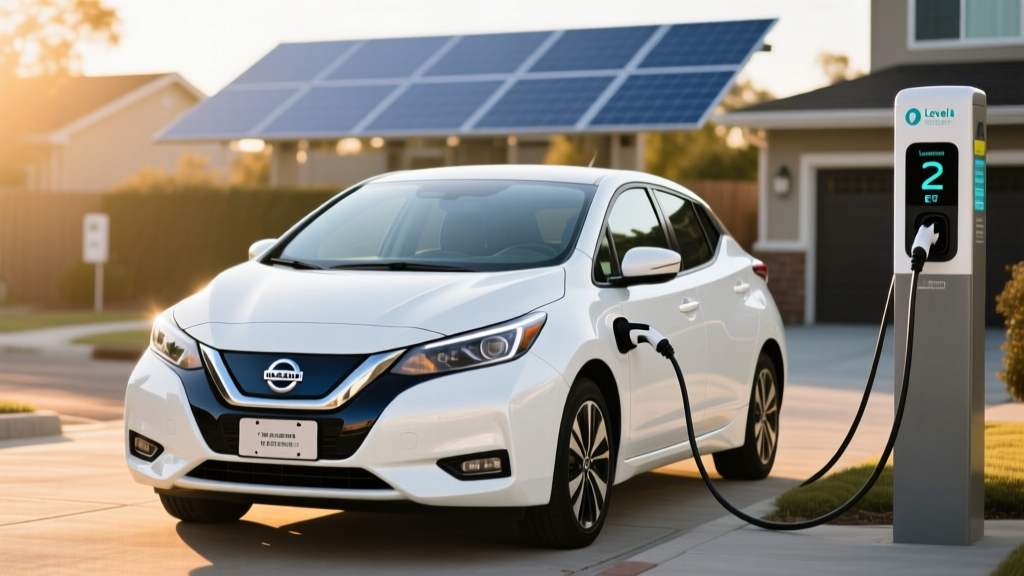
Level 2 Home Charging: The 6.6 kW onboard charger is the SV's strong suit for daily use. A full charge from empty takes about 7 hours — easily overnight. If you install a 240V Level 2 home station (a $500–$1,500 investment including electrician labor), you'll wake up to a full battery every morning, which is how the Leaf is best used.
Performance and Driving Dynamics
The 2018 Leaf SV's 80 kW AC synchronous motor produces 147 horsepower and 236 lb-ft of torque, driving the front wheels through a single-speed reduction gear. The 0–60 mph time of roughly 7.9 seconds feels brisk in city traffic thanks to instant electric torque, though acceleration tapers noticeably above 50 mph.
Ride quality is comfortable and compliant, tuned for commuting rather than sporty driving. The low center of gravity (battery pack under the floor) keeps body roll manageable. Steering is light and numb — fine for parking, less inspiring on back roads.
The Leaf's e-Pedal feature enables one-pedal driving by maximizing regenerative braking when you lift off the accelerator. It can bring the car to a complete stop and hold it without touching the brake pedal. This is one of the Leaf's best features for city driving and reduces brake pad wear significantly.
Interior, Tech, and Cargo
The SV trim sits above the base S and adds meaningful equipment: 17-inch alloy wheels, fog lights, auto-on/off LED headlights, leather-wrapped steering wheel, and an upgraded 8-inch touchscreen infotainment system with navigation, Apple CarPlay, and Android Auto (on units with the tech package).
Driver Assistance (ProPILOT Assist): The SV was available with Nissan's ProPILOT Assist package, which combines adaptive cruise control and lane-keeping assist. This is an SAE Level 2 system — it helps with steering and speed on highways but requires continuous driver attention and hands on the wheel. It is not autonomous driving.
Space: Passenger room is generous for the compact hatchback class, with 42.1 inches of front legroom and 33.5 inches rear. Cargo volume is 23.6 cubic feet behind the rear seats — competitive with the Volkswagen Golf — expanding to 30.0 cubic feet with the 60/40 split rear seats folded. Note that the floor isn't flat when folded due to the battery packaging underneath.
Notable Drawbacks: Interior materials feel dated even for 2018 — hard plastics dominate. The infotainment screen is small by current standards and the UI is sluggish. There's no frunk (front trunk); the space under the hood is occupied by power electronics. Rear visibility is compromised by thick C-pillars, though the SV includes a backup camera.
Pricing, Tax Credits, and Ownership Costs
The 2018 Leaf SV originally carried an MSRP of approximately $33,370 (before destination), with the ProPILOT Assist and Technology packages adding $1,000–$2,000. The federal $7,500 new-EV tax credit was available to original purchasers, bringing effective cost to roughly $26,000.
In 2026, you're buying used. Clean examples with 40,000–70,000 miles typically list between $10,000 and $16,000 depending on condition, mileage, and battery health.
Used EV Tax Credit (IRS §25E) Eligibility
- Credit Amount: 30% of sale price, up to a maximum of $4,000
- Vehicle Price Cap: Sale price must be $25,000 or less (the 2018 Leaf qualifies easily)
- Vehicle Age: Must be at least 2 model years old (2018 qualifies in 2026)
- Buyer Income Cap: AGI ≤ $75,000 (single) / $112,500 (head of household) / $150,000 (joint)
- Dealer Requirement: Must purchase from a licensed dealer (private sales don't qualify)
- Point-of-Sale: Credit can be transferred to the dealer for an immediate price reduction
Source: IRS §25E Used Clean Vehicle Credit. Verify eligibility with a tax professional before purchase — rules are subject to change.
Battery Degradation and Warranty: The original 8-year/100,000-mile battery warranty has expired or is expiring for most 2018 Leafs in 2026. Nissan's warranty covered capacity loss below 9 bars (out of 12) on the battery health gauge. When buying used, check the battery health indicator on the dashboard — look for 11 or 12 bars. Expect 10–15% capacity loss at 60,000–80,000 miles, meaning a real-world range of roughly 130–140 miles when new-equivalent degradation is factored in. Battery replacement, if needed, runs $6,500–$9,000 at a Nissan dealer.
Who the 2018 Leaf SV Suits Best
Choose the 2018 Leaf SV if:
- You need an affordable EV commuter for a sub-60-mile daily round trip
- You can install Level 2 charging at home (essential for this car)
- You live in a mild-to-moderate climate (extreme cold hammers range)
- You want hatchback cargo flexibility without paying SUV prices
- You qualify for the §25E used EV tax credit (up to $4,000 off)
Look elsewhere if:
- You need road-trip capability (50 kW CHAdeMO charging limits you severely)
- You live in a very cold climate where winter range drops below 100 miles
- You want modern driver-assist tech or a large infotainment screen
- You plan to fast-charge multiple times in one day (Rapidgate thermal throttling)
Pros and Cons
Pros
- Low used-market entry price ($10k–$16k before credit)
- Eligible for up to $4,000 used EV tax credit (§25E)
- Comfortable ride, easy to drive and park
- e-Pedal one-pedal driving is excellent in traffic
- Practical hatchback cargo (23.6 cu ft)
- 6.6 kW Level 2 charging is adequate for overnight home use
Cons
- CHAdeMO connector is being phased out at new charging stations
- 50 kW peak DC fast charging is slow; Rapidgate limits repeat sessions
- Passive air cooling — no active thermal management
- No heat pump — cold weather range loss is significant
- Dated interior materials and infotainment
- Original battery warranty expired or expiring in 2026
Competitor Comparison
In the used-EV market at similar prices, the 2018 Leaf SV competes with the 2018 Chevrolet Bolt EV (238-mile range, CCS charging, liquid-cooled battery), the 2018 Volkswagen e-Golf (125-mile range, CCS, more refined interior), and the 2018 BMW i3 (114-mile range, CCS, carbon-fiber construction). The Bolt is the clear range and charging-technology winner, though it often commands $2,000–$4,000 more on the used market. The Leaf's advantage is price and simplicity — fewer moving parts, widely available Nissan service, and a proven drivetrain.
For more on how the Leaf's efficiency compares, check the EPA's side-by-side comparison tool on fueleconomy.gov.
Frequently Asked Questions
What is the real-world range of the 2018 Nissan Leaf SV?
The EPA rates it at 151 miles combined. In real-world highway driving at 70 mph, expect 120–140 miles. In freezing weather with cabin heat, that drops to 100–120 miles. City driving with regenerative braking can exceed the EPA figure, reaching 155+ miles in mild conditions.
How fast does the 2018 Leaf SV charge?
On Level 2 (240V), the 6.6 kW onboard charger delivers about 22 miles of range per hour, with a full charge taking roughly 7 hours. DC fast charging via CHAdeMO peaks at 50 kW, reaching 10–80% in about 40–50 minutes under ideal conditions. Successive fast charges in warm weather trigger thermal throttling (Rapidgate), reducing speed.
Does the 2018 Leaf SV qualify for any tax credit in 2026?
It no longer qualifies for the new-vehicle §30D credit. However, it is eligible for the IRS §25E Used Clean Vehicle Credit: 30% of the sale price, up to $4,000, if purchased from a dealer for $25,000 or less and the buyer meets income caps ($75k single / $150k joint). Consult a tax professional for your specific situation.
Is the 2018 Leaf SV worth buying vs. a used Chevy Bolt?
If price is paramount and your commute is short, the Leaf SV is a solid deal. The Bolt EV offers significantly more range (238 miles), CCS fast charging (more future-proof), and liquid-cooled battery management. If you can afford the Bolt's typical $2,000–$4,000 premium, it's the better long-term bet. The Leaf wins on absolute lowest cost of entry.
How long does the 2018 Leaf battery last?
Nissan's NMC battery packs in the 40 kWh Leaf typically show 10–15% degradation at 60,000–80,000 miles. Many owners report 11–12 bars (out of 12) on the health gauge at this mileage. With proper care (avoiding frequent DC fast charging, not regularly charging to 100% or draining to 0%), the pack should remain functional well past 100,000 miles, albeit with reduced range. Replacement cost is $6,500–$9,000 if needed.
Can I use a Tesla Supercharger with the 2018 Leaf?
No. The 2018 Leaf uses CHAdeMO for DC fast charging and J1772 for Level 2. Tesla Superchargers use the NACS connector. There is no commercially available adapter from CHAdeMO to NACS that supports DC fast charging. You can use a J1772-to-NACS adapter for Level 2 Tesla destination chargers, but not Superchargers.