Quick Verdict: Who Should Buy a Used 2018 Kia Soul EV?
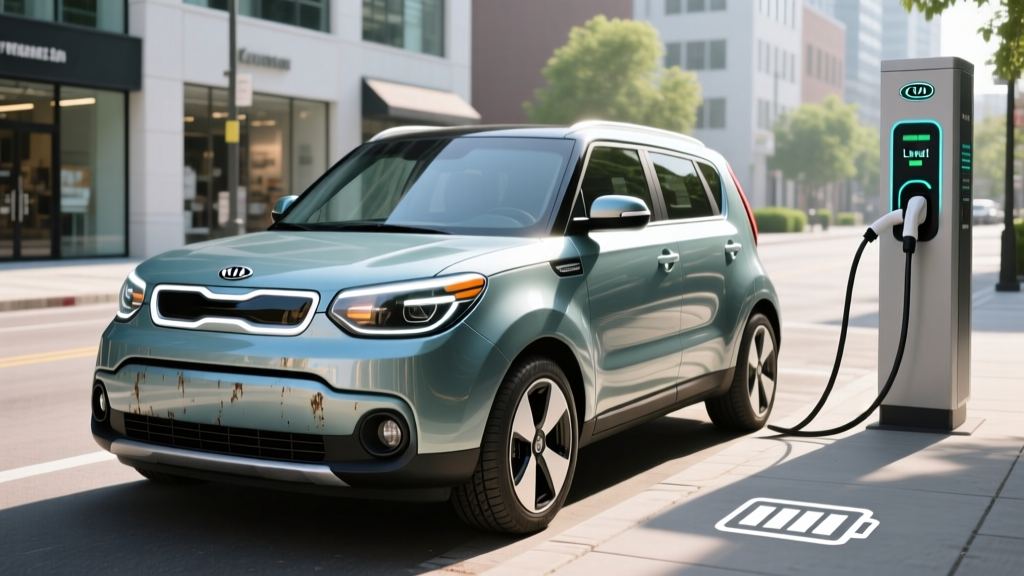
The 2018 Kia Soul EV is a practical used EV for city commuters with reliable home charging access and daily round trips under 70 miles. Expect to pay between $8,000 and $13,000 on the used market in 2026. Its 111-mile EPA range (realistic highway/cold-weather: 75–95 miles) and CHAdeMO DC fast-charging connector limit its usefulness for road trips or apartment dwellers without Level 2 access. The 30 kWh battery holds up reasonably well, but check State of Health (SoH) before purchasing — degradation to 80–85% capacity is common at this age. You will not qualify for the federal §30D new EV tax credit, but the used clean vehicle credit may provide up to $4,000 if you meet income caps and the dealer processes the point-of-sale transfer.
2018 Kia Soul EV Specs at a Glance
Before evaluating ownership costs, here are the exact figures that define this vehicle. The 2018 Soul EV was the final model year before Kia's major 2020 redesign (which jumped to 64 kWh and 243 miles). This first-generation version is strictly a short-range commuter.
| Specification | 2018 Kia Soul EV |
|---|---|
| EPA Range | 111 miles |
| Real-World Range (highway/cold) | 75–95 miles |
| Battery Capacity (usable) | 30 kWh (NMC chemistry) |
| Motor Output | 109 hp / 210 lb-ft torque |
| 0–60 mph | ~11.2 seconds |
| EPA Efficiency | 108 MPGe combined (31 kWh/100mi) |
| Level 2 Charging (AC) | 6.6 kW (~22 miles/hour) |
| DC Fast Charging (CHAdeMO) | ~50 kW peak (10–80% in ~33 min) |
| Connector Standard | CHAdeMO (DC) / J1772 (AC) |
| Battery Warranty (original) | 10 years / 100,000 miles (capacity ≥70%) |
| Used Market Price (2026) | $8,000–$13,000 |
Real-World Range: What 111 EPA Miles Actually Means
The EPA's 111-mile estimate assumes a mix of city and highway driving at moderate temperatures. In practice, several factors compress that number significantly:
- Highway driving (70+ mph): Expect 85–95 miles. The Soul EV's boxy shape creates substantial aerodynamic drag, and electric motors are less efficient at sustained high speeds than in stop-and-go traffic where regenerative braking recovers energy.
- Cold weather (below 32°F): Range drops to 70–85 miles. The 2018 Soul EV lacks a heat pump — it uses resistive cabin heating, which draws heavily from the 30 kWh pack. Battery chemistry itself also becomes less efficient in cold temperatures.
- City/commuter driving (moderate climate): You can approach or slightly exceed the 111-mile sticker, sometimes reaching 120+ miles thanks to frequent regen braking opportunities and lower average speeds.
If your daily commute is 40 miles round-trip with some errand buffer, the Soul EV works year-round. If you regularly need 80+ miles in a single day without mid-day charging access, this vehicle will cause stress — particularly in winter.
Charging Realities: CHAdeMO's Shrinking Network
This is the 2018 Soul EV's most significant long-term liability. Kia chose the CHAdeMO DC fast-charging standard, which was competitive in 2018 but has since lost the connector war in North America.
Charging Speed Breakdown
| Level | Power (kW) | Miles Added Per Hour | Typical Use Case |
|---|---|---|---|
| Level 1 (120V outlet) | ~1.2 kW | ~4 miles/hour | Emergency / overnight trickle |
| Level 2 (240V home/public) | 6.6 kW | ~22 miles/hour | Primary daily charging |
| DC Fast (CHAdeMO) | ~50 kW peak | ~150 miles/hour (to 80%) | Road trips — where available |
Home charging: A full Level 2 charge from empty takes roughly 5 hours. If you install a 240V Level 2 home charger (typically $500–$1,500 for equipment plus $800–$2,500 for electrician labor and permitting), overnight charging easily refills the pack each night. This is the ownership model the Soul EV was designed around.
Public DC fast charging: Here's where CHAdeMO becomes a problem. Most new public fast-charging infrastructure in 2026 uses either the CCS1 or Tesla NACS connector. Electrify America, the largest US network, installed CHAdeMO connectors at many early stations but has been deprioritizing them in new deployments. In some regions, CHAdeMO stations are becoming sparse. Before buying, check PlugShare for CHAdeMO availability along your regular routes.
The ~50 kW peak charge rate also means the Soul EV is a slow fast-charger by 2026 standards. Most modern EVs pull 150–350 kW. At 50 kW, a 10–80% session takes about 33 minutes — functional for occasional road trips but noticeably slower than current vehicles.
Cost of Ownership: 2018 Soul EV vs. a Comparable Gas Car
The used Soul EV's economics depend heavily on your local electricity rates, driving patterns, and whether you can charge at home. Here's a realistic 5-year comparison against a typical used gas compact crossover getting 28 MPG combined.
| Cost Factor (5 Years / 60,000 mi) | 2018 Kia Soul EV | Used Gas Crossover (28 MPG) |
|---|---|---|
| Purchase Price | $10,500 (avg used) | $12,000 |
| Fuel / Electricity | $2,400 (at $0.14/kWh home) | $7,500 (at $3.50/gal) |
| Maintenance | $1,200 (tires, cabin filter, fluid top-offs) | $3,500 (oil, filters, brakes, belts) |
| Insurance (avg) | $6,500 | $5,800 |
| Federal Tax Credit | Up to –$4,000 (used EV credit) | $0 |
| Estimated 5-Year Total | ~$16,600 | ~$28,800 |
The Soul EV saves roughly $12,000 over five years in this scenario, driven primarily by fuel savings and lower maintenance. However, several caveats apply:
- These savings assume home charging at the US average of ~$0.14/kWh. Public DC fast charging at $0.35–$0.50/kWh erodes the fuel-cost advantage substantially.
- Insurance tends to run 10–15% higher on EVs due to repair-cost data and parts pricing, though the Soul EV's low value narrows this gap.
- The used EV tax credit (§25E) requires that the vehicle sale price be $25,000 or less (easily met), your modified adjusted gross income fall below $75,000 single / $150,000 joint, and the sale be processed through a registered dealer offering point-of-sale transfer. Check current IRS guidelines as rules can shift.
- If the battery degrades below 70% capacity and the original 10-year/100,000-mile warranty has expired or doesn't transfer in your state, a replacement battery could cost $5,000–$8,000 — a potentially deal-breaking expense on a $10,000 car.
Battery Health: What to Check Before You Buy
The 30 kWh NMC (nickel-manganese-cobalt) battery in the 2018 Soul EV has aged 7–8 years by 2026. NMC chemistry offers good energy density but degrades somewhat faster than LFP (lithium iron phosphate), especially if the previous owner frequently DC fast-charged or regularly charged to 100%.
Key Battery Inspection Steps
- Check the State of Health (SoH): Use the Soul EV's dashboard display or an OBD-II scanner with the SoulEV Spy app to read the battery's current capacity percentage. A healthy 2018 pack should show 80–88% SoH. Anything below 75% is a red flag.
- Verify warranty transferability: Kia's 10-year/100,000-mile battery warranty (covering capacity below 70%) originally applies to the first owner. Some states enforce transferability to second owners; others do not. Contact Kia with the VIN to confirm coverage status before purchasing.
- Look for cell imbalance warnings: If the dashboard shows significant range variation between full charges, or if the car frequently limits charge to less than 100%, individual cells may be degrading unevenly — a sign of a pack nearing the end of its useful life.
- Review charging history: Ask the previous owner or check Carfax for frequent DC fast-charging sessions. Occasional fast charging is fine; daily use accelerates degradation in NMC packs.
Common Misconceptions About the 2018 Soul EV
| Myth | Fact |
|---|---|
| "The battery will need replacing soon." | NMC packs from this era typically retain 80–88% capacity at 7–8 years. Many 2018 Soul EVs still have functional batteries, but verify SoH before purchase. |
| "I can charge at any public fast charger." | The Soul EV uses CHAdeMO, not CCS or NACS. Many newer public stations lack CHAdeMO connectors. Always verify availability on PlugShare. |
| "It qualifies for the $7,500 federal tax credit." | The §30D new-vehicle credit does not apply to used cars. The §25E used-EV credit offers up to $4,000 with income and dealer requirements. |
| "111 miles of range is enough for everyone." | Real-world highway and cold-weather range drops to 75–95 miles. This works for short commutes but not for drivers who regularly need 80+ miles without mid-day charging. |
| "EVs need no maintenance." | Tires wear faster on EVs due to instant torque and heavier weight. Cabin filters, brake fluid, coolant, and wiper blades still need regular service. You just skip oil changes and most brake work. |
Decision Framework: Is the 2018 Kia Soul EV Right for You?
Choose the 2018 Soul EV if:
- Your daily driving is under 70 miles round-trip, with occasional days up to 90 miles
- You have access to Level 2 home charging (garage or driveway with 240V circuit)
- You live in a moderate climate, or you accept significant winter range loss
- You want the lowest-cost entry into EV ownership and can verify battery SoH ≥80%
- You're a second-car household with a gas vehicle available for longer trips
- You've confirmed CHAdeMO fast-charger availability along any routes where you'd need it
Look elsewhere if:
- Your daily commute exceeds 80 miles or you frequently drive highway speeds for long distances
- You rely exclusively on public charging — CHAdeMO availability is declining
- You live in a cold climate (regularly below 20°F) and need reliable 100+ mile range year-round
- You want a single-vehicle household EV capable of road trips
- The battery SoH reads below 75% or the warranty has expired without transferability
Consider these alternatives instead:
- 2020+ Kia Soul EV (64 kWh): 243-mile EPA range, CCS connector, still affordable used ($18,000–$24,000). A dramatically more capable vehicle.
- 2018–2019 Chevrolet Bolt EV: 238-mile EPA range, CCS connector, similar used pricing ($11,000–$15,000). Far more range and better charging infrastructure compatibility.
- Used Toyota Prius Prime (PHEV): If range uncertainty and charging access concern you, a plug-in hybrid offers 25 miles of electric commuting plus unlimited gas range.
Frequently Asked Questions
How long does it take to charge the 2018 Kia Soul EV at home?
From near-empty to full on a 240V Level 2 charger (6.6 kW), expect approximately 5 hours. On a standard 120V household outlet (Level 1 at ~1.2 kW), a full charge takes roughly 25 hours — making Level 1 impractical as a primary charging method unless you drive fewer than 30 miles per day.
Does the 2018 Soul EV battery warranty transfer to a second owner?
Kia's 10-year/100,000-mile battery warranty was designed to cover the original owner. Transferability to subsequent owners varies by state and by how the vehicle was titled. Call Kia's customer service with the specific VIN to confirm remaining coverage before purchasing. A car purchased new in early 2018 could still have warranty coverage through early 2028 or 100,000 miles — but only if it transfers in your jurisdiction.
Can I use a Tesla Supercharger with the 2018 Soul EV?
No. The 2018 Soul EV uses the CHAdeMO DC fast-charging connector. Tesla Superchargers use the NACS connector, and while Tesla has opened some stations to non-Tesla vehicles, those require a CCS-to-NACS adapter or built-in CCS port — neither of which is compatible with CHAdeMO. There is no commercially available CHAdeMO-to-NACS adapter as of 2026. You are limited to CHAdeMO-equipped public stations.
What is the real cost per mile to drive the 2018 Soul EV?
At the US average residential electricity rate of ~$0.14/kWh and the Soul EV's efficiency of 31 kWh/100 miles, your fuel cost is approximately $0.043 per mile. A comparable gas car at 28 MPG and $3.50/gallon costs $0.125 per mile. That's roughly $5,100 in fuel savings over 60,000 miles. Public fast charging at $0.40/kWh would raise the EV cost to ~$0.124/mile — essentially eliminating the fuel savings.
Is the 2018 Kia Soul EV safe?
The 2018 Soul EV earned a Top Safety Pick rating from the IIHS with acceptable ratings in most crashworthiness tests. It comes standard with a rearview camera, but lacks modern ADAS features like automatic emergency braking, lane-keeping assist, or adaptive cruise control that are common on 2026 vehicles. It is not equipped with any Level 2 driver-assistance system — you are fully responsible for all driving tasks at all times.
Should I be worried about the CHAdeMO connector becoming obsolete?
Yes, this is a legitimate concern. While existing CHAdeMO stations won't disappear overnight, new infrastructure investment overwhelmingly favors CCS and NACS. If you plan to keep the Soul EV for 3+ years and ever need public fast charging, the shrinking CHAdeMO network is a real ownership friction point. For pure home-charging commuters who rarely need DC fast charging, this matters less — but it does hurt resale value and long-term usability.