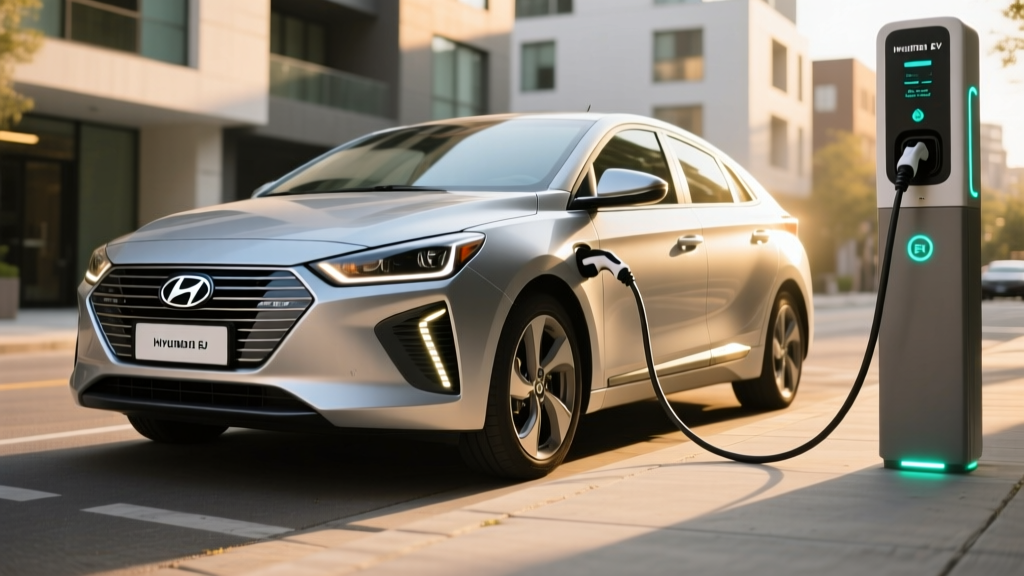
The 2018 Hyundai Ioniq Electric occupies a specific niche in today's used EV market: it's an efficiency champion with modest range, built for commuters who charge at home and rarely need more than 100 miles in a day. Hyundai discontinued the Ioniq Electric after the 2021 model year, replacing it with the Kona Electric and Ioniq 5 lineup. But on the used market, this compact hatchback remains a data-point darling — it achieved 136 MPGe combined per the EPA, a figure that still rivals or beats many 2026 EVs on pure energy efficiency.
If you're considering a used 2018 Ioniq Electric in 2026, you're likely weighing its low entry price against its limited range and older charging hardware. This review breaks down every spec that matters — from real-world range expectations to the used-EV tax credit — so you can decide whether this efficiency-first hatchback fits your driving life.
Range and Efficiency: 124 EPA Miles, But What's Real?
Real-World Expectation: 100–115 miles highway; 120–130 miles city; 80–95 miles in freezing temperatures with cabin heat
The 2018 Ioniq Electric carries a 28 kWh lithium-ion polymer battery pack (NMC chemistry), of which approximately 25.6 kWh is usable capacity. Hyundai engineered this car around efficiency, not range. The result is an EPA-rated 124 miles — modest even by 2018 standards (the Chevrolet Bolt EV offered 238 miles that same year) — but delivered with remarkably low energy consumption: just 25 kWh per 100 miles, or 136 MPGe combined.
In real-world driving, city commuters who rely on regenerative braking and stay under 45 mph will often match or slightly exceed the EPA sticker. Highway driving at 70–75 mph drops range noticeably; expect 100–115 miles before the low-battery warnings begin. Cold weather is the Ioniq's biggest range adversary. Without a heat pump (this generation uses resistive cabin heating), winter range loss of 25–35% is typical. If your commute is 40 miles round-trip in a Minnesota January, you'll still make it — but you'll be charging nightly.
For context on how this stacks up to its era and today's used alternatives, consider that the 2018 Nissan Leaf (40 kWh) delivered 151 miles EPA, and the 2018 Bolt EV hit 238 miles. The Ioniq trades range for unmatched efficiency per mile driven.
Battery, Charging, and What to Expect at the Plug
| Spec | 2018 Ioniq Electric |
|---|---|
| Battery Capacity (Total / Usable) | 28 kWh / ~25.6 kWh |
| Battery Chemistry | NMC (Nickel Manganese Cobalt) |
| Max DC Fast Charge Rate | ~40 kW peak (CCS) |
| DC Fast Charge 10–80% | ~33 minutes (under ideal conditions) |
| Level 2 Charge Rate | 6.6 kW onboard charger |
| Level 2 Full Charge Time | ~4 hours (from empty) |
| Level 1 (120V) Charge Rate | ~1.2 kW (~4 mi/hr) |
| Charge Port / Connector | CCS1 (Combo) |
The Ioniq Electric's 40 kW peak DC fast-charge rate was unremarkable in 2018 and feels dated in 2026, when many new EVs pull 150–350 kW at public chargers. On a 50 kW CHAdeMO-to-CCS adapter or a 50+ kW CCS station, the Ioniq will ramp to roughly 40 kW at low state-of-charge, then taper significantly above 70%. A 10–80% session takes approximately 33 minutes — adequate for a lunch stop, but you won't be blowing through road trips.
Where this car shines is home Level 2 charging. The 6.6 kW onboard charger means a full charge from empty takes about 4 hours on a 240V home station. Most owners who plug in overnight will wake to a full battery every morning, making the limited range far less relevant for daily commuting. If you install a 32-amp or 40-amp Level 2 home charger (typically $500–$1,500 installed, depending on your electrical panel), the Ioniq becomes a zero-effort daily driver.
One practical note: the 2018 Ioniq Electric uses the CCS1 connector standard. While Tesla has opened its Supercharger network to CCS-equipped EVs via the Magic Dock adapter at select stations, the Ioniq's 40 kW charge ceiling means it won't benefit from V3/V4 Supercharger speeds regardless. Plan your public charging around Electrify America, EVgo, or ChargePoint DC stations.
Performance and Driving Dynamics
| Metric | Value |
|---|---|
| Motor Output | 88 kW (118 hp) / 218 lb-ft torque |
| Drivetrain | FWD (single front motor) |
| 0–60 mph | ~9.7 seconds |
| Top Speed | ~103 mph (electronically limited) |
| Curb Weight | ~3,250 lbs |
The Ioniq Electric was never engineered to be quick. Its 118-hp motor and 9.7-second 0–60 time put it firmly in economy-car territory — comparable to a Toyota Corolla of the same era. But electric torque delivery means the car feels responsive around town, with instant 218 lb-ft available from zero RPM. Merging onto highways requires planning, and passing at speed demands patience.
Handling is competent but unexciting. The low center of gravity from the floor-mounted battery pack reduces body roll, and the hatchback's light weight (3,250 lbs — hundreds of pounds lighter than most modern EVs) gives it an agility that heavier, longer-range EVs can't match. Ride quality is firm; Hyundai tuned the Ioniq for efficiency over plushness. Road noise is noticeable at highway speeds, a common complaint in owner forums.
Interior, Cargo, and Daily Livability
The 2018 Ioniq Electric is a compact five-door hatchback, and its interior reflects its economy-car roots. Materials are hard-plastic-heavy, and the 7-inch touchscreen infotainment system (8-inch on the Limited trim) feels dated next to 2026 offerings. Apple CarPlay and Android Auto are standard, which keeps the tech experience usable in 2026.
| Dimension | Measurement |
|---|---|
| Front Legroom | 43.3 inches |
| Rear Legroom | 35.7 inches |
| Front Headroom | 39.5 inches |
| Cargo Volume (rear seats up) | 23.8 cu ft |
| Cargo Volume (rear seats folded) | 55.0 cu ft |
| Seating Capacity | 5 passengers |
Cargo capacity is a genuine strength. With 23.8 cubic feet behind the rear seats and 55.0 cu ft with them folded, the Ioniq Electric out-cargoes many compact SUVs and significantly beats the Nissan Leaf (23.6 cu ft) and Bolt EV (16.9 cu ft) of the same year. The hatchback shape makes loading bulky items easy. There is no front trunk (frunk); the space under the hood houses the motor and power electronics.
Driver-assistance tech on the 2018 Ioniq includes Hyundai's SmartSense suite on higher trims: adaptive cruise control, lane-keep assist, automatic emergency braking, and blind-spot detection. These are SAE Level 2 driver-assist features — they support the driver but do not enable hands-off or self-driving operation. You must remain engaged and keep your hands on the wheel at all times.
Pricing, Trims, and the Used-EV Tax Credit
When new, the 2018 Ioniq Electric started at roughly $29,995 (base SE trim) and climbed to about $36,500 for the Limited trim with all options. In 2026, used examples typically trade between $10,000 and $16,000 depending on mileage, condition, battery state of health, and regional demand.
| Trim (Original MSRP) | 2026 Used Price Estimate | Key Features |
|---|---|---|
| SE (~$29,995) | $10,000–$13,000 | 7" touchscreen, CarPlay/Android Auto, heated front seats, SmartSense AEB |
| Limited (~$36,500) | $13,000–$16,000 | 8" nav, leather, adaptive cruise, LED headlights, power sunroof, ventilated front seats |
Federal Used Clean Vehicle Credit (§25E)
Because the Ioniq Electric is a discontinued model purchased used, it does not qualify for the new-vehicle §30D credit. However, it may qualify for the Used Clean Vehicle Credit (§25E), which provides up to $4,000 (or 30% of the sale price, whichever is lower) for eligible used EV purchases from a licensed dealer. Key requirements per IRS guidelines:
- Price cap: Sale price must be $25,000 or less (most used Ioniq Electrics qualify)
- Buyer income cap: AGI ≤ $75,000 (single), $112,500 (head of household), $150,000 (joint)
- Vehicle age: Must be at least 2 model years old (2018 qualifies in 2026)
- Dealer sale: Must be purchased from a licensed dealer, not a private party
- First transfer: Credit applies only on the first qualified resale after August 16, 2022 — verify the vehicle hasn't already been claimed
- Point-of-sale: You may elect to transfer the credit to the dealer for an immediate price reduction
On a $13,000 used Ioniq Electric SE, a qualifying buyer could claim 30% × $13,000 = $3,900 — bringing the effective price to around $9,100. This makes the Ioniq one of the most affordable paths into EV ownership in 2026. Consult a tax professional to confirm your eligibility; rules can change and individual circumstances vary.
Battery Health, Warranty, and Longevity
Hyundai originally backed the Ioniq Electric's battery with a 10-year/100,000-mile warranty (8 years/100,000 miles in states that don't follow California emissions rules) against capacity loss below 70% of original. For a 2018 model, that factory battery warranty is either expired or expiring in 2028 at the latest — so if you're buying used in 2026, verify remaining coverage with a Hyundai dealer using the VIN.
The 28 kWh NMC pack has proven durable in owner reports. NMC chemistry typically sees 10–15% degradation over 8–10 years under normal use. Given the Ioniq's modest range to begin with, even a 10% loss means dropping from 124 to roughly 112 EPA miles — still workable for short commutes but worth verifying before purchase. Request a battery state-of-health (SoH) report from a Hyundai dealer or use an OBD-II EV diagnostic tool to check actual capacity.
Out-of-warranty battery replacement for the Ioniq Electric is estimated at $5,000–$8,000 including labor — a significant expense relative to the car's used value. This economics reality means buyers should prioritize examples with verified low-degradation batteries and remaining warranty coverage.
Who Should Buy the 2018 Ioniq Electric — and Who Shouldn't
Pros
- Best-in-class efficiency: 136 MPGe / 25 kWh per 100 mi
- Low used pricing: $10K–$16K before potential $4K credit
- Strong cargo space (23.8 cu ft) for its class
- Fast home Level 2 charging (~4 hours full)
- Apple CarPlay / Android Auto standard
- Available SmartSense driver assists on Limited trim
Cons
- Limited EPA range: 124 miles (80–95 mi in winter)
- Slow DC fast charging: ~40 kW peak, 33 min 10–80%
- No heat pump — significant cold-weather range loss
- Modest power: 118 hp, 9.7-sec 0–60
- Dated infotainment and interior materials
- Battery warranty expiring or expired on most examples
- Your daily round-trip commute is under 80 miles
- You have reliable home Level 2 charging
- You want the lowest possible cost-per-mile EV
- You qualify for the $4,000 used-EV tax credit
- Cargo versatility in a compact footprint matters
- You need 200+ miles of range for road trips or long commutes
- You live in a very cold climate without a garage
- You rely on public DC fast charging regularly
- You want modern infotainment or fast acceleration
How the 2018 Ioniq Electric Compares to Used Alternatives
| Spec | 2018 Ioniq Electric | 2018 Nissan Leaf (40 kWh) | 2018 Chevrolet Bolt EV |
|---|---|---|---|
| EPA Range | 124 mi | 151 mi | 238 mi |
| Battery (usable) | ~25.6 kWh | ~38 kWh | ~57 kWh |
| Efficiency (MPGe) | 136 | 112 | 119 |
| DC Fast Charge Peak | ~40 kW (CCS) | ~50 kW (CHAdeMO) | ~55 kW (CCS) |
| 10–80% DC Time | ~33 min | ~40 min | ~55 min |
| 0–60 mph | 9.7 sec | 7.9 sec | 6.5 sec |
| Cargo (seats up) | 23.8 cu ft | 23.6 cu ft | 16.9 cu ft |
| 2026 Used Price (est.) | $10K–$16K | $9K–$14K | $12K–$18K |
The Bolt EV's 238-mile range makes it the clear pick for anyone needing versatility beyond commuting, but it costs more on the used market and sacrifices cargo space. The Leaf's CHAdeMO connector is a growing liability as the industry consolidates on CCS and NACS. The Ioniq wins on pure efficiency and hatchback cargo practicality, but only if its 124-mile ceiling fits your life.
Frequently Asked Questions
What is the real-world range of the 2018 Hyundai Ioniq Electric?
The EPA rates it at 124 miles. In real-world driving, expect 100–115 miles on the highway, 120–130 in city driving with regenerative braking, and as low as 80–95 miles in freezing weather due to resistive cabin heating and reduced battery performance.
How fast does the 2018 Ioniq Electric charge?
On DC fast charging, it peaks at approximately 40 kW, reaching 10–80% in roughly 33 minutes under ideal conditions. At home on a Level 2 (240V) charger, its 6.6 kW onboard charger delivers a full charge in about 4 hours. On a standard 120V outlet, expect about 4 miles of range per hour of charging.
Does the 2018 Ioniq Electric qualify for a federal tax credit?
Not the new-vehicle §30D credit, since it's a used purchase. However, it may qualify for the Used Clean Vehicle Credit (§25E) — up to $4,000 or 30% of the sale price — if bought from a licensed dealer for $25,000 or less, and if the buyer meets IRS income caps ($75K single / $150K joint). Verify eligibility at irs.gov and with a tax professional.
Is the 2018 Ioniq Electric worth buying in 2026?
It's an excellent value for budget-conscious commuters with home charging and short daily drives. Its efficiency (136 MPGe) remains class-leading, and with the used-EV credit, you can get into one for under $10,000. But if you need long range, fast public charging, or modern tech, spend more on a used Bolt EV, Kona Electric, or early Ioniq 5.
What's the biggest risk of buying a used 2018 Ioniq Electric?
Battery degradation on an out-of-warranty pack. The 28 kWh NMC battery should retain 85–90% capacity at this age, but always verify state-of-health before purchase. An out-of-warranty replacement costs $5,000–$8,000 — a large fraction of the car's value. Prioritize low-mileage examples with dealer-verified SoH reports and any remaining factory battery warranty.
What connector does the 2018 Ioniq Electric use?
It uses the CCS1 (Combined Charging System) connector for both Level 2 AC and DC fast charging. This is compatible with Electrify America, EVgo, ChargePoint, and other CCS networks. Tesla Supercharger access is available only at select locations with Tesla's Magic Dock CCS adapter, though the Ioniq's 40 kW charge cap limits any speed benefit.
Sources: EPA Fuel Economy — 2018 Hyundai Ioniq Electric; IRS Used Clean Vehicle Credit (§25E); Hyundai Motor America specifications archive.