Quick Verdict: The 2018 BMW i3 in 2026
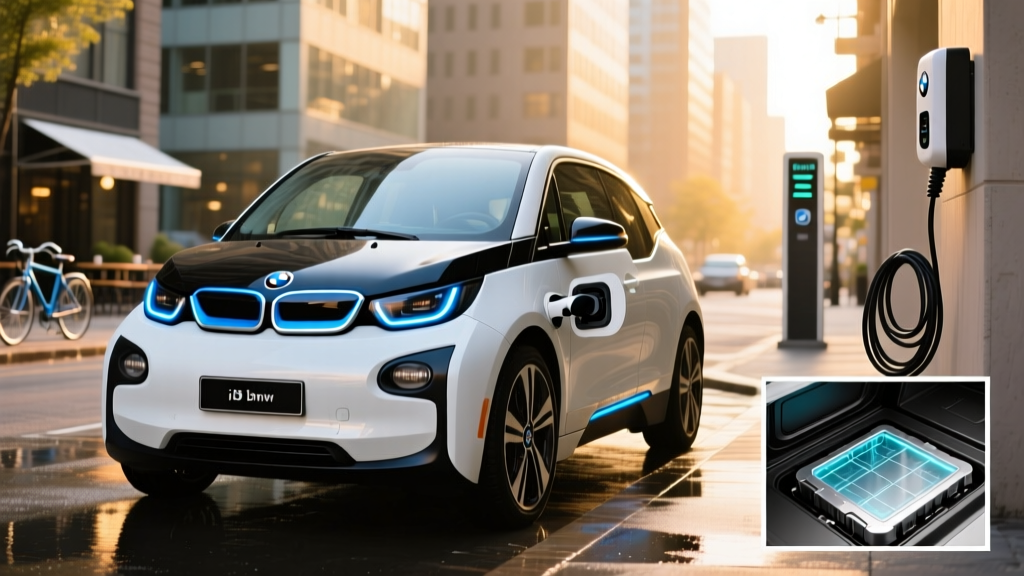
The 2018 BMW i3 occupies a specific niche in the used EV market: a premium, city-focused commuter with distinctive carbon-fiber construction and a surprisingly tight turning radius. With the 94 Ah battery pack (introduced for the 2017 model year and carried into 2018), BMW bumped usable capacity to 27.2 kWh, yielding an EPA-estimated 114 miles of range for the pure battery-electric (BEV) variant. That figure is modest by 2026 standards, but the i3's lightweight carbon-fiber-reinforced plastic (CFRP) chassis, tight urban packaging, and available Range Extender (REx) powertrain keep it relevant for the right buyer.
On the used market, a 2018 i3 typically trades between $12,000 and $19,000 depending on mileage, condition, and whether it's the BEV or REx model. The critical question for 2026 buyers: does it qualify for the federal used EV tax credit under IRS §25E? We break that down below.
Range, Battery, and Efficiency
Real-World Expectation: Plan for 85–100 miles in mixed driving. Highway speeds above 70 mph and cold weather (below 40°F) can reduce range by 20–35%. In our experience, a 2018 i3 BEV in winter city driving may deliver as little as 75 miles before needing a charge. The REx model's small 2-cylinder gasoline engine adds roughly 60–80 miles of extended range, easing anxiety on longer trips.
The 2018 i3 BEV uses a 33.2 kWh gross / 27.2 kWh usable Samsung SDI lithium-ion battery pack with NMC (nickel manganese cobalt) chemistry. This was the second-generation pack (94 Ah cells), a meaningful upgrade over the original 60 Ah / 22 kWh pack in the 2014–2016 models. The usable buffer protects against deep discharge, but it also means you're working with a relatively small energy reserve.
Efficiency is where the i3's lightweight construction pays off. The BEV achieves an EPA-rated 129 MPGe combined (118 city / 140 highway) and consumes roughly 26 kWh per 100 miles, per fueleconomy.gov. That's among the most efficient EVs of its era, though newer models like the Hyundai Ioniq 5 and Tesla Model 3 achieve similar or better efficiency with far more range.
| Spec | BEV (Pure Electric) | REx (Range Extender) |
|---|---|---|
| EPA Range (electric) | 114 miles | 97 miles (electric) + ~70 mi (gas) |
| Battery (gross / usable) | 33.2 kWh / 27.2 kWh | 33.2 kWh / 27.2 kWh |
| Chemistry | NMC (Samsung SDI 94 Ah) | NMC (Samsung SDI 94 Ah) |
| Motor Output | 170 hp / 184 lb-ft | 170 hp / 184 lb-ft |
| 0–60 mph | 6.9 seconds | 7.5 seconds |
| Drivetrain | RWD (single motor) | RWD (single motor + 2-cyl gas) |
| MPGe (combined) | 129 MPGe | 111 MPGe (electric) |
| Curb Weight | 2,961 lbs | 3,296 lbs |
Charging Speed: DC Fast, Level 2, and Level 1
The 2018 i3 uses a CCS1 (Combined Charging System) connector for DC fast charging and a standard J1772 inlet for Level 1 and Level 2 AC charging. BMW did not offer NACS (Tesla-style) on this model year.
| Charging Level | Power (kW) | Time / Rate | Notes |
|---|---|---|---|
| Level 1 (120V household) | ~1.3 kW | ~2–3 miles per hour | Full charge in ~24+ hours; impractical as primary method |
| Level 2 (240V home/public) | 7.4 kW (32A) | ~25 miles per hour; full charge in ~4.5 hours | Onboard charger limited to 7.4 kW max |
| DC Fast Charge (CCS) | 50 kW peak | 10–80% in ~35–40 minutes | Peak rate sustained only briefly; tapers significantly above 60% SoC |
The 50 kW DC fast-charge ceiling is the i3's most significant limitation for road-trip use. On a 50 kW charger, the small 27.2 kWh usable battery fills quickly at the bottom of the curve, but the charge rate drops sharply once you pass roughly 60% state of charge. Expect a 10–80% session to take 35–40 minutes in practice. On higher-power chargers (150 kW or 350 kW Electrify America stations), the i3 cannot take advantage of the extra capacity — it will still cap at 50 kW.
Practical implication: For daily commuting with home Level 2 charging, the i3's charging profile is perfectly adequate. A nightly plug-in on a 7.4 kW home charger replenishes the battery fully in under 5 hours. For road trips, however, plan stops carefully and expect 35+ minute charge breaks every ~80 miles in the BEV model.
Performance and Driving Dynamics
The i3's rear-mounted synchronous electric motor produces 170 horsepower and 184 lb-ft of torque, delivered to the rear wheels through a single-speed reduction gear. The BEV model hits 0–60 mph in 6.9 seconds; the heavier REx variant takes about 7.5 seconds. Instant torque delivery makes the i3 feel quicker than those numbers suggest in stoplight-to-stoplight urban driving.
What distinguishes the i3 dynamically is its carbon-fiber passenger cell (BMW calls it "LifeDrive" architecture). The CFRP structure keeps weight low — just 2,961 lbs for the BEV — and gives the chassis exceptional rigidity. The result is a surprisingly planted feel for a tall, narrow city car. The 19-inch narrow tires (155/70R19) minimize rolling resistance but limit cornering grip; this is not a sports sedan, but it handles urban canyon driving with composure.
The turning circle is a standout: just 32.7 feet, making the i3 one of the easiest EVs to park in tight city spaces. Regenerative braking is aggressive and largely enables one-pedal driving in most urban conditions — lift off the accelerator and the i3 decelerates briskly, often eliminating the need for the brake pedal at lower speeds.
Interior, Cargo, and Technology
The i3's interior is a study in sustainable luxury. BMW used recycled and renewable materials throughout: eucalyptus wood dashboard trim, kenaf (hibiscus fiber) door panels, and recycled PET bottle textiles on the seats. The result is a cabin that feels distinctly premium but unlike any conventional luxury car.
Passenger space is generous up front but tight in the rear. The front-hinged "coach doors" (the rear half-doors open backward, like a Rolls-Royce) create a wide opening but require the front doors to be open first — a quirk that complicates loading in tight parking spots.
- Front legroom: 40.5 inches
- Rear legroom: 31.9 inches (cramped for adults on longer rides)
- Front headroom: 39.6 inches
- Cargo volume (rear seats up): 15.1 cubic feet
- Cargo volume (rear seats folded): 36.0 cubic feet
- Frunk: None — the front compartment houses electronics
The 2018 model year includes BMW's iDrive 6.0 infotainment system on a 6.5-inch display (10.25-inch widescreen available with the Technology + Driving Assist package). Apple CarPlay is supported via wired connection; Android Auto was not available on the 2018 model year. Navigation includes an EV-specific range display with topography-aware route planning.
Driver assistance is limited by 2026 standards. Available features include:
- Active Cruise Control with Stop & Go
- Frontal Collision Warning with City Collision Mitigation (automatic emergency braking)
- Lane Departure Warning
- Park Distance Control (front and rear sensors)
Notably absent: lane-keeping assist, blind-spot monitoring, and any form of hands-free driving. This is a SAE Level 0–1 vehicle in terms of automation — the driver is fully responsible at all times.
Pricing, Tax Credits, and Ownership Costs
The 2018 BMW i3 is no longer in production (BMW ended i3 manufacturing in July 2022), so all purchases are on the used market. Current 2026 resale values:
- 2018 i3 BEV (base): $12,000–$15,000 (60,000–80,000 miles)
- 2018 i3 BEV (well-equipped, low miles): $15,000–$18,000
- 2018 i3 REx: $13,500–$19,000 depending on condition and mileage
Federal Used EV Tax Credit (IRS §25E): The 2018 i3 may qualify for up to $4,000 under the federal used clean vehicle credit. This credit equals 30% of the sale price, capped at $4,000. Key eligibility requirements per irs.gov:
- Sale price must be $25,000 or less (most 2018 i3s qualify)
- Buyer adjusted gross income must not exceed $75,000 (single) / $150,000 (joint)
- Vehicle must be at least 2 model years old (2018 qualifies in 2026)
- Vehicle must have a battery capacity of at least 7 kWh (i3's 33.2 kWh qualifies)
- Credit is non-refundable and can only be claimed once per vehicle (check the VIN hasn't been used for a prior §25E claim)
- Must purchase from a licensed dealer (private-party sales do not qualify)
| Scenario | Sale Price | §25E Credit | Effective Cost |
|---|---|---|---|
| BEV, 70K miles, fair condition | $13,000 | –$3,900 (30%) | ~$9,100 |
| BEV, 45K miles, well-equipped | $17,000 | –$4,000 (cap) | ~$13,000 |
| REx, 55K miles, good condition | $16,000 | –$4,000 (cap) | ~$12,000 |
Battery warranty consideration: BMW's original high-voltage battery warranty was 8 years / 100,000 miles (against defects and capacity loss below 70% of original). For a 2018 model, this warranty expires in 2026 based on the 8-year clock. If you're buying a 2018 i3 in 2026, assume you are purchasing the vehicle with little to no remaining factory battery coverage. A replacement battery pack (if needed) costs approximately $12,000–$16,000 at a BMW dealer, though third-party refurbishment options are emerging at lower cost.
Pros and Cons
Pros
- Exceptional urban efficiency (129 MPGe combined, 26 kWh/100 mi)
- Lightweight CFRP chassis gives engaging, nimble handling
- Tight 32.7-ft turning circle — ideal for city parking
- Premium, sustainable interior materials unlike any competitor
- Strong regenerative braking enables true one-pedal driving
- Eligible for up to $4,000 used EV tax credit (§25E)
- REx option adds gas-engine range buffer for longer trips
Cons
- 114-mile EPA range is limiting by 2026 standards
- 50 kW DC fast-charge cap means slow road-trip charging
- Rear seats are cramped (31.9" legroom); coach doors are impractical
- No Android Auto; iDrive screen is small (6.5" base)
- Minimal driver-assist features — no lane-keeping or blind-spot monitoring
- Original battery warranty expiring in 2026 for most examples
- Narrow 155-section tires limit wet-weather and cornering grip
- No frunk; cargo space (15.1 cu ft) is modest
Who Should Buy the 2018 BMW i3?
The 2018 i3 is best suited for:
- Urban commuters with home Level 2 charging who drive under 80 miles round-trip daily and value a premium, distinctive cabin.
- Second-car households that need an efficient runabout for errands and school runs while keeping a larger vehicle for road trips.
- REx buyers who want electric commuting most days but need the gasoline range extender for occasional 150–200 mile trips without charge-planning stress.
The i3 is not ideal for:
- Frequent road-trippers (the 50 kW charge rate and 114-mile range make highway travel tedious in the BEV).
- Families needing rear-seat space for teenagers or bulky car seats.
- Buyers in extreme cold climates without garage parking (the small battery loses range quickly in sub-freezing temps without preconditioning infrastructure).
Frequently Asked Questions
What is the real-world range of the 2018 BMW i3?
The EPA rates the 2018 i3 BEV at 114 miles. In real-world mixed driving, expect 85–100 miles. Highway driving at 70+ mph reduces this to roughly 80–90 miles. In cold weather (below 32°F) without battery preconditioning, range can drop to 70–80 miles. The REx model provides 97 electric miles plus roughly 60–80 additional miles on its 1.9-gallon gasoline tank.
How fast does the 2018 BMW i3 charge?
On a Level 2 (240V) home charger at 7.4 kW, the i3 gains about 25 miles of range per hour and charges fully in roughly 4.5 hours. On a 50 kW DC fast charger (CCS), a 10–80% session takes approximately 35–40 minutes. The i3 cannot accept more than 50 kW, so 150 kW or 350 kW chargers offer no speed benefit.
Does the 2018 BMW i3 qualify for the federal EV tax credit?
It is not eligible for the new-vehicle §30D credit (the car is discontinued and used). However, it may qualify for the §25E used clean vehicle credit of up to $4,000 if: the sale price is $25,000 or less, the buyer's AGI is within limits ($75K single / $150K joint), the vehicle is purchased from a dealer, and the VIN hasn't previously been claimed under §25E. Verify eligibility with your tax professional and the IRS portal at irs.gov.
Is the 2018 BMW i3 worth buying vs. competitors?
Compared to a used 2018 Nissan Leaf (151-mile range with the 40 kWh pack, but passive battery cooling), the i3 offers a more premium interior, lighter weight, and better efficiency — but less range and slower DC charging. Compared to a used 2018 Chevrolet Bolt EV (238-mile EPA range, 60 kWh battery), the Bolt is the clear winner for range and practicality, though it lacks the i3's premium materials and urban agility. The i3 wins on character and city-driving refinement; it loses on range and versatility.
What is the battery degradation like on the 2018 i3?
The 94 Ah Samsung SDI NMC pack has shown moderate degradation in owner reports. Expect 8–15% capacity loss over 6–8 years and 60,000–100,000 miles, depending on charging habits and climate. Vehicles that were frequently DC fast-charged or regularly charged to 100% and stored in hot climates will show more loss. Third-party battery health checks (via OBD-II tools like BimmerCode or dealer diagnostics) are strongly recommended before purchase.
Can I install a home charger for the BMW i3?
Yes. The i3 accepts up to 7.4 kW on Level 2 (32 amps, 240V). A standard 40-amp hardwired home charger (like a ChargePoint Home Flex or Wallbox Pulsar Plus) on a 50-amp circuit will fully utilize the i3's onboard charger. Installation costs typically range from $500–$2,000 depending on panel proximity and local permit requirements. Consult a licensed electrician for your specific setup.