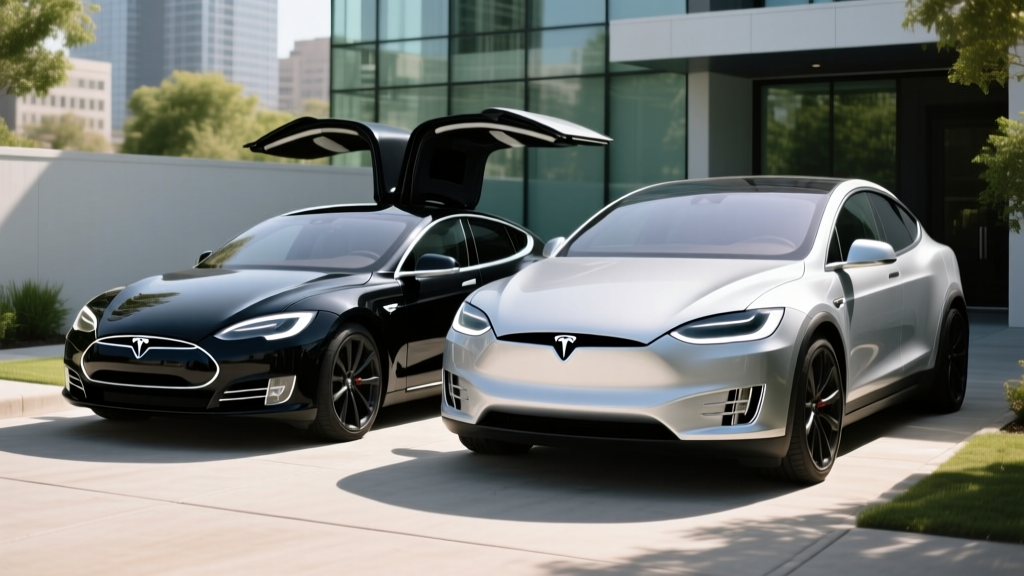
The 2017 model year was a pivotal one for Tesla. The Model S and Model X received the long-awaited 100 kWh battery option, Autopilot hardware was upgraded to HW2.5, and the company began laying the groundwork for the mass-market Model 3. For buyers in 2026 scouring the used EV market, a 2017 Tesla Model S or Model X represents an intriguing proposition: a luxury electric sedan or SUV with Supercharger access, over-the-air updates, and 200+ miles of range — often for under $25,000. But nearly a decade of battery cycles and evolving EV competition demand a clear-eyed look at what these cars actually deliver today.
This review covers the 2017 Tesla Model S (sedan) and Model X (SUV) as they exist on the used market in 2026 — including real-world battery health, current charging compatibility, and whether they still hold up against newer, cheaper EVs.
2017 Tesla Lineup: What Was Available
Tesla sold three core vehicles in 2017, though only two carried over from prior years with established track records:
- Model S — Available in 75D, 100D, and P100D trims (the rear-wheel-drive 60 and 75 were discontinued mid-year).
- Model X — Available in 75D, 100D, and P100D trims. Featured distinctive falcon-wing rear doors.
- Model 3 — Began limited production in July 2017 (Long Range only, ~$49,000). Extremely rare on the used market today; most 2017-titled Model 3s were delivered in early 2018.
This review focuses on the Model S and Model X, the volume sellers from 2017 that are widely available on the used market today.
Spec Table: 2017 Tesla Model S and Model X at a Glance
| Specification | Model S 75D | Model S 100D | Model S P100D | Model X 100D |
|---|---|---|---|---|
| EPA Range (original) | 259 mi | 335 mi | 315 mi | 295 mi |
| Battery (usable, approx.) | ~72.5 kWh (NMC) | ~98 kWh (NMC) | ~98 kWh (NMC) | ~98 kWh (NMC) |
| Drivetrain | Dual Motor AWD | Dual Motor AWD | Dual Motor AWD (Performance) | Dual Motor AWD |
| Horsepower | ~328 hp | ~417 hp | ~588 hp (Ludicrous) | ~417 hp |
| 0–60 mph | 4.2 sec | 4.2 sec | 2.5 sec | 4.7 sec |
| MPGe (combined, orig.) | 101 MPGe | 102 MPGe | 98 MPGe | 93 MPGe |
| Efficiency (kWh/100 mi) | 33 kWh | 33 kWh | 34 kWh | 36 kWh |
| Cargo Volume | 26.3 cu ft (rear seats up, +frunk) | 26.3 cu ft | 26.3 cu ft | 88.1 cu ft max (X) |
| Original Base MSRP | ~$74,500 | ~$94,000 | ~$135,000 | ~$99,500 |
| Typical 2026 Used Price | $14,000–$19,000 | $19,000–$28,000 | $25,000–$38,000 | $20,000–$32,000 |
Sources: EPA / fueleconomy.gov, Tesla press archives.
Real-World Range: What to Actually Expect in 2026
EPA vs. Reality: The original EPA range figures above were measured when these batteries were new. In 2026, a 2017 Model S or Model X will have experienced 8–9 years of calendar degradation plus whatever cycle wear the odometer reflects.
Expected battery health (State of Health): Most 2017 NMC packs with 70,000–120,000 miles show 82–90% SoH based on community scan-tool data. Calendar aging is the dominant factor at this point — a garage-kept, lower-mileage example may retain 90%+ capacity, while a high-mileage Supercharged example could be closer to 78–82%.
Adjusted real-world range estimates (2026):
- Model S 75D: ~195–220 miles (down from 259 EPA)
- Model S 100D: ~265–300 miles (down from 335 EPA)
- Model S P100D: ~245–280 miles (down from 315 EPA)
- Model X 100D: ~230–265 miles (down from 295 EPA)
Cold weather penalty: Expect an additional 15–25% range reduction in sub-freezing temperatures, particularly on short trips where the battery cannot fully warm up. The 2017 models lack a heat pump (resistive cabin heating draws significant power), making winter efficiency notably worse than newer EVs with heat pump systems.
For daily commuting under 80 miles round-trip, even the degraded 75D provides ample buffer. The 100D remains a credible road-trip vehicle with strategic Supercharger stops, but buyers expecting the original 335-mile EPA sticker will be disappointed.
Charging Speeds: DC Fast, Level 2, and Supercharger Access
Charging technology has advanced significantly since 2017, and these Teslas reflect the standards of their era. Here's what you're working with:
| Charging Method | Max Rate | Time / Delivery | Notes |
|---|---|---|---|
| Tesla Supercharger (V2) | ~120 kW peak (75D); ~145 kW peak (100D/P100D) | 10–80% in ~40–50 minutes | Peak rate sustained only briefly; tapers significantly above 60% SoC. V3/V4 Superchargers will not deliver faster rates to 2017 vehicles — the car's BMS limits intake. |
| CHAdeMO DC Fast (with adapter) | ~50 kW | 10–80% in ~90 minutes | Tesla's CHAdeMO adapter was discontinued; third-party adapters exist but are uncommon. Not a practical fast-charging path. |
| CCS1 DC Fast | Not natively supported | N/A | No CCS adapter was offered for pre-2021 Teslas. Third-party CCS-to-Tesla adapters (e.g., from Lectron or A2Z) exist (~$200–$300) and work with 2017 models at up to ~120 kW, unlocking Electrify America and other CCS networks. |
| Level 2 (240V, Tesla Wall Connector or J1772 w/ adapter) | ~11.5 kW (48A onboard charger) or ~17.3 kW (72A dual charger option) | ~29–44 miles of range per hour | Most 2017 Model S/X have the 48A single charger. The 72A High Amperage Charger was a $450 option. J1772 adapter is included with the car. |
| Level 1 (120V household) | ~1.4 kW | ~3–4 miles per hour | Emergency/trickle only. Full charge takes 2–3 days. |
Key charging reality: The 2017 Model S and Model X use Tesla's proprietary connector (now called NACS). In 2026, the broader EV industry has largely adopted NACS as the standard, meaning newer Teslas and non-Tesla EVs with native NACS ports share the same Supercharger network. Your 2017 Tesla charges natively at every Supercharger — a significant advantage over older CCS-equipped used EVs that may need adapters for the expanding NACS Supercharger network.
Charging curve caveat: Don't expect 120–145 kW to be sustained. The 100D pack typically peaks near 145 kW only between roughly 10–30% SoC, then tapers to ~90 kW by 50% and ~40 kW above 80%. The 75D peaks around 100–120 kW with a similar taper pattern. Plan road-trip stops around 20–25 minutes for a 10–70% charge rather than chasing a full 80%.
Performance and Driving Experience
Even by 2026 standards, the performance of a 2017 Tesla Model S P100D is startling. The 2.5-second 0–60 mph time (with Ludicrous Mode engaged) was hypercar territory when new and still embarrasses most production cars at a stoplight. The 100D and 75D are no slouches either, with 4.2-second sprints that match contemporary BMW M and Mercedes-AMG sedans.
The Model X P100D hits 60 mph in roughly 2.9 seconds in Ludicrous mode — making it one of the quickest SUVs ever built, regardless of powertrain.
Driving dynamics: The Model S rides on an adaptive air suspension (standard on most 2017 trims) that delivers a comfortable, slightly floaty highway cruiser feel. It's not a sports sedan in the corners — the ~4,600–5,000 lb curb weight is always present. The Model X, at ~5,000–5,400 lbs, feels heavier and less composed through transitions, with the falcon-wing doors adding structural weight high in the body.
Regenerative braking: 2017 models offer two regen settings (Standard and Low). Standard regen provides strong deceleration that enables near-one-pedal driving in most situations. Unlike newer Teslas, you cannot fully customize regen intensity or blend it with friction braking as seamlessly.
Technology, Autopilot, and Interior
The 2017 Model S and Model X feature the pre-refresh interior — a 17-inch center touchscreen (vertically oriented), a small instrument cluster behind the steering wheel, and a minimalist center console. The infotainment system has received continuous over-the-air (OTA) updates from Tesla, so even a 2017 model in 2026 runs a relatively current software interface, including navigation, streaming media (Spotify, Tidal), and Tesla's app ecosystem.
Autopilot and FSD — SAE Level 2 only: 2017 Teslas shipped with Hardware 2.0 or 2.5 (cameras and radar). Vehicles equipped with Enhanced Autopilot or the Full Self-Driving (FSD) package operate at SAE Level 2 — meaning the driver must remain fully attentive, hands on or near the wheel, at all times. This is not autonomous driving. FSD (Supervised) on a 2017 vehicle with HW2.5 runs a legacy vision stack that is noticeably less capable than Tesla's current HW4/AI5-based systems. Expect more frequent disengagements, less confident urban handling, and phantom braking events. Do not purchase a used 2017 Tesla expecting cutting-edge FSD performance.
Notable tech features:
- Over-the-air software updates (still active in 2026)
- Sentry Mode (dashcam-based security recording)
- Dog Mode (climate control for parked pets)
- Phone-as-key via Bluetooth
- Heated seats (front standard; rear optional on Model S, standard on Model X)
- HEPA air filtration with "Bioweapon Defense Mode" (Model X standard, Model S optional)
Notable drawbacks:
- No heat pump — resistive cabin heating reduces winter range significantly
- MCU1 (Media Control Unit) in early 2017 builds may suffer from eMMC flash memory failure (yellowing/flickering screen). Tesla issued a recall/extended warranty for this; verify the MCU has been replaced with MCU2.
- Falcon-wing doors on the Model X are a known maintenance headache — sensor calibration issues, seal leaks, and actuator failures are common and expensive out of warranty.
- No rear-seat entertainment screens (added in the 2021 refresh)
- Build quality varies widely — panel gaps, wind noise, and interior rattles are common complaints from this era
Pricing, Tax Credits, and the Used EV Credit
Used 2017 Tesla prices have dropped substantially as newer, more efficient EVs flood the market. Here's what the market looks like in 2026:
| Model/Trim | Typical Used Price (2026) | Federal Used EV Credit (§25E) | Effective Price After Credit |
|---|---|---|---|
| Model S 75D (70k–100k mi) | $14,000–$19,000 | Up to $4,000 (30% of sale price, max $4,000) | $10,000–$15,000 |
| Model S 100D (60k–90k mi) | $19,000–$28,000 | Up to $4,000 | $15,000–$24,000 |
| Model S P100D (50k–80k mi) | $25,000–$38,000 | Up to $4,000 | $21,000–$34,000 |
| Model X 100D (60k–90k mi) | $20,000–$32,000 | Up to $4,000 | $16,000–$28,000 |
Federal Used EV Tax Credit (§25E) — Key Rules for 2026:
- Credit equals 30% of the sale price, up to a maximum of $4,000
- Vehicle must be purchased from a licensed dealer (private-party sales do not qualify)
- Vehicle sale price must be $25,000 or less (this eliminates most P100D and higher-mileage 100D examples from credit eligibility)
- Buyer income caps: $75,000 single / $112,500 head of household / $150,000 joint (modified AGI)
- Vehicle must be at least 2 model years old (2017 qualifies)
- Credit is non-refundable — you need sufficient tax liability to use it
- The credit can only be claimed once per vehicle (VIN tracking)
Source: IRS.gov — Used Clean Vehicle Credit. Tax rules are subject to change; consult a tax professional for your specific situation.
New EV tax credit (§30D) does NOT apply: The $7,500 new-vehicle credit is irrelevant here — these are used cars. However, the §25E used credit makes a Model S 75D from a dealer potentially as affordable as $10,000–$15,000 after the credit, which is remarkable value for a 259-mile-range (new) luxury EV.
Battery Health, Warranty, and Long-Term Ownership Costs
The battery is the single most important factor when buying any used EV. Here's what to know about the 2017 Tesla packs:
Battery chemistry: All 2017 Model S and Model X vehicles use NMC (nickel manganese cobalt) lithium-ion cells supplied primarily by Panasonic. LFP (lithium iron phosphate) chemistry was not introduced in Tesla vehicles until 2021 (Model 3/Y Standard Range). NMC offers higher energy density but is more sensitive to sustained high-State-of-Charge storage and high-temperature degradation than LFP.
Degradation data: Based on aggregated fleet data from TeslaFi and community scan tools, 2017 Model S/X NMC packs typically show:
- 5–8% degradation in the first 30,000 miles (initial settling)
- ~1% per year calendar degradation thereafter
- 82–90% State of Health at 8–9 years and 70k–120k miles
- High-frequency Supercharging correlates with slightly faster degradation (~2–4% additional loss vs. primarily home-charged examples)
Warranty coverage in 2026:
- Battery & Drive Unit: 8 years / unlimited miles (Model S/X) — This means the original 8-year battery warranty on a 2017 vehicle expired in 2025. You are buying these cars fully out of factory battery warranty.
- Exception: Tesla's battery recall campaigns (if any applied to your VIN) may still offer coverage. Check with Tesla Service using the VIN.
- Basic Vehicle Warranty: 4 years / 50,000 miles — long expired.
Battery replacement cost: If the pack fails outside warranty, a remanufactured 100 kWh replacement from Tesla Service currently runs $12,000–$16,000 (parts and labor). Third-party EV battery shops may offer repairs (module-level) for $4,000–$8,000. For the 75 kWh pack, replacement costs are slightly lower at $10,000–$13,000. This is a meaningful risk to budget for on an out-of-warranty vehicle.
Other ownership cost considerations:
- Insurance: Model S and Model X insurance premiums remain elevated relative to mainstream EVs. Expect $1,800–$3,000/year depending on state, driving record, and coverage levels.
- Maintenance: No oil changes, minimal brake wear (regen saves pads). Budget for cabin air filter replacement ($150–$250), brake fluid flush (~$200), and tire rotation. The Model X's air suspension and falcon-wing doors add potential repair costs.
- Supercharger pricing: Most 2017 Model S and Model X vehicles do not have free unlimited Supercharging unless the car was originally ordered with it and the feature was transferred to subsequent owners (Tesla changed transferability policies multiple times). Verify Supercharger billing status with Tesla before purchase. Current Supercharger rates average $0.25–$0.40/kWh in 2026.
- Tires: The Model S/X wear through tires faster than ICE vehicles due to instant torque and heavy weight. Budget $1,200–$2,000 for a set of premium tires every 25,000–35,000 miles.
Cargo, Passenger Space, and Practicality
Model S:
- Rear cargo (seats up): 26.3 cu ft
- Rear cargo (seats folded): 58.1 cu ft
- Front trunk (frunk): 5.3 cu ft
- Rear legroom: 35.4 inches
- Seating: 5 passengers (optional rear-facing third-row jump seats were available for 2 small children, bringing capacity to 7 — rare and not recommended for safety reasons)
Model X:
- Rear cargo (seats up, 5-seat config): 21.8 cu ft behind 2nd row; 88.1 cu ft with both rows folded
- Front trunk (frunk): 6.6 cu ft
- Rear legroom (2nd row): 37.1 inches
- Seating: 5, 6, or 7 passengers depending on configuration
- Towing capacity: Up to 5,000 lbs (with tow package)
The Model X offers genuine family-SUV utility with three rows and substantial cargo volume, though the falcon-wing doors require adequate overhead clearance in garages and parking structures. The Model S is a comfortable four-adult sedan with a large hatchback-style trunk and frunk — more practical than its exterior profile suggests.
Pros and Cons: The Honest Verdict
Pros
- Native NACS/Supercharger access — no adapter needed for Tesla's 20,000+ station network
- OTA updates keep software relatively current even on 2017 hardware
- 100D offers 265–300 miles of real-world range even with degradation
- P100D performance remains extraordinary (2.5 sec 0–60)
- Strong safety structure; good NHTSA ratings for its era
- Used EV tax credit (§25E) can bring effective price under $15,000 for 75D
- Low running costs vs. comparable ICE luxury sedans/SUVs
Cons
- Factory battery warranty expired in 2025 — replacement is a $12k+ risk
- No heat pump — significant winter range penalty
- MCU1 eMMC failure risk on early 2017 builds (verify replacement)
- Model X falcon-wing doors are a reliability and maintenance liability
- Supercharging speed capped at ~120–145 kW — slower than modern EVs on V3/V4 stalls
- FSD on HW2.5 is outdated and not competitive with current ADAS systems
- Insurance premiums remain high relative to vehicle value
- Build quality inconsistent — inspect panel gaps and interior trim carefully
Who Should Buy a 2017 Tesla — and Who Shouldn't
Choose a 2017 Model S 75D if: You need an affordable daily commuter with Supercharger access, your round-trip commute is under 100 miles, and you can charge at home. At $10,000–$15,000 after the used EV credit, it's one of the cheapest ways into a premium EV with a usable fast-charging network.
Choose a 2017 Model S 100D if: You want a long-range electric sedan for road trips and can find one under $25,000 (to qualify for the §25E credit). The 100 kWh pack's extra buffer means even with degradation, 265+ real-world miles is achievable.
Choose a 2017 Model X 100D if: You need three-row electric SUV seating, can accept the falcon-wing door maintenance risk, and primarily drive in moderate climates. Verify air suspension health and door actuator function during a pre-purchase inspection.
Skip the 2017 Tesla entirely if: You live in a cold climate with harsh winters (the lack of a heat pump is a real penalty), you want modern ADAS performance (consider a 2021+ vehicle with HW3/HW4), or you cannot budget $2,000–$5,000/year for potential out-of-warranty repairs. Also look elsewhere if you need CCS charging compatibility without adapter hassle.
Frequently Asked Questions
What is the real-world range of a 2017 Tesla Model S in 2026?
With 8–9 years of battery aging, expect approximately 195–220 miles from the 75D, 265–300 miles from the 100D, and 245–280 miles from the P100D. Cold weather can reduce these figures by an additional 15–25%. Always check the specific vehicle's battery health via the Tesla service menu or a third-party scan tool before purchasing.
How fast does a 2017 Tesla charge at home and on the road?
At home on Level 2 (240V), a 2017 Model S/X adds approximately 29–44 miles of range per hour depending on whether the car has the standard 48A or optional 72A onboard charger. On Tesla Superchargers, peak rates are 120–145 kW, delivering a 10–80% charge in roughly 40–50 minutes. These rates are slower than modern EVs on V3 Superchargers, which can deliver 250 kW to newer vehicles.
Does a 2017 Tesla qualify for any federal tax credit?
Not the new-vehicle §30D credit ($7,500). However, the §25E Used Clean Vehicle Credit offers up to $4,000 (30% of sale price) if the vehicle is purchased from a dealer for $25,000 or less, and the buyer meets income caps ($75,000 single / $150,000 joint). Most 2017 Model S 75D examples qualify; many 100D and P100D examples exceed the $25,000 price cap.
Is a 2017 Tesla Model S worth buying vs. a newer EV like the Hyundai Ioniq 6 or Tesla Model 3?
It depends on budget and priorities. A 2017 Model S 100D offers more interior space, air suspension, and a large hatchback trunk than a Model 3, but with older tech, no heat pump, and expired warranty. A 2022–2025 Model 3 or Ioniq 6 will have better efficiency, faster charging, modern ADAS, and remaining factory warranty — but at a higher purchase price. If your budget is strictly under $20,000, the 2017 Model S is hard to beat on value. If you can spend $30,000+, a newer vehicle is the smarter long-term bet.
What should I inspect before buying a used 2017 Tesla?
Priority items: (1) Battery health percentage — check via the car's service menu or a scan tool; (2) MCU version — confirm MCU1 has been replaced with MCU2 under Tesla's recall; (3) Air suspension — cycle through all height settings and listen for compressor strain; (4) Drive unit whine — excessive noise may indicate impending bearing failure; (5) Supercharger billing — verify whether free Supercharging transfers with the vehicle; (6) Title status — avoid salvaged/rebuilt titles, as Tesla will not service them and OTA updates may be disabled.
Can a 2017 Tesla use non-Tesla charging networks?
Not natively. The 2017 Model S/X has Tesla's proprietary (NACS) connector. With a third-party CCS-to-NACS adapter ($200–$300), you can access Electrify America, EVgo, and other CCS networks at up to ~120 kW. The included J1772 adapter lets you use any Level 2 public charger. As NACS becomes the industry standard through 2025–2026, more non-Tesla networks are adding NACS cables, which will work natively with your 2017 Tesla.