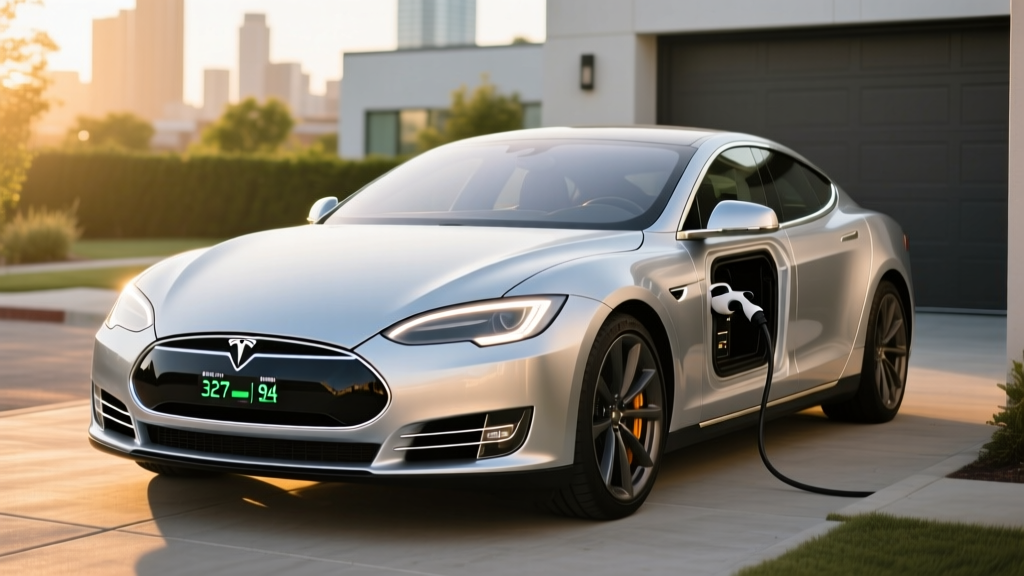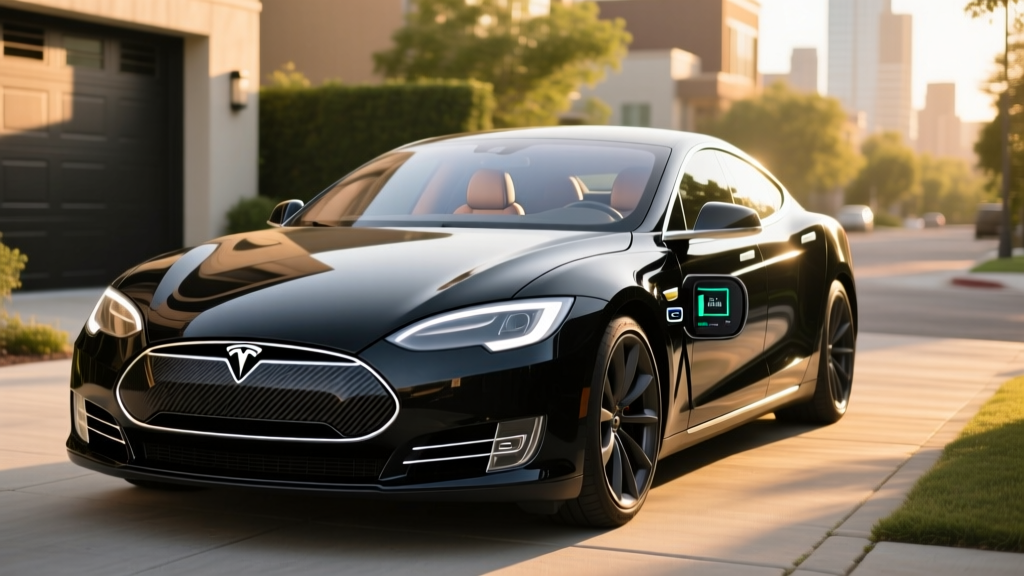
The 2017 Tesla Model S 75D occupies a unique space in the used EV market in 2026. It's a dual-motor, all-wheel-drive luxury sedan that originally stickered near $80,000 but now trades between $18,000 and $28,000 depending on mileage, condition, and — critically — battery state of health (SoH). For buyers who want Tesla's Supercharger network access, genuine long-range capability, and a spacious interior without paying new-car prices, the 75D remains compelling. But a nearly decade-old EV demands scrutiny that a new one doesn't. This review breaks down exactly what you're getting, what to watch out for, and whether the math works.
2017 Model S 75D: Core Specifications at a Glance
| Specification | Value |
|---|---|
| EPA Range (original) | 259 miles |
| Battery Capacity (usable) | ~72.5 kWh (75 kWh nominal, NMC) |
| Drivetrain | Dual-motor AWD |
| Horsepower | 328 hp (combined) |
| 0–60 mph | 4.2 seconds |
| MPGe (combined) | 104 MPGe |
| Energy Consumption | 32 kWh/100 mi |
| Max DC Fast Charge | ~120 kW (Supercharger V2) |
| Level 2 Charge Rate | 11.5 kW (48A onboard charger) |
| Cargo Volume | 26.3 cu ft (rear) + 5.3 cu ft (frunk) |
| Original Base MSRP | $74,500 (before incentives) |
| 2026 Used Price Range | $18,000–$28,000 |
| Battery Warranty (original) | 8 years / 120,000 miles |
Real-World Range: What 259 EPA Miles Actually Means in 2026
EPA Sticker: 259 miles
Expected Highway (70 mph, moderate temps): ~220–235 miles
Expected Mixed City/Highway: ~230–250 miles
Cold Weather (below 32°F): ~170–200 miles
With 10–15% Battery Degradation (typical for 2017): subtract 25–40 miles from all figures above
The EPA rated the 2017 Model S 75D at 259 miles when new, per fueleconomy.gov. That figure assumed a brand-new battery in ideal conditions. In 2026, a used 75D with 80,000–120,000 miles will typically show 10–15% battery degradation, meaning the effective range on a full charge drops to roughly 220–235 miles in fair weather.
Highway driving at 75–80 mph pushes consumption to around 34–36 kWh/100 mi, reducing range further. Cold weather compounds the problem: lithium-ion NMC batteries lose efficiency in freezing temperatures, and cabin heating draws significant energy. Expect 30–35% range loss in sustained sub-freezing conditions — a 259-mile car becomes a 170–185-mile car in January in Minnesota, even before degradation.
The 75D's battery uses Nickel-Manganese-Cobalt (NMC) chemistry, which offers higher energy density than LFP but is more susceptible to calendar degradation when stored at high states of charge. Tesla's battery management system (BMS) includes a top-end buffer, but owners who routinely charged to 100% and let the car sit will see more degradation than those who followed the 80% daily charge recommendation.
How to check battery health before buying: Request a screenshot of the car's battery health from Tesla's service menu, or use third-party tools like TeslaFi or Tessie to analyze charge logs. A healthy 2017 75D at 90,000 miles should still deliver 62–67 kWh of usable capacity. Anything below 60 kWh suggests accelerated degradation and warrants negotiation on price.
Charging Speeds: Supercharger V2 and Home Level 2
Charging speed is where the 2017 Model S 75D shows its age relative to modern EVs built on 800V architectures. The 75D maxes out at approximately 120 kW on DC fast charging — specifically on Tesla Supercharger V2 stalls. It cannot use V3 or V4 Superchargers at their full rate (250–350 kW), though it will charge at its own maximum on those stalls.
| Charging Method | Power (kW) | Speed / Time |
|---|---|---|
| Level 1 (120V household) | ~1.4 kW | ~3–4 miles per hour |
| Level 2 (240V, 48A) | 11.5 kW | ~29 miles per hour; 0–100% in ~7 hours |
| DC Fast Charge (Supercharger V2) | Peak ~120 kW | 10–80% in ~40 minutes |
| CHAdeMO Adapter (if equipped) | ~50 kW | 10–80% in ~80 minutes |
The 10–80% DC fast charge time of roughly 40 minutes is adequate for road trips but noticeably slower than modern competitors. A 2026 Hyundai Ioniq 5 or Kia EV6 completes the same 10–80% session in 18 minutes thanks to 800V architecture. On a cross-country drive, this means 20+ extra minutes per stop in the 75D.
The charge curve matters as much as peak rate. The 75D sustains close to 120 kW from roughly 10% to 40% SoC, then tapers to 80–90 kW through 60%, and drops sharply above 80%. This is why Tesla and experienced owners recommend charging to 80% on road trips and moving on — the time spent from 80–100% is disproportionately long.
At home, the 75D's 11.5 kW onboard charger (standard on dual-motor models with the upgraded 48-amp charger) is excellent. A full charge from near-empty takes about 7 hours on a Level 2 wall connector, meaning overnight charging easily replenishes even a fully depleted battery. If the car has the base 40-amp onboard charger (some early-build 75D units), Level 2 drops to 9.6 kW — still adequate but slightly slower.
Important connector note: The 2017 Model S uses Tesla's proprietary connector. In 2026, with the industry shifting to NACS (which is physically the same Tesla connector), the 75D can use all Tesla Superchargers natively. For CCS-equipped public chargers (Electrify America, EVgo CCS stalls), you'll need a Tesla-to-CCS adapter — widely available for $50–$100 — but charging speeds will still be limited by the car's onboard hardware.
Performance, Drivetrain, and Driving Dynamics
The 75D's dual-motor all-wheel-drive powertrain produces 328 horsepower and delivers a 4.2-second 0–60 mph time. In 2026, that still feels brisk — quicker than most gas-powered luxury sedans and more than adequate for highway merging and passing. The instant torque delivery characteristic of electric motors makes the 75D feel even faster than the numbers suggest in city driving.
The dual-motor setup provides genuine all-weather capability. Unlike the rear-wheel-drive Model S 75 (single motor, 4.5-second 0–60), the 75D distributes torque between front and rear axles for confident traction in rain and light snow. It's not a performance variant — that role belongs to the P100D with its Ludicrous mode — but the 75D strikes a practical balance between efficiency and acceleration.
Ride quality remains a strong point. The 75D rides on Tesla's adaptive air suspension (standard on most 2017 Model S variants), which provides a comfortable, compliant ride with adjustable ride height. However, air suspension failures are a known issue on 2012–2020 Model S vehicles. Replacement air struts cost $1,500–$2,500 per corner, and at 80,000+ miles, many original units have already been replaced or are nearing failure. Budget for this in your ownership plan or verify replacement history before purchase.
Interior, Cargo, and Technology
The 2017 Model S interior reflects Tesla's minimalist philosophy, centered on a 17-inch portrait touchscreen that controls virtually all vehicle functions — climate, media, navigation, vehicle settings, and even the glovebox. The infotainment system received significant software updates over the years, and as of 2026, most 2017 Model S units running current firmware still support navigation, streaming media (Spotify, Tidal), and over-the-air updates, though Tesla has gradually limited feature availability on older hardware (HW2.0/HW2.5).
Passenger space is generous for a sedan. Rear legroom measures 35.4 inches, and the low, flat floor (no transmission tunnel) makes the middle seat usable for short trips. The trunk offers 26.3 cubic feet of cargo space — more than most midsize SUVs — and the rear seats fold 60/40 for longer items. The front trunk (frunk) adds 5.3 cubic feet, useful for charging cables and groceries.
Autopilot and driver assistance: The 2017 Model S 75D shipped with Hardware 2.0 or 2.5 (depending on build date), which supports basic Autopilot features: Traffic-Aware Cruise Control and Autosteer (lane centering). This is SAE Level 2 driver assistance — the driver must keep hands on the wheel and eyes on the road at all times. Full Self-Driving (FSD) capability was available as a paid option, but on HW2.5 hardware, FSD performance is limited compared to HW3.0/HW4.0 vehicles. Tesla no longer sells FSD transfers to newer hardware for these older units in most cases.
Autopilot and FSD on a 2017 Model S are Level 2 driver-assist systems, not self-driving. The driver is fully responsible for steering, braking, and monitoring traffic at all times. The older HW2.0/2.5 sensor suite has lower camera resolution and fewer neural network capabilities than current Tesla hardware. Expect more frequent disengagements and less confident behavior in construction zones, poor weather, and complex intersections.
Notable drawbacks: Build quality on 2017-era Model S vehicles is inconsistent — panel gaps, rattles, and premature interior wear are common complaints. The MCU1 (Media Control Unit) in early 2017 builds was subject to a recall for eMMC memory failure; verify this was addressed under warranty. The panoramic sunroof (if equipped) is prone to leaking and is expensive to repair. And the lack of a heat pump (the 75D uses resistive heating) contributes to the significant cold-weather range loss mentioned earlier.
Pricing, Tax Credits, and Total Cost of Ownership
The 2017 Model S 75D originally carried a base MSRP of $74,500, with typical as-tested prices reaching $82,000–$95,000 after options like Enhanced Autopilot, premium interior, and metallic paint. In 2026, used examples trade between $18,000 and $28,000, with lower-mileage, well-maintained units commanding premiums.
As a used vehicle, the 2017 Model S 75D may qualify for the Used Clean Vehicle Credit under IRS §25E — not the §30D new-vehicle credit. Key requirements per IRS.gov:
- Credit amount: 30% of sale price, up to a maximum of $4,000
- Vehicle price cap: Sale price must be $25,000 or less
- Buyer income limits: AGI ≤ $75,000 (single) / $112,500 (head of household) / $150,000 (joint)
- Vehicle age: Must be at least 2 model years old (2017 qualifies)
- Dealer requirement: Must be purchased from a licensed dealer (private-party sales do not qualify)
- Transfer option: Credit can be transferred to the dealer at point of sale as a price reduction
Five-year ownership cost estimate (2026):
| Category | Estimated Cost |
|---|---|
| Purchase Price (after credit) | $18,000–$24,000 |
| Insurance (5 years) | $9,000–$14,000 |
| Electricity (home charging, 12,000 mi/yr) | $3,600–$5,400 |
| Maintenance (tires, cabin filter, fluid top-offs) | $2,500–$4,000 |
| Out-of-Warranty Repairs (suspension, MCU, etc.) | $2,000–$6,000 |
| Total (5 years) | $35,100–$53,400 |
The wildcard in used Model S ownership is out-of-warranty repairs. The original 8-year/120,000-mile battery and drive unit warranty has expired or is expiring for 2017 models. A battery replacement (if needed) costs $12,000–$16,000 from Tesla or $8,000–$12,000 from independent EV shops using refurbished packs. Drive unit replacements run $3,000–$5,000. These are worst-case scenarios — many 75D batteries last well beyond 150,000 miles — but buyers must budget for the risk.
How the 2017 Model S 75D Compares to Key Competitors
In the $18,000–$28,000 used EV market in 2026, the 75D competes with several strong alternatives:
| Attribute | 2017 Model S 75D | 2018 Chevy Bolt EV | 2019 Tesla Model 3 LR AWD | 2018 Jaguar I-PACE |
|---|---|---|---|---|
| EPA Range | 259 mi | 238 mi | 310 mi | 234 mi |
| Used Price (2026) | $18K–$28K | $12K–$17K | $20K–$27K | $18K–$25K |
| DC Fast Charge (peak) | ~120 kW | ~55 kW | ~170 kW | ~105 kW |
| 0–60 mph | 4.2s | 6.5s | 4.4s | 4.5s |
| Cargo Space | 31.6 cu ft (total) | 56.6 cu ft (rear fold) | 22.6 cu ft (total) | 51.0 cu ft (rear fold) |
| Supercharger Access | Native | No (adapter required*) | Native | No |
*The Bolt EV can access some Superchargers via third-party adapters but lacks native NACS/Tesla connector support.
Choose the 2017 Model S 75D if: You want a spacious luxury sedan with Supercharger access, strong acceleration, excellent cargo capacity, and a proven long-range platform — and you're comfortable with out-of-warranty repair risk.
Choose the 2019 Model 3 Long Range AWD instead if: You want newer hardware (HW3.0), faster charging, lower maintenance risk, and better software support — and you can accept a smaller interior and less cargo room.
Choose the Bolt EV if: Budget is the top priority and you mostly drive locally. The Bolt's 55 kW DC fast charging makes road trips painful, but its low purchase price and strong city range are hard to beat for commuters.
Pros, Cons, and Final Verdict
Pros
- 259-mile EPA range (220+ real-world with degradation) remains practical for most drivers
- Dual-motor AWD provides confident all-weather traction
- Massive cargo capacity (31.6 cu ft total) beats most SUVs
- Native Tesla Supercharger access — best charging network in the US
- Air suspension and premium ride quality
- Over-the-air software updates still supported
- Qualifies for up to $4,000 used EV tax credit (§25E)
- Strong 0–60 performance (4.2 seconds)
Cons
- Original battery/drivetrain warranty has expired — repair risk is real
- 120 kW peak DC charging is slow vs. modern 250–350 kW EVs
- Air suspension failures are common and expensive ($1,500–$2,500/strut)
- No heat pump — significant cold-weather range loss (30–35%)
- HW2.0/2.5 Autopilot hardware is outdated vs. current systems
- MCU1 eMMC failure risk (verify recall completion)
- Resistive cabin heating draws heavy power
- Insurance costs can be elevated for older Tesla vehicles
The 2017 Tesla Model S 75D is best suited for budget-conscious buyers who want a spacious, fast, long-range EV with Supercharger access and who can absorb the risk of out-of-warranty repairs. It's an excellent daily driver and capable road-trip vehicle, but it demands a buyer who will inspect battery health carefully, budget $2,000–$4,000 for potential suspension and electronics repairs, and accept that charging speeds lag behind 2023+ EVs. If you find a well-maintained example with documented battery health above 90% and completed recall work, the 75D offers remarkable value at $20,000–$25,000 — particularly with the $4,000 used EV credit bringing the effective price under $20,000.
Frequently Asked Questions
What is the real-world range of the 2017 Model S 75D in 2026?
With typical 10–15% battery degradation, expect 220–235 miles in fair weather with mixed driving. Highway-only driving at 75+ mph drops this to ~200–215 miles. In cold weather (below freezing), plan for 170–200 miles. Always check the specific car's battery SoH before purchase — individual results vary significantly based on charging habits and climate.
How fast does the 2017 Model S 75D charge at home and on road trips?
At home on a Level 2 (240V) Tesla Wall Connector, the 75D charges at up to 11.5 kW, adding about 29 miles per hour and reaching a full charge in roughly 7 hours. On DC fast charging (Tesla Supercharger V2), it peaks at ~120 kW and charges from 10–80% in about 40 minutes. This is slower than modern EVs but adequate for most road trips with proper planning.
Does the 2017 Model S 75D qualify for any federal tax credit?
It does not qualify for the §30D new EV credit (that applies only to new vehicle purchases). However, it may qualify for the §25E Used Clean Vehicle Credit — up to $4,000 or 30% of the sale price (whichever is less). Requirements include: sale price at or below $25,000, buyer AGI within income limits ($75K single / $150K joint), purchase from a licensed dealer, and the vehicle must be at least 2 model years old. Verify current rules at IRS.gov and consult a tax professional.
Is the 2017 Model S 75D worth buying over a newer Model 3?
It depends on your priorities. The 75D offers more interior space, more cargo room, air suspension, and a more premium feel. The 2019+ Model 3 Long Range AWD offers newer Autopilot hardware (HW3.0), faster DC charging (~170 kW), lower repair risk, and similar or better range (310 miles EPA). If space and luxury matter most, the 75D wins. If you want lower risk and better tech, the Model 3 is the safer buy.
What should I check before buying a used 2017 Model S 75D?
Prioritize these five items: (1) Battery state of health — request Tesla service data or use TeslaFi to verify capacity retention above 85%. (2) Air suspension — test all ride heights and listen for compressor strain. (3) MCU recall — verify the eMMC memory recall was completed. (4) Drive unit condition — listen for whining or grinding from the front or rear motor. (5) Service history — prefer cars with documented maintenance at Tesla Service Centers. A pre-purchase inspection at a Tesla-authorized or EV-specialist shop ($200–$400) is strongly recommended.
How long will the battery last on a 2017 Model S 75D?
Tesla's NMC batteries in the Model S platform have demonstrated strong longevity. Data from fleet analyses shows average degradation of approximately 10–12% at 100,000 miles and 15–20% at 150,000 miles. Many Model S batteries exceed 200,000 miles before requiring replacement. The key factors are charging habits (avoiding routine 100% charges and prolonged storage at high SoC), climate (extreme heat accelerates degradation), and mileage. The original 8-year/120,000-mile battery warranty has expired for 2017 models, so any replacement would be out of pocket — typically $12,000–$16,000 for a new pack from Tesla or $8,000–$12,000 for a refurbished unit from independent shops.