Quick Verdict: The Entry-Level EV Benchmark Gets Sharper
The 2026 Tesla Model 3 Rear Wheel Drive remains the most efficient, best-charging sedan in its price class — and one of the few EVs that can credibly serve as a sole vehicle for apartment dwellers with access to destination charging. With a 341-mile EPA range, a 60 kWh LFP battery that tolerates daily 100% charges, and access to Tesla's Supercharger network, the RWD Model 3 is the default recommendation for buyers who want maximum range per dollar without stepping into Long Range or Performance territory.
But the RWD trim is not without trade-offs. The single-motor layout means less traction in snow, the 5.8-second 0-60 time is merely adequate, and the minimalist interior still polarizes. This review breaks down every spec that matters for a real purchase decision.
| Spec | Value |
|---|---|
| EPA Range | 341 miles |
| Battery (Usable) | ~60 kWh, LFP (Lithium Iron Phosphate) |
| Drivetrain | Rear-Wheel Drive, single motor |
| Horsepower / Torque | 271 hp / 317 lb-ft |
| 0-60 mph | 5.8 seconds |
| Top Speed | 125 mph |
| Max DC Fast Charge | 170 kW (peak) |
| 10-80% DC Charge Time | ~25 minutes |
| Level 2 Charge Rate | 11.5 kW (~44 mi/hr) |
| MPGe (City / Hwy / Combined) | 138 / 119 / 129 MPGe |
| Energy Consumption | 26 kWh/100 mi |
| Cargo Volume | 23 cu ft (trunk + frunk) |
| Rear Legroom | 35.3 inches |
| Battery Warranty | 8 years / 100,000 miles (70% retention) |
| Base MSRP | $38,990 (before destination) |
Range & Efficiency: 341 EPA Miles, But What About the Real World?
EPA Sticker: 341 miles
Real-World Highway (70-80 mph, 65°F): ~275–295 miles
Real-World Mixed Commute: ~300–320 miles
Cold Weather (20°F, highway): ~220–250 miles
The 2026 Model 3 RWD's 341-mile EPA figure is among the highest of any single-motor EV sedan. But EPA testing uses a weighted mix of low-speed city and moderate highway cycles that flatter efficient vehicles. On sustained 75-mph highway driving — the scenario that triggers the most range anxiety — expect roughly 275 to 295 miles before the battery buffer warns you to find a charger.
Cold weather compounds the loss. LFP chemistry is more sensitive to low temperatures than NMC, and without preconditioning the battery to a Supercharger, you'll see range drop to 220–250 miles at 20°F with cabin heat running. The Model 3's heat pump (standard on all trims) helps, but LFP packs lose more usable capacity in the cold than their NMC counterparts.
The efficiency story is where the RWD shines: at 26 kWh per 100 miles, it is one of the most efficient EVs on the market. For context, the Hyundai Ioniq 6 SE RWD achieves 24 kWh/100 mi, while the BMW i4 eDrive40 sits at 27 kWh/100 mi. Lower kWh/100 mi means cheaper charging and more miles per minute at a DC fast charger.
Charging Speed: 170 kW Peak, 25 Minutes to 80%
| Charge Level | Power (kW) | Miles Added per Hour | Typical Use Case |
|---|---|---|---|
| Level 1 (120V, 12A) | ~1.4 kW | ~4 mi/hr | Emergency / trickle top-off |
| Level 2 (240V, 48A) | 11.5 kW | ~44 mi/hr | Home overnight, workplace |
| DC Fast (V3 Supercharger) | 170 kW peak | Up to ~175 mi in 15 min | Road trips, highway corridors |
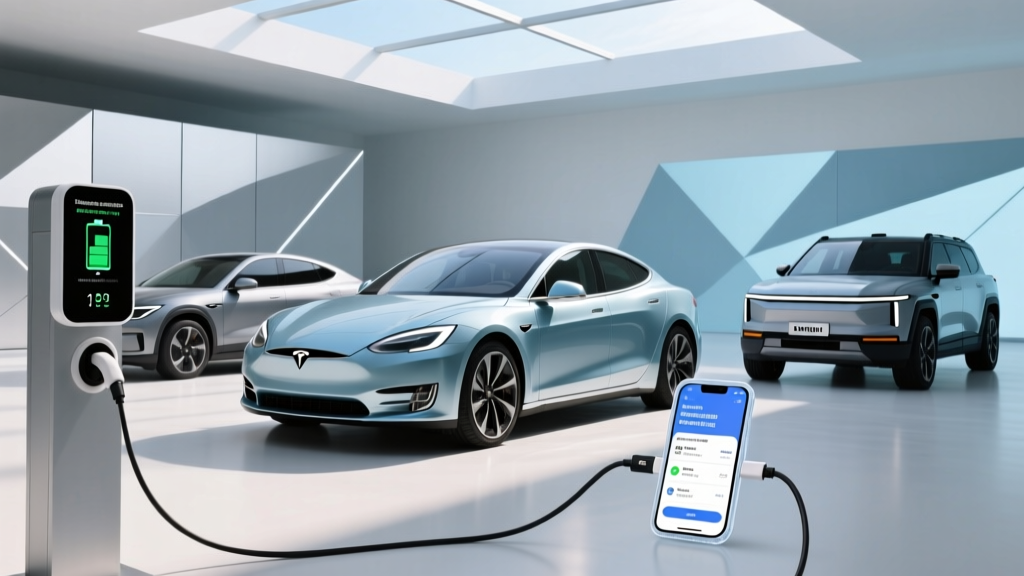
The 2026 Model 3 RWD peaks at 170 kW on a V3 Supercharger (250 kW capable) or compatible CCS/NACS DC fast charger. The charge curve is the critical detail: the car holds near-peak speed from roughly 10% to 45% State of Charge (SoC), then tapers progressively. A 10-80% session takes approximately 25 minutes — competitive but not class-leading. The Hyundai Ioniq 5 and Kia EV6, with their 800V architectures, complete the same session in about 18 minutes at 240 kW peak.
For home charging, the onboard charger accepts 11.5 kW on a 240V / 48A circuit (hardwired Level 2). A full 0-100% charge takes roughly 5.5 hours — meaning a standard overnight session from 20% to full is easily achieved. Because this is an LFP battery, Tesla recommends charging to 100% at least once per week to maintain cell balancing and accurate SoC estimation. This is a genuine ownership advantage over NMC-equipped competitors, which degrade faster when held at 100%.
Preconditioning matters. Navigate to a Supercharger using the car's built-in navigation, and the battery will warm itself to optimal charging temperature before you arrive. Skip this step on a cold day and your peak charge rate may be cut in half for the first 5-10 minutes of the session.
Performance & Drivetrain: Adequate, Not Thrilling
The single rear-mounted motor produces 271 horsepower and 317 lb-ft of torque. The 5.8-second 0-60 time is quick enough for confident highway merging but won't surprise anyone coming from a Performance trim or a dual-motor competitor. Instant torque delivery makes the car feel punchier than the number suggests in city driving, and one-pedal regeneration is smooth and predictable.
The RWD layout is the trade-off. In rain and snow, the Model 3 RWD relies on traction control and the low center of gravity from the battery pack, but it cannot match the all-weather confidence of the Long Range AWD or competitors like the Subaru Solterra or BMW i4 xDrive40. If you live above the snow belt, the $4,000 premium for Long Range AWD is worth considering.
Ride quality improved significantly with the 2024 refresh (Highland) and carries forward: the suspension is firmer than a Camry but absorbs highway imperfections well. Cabin noise is notably lower than pre-2024 Model 3s, thanks to acoustic glass and improved insulation.
Interior, Tech & Cargo
The Model 3 cabin is defined by what's absent: no instrument cluster, no physical buttons, no traditional shifter. Everything routes through the 15.4-inch center touchscreen, including climate, mirror adjustment, and glovebox release. The 2024+ refresh added ventilated front seats, ambient lighting, rear-seat ventilation controls via an 8-inch rear screen, and a power-folding rear seat — all standard on RWD.
Cargo space: 23 cubic feet total (trunk + front trunk/frunk). The trunk is a liftback design, making it more practical than a traditional sedan's. Rear seats fold 60/40 for longer items. The frunk holds roughly 3 cu ft — enough for a charging cable bag or small groceries.
Rear seat: 35.3 inches of legroom, which is tight for adults over 6 feet on long trips. The Model 3 is a driver's car first; families with tall teenagers will want to test-fit before buying.
Driver Assistance: Autopilot Standard, FSD Optional
SAE Level 2 — NOT Self-Driving. Tesla's Autopilot (standard) and Full Self-Driving Supervised ($8,000 option or $99/month subscription) are Level 2 driver-assist systems. You must keep your hands on the wheel and eyes on the road at all times. The car does not drive itself.
Standard Autopilot includes adaptive cruise control and lane-centering, which works reliably on divided highways. FSD Supervised adds automatic lane changes, traffic-light recognition, and city-street navigation — but its performance varies significantly by geography and road marking quality. As of 2026, FSD remains a supervised beta: impressive in capability, inconsistent in execution, and not a substitute for an attentive driver.
Pricing, Trims & Federal Tax Credit
| Trim | MSRP (incl. destination) | Est. After §30D Credit |
|---|---|---|
| Rear-Wheel Drive | $39,990 | ~$32,490 (if eligible) |
| Long Range AWD | $47,990 | ~$40,490 (if eligible) |
| Performance AWD | $54,990 | ~$47,490 (if eligible) |
The 2026 Model 3 RWD starts at $38,990 plus $1,000 destination, for a total of $39,990. Paint upgrades ($1,000–$2,500), 19-inch wheels ($1,500), and FSD subscription ($99/month) are the main add-ons. A typical as-tested RWD with metallic paint comes to roughly $41,490.
Federal Tax Credit Eligibility (IRS §30D)
- MSRP Cap: Vehicle must be under $55,000 — Model 3 RWD qualifies ✓
- Buyer Income Cap: AGI ≤ $150,000 (single) / $300,000 (joint) / $225,000 (HOH)
- Battery Sourcing: Critical minerals and battery components must meet phased-in thresholds (increasing annually through 2026). Tesla's LFP cells for the RWD are sourced from CATL (China), which may affect eligibility depending on current-year FEOC (Foreign Entity of Concern) rules.
- Point-of-Sale Transfer: Eligible buyers can apply the credit as an instant rebate at purchase rather than waiting for tax filing.
- Always verify: Check IRS.gov §30D guidance and Tesla's configurator for current eligibility before purchasing.
The $7,500 credit is not guaranteed for every buyer or every Model 3 RWD. Battery-sourcing rules tightened in 2024 and continue phasing in through 2026. The LFP battery in the RWD uses CATL cells, and depending on current FEOC restrictions, the RWD may qualify for the full $7,500, a partial $3,750, or — in some scenarios — no credit at all. The Long Range and Performance trims use NMC cells from Panasonic at Tesla's Nevada Gigafactory and have historically qualified more consistently. Confirm eligibility on the IRS clean vehicle credit page and with Tesla directly before finalizing your order.
Ownership Costs & Warranty
Tesla's battery warranty covers 8 years or 100,000 miles (whichever comes first) with a minimum 70% capacity retention threshold. The vehicle limited warranty is 4 years / 50,000 miles. These terms are average for the segment — Hyundai offers 10yr/100,000 mi, and BMW matches at 8yr/100,000 mi.
Total cost of ownership favors the RWD heavily if you charge at home. At $0.14/kWh (national average residential rate), a full charge costs about $8.40 for 341 miles — roughly $0.025/mile. A comparable gas sedan at 30 MPG and $3.50/gallon runs $0.117/mile. Over 15,000 miles/year, that's a $1,380 annual fuel savings.
Insurance is the offset: Model 3 premiums average 15-25% higher than comparable gas sedans due to repair costs and Tesla's proprietary parts network. Get quotes before ordering.
Who the 2026 Model 3 RWD Is For
Choose the Model 3 RWD if:
- You want maximum range under $40K and can charge at home or work
- You live in a mild climate where RWD traction is adequate year-round
- You value Supercharger network access for road trips
- You prefer LFP chemistry's 100% daily charging tolerance and longer cycle life
Look elsewhere if:
- You need AWD for snow-belt winters (consider Long Range AWD or Ioniq 5 AWD)
- You regularly carry rear-seat adults over 6 feet tall
- You want physical buttons, Apple CarPlay, or a traditional instrument cluster
- Fastest DC charging is a priority (Ioniq 5/EV6 charge 10-80% in ~18 min)
Pros & Cons
Pros
- 341-mile EPA range is best-in-class for single-motor sedans
- LFP battery tolerates daily 100% charging without accelerated degradation
- Best-in-class efficiency at 26 kWh/100 mi
- Supercharger network access (now with NACS native port)
- Over-the-air updates add features post-purchase
- Strong resale value relative to EV competitors
Cons
- 170 kW peak DC charging is slower than 800V competitors
- RWD only — no AWD option on this trim
- Tight rear legroom for tall passengers
- No Apple CarPlay or Android Auto
- LFP range loss in cold weather is significant
- FSD subscription cost adds up; still requires full driver supervision
Frequently Asked Questions
What is the real-world range of the 2026 Tesla Model 3 RWD?
Expect 275–295 miles on sustained highway driving at 70-80 mph in mild weather, 300–320 miles in mixed commuting, and as low as 220–250 miles in sub-freezing highway conditions. The 341-mile EPA figure is achievable primarily in low-speed city driving with moderate climate use.
How fast does the Model 3 RWD charge at home and on DC fast chargers?
At home on a 240V Level 2 charger, it adds about 44 miles per hour (11.5 kW), reaching a full charge in ~5.5 hours. On a DC fast charger, it peaks at 170 kW and charges from 10% to 80% in approximately 25 minutes — adequate for road trips but slower than 800V competitors like the Ioniq 5.
Does the 2026 Model 3 RWD qualify for the $7,500 federal tax credit?
It depends on your income, the vehicle's MSRP (which qualifies at under $55K), and current-year battery-sourcing rules. The RWD's LFP battery from CATL may face FEOC restrictions that reduce or eliminate the credit. Always verify on IRS.gov and with Tesla before purchasing. Point-of-sale transfer is available if eligible.
Is the Model 3 RWD worth buying over the Hyundai Ioniq 6 or BMW i4?
The Model 3 RWD wins on range (341 vs. Ioniq 6 SE's 361 but at higher price), efficiency, Supercharger access, and software. The Ioniq 6 charges faster (800V architecture, ~18 min 10-80%). The BMW i4 offers a more traditional interior and dealer service network but costs significantly more. For pure value-per-mile, the Model 3 RWD remains the benchmark.
Can I charge to 100% daily with the LFP battery?
Yes — Tesla recommends charging LFP-equipped Model 3s to 100% at least once per week for accurate battery management system calibration. Unlike NMC batteries, LFP chemistry does not suffer accelerated degradation from regular full charges, making it ideal for owners who want maximum daily range without babying the battery.
Is Tesla Autopilot self-driving?
No. Autopilot and FSD Supervised are SAE Level 2 driver-assist systems. You must remain fully engaged — hands on wheel, eyes on road — at all times. True self-driving (Level 4) is currently available only in limited robotaxi services like Waymo in select cities.