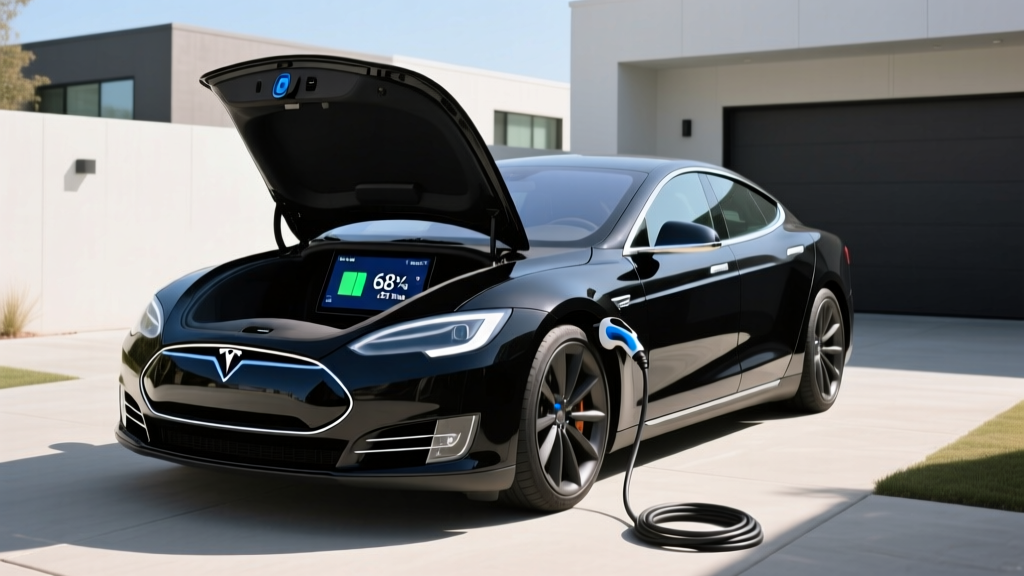
The 2017 Tesla Model S 75 occupies a unique space in the used EV market. Originally positioned as the entry point to Tesla's flagship sedan lineup, the Model S 75 paired a 75 kWh battery with rear-wheel or all-wheel drive in a package that undercut the 100D and P100D by tens of thousands of dollars. In 2026, these vehicles are flooding the secondary market at attractive prices — but nearly a decade of battery chemistry, charging infrastructure shifts, and evolving ownership economics mean the calculus for buying one is very different from what it was at launch.
This review breaks down exactly what you're getting with a 2017 Model S 75 today: real range, charging reality, battery longevity, and the total cost picture. We'll also address the tax-credit question head-on, because the answer may surprise you.
Quick Verdict: Who Should Consider a 2017 Model S 75?
The 2017 Model S 75 is best suited for budget-conscious commuters and families who want a premium electric sedan with access to the Supercharger network but don't need 300+ miles of range. It's a strong candidate if you can charge at home, drive under 200 miles round-trip most days, and are prepared for out-of-warranty maintenance costs. It is not ideal for road-trippers who regularly exceed 250 miles between stops, or buyers in extreme cold climates where range loss compounds the already modest battery capacity.
- You want a luxury EV sedan under $25,000 on the used market
- You have reliable home Level 2 charging
- Your daily commute is under 150 miles round-trip
- Supercharger network access matters to you
- You need 300+ miles of real-world range
- You live in a region with harsh winters and no garage charging
- You want modern Tesla interior tech (the 2017 interior is showing its age)
- You want a battery still under the 8-year/150,000-mile warranty
Range, Efficiency & Real-World Expectations
The EPA rated the 2017 Model S 75 (RWD) at 249 miles of combined range. The all-wheel-drive 75D variant was rated at 259 miles. These were respectable numbers in 2017, but the 75 kWh battery pack — with approximately 72.5 kWh of usable capacity — means real-world results diverge meaningfully from the sticker.
Real-World Highway (70 mph, moderate temps): ~210–225 mi
Real-World Cold Weather (below 32°F): ~165–190 mi
Real-World City/Mixed (mild climate): ~230–245 mi
The Model S 75 uses an NMC (nickel manganese cobalt) lithium-ion battery pack. NMC chemistry offers high energy density but is more susceptible to cold-weather range loss than LFP (lithium iron phosphate). Expect 15–25% range reduction in freezing temperatures, depending on whether you precondition the cabin and battery.
Efficiency is rated at 104 MPGe combined (RWD), translating to roughly 32 kWh per 100 miles — competitive for a 4,600+ lb luxury sedan of its era, but less efficient than modern EVs like the Hyundai Ioniq 6 or Tesla Model 3. Highway driving at sustained speeds pushes consumption closer to 35–38 kWh/100mi.
Battery Health, Degradation & Warranty Status
This is the single most important factor when evaluating any 2017 Model S 75 in 2026. Tesla's original battery warranty covered 8 years or 150,000 miles (whichever came first) with a minimum 70% capacity retention threshold. For a 2017 model year vehicle, that warranty window closed in 2025 at the latest.
What this means in practice: You are buying a vehicle whose battery is now entirely your financial responsibility. A replacement battery pack for the Model S currently runs $12,000–$20,000 depending on whether Tesla installs a new or refurbished unit, and third-party options are limited.
Based on aggregated fleet data from sources like Teslanorth and owner forums, 2017-era Model S batteries typically retain 82–90% of original capacity at 80,000–100,000 miles. However, vehicles that were frequently DC fast-charged to 100% or regularly exposed to extreme heat without preconditioning may show steeper degradation. Always request a battery health reading (State of Health / SoH) before purchase — either through the Tesla service center or third-party diagnostic tools.
| Specification | Value |
|---|---|
| Battery Chemistry | NMC (Nickel Manganese Cobalt) |
| Total Capacity | 75 kWh |
| Usable Capacity | ~72.5 kWh |
| Original Warranty | 8 years / 150,000 miles (expired) |
| Typical SoH at 80k–100k mi | 82–90% |
| Replacement Cost (2026 est.) | $12,000–$20,000 |
| Thermal Management | Active liquid cooling/heating |
Charging Speeds: DC Fast, Level 2 & Home Setup
The 2017 Model S 75 uses Tesla's proprietary connector (now being phased in favor of NACS across the industry, though Tesla vehicles retain native compatibility with all Superchargers). It does not natively support CCS without an adapter — important if you plan to use Electrify America or other non-Tesla DC networks.
| Charging Level | Power | Speed / Time |
|---|---|---|
| Level 1 (120V outlet) | ~1.4 kW | ~3–4 mi/hr |
| Level 2 (240V, 48A) | 11.5 kW | ~29 mi/hr (full charge ~7.5 hrs) |
| Level 2 (240V, 40A) | 9.6 kW | ~24 mi/hr (full charge ~9 hrs) |
| DC Fast (Supercharger V2) | Peak ~120 kW | 10–80% in ~40 min |
| DC Fast (Supercharger V3/V4) | Peak ~120 kW (car-limited) | 10–80% in ~38 min |
| DC Fast (CCS w/ adapter) | Peak ~120 kW | Varies by station |
A critical detail: the 2017 Model S 75's onboard charge architecture maxes out at approximately 120 kW on DC fast charging. Even at a V3 Supercharger capable of 250 kW, this car cannot accept more than its hardware allows. The charge curve is also relatively flat compared to newer EVs — it sustains around 90–110 kW from roughly 10–50% SoC, then tapers progressively. Expect a 10–80% session to take 35–42 minutes in practice, depending on battery temperature and preconditioning.
For home charging, the dual onboard chargers (if equipped — Tesla offered a 48A single or 72A dual-charger option in 2017) determine your Level 2 speed. The 72A dual-charger option enables up to 17.3 kW on a sufficiently robust 240V circuit, cutting a full charge to roughly 5 hours. Most 2017 Model S 75 vehicles on the used market have the standard 48A charger (11.5 kW).
Performance, Drivetrain & Driving Dynamics
| Specification | 75 RWD | 75D AWD |
|---|---|---|
| Horsepower | 315 hp | 328 hp |
| Torque | 325 lb-ft | 325 lb-ft |
| 0–60 mph | 5.5 seconds | 4.2 seconds |
| Drivetrain | Rear-Wheel Drive | Dual-Motor AWD |
| Top Speed | 140 mph | 140 mph |
| Curb Weight | ~4,647 lbs | ~4,725 lbs |
| EPA Range | 249 mi | 259 mi |
| MPGe (combined) | 104 MPGe | 102 MPGe |
Even by 2026 standards, the Model S 75D's 4.2-second 0–60 time is genuinely quick for a full-size luxury sedan. The RWD variant's 5.5 seconds is more sedate but still brisk. The dual-motor AWD system provides excellent traction in rain and light snow, though the car's 4,700+ lb curb weight means you'll want dedicated winter tires for serious cold-weather driving.
Regenerative braking on the 2017 Model S is strong but not as aggressive as newer one-pedal-driving EVs. Tesla removed the adjustable regen setting in later software updates, so regen behavior is fixed. The air suspension (standard on most 2017 Model S trims) provides a comfortable ride but is a known maintenance item — strut and compressor failures typically surface between 80,000 and 120,000 miles and cost $1,500–$3,000 per corner to repair.
Interior, Cargo Space & Technology
The 2017 Model S interior was updated with Tesla's second-generation design that year, featuring improved materials over the 2012–2016 models. However, compared to 2026 luxury EVs, the cabin shows its age — the 17-inch center touchscreen runs older hardware (MCU1 or MCU2, depending on production date), and vehicles with the original MCU1 (NVIDIA Tegra) are notably sluggish by modern standards. Tesla offered an MCU2 upgrade (Intel Atom) for ~$2,000, and some used examples will have this installed.
Cargo and passenger space:
- Total cargo volume: 31.6 cu ft (26.3 cu ft rear trunk + 5.3 cu ft front trunk/frunk)
- Rear legroom: 35.4 inches
- Front legroom: 42.7 inches
- Seating: 5-passenger standard (optional rear-facing third-row jump seats for 7-passenger, rare)
The hatchback-style trunk opening and fold-flat rear seats make the Model S surprisingly practical for cargo, though the frunk is smaller than you'd expect. For families, the rear seat is comfortable for two adults or three children, and the panoramic glass roof (standard) adds an airy feel.
Driver assistance: The 2017 Model S came with Autopilot hardware suite (HW2 or HW2.5), supporting Traffic-Aware Cruise Control and Autosteer (lane centering). This is SAE Level 2 driver assistance — the driver must remain engaged with hands on the wheel and eyes on the road. Full Self-Driving (FSD) capability was available as a software purchase, but even the latest FSD Supervised remains Level 2 and requires active driver supervision. It is not autonomous driving.
Pricing, Tax Credits & Ownership Costs
The 2017 Model S 75 launched with an MSRP of approximately $69,500 (RWD) to $74,500 (75D AWD) before destination fees and options. Well-equipped examples with Enhanced Autopilot, premium interior, and air suspension pushed as-tested prices past $85,000.
In the 2026 used market, a 2017 Model S 75 typically sells for $18,000–$28,000 depending on mileage, condition, battery health, and hardware configuration (MCU2 and HW2.5 command a premium).
| Item | Detail |
|---|---|
| Original MSRP (75 RWD) | ~$69,500 |
| Original MSRP (75D AWD) | ~$74,500 |
| 2026 Used Market Price | $18,000–$28,000 |
| Federal Tax Credit (§30D New EV) | NOT eligible (new vehicle credit) |
| Used EV Tax Credit (§25E) | Up to $4,000 or 30% of sale price, whichever is less |
| §25E Income Caps | $75k single / $112,500 HOH / $150k joint (AGI) |
| §25E Sale Price Cap | $25,000 or less |
| §25E Dealer Requirement | Must purchase from a licensed dealer (not private party) |
Tax credit clarity: The 2017 Model S 75 does not qualify for the new-vehicle §30D federal tax credit (that applies only to new EV purchases meeting current battery-sourcing, MSRP, and income requirements). However, it may qualify for the §25E used EV tax credit — up to $4,000 or 30% of the sale price, whichever is less. To qualify under §25E, the sale price must be $25,000 or less, the buyer must meet income caps ($75,000 single / $150,000 joint), the vehicle must be purchased from a licensed dealer (not a private party), and it must be at least two model years old. Always verify current rules at IRS.gov and consult a tax professional, as credit availability and rules may change.
Estimated 5-year ownership costs for a 2017 Model S 75 purchased at ~$23,000:
- Electricity (home charging, 12,000 mi/yr): ~$3,600–$5,400 (at $0.10–$0.15/kWh)
- Insurance: ~$9,000–$13,000 (Tesla insurance premiums run 20–40% above average for the class)
- Maintenance (tires, cabin filter, brake fluid, wipers): ~$2,500–$4,000
- Potential repairs (air suspension, MCU, drive unit): $0–$6,000 (highly variable)
- Total estimated 5-year operating cost: ~$15,000–$28,000 (excluding purchase price)
Pros, Cons & How It Compares
- Access to Tesla Supercharger network — still the most reliable DC fast-charging ecosystem
- Spacious hatchback design with 31.6 cu ft cargo and usable frunk
- Strong acceleration, especially 75D (4.2s 0–60)
- Over-the-air software updates continue to add features
- Premium ride quality with adaptive air suspension
- Used prices have dropped to compelling levels ($18k–$28k)
- Battery warranty has expired — replacement risk is $12k–$20k
- Real-world range of ~210 mi highway falls short for road trips
- DC fast charging capped at ~120 kW (40-min 10–80% sessions)
- Air suspension and MCU1 hardware are known failure points
- Insurance premiums significantly above class average
- Interior materials and infotainment feel dated vs. 2026 competitors
- §25E used credit only applies if dealer sale is ≤$25,000
Versus key competitors in the $20k–$30k used EV sedan market:
- 2017–2018 Chevrolet Bolt EV: Similar price, better EPA range (238 mi), far cheaper to insure and maintain, but no DC fast charging to speak of (50 kW max) and a much smaller cabin.
- 2018–2019 Nissan Leaf Plus: ~226 mi EPA range, CHAdeMO charging (declining network), lower performance and less premium feel.
- 2018 Tesla Model 3 Long Range: 310 mi EPA range, faster charging, modern interior, but typically $24,000–$32,000 used — a meaningful premium over the Model S 75.
The Model S 75 wins on space, ride comfort, and Supercharger access. It loses on range, charging speed, and long-term maintenance risk. If you can stretch the budget, a used Model 3 Long Range is the more rational buy for most drivers.
Frequently Asked Questions
What is the real-world range of the 2017 Tesla Model S 75?
The EPA rated it at 249 miles (RWD) or 259 miles (75D AWD). In real-world highway driving at 70 mph in moderate temperatures, expect approximately 210–225 miles. In cold weather below freezing, that drops to 165–190 miles. City and mixed driving in mild climates can approach the EPA figure at 230–245 miles. Battery degradation will further reduce these numbers depending on the vehicle's State of Health.
How fast does the 2017 Model S 75 charge at home and on the road?
At home on a 240V Level 2 charger with the standard 48A onboard charger, the Model S 75 adds about 29 miles of range per hour (11.5 kW), reaching a full charge in roughly 7.5 hours. On a Tesla Supercharger, the car peaks at approximately 120 kW DC, and a 10–80% session takes about 38–42 minutes. The car's charge hardware limits it well below the 250 kW that newer Superchargers can deliver.
Does the 2017 Model S 75 qualify for any federal tax credit?
It does not qualify for the §30D new-vehicle credit. It may qualify for the §25E used EV credit — up to $4,000 or 30% of the sale price (whichever is less) — provided the sale price is $25,000 or less, the buyer meets income caps, and the purchase is from a licensed dealer. Verify eligibility at IRS.gov and consult a tax professional before relying on this credit.
Is the 2017 Model S 75 still worth buying in 2026?
It depends on your priorities. If you want a spacious, comfortable luxury EV sedan with Supercharger access for under $25,000, it's one of the best options available. However, the expired battery warranty, 120 kW charging ceiling, and ~210-mile real-world highway range are meaningful compromises. Buyers who prioritize range and lower maintenance risk should consider a used Model 3 Long Range or a newer Hyundai Ioniq 5 instead.
What are the biggest risks of owning a 2017 Model S 75 out of warranty?
The three most expensive potential failures are: (1) battery pack degradation or cell failure ($12,000–$20,000 replacement), (2) air suspension strut or compressor failure ($1,500–$3,000 per corner), and (3) drive unit replacement ($5,000–$8,000). The MCU1 infotainment screen is also prone to delamination and failure. Budget $3,000–$5,000 in the first year for unexpected repairs, and consider an extended warranty from a third-party EV specialist if available.
Can I use non-Tesla chargers with the 2017 Model S 75?
Yes, with limitations. The 2017 Model S uses Tesla's proprietary connector natively. For Level 2 J1772 public chargers, Tesla includes a J1772 adapter in the vehicle's mobile connector kit. For CCS DC fast chargers (Electrify America, EVgo, etc.), you'll need a Tesla-to-CCS adapter — Tesla sells one, and third-party options exist. CHAdeMO adapters were available but are increasingly rare. In practice, most 2017 Model S owners rely primarily on home charging and the Supercharger network.
Sources: EPA fuel economy data via fueleconomy.gov; IRS used clean vehicle credit rules via irs.gov; Tesla Model S owner documentation and specifications.