Quick Verdict: Does the 2017 Model S 100D Still Hold Up?
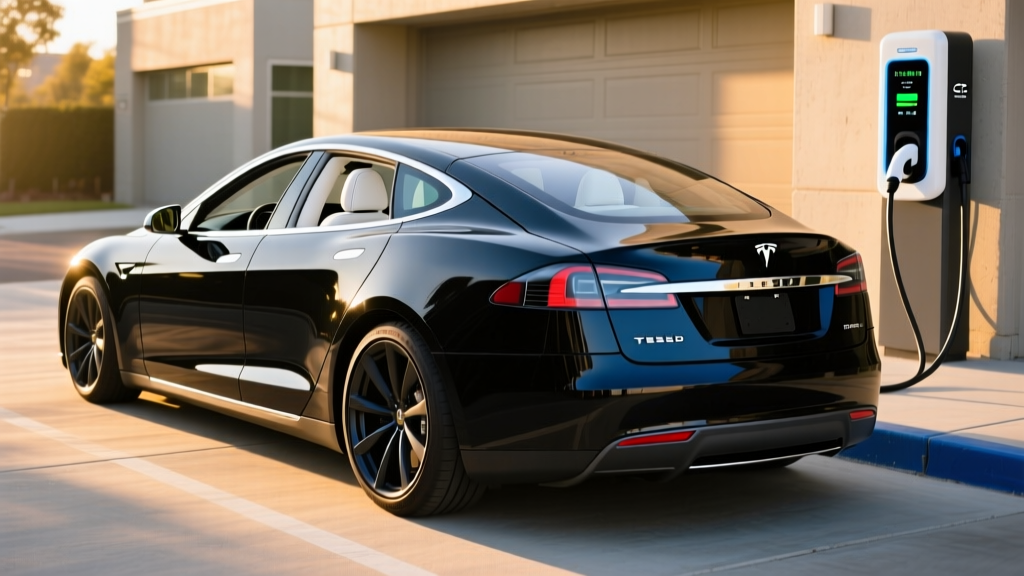
Buying a used Tesla Model S from the 2017 model year is an exercise in balancing flagship luxury against aging battery technology. The 2017 Tesla Model S 100D 0-60 time of 4.2 seconds remains brisk for a large luxury sedan, and the 335-mile EPA range was class-leading at launch. However, prospective used buyers must weigh battery degradation, outdated media hardware, and the lack of modern fast-charging speeds against a depreciated price tag that makes this one of the most affordable ways into a long-range, dual-motor Tesla.
Real-World Range Expectations
EPA Estimate: 335 miles
Real-World Highway (70 mph): ~260–285 miles
Cold Weather (30°F or below): ~210–240 miles
The 100D's massive battery provides a buffer, but aerodynamic drag at highway speeds and cold-weather cabin heating significantly reduce usable range.
Performance: The 2017 Tesla Model S 100D 0-60 Time and Drivetrain
The 100D (100 kWh, Dual-motor) was positioned as the range-optimized flagship rather than the performance king (that was the P100D). Still, the dual-motor all-wheel-drive system provides relentless, linear torque.
| Metric | 2017 Model S 100D Spec |
|---|---|
| 0-60 mph | 4.2 seconds |
| Horsepower | ~518 hp (combined) |
| Drivetrain | Dual-Motor AWD |
| Top Speed | 155 mph |
| Battery Capacity | 100 kWh (NMC chemistry) |
| EPA Range | 335 miles |
| EPA Efficiency | 102 MPGe (33 kWh/100mi) |
The 0-60 time of 4.2 seconds is achieved through the instant torque delivery characteristic of EVs. Unlike turbocharged gas sedans, there is no lag. However, owners should be aware that repeated hard launches will heat-soak the battery and trigger thermal management throttling, a common trait of older Tesla powertrains.
Battery Health, Degradation, and Warranty
The 100 kWh battery pack uses Nickel-Manganese-Cobalt (NMC) chemistry, which offers high energy density but is more susceptible to degradation from high state-of-charge (SoC) and extreme heat compared to modern LFP packs.
Battery Warranty and Replacement
Tesla's warranty for the 2017 Model S 100D covers the battery and drive unit for 8 years or 150,000 miles, whichever comes first, with a minimum capacity retention of 70%. Because these vehicles are now approaching or exceeding the 8-year mark, buyers must verify the remaining warranty status and check the State of Health (SoH) via the vehicle's service menu or third-party diagnostic tools.
Charging Speed: DC Fast Charging and Home Level 2
The 2017 Model S 100D predates Tesla's V3/V4 Supercharger architecture. While it can connect to modern NACS stalls, its peak charge rate is limited by the vehicle's onboard hardware.
| Charging Level | Power / Rate | Time / Range Added |
|---|---|---|
| Level 1 (120V) | ~1.4 kW | ~3 miles per hour |
| Level 2 (240V / 48A) | ~11.5 kW | ~34 miles per hour |
| DC Fast (Supercharger V2) | Peak ~120 kW | 10-80% in ~45 minutes |
Charge Curve Reality: The 100D will peak near 120 kW only when the battery is preconditioned and at a low SoC (below 20%). Once you pass 50% SoC, the charge rate tapers significantly, dropping below 40 kW by the time you reach 80%. This makes the 10-80% time a more accurate metric than peak kW for road-trip planning.
Interior Space, Tech, and Drawbacks
The Model S remains a full-size luxury liftback, offering exceptional utility with its rear hatch and optional rear-facing third-row seats (best suited for small children).
- Cargo Volume: 26.3 cu ft (rear seats up); 58.1 cu ft (folded).
- Front Trunk (Frunk): 5.3 cu ft.
- Legroom (Front/Rear): 42.7 in / 35.4 in.
Notable Drawbacks for 2026 Buyers
The biggest technological deficit is the MCU1 (Media Control Unit). If the car hasn't had the infotainment upgrade, it lacks modern navigation, streaming apps, and the processing speed required for the latest FSD visualizations. Additionally, the 2017 model lacks the heat pump introduced in later Tesla architectures; it uses resistive cabin heating, which is a major range drain in winter climates.
Pricing and Used Market Value
The original MSRP of the 2017 Model S 100D was approximately $94,000 (before options). In the 2026 used market, examples typically trade between $28,000 and $38,000, depending on mileage, condition, and MCU upgrade status.
Federal Tax Credit Eligibility
Under the IRS Used Clean Vehicle Credit (§25E), buyers may qualify for up to $4,000 (or 30% of the sale price, whichever is lower) if the vehicle is purchased from a dealer for $25,000 or less. Given the 100D's current market value often exceeds the $25,000 cap, many buyers will find it ineligible for the federal credit unless they locate a high-mileage bargain.
Pros and Cons
Pros
- Class-leading 335-mile EPA range (when new).
- Spacious liftback design with frunk utility.
- Access to the Tesla Supercharger network.
- Strong dual-motor AWD performance.
Cons
- Slow DC fast charging by modern standards (~45 min 10-80%).
- Outdated MCU1 infotainment (if not upgraded).
- Resistive heating hurts winter range.
- High insurance premiums for older luxury EVs.
FAQ: Buying a Used 2017 Model S 100D
What is the real-world range of a used 2017 Model S 100D?
Expect 260-285 miles on the highway in mild weather. If the battery has degraded 10-15% over its life, that figure will drop proportionally. In freezing temperatures, resistive heating can cut range to 210-240 miles.
Is it worth buying vs. a newer Model 3 or Model Y?
Choose the 2017 100D if you need maximum cargo space and a luxury ride at a sub-$35k price. Choose a newer Model 3/Y if you prioritize faster charging, a heat pump for winter efficiency, and modern infotainment.
Does the 2017 Model S support FSD (Supervised)?
Yes, but only if equipped with Hardware 2.5 or later (or if retrofitted). Note that FSD is an SAE Level 2 driver-assist system, meaning the driver must remain fully engaged and supervise the vehicle at all times.