The 2017 Tesla Model 3 was the car that promised to bring electric vehicles to the masses. Nearly a decade later, these early Long Range examples are circulating the used market at tempting prices. But buying a first-year production EV requires a hard look at battery degradation, outdated charging hardware, and the realities of owning a vehicle that predated Tesla's shift to lithium iron phosphate (LFP) chemistry. This guide breaks down exactly what you're getting — and what you're risking — with a 2017 Model 3 in 2026.
EPA Estimate (2017 Long Range): 310 miles
Expect in 2026 (with battery degradation): 255–280 miles at 100% SoC
Highway (70 mph, 75°F): ~235–260 miles
Cold Weather (30°F, mixed driving): ~195–225 miles
Early NMC cells lose roughly 10–15% capacity after 8 years and 80,000–120,000 miles. Always check the car's State of Health before buying.
2017 Tesla Model 3 Core Specifications
| Spec | Long Range RWD | Long Range AWD |
|---|---|---|
| EPA Range (new) | 310 mi | 310 mi |
| Battery (usable) | ~75 kWh (NMC) | ~75 kWh (NMC) |
| 0-60 mph | 5.1 sec | 4.5 sec |
| Horsepower | 271 hp | 346 hp |
| Drivetrain | Rear-Wheel Drive | Dual-Motor AWD |
| MPGe (combined) | 136 MPGe | 130 MPGe |
| Efficiency | 24 kWh/100 mi | 25 kWh/100 mi |
| Original MSRP | $49,000 | $53,500 |
| Typical Used Price (2026) | $14,000–$18,000 | $16,000–$21,000 |
Sources: fueleconomy.gov, Tesla 2017 press materials.
Battery Chemistry and Degradation: What 8+ Years Does to NMC
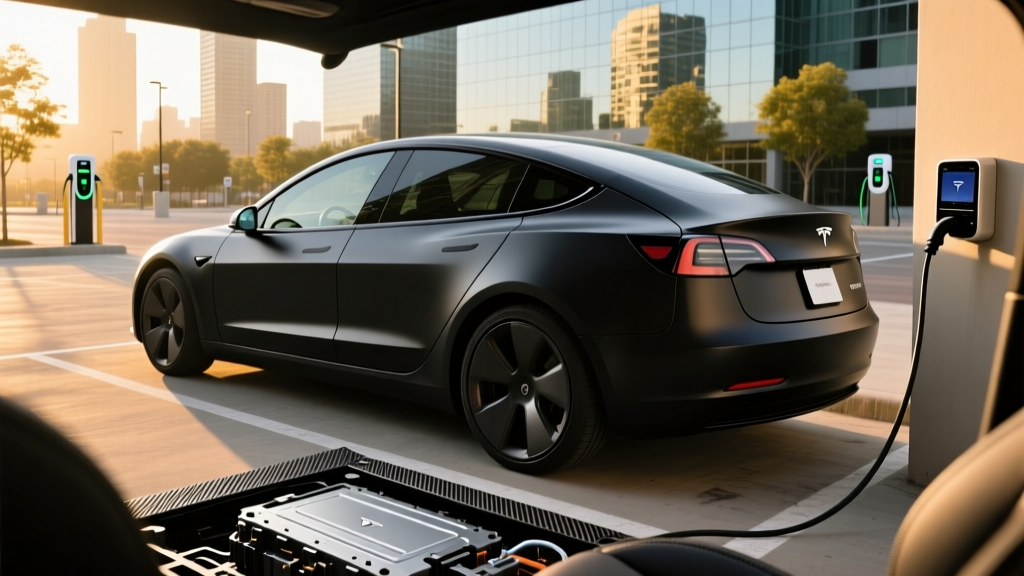
The 2017 Model 3 uses an NMC (nickel manganese cobalt) lithium-ion pack — Tesla's standard chemistry before the company introduced LFP (lithium iron phosphate) cells in the Standard Range models starting around 2021. NMC packs offer higher energy density, which is why the 2017 Long Range squeezed 310 EPA miles out of a ~75 kWh usable pack, but they degrade faster than LFP over time and with repeated high state-of-charge exposure.
Based on fleet data aggregated by sources like Teslanorth and Recurrent Auto, NMC packs in early Model 3 vehicles typically show:
- 5–8% degradation at 50,000 miles
- 10–15% degradation at 80,000–120,000 miles
- 15–20% degradation at 150,000+ miles
A 2017 Model 3 with 100,000 miles and 12% degradation will show roughly 273 miles at a full charge, down from 310. That's still usable for most commutes, but it fundamentally changes road-trip planning. Owners who routinely charged to 100% and let the car sit at full charge accelerated their degradation — a common pattern among early adopters who didn't yet understand NMC care best practices.
Buyer action item: Before purchasing, access the car's Service Mode (or ask the seller for a screenshot) to view the battery's State of Health (SoH). A reading below 85% on a 2017 car is a red flag unless the price reflects a potential $12,000–$16,000 battery replacement down the road.
Charging Speed: The 2017 Hardware Limitation
This is where the 2017 Model 3 shows its age most clearly. The car was engineered before Tesla's V3 Supercharger architecture and before the CCS/NACS connector wars reshaped the industry.
| Charging Level | Power / Rate | Time / Speed |
|---|---|---|
| Level 1 (120V) | ~1.4 kW | ~4–5 mi/hr |
| Level 2 (240V, 48A) | ~11.5 kW | ~37 mi/hr (full in ~7 hr) |
| DC Fast Charge (Peak) | ~170 kW peak | 10–80% in ~30 min |
| DC Sustained (avg 10-80%) | ~110–120 kW avg | Adds ~200 mi in 30 min |
The 2017 Model 3 peaks around 170 kW on a V2 or V3 Supercharger, but the charge curve tapers aggressively above 50% SoC. Expect an average rate closer to 110–120 kW across the 10–80% window, meaning a typical Supercharger stop takes about 30 minutes. That's noticeably slower than a 2024+ Model 3 Highland (which can sustain 250 kW peaks and do 10–80% in roughly 18 minutes).
Connector note: The 2017 Model 3 shipped with Tesla's proprietary connector (now called NACS). Since NACS has become the North American standard through 2025–2026 adoption by Ford, GM, Rivian, and others, this is actually an advantage — you'll have full access to the Supercharger network and all NACS-equipped public chargers without an adapter.
Performance and Driving Dynamics
Even with 8+ years of battery aging, the 2017 Model 3 Long Range remains a genuinely quick car. The RWD version hits 0–60 mph in 5.1 seconds with 271 hp from its single rear motor, while the dual-motor AWD variant drops that to 4.5 seconds with a combined 346 hp. Instant electric torque means these numbers feel even more responsive in stoplight-to-stoplight driving than the figures suggest.
The ride quality is firm — Tesla's early Model 3 suspension tuning was sporty to the point of harshness on rough pavement, a complaint Tesla addressed with suspension revisions in later model years. Road noise is also more pronounced than in the refreshed Highland generation, which received significant acoustic insulation upgrades.
Regenerative braking in the 2017 Model 3 is strong and consistent, enabling one-pedal driving in most scenarios. However, unlike 2021+ models, there's no adjustable regen strength in the settings — it's full regen or nothing, which some drivers love and others find fatiguing in stop-and-go traffic.
Interior, Cargo, and Tech
The 2017 Model 3 interior is famously minimalist: a single 15-inch touchscreen handles everything from climate control to the speedometer. There are no physical buttons, no instrument cluster, and no heads-up display. This was polarizing in 2017 and remains so today.
Cargo dimensions:
- Rear trunk: 15 cu ft
- Front trunk (frunk): 3.1 cu ft
- Total cargo: 18.1 cu ft (rear seats up)
- With rear seats folded: ~43 cu ft
Passenger space:
- Front legroom: 42.7 inches
- Rear legroom: 35.2 inches (tight for adults on longer trips)
- Rear headroom: 36.6 inches (the glass roof eats into space)
Tech features (as of 2017 hardware):
- Autopilot basic (lane centering, adaptive cruise) — SAE Level 2 driver assist, not self-driving
- Enhanced Autopilot (optional): auto lane change, autosteer on highways, Navigate on Autopilot
- Full Self-Driving (if purchased): still SAE Level 2, requires active driver supervision
- Over-the-air updates: 2017 cars still receive software updates, though some newer features require hardware 3.0+ (HW3) which was introduced in April 2019 — most 2017 cars have HW2.5
- No heat pump (resistive cabin heater): this means cold-weather range loss is more severe than in 2021+ Model 3s equipped with Tesla's heat pump
Pricing, Used Market Value, and Tax Credits in 2026
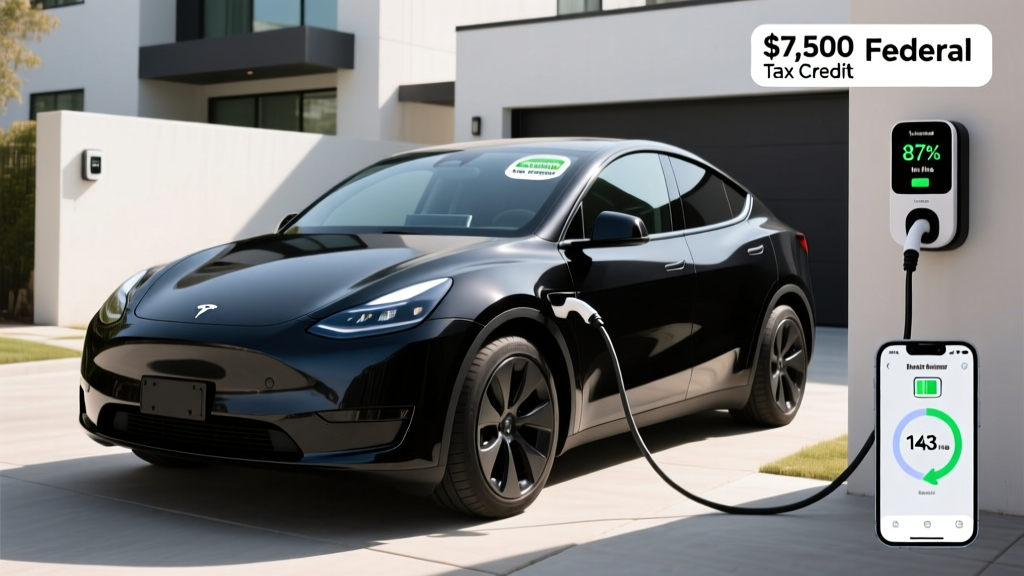
The 2017 Model 3 Long Range originally started at $49,000 (RWD) and $53,500 (AWD), before the $7,500 federal credit that was still available for Tesla buyers in 2017–2018. In the 2026 used market, here's what you'll actually pay:
| Scenario | Price Range |
|---|---|
| Long Range RWD (80k–120k mi) | $14,000–$18,000 |
| Long Range AWD (80k–120k mi) | $16,000–$21,000 |
| Low-mileage example (<60k mi) | $19,000–$24,000 |
| With §25E Used EV Credit | Subtract up to $4,000 |
Federal used-EV tax credit (§25E): If you buy a 2017 Model 3 from a licensed dealer for $25,000 or less, you may qualify for a used clean vehicle credit equal to 30% of the sale price, up to $4,000. Key eligibility requirements per the IRS:
- Buyer AGI must not exceed $75,000 (single), $112,500 (head of household), or $150,000 (joint)
- Sale price must be $25,000 or less
- Vehicle must be purchased from a licensed dealer (private-party sales don't qualify)
- The vehicle must be at least 2 model years old (2017 qualifies easily)
- You can only claim the used-EV credit once every 3 years
A $17,000 dealer purchase with the full $4,000 credit effectively drops your net cost to $13,000 — making the 2017 Model 3 one of the cheapest ways into a 250+ mile EV in 2026.
Warranty Status in 2026
Here's the uncomfortable truth: the 2017 Model 3's original warranties have expired or are expiring.
- Basic vehicle warranty: 4 years / 50,000 miles — expired on all 2017 cars
- Battery & drive unit warranty: 8 years / 120,000 miles (Long Range) — expired or expiring in 2025–2026
If you're buying a 2017 Model 3 in 2026, you are almost certainly buying it out of warranty unless the previous owner purchased an extended service agreement. A battery replacement at a Tesla Service Center currently runs $12,000–$16,000. A drive unit replacement is $5,000–$8,000. These are worst-case scenarios, but they must factor into your total cost of ownership calculation.
Independent EV shops are increasingly offering battery module-level repairs for $3,000–$6,000, which can extend the pack's life without a full replacement. Research reputable EV specialists in your area before you buy.
2017 Model 3 vs. Key Used-EV Competitors
| Vehicle | EPA Range | Used Price (2026) | Key Advantage |
|---|---|---|---|
| 2017 Tesla Model 3 LR | 310 mi (new) | $14k–$21k | Supercharger network, efficiency |
| 2018 Chevrolet Bolt EV | 238 mi | $11k–$15k | Lower price, hatchback cargo |
| 2018 Nissan Leaf Plus | 226 mi | $10k–$14k | Cheapest option, CHAdeMO charging |
| 2019 Hyundai Kona Electric | 258 mi | $15k–$19k | Better warranty remaining, crossover |
The 2017 Model 3 still wins on range and charging infrastructure. The Supercharger network — now open to NACS-equipped vehicles from other brands — remains the most reliable DC fast-charging network in the US. The Bolt and Leaf are cheaper but lack the range and charging speed for comfortable road trips. The Kona Electric is a strong alternative if you want a crossover form factor and may still have some factory warranty remaining.
Pros, Cons, and Who Should Buy
- 310-mi EPA range (new) still competitive after degradation
- Full NACS/Supercharger access — no adapter needed
- Over-the-air updates keep software current
- Best-in-class efficiency (24 kWh/100 mi)
- Strong performance even with aged battery
- Eligible for up to $4,000 used-EV tax credit
- Large and growing third-party repair ecosystem
- Battery & drivetrain warranty expired or expiring
- No heat pump — worse cold-weather range loss
- HW2.5 Autopilot hardware limits FSD capability
- Slower DC charging vs. modern EVs (170 kW peak)
- Firm ride, more road noise than refreshed Model 3
- Minimalist interior not for everyone
- Potential $12k–$16k battery replacement cost
- Budget-conscious commuters who want 200+ real-world miles and home charging
- Tech-savvy buyers comfortable with a touchscreen-only interface and willing to monitor battery health
- Second-car households needing an efficient daily driver with occasional road-trip ability
- Cold-climate drivers (the lack of a heat pump is a real penalty)
- Families needing rear-seat space (35.2" rear legroom is tight)
- Anyone who wants warranty protection (consider a 2021+ CPO Model 3 instead)
Frequently Asked Questions
What is the real-world range of a 2017 Tesla Model 3 in 2026?
Expect 255–280 miles at full charge for a Long Range example with typical 10–15% battery degradation. Highway driving at 70 mph drops that to roughly 235–260 miles. In freezing temperatures, plan for 195–225 miles due to the resistive cabin heater and cold battery chemistry. Always verify the specific car's SoH before purchase.
How fast does the 2017 Model 3 charge at home and on the road?
At home on a 240V Level 2 charger (48A), the car charges at ~11.5 kW, adding about 37 miles of range per hour — a full charge takes roughly 7 hours. On DC fast chargers, it peaks at ~170 kW but averages 110–120 kW from 10–80%, taking about 30 minutes. That's adequate but noticeably slower than modern EVs that hit 250+ kW peaks.
Does a used 2017 Tesla Model 3 qualify for any federal tax credit?
Yes, under the IRS §25E used clean vehicle credit. If you buy from a licensed dealer for $25,000 or less and your AGI falls under the income caps ($75k single / $150k joint), you can claim 30% of the sale price up to $4,000. This credit is available as a point-of-sale reduction at participating dealers. It does NOT qualify for the new-vehicle §30D credit.
Is a 2017 Model 3 worth buying vs. a newer used EV?
It depends on budget and risk tolerance. At $14,000–$18,000 (minus up to $4,000 in credits), it's one of the most affordable long-range EVs available. But you're accepting out-of-warranty risk on a $12,000–$16,000 battery. If you can stretch to $25,000–$30,000, a 2021 Model 3 with a heat pump, HW3, and remaining battery warranty is a safer bet. For budgets under $15,000, the 2017 Model 3 is hard to beat on capability.
Can I upgrade the Autopilot hardware on a 2017 Model 3?
Tesla has not offered a retrofit program for Model 3 HW2.5 to HW3 (unlike early Model S/X). Some third-party shops claim to offer upgrades, but this is not officially supported and may cause software compatibility issues. Buy the car accepting the HW2.5 limitation — basic Autopilot (lane centering + adaptive cruise) works fine, but FSD (Supervised) performance will not match HW3/HW4 vehicles.
What should I check before buying a used 2017 Model 3?
Prioritize these: (1) Battery State of Health via Service Mode, (2) drive unit whine or vibration, (3) suspension component wear (control arms, bushings), (4) 12V battery age (these need replacement every 3–5 years), (5) screen delamination or yellowing, (6) service history for any battery or drive unit replacements already performed under warranty. A pre-purchase inspection at a Tesla Service Center or qualified independent EV shop costs $200–$400 and is strongly recommended.